Processed Aconite Root is the name of a traditional Chinese medicine. It refers to processed preparations of Aconite Root, including processed Aconite Slices, Salted Aconite Root, Black Aconite Slices, and White Aconite Slices. It has the therapeutic effects of restoring Yang to reverse collapse, tonifying fire to assist Yang, and dispelling cold to relieve pain.It is primarily used to treat yang collapse and deficiency-collapse, cold limbs and faint pulse, deficiency of heart yang, chest bi and heart pain, deficiency-cold vomiting and diarrhea, cold pain in the epigastrium and abdomen, kidney yang deficiency, impotence and uterine cold, yin-cold edema, yang deficiency with external pathogenic factors, and cold-damp bi pain.

Processed Aconite Root
Processed Aconite Root is the name of a traditional Chinese medicine. It refers to processed preparations of Aconite Root, including processed Aconite Slices, Salted Aconite Root, Black Aconite Slices, and White Aconite Slices. It has the therapeutic effects of restoring Yang to reverse collapse, tonifying fire to assist Yang, and dispelling cold to relieve pain.It is primarily used to treat yang collapse and deficiency-collapse, cold limbs and faint pulse, deficiency of heart yang, chest bi and heart pain, deficiency-cold vomiting and diarrhea, cold pain in the epigastrium and abdomen, kidney yang deficiency, impotence and uterine cold, yin-cold edema, yang deficiency with external pathogenic factors, and cold-damp bi pain.
Chinese Name : 炮附子
Aliases : Salted Aconite Root, Black Sliced Aconite Root, White Sliced Aconite Root, Processed Sliced Aconite Root
Nature, Flavor & Meridian Tropism : Taste: pungent and sweet; nature: extremely hot. Enters the Heart, Kidney, and Spleen meridians.
Benefits & Efficacy
Benefits
Restores Yang to reverse collapse, tonifies fire to assist Yang, dispels cold, and relieves pain.
Indications
1. Yang-Collapse Syndrome: This herb can support Heart Yang in the upper burner, warm Spleen Yang in the middle burner, and tonify Kidney Yang in the lower burner; it is regarded as the “premier herb for restoring Yang and rescuing from collapse.” 2. Yang Deficiency Syndrome: With its pungent, sweet, and warm nature, this herb has the effect of vigorously tonifying primordial Yang and promoting fire to dispel Yin. It can be used for all cases of weakened Yang Qi in the Kidney, Spleen, and Heart. 3. Cold-Induced Bi Syndrome:This herb possesses a vigorous and potent nature; it moves through the body rather than remaining stationary. It warms the meridians and unblocks the collaterals, expelling pathogenic factors of wind, cold, and dampness from the meridians and collaterals, thus exerting a strong effect in dispelling cold and relieving pain. It may be used for all cases of wind-cold-damp bi syndrome presenting with pain in the joints and throughout the body, and is particularly effective for severe pain associated with cold bi syndrome. 4. Cardiogenic shock diagnosed in Western medicine as resulting from myocardial infarction, arrhythmia, or heart failure,infectious shock caused by fulminant meningococcal meningitis, toxic pneumonia, sepsis, and other conditions classified as “Yang-Collapse Syndrome”; hypovolemic shock resulting from massive hemorrhage or severe vomiting and diarrhea caused by gastrointestinal or respiratory diseases, as well as gynecological surgical trauma; hypovolemic shock caused by severe dehydration due to profuse sweating in acute illnesses classified as “Yang-Collapse Syndrome”; shock resulting from excessive sweating in certain emergencies classified as “Yang-Collapse Syndrome”; and cases of chronic nephritis, diabetes,hyperaldosteronism, hypothyroidism, neurasthenia, adrenal cortical insufficiency, acute nephritis, and nephrotic syndrome with Kidney Yang Deficiency; acute and chronic gastroenteritis, as well as gastric and duodenal ulcers classified as Spleen-Stomach Yang Deficiency; rheumatoid arthritis and cirrhosis with jaundice attributed to Cold-Damp Obstruction; constipation classified as Deficiency-Cold Syndrome; and dysmenorrhea attributed to Cold Obstruction of the Uterus.
Usage and Dosage
Oral Use: Decoct and take 3–15 g; as this herb is toxic, it should be decocted for 0.5–1 hour beforehand, until no numbing or spicy sensation is detected when tasted.
Precautions
Overdose, or improper preparation or decoction methods, may cause poisoning.
Chemical Constituents
This product contains aconitine, mesaconitine, subaconitine, isopapaverine, neaconitine, aconitamine, and uracil, among others.
Pharmacological Actions
Decoctions of Aconite and its water-soluble fractions exhibit a marked cardiotonic effect on the hearts of frogs, toads, and warm-blooded animals, regardless of whether they are in a normal or failing state;its n-butanol, ethanol, and aqueous extracts have a preventive effect against chloroform-induced ventricular fibrillation in mice; Aconite has significant anti-inflammatory effects, inhibiting paw edema in rats induced by egg white, carrageenan, and formaldehyde, suppressing acetic acid-induced increased capillary permeability, and inhibiting granuloma formation and adjuvant-induced arthritis;Mesaconine, aconitine, and subaconitine all possess analgesic effects. Recent studies indicate that Aconite root enhances the body’s antioxidant capacity and exhibits anti-aging effects.
Relevant Discussions
1. *Ben Cao Hui Yan*: “Aconite is a potent medicine that restores yang qi, dispels yin cold, expels cold phlegm, and unblocks the joints. For all diseases characterized by deficiency of true yang, rising deficient fire, difficulty swallowing, inability to eat or drink, and conditions where cold medicines only worsen the condition, Aconite is the primary medicine for the Gate of Life. It can penetrate to the very source to summon the yang, guiding the fire back to its origin, thereby extinguishing the wandering fire.In all cases of yang deficiency and extreme yin, where there are no signs of heat in the lungs or kidneys, taking it has the extraordinary power to revive the dying.”
2. *Ben Cao Zheng Yi*: “Aconite is inherently pungent, warm, and intensely hot. Its nature is to move rapidly, making it an essential medicine for unblocking the pure yang of the Twelve Meridians. Externally, it reaches the skin and hair to dispel superficial cold; internally, it reaches the Lower Jiao to warm chronic cold. Penetrating both internally and externally, it treats all cases of true cold in the Triple Burner, meridians, and all organs and viscera.”
Applications
Clinical Applications
1. Sick-Sinus Syndrome: Prepared Aconite Root (decocted for 2–3 hours beforehand) 12–60 g, Cinnamon Twig 12–18 g, Fried Licorice Root 12–30 g, Barley Tong 30 g, Red Dates 15–30, Goji Berries 12–30 g, Prince Ginseng 15–30 g,Salvia miltiorrhiza 30 g, Aquilaria agallocha (added later) 5–9 g. One dose per day; decoct twice with water. Take the first decoction in the evening and the second decoction the following morning. One course of treatment consists of 15 doses.
2. Congestive Heart Failure: Aconite 10–15 g (decocted first), Acanthopanax senticosus bark 10–15 g, Eupatorium fortunei 15 g, Paeonia rubra 15 g,Chuanxiong 15g, Danshen 15g, Jixueteng 15g, Dangshen 25g, Maidong 25g; decoct in water and divide into doses.
3. Emergency treatment for critically ill patients: Heifupian 156.25g, Danshen 156.25g, Red Ginseng (first-grade) 93.75g; prepare as a 1000ml injection solution.Administer 80–200 ml daily by slowly infusing intravenously in two divided doses, mixed with 250–500 ml of 10% glucose injection.
4. Gastric ptosis: 12 g of processed Aconite Root (pre-decocted), 10 g of stir-fried Atractylodes, 9 g of charred Artemisia leaves, and 5 g of fennel. Decoct in water and take in divided doses after meals for 50 consecutive days.
5. Chronic renal failure: 10–15 g each of Aconite (decocted first), Cinnamon Twig, and Rhubarb; 20–40 g of Astragalus; and 15–20 g of Mulberry Bark. Decoct in water and take one dose daily. Concurrently, use 15 g of Aconite and 30 g of Rhubarb,Oyster Shell and Dandelion, each 60 g; decoct to a concentrated solution of 200–400 ml and administer as a retention enema once daily.
6. Uremia: 20 g of Rhubarb, 50 g each of Scutellaria and Raw Oyster Shell, and 15 g of Fried Aconite Root; decoct in water and instill 150 ml rectally before bed each day; for severe cases, administer 2–3 times daily.
7. Shao Yin syndrome, characterized by body pain, cold hands and feet, joint pain, and a deep pulse: 2 pieces of Aconite (roasted, peeled, and cut into eight slices), 90g of Poria, 60g of Ginseng, 120g of Atractylodes, and 90g of Peony. Decoct the five ingredients in 4000ml of water until reduced to 1500ml; strain out the residue; take 200ml while warm, three times daily.
8. For wandering wind-cold causing unilateral or bilateral headaches that have persisted for a long time without resolution: 1 large Aconite root, cut into 4 slices; soak in one zhan of ginger juice, then roast; repeat the soaking and roasting process until all the juice is absorbed; mix with an equal amount of Galanga, ground into a powder. Take 3g per dose, mixed with clear, unflavored tea; avoid hot foods for a short time afterward.
9. Yin-toxin typhoid fever, with a pale face, cold and numb limbs, abdominal pain, and chills; all conditions involving cold qi: 3 pieces of large Aconite Root (roasted until cracked, with skin and pith removed), ground into a powder. Take 9g per dose, mixed with half a zhan of ginger juice and half a zhan of cold wine. The treatment is complete when a warm, fiery sensation is felt below the navel after a considerable time.
10. For kidney qi rising upward, causing inability to turn the neck or back: Take 1 Aconite Root (weighing 6 qian or more), roast it, remove the skin and pith, and grind into a powder. For each dose, take 2 da qian of the powder and 20 grains of high-quality Sichuan pepper. Fill the pepper with wheat flour, add one and a half zhan of water and seven slices of fresh ginger, and decoct until the volume is reduced to 2 g. Remove the pepper, add salt, and take on an empty stomach.
11. Seven types of hernia, cold pain in the chest and abdomen, intestinal rumbling and gas, chills with spontaneous sweating, and loose stools: 15g of Wood Fragrance (unroasted), 30g each of Xuanhusuo (roasted, peel removed) and Aconite Root (roasted, peel and pith removed). Coarsely grind the ingredients into powder. Take 12g per dose, decoct with one and a half bowls of water and seven slices of ginger until reduced to 2g. Strain and take while warm.
Related Compatibility
1. Combination of Aconite and White Peony Root: Aconite is pungent, sweet, and extremely hot; it enters the Qi level, moves freely without stagnation, and circulates through the Twelve Meridians, possessing the functions of warming Yang, dispelling cold, restoring Yang, and rescuing from collapse. White Peony Root is sour, bitter, and slightly cold; it enters the Blood level, has a gentle nature and promotes stability, and is effective in nourishing the blood, soothing the liver, consolidating Yin, harmonizing the Nutritive Level, and relieving spasms and pain.When Aconite is combined with White Peony, it warms yang and dispels cold without harming yin or blood; when White Peony is combined with Aconite, it nourishes blood and harmonizes the营 without the drawback of cold stagnation. When used together, their effects of warming yang, dispelling cold, nourishing yin, and harmonizing the营 are even more pronounced. This combination is used to treat conditions such as numbness in the limbs and joint pain caused by blood deficiency with cold stagnation; rib pain caused by cold stagnation in the liver meridian; and dysmenorrhea caused by cold stagnation in the uterus.
2. Aconite combined with Atractylodes and Poria: Aconite warms the kidneys and supports yang; Atractylodes strengthens the spleen and dries dampness; Poria drains dampness and promotes diuresis. When used together, these three herbs have the effects of warming the kidneys, strengthening the spleen, promoting diuresis, and reducing edema. They are used to treat spleen-kidney yang deficiency, edema caused by the accumulation of damp turbidity, difficulty urinating, and chronic diarrhea.
3. Aconite combined with Rhubarb: Rhubarb is bitter and cold, clearing stagnation and eliminating food stagnation; Aconite is pungent and hot, assisting yang and dispelling internal cold, while also moderating the cold nature of Rhubarb. When combined, they utilize both cold and heat to warm and purge cold-type stagnation and accumulation. This combination is used to treat abdominal pain, constipation, and cold extremities resulting from internal cold-type stagnation coupled with yang deficiency.
4. Combining Aconite with Dried Ginger: Both have the efficacy of restoring yang and reversing collapse; however, Aconite moves rather than remains localized, assisting kidney yang and dispelling yin cold, while Dried Ginger remains localized rather than moving, warming the spleen and stomach and dispelling cold pathogens.When used synergistically, they have the effect of warming and tonifying the spleen and kidneys, as well as assisting yang and dispelling cold. This combination is used to treat symptoms of spleen and kidney yang deficiency—such as aversion to cold, cold extremities, loose stools containing undigested food, cold pain in the epigastrium and abdomen, and early-morning diarrhea—or conditions of impending yang collapse characterized by cold and numb extremities, cold and clammy sweat, and a faint, nearly imperceptible pulse.
5. Combining Aconite with Cinnamon Twig: Aconite is pungent and hot, circulating through the Twelve Meridians; it warms yang, dispels cold, removes dampness, relieves pain, and unblocks the joints. Cinnamon Twig is pungent and warm, with a light, ascending, and dispersing nature; it warms the meridians, promotes yang, expels wind, dispels cold, and relieves pain.When combined, their efficacy in warming and unblocking the meridians, dispelling wind and cold, and relieving pain is even more pronounced. This combination is used to treat physical discomfort and pain caused by constitutional yang deficiency and invasion by wind, cold, and dampness pathogenic factors, manifesting as an inability to turn over in bed or to flex and extend the joints.
6. Combination of Aconite Root (Fu Zi) and Sichuan Pepper (Hua Jiao): Aconite Root warms the kidneys, assists yang, dispels cold, and relieves pain; Sichuan Pepper warms the middle burner, relieves pain, warms the spleen, and stops diarrhea.Both are pungent and hot in nature and serve to warm the interior and dispel cold. When combined, their effects of invigorating yang, dispelling cold, warming the middle burner, and relieving pain are even more pronounced. This combination is used to treat cold pain in the epigastric region due to deficiency-cold in the middle jiao, as well as sudden-onset stomach pain caused by direct invasion of cold pathogens.
7. Aconite Root combined with Astragalus: Aconite Root warms and tonifies primordial yang; Astragalus tonifies qi and fortifies the exterior.When used together, they not only warm yang, tonify qi, and consolidate the exterior to stop sweating—making them suitable for treating spontaneous sweating, fatigue, aversion to cold, and a cold body caused by qi deficiency and yang decline with a weakened defensive exterior—but they also warm and tonify the spleen and kidneys, and support fire to nourish earth, making them effective for treating edema and difficulty urinating resulting from spleen-kidney yang deficiency with internal retention of water and dampness.
8. Combining Aconite with Cinnamon Bark: Aconite is pungent, hot, and intensely drying; it moves freely without retaining, serving as a pure yang herb that traverses the Twelve Meridians, capable of restoring yang and reversing collapse. Cinnamon Bark is pungent, sweet, and hot; it can both move and retain, primarily warming the Lower Jiao to tonify kidney yang, and is particularly effective at guiding fire back to its source. When these two herbs are used in synergy, Aconite excels at entering the Qi level to dispel cold and relieve pain, while Cinnamon Bark excels at entering the Blood level to warm the meridians and unblock the vessels.Together, they achieve the effects of warming the kidneys and assisting yang, guiding fire back to its source, warming the meridians, dispelling cold, and relieving pain. This combination is used to treat symptoms such as weakness and soreness in the lower back and knees, aversion to cold and cold limbs, impotence, frequent urination, and clear, copious urine resulting from deficiency of Mingmen fire in the lower jiao and insufficiency of kidney yang, as well as joint soreness and pain throughout the body caused by wind-cold-damp bi syndrome.
9. Aconite Root Combined with White Atractylodes: Aconite Root warms and tonifies the spleen and kidneys while dispelling cold;Atractylodes macrocephala tonifies qi, strengthens the spleen, and dries dampness. When combined, these two herbs work to warm the middle burner, dispel cold, strengthen the spleen, and dry dampness. This combination is suitable for conditions such as cold pain in the chest and abdomen, vomiting, and diarrhea caused by an excess of cold and dampness due to yang deficiency, as well as phlegm-fluid retention and edema. Aconite warms the meridians, dispels cold, and relieves pain; Atractylodes macrocephala dries dampness, strengthens the spleen, and tonifies qi. When used together, they work to warm the meridians, tonify qi, dispel cold, and eliminate dampness.It is also suitable for pain in the limbs and joints caused by the combined effects of wind and dampness.
10. Aconite Root combined with Aconite: Aconite Root excels at replenishing fire and assisting yang; Aconite is effective at warming the meridians, dispelling cold, and relieving pain. When used together, these two herbs work to warm yang, dispel cold, expel yin, and relieve pain. This combination is suitable for chest pain radiating to the back, back pain radiating to the chest, and chest bi pain caused by deficient heart yang and chronic accumulation of yin-cold.
11. Aconite Root (Fuzi) Combined with White Mulberry Bark (Sangbaipi): Aconite Root has a pungent taste and is extremely hot; it excels at restoring Yang to reverse collapse and warming Yang to promote diuresis. White Mulberry Bark has a sweet, cold nature and excels at draining the lungs to relieve wheezing and promoting diuresis to reduce swelling. When used together, these two herbs have the effects of warming Yang, promoting diuresis, draining the lungs, and relieving wheezing. This combination is suitable for conditions characterized by deficiency of Kidney Yang and failure of Lung Qi to descend, presenting as water retention and edema, scanty urination, accompanied by wheezing, coughing, and shortness of breath.
12. Aconite Root Combined with Eucommia Bark: Aconite Root has a pungent taste and is extremely hot; it excels at replenishing fire and assisting yang. Eucommia Bark is sweet and warm; it excels at tonifying the liver and kidneys. When used together, these two herbs enhance the effects of tonifying the liver and kidneys and strengthening the lower back and knees. This combination is suitable for conditions characterized by kidney yang deficiency, soreness and weakness in the lower back and knees, and cold pain in the lower abdomen.
Medicinal Identification
1. Raw Aconite Slices, Processed Aconite Slices, Salted Aconite, Black Aconite Slices, and White Aconite Slices: Processed forms of Aconite include raw Aconite slices, processed Aconite slices, salted Aconite, black Aconite slices, and white Aconite slices.Raw Aconite Slices are toxic, with a total alkaloid content of 1.1%, and are primarily used externally. Processed Aconite Slices have a total alkaloid content reduced by 81.30% compared to raw slices, while White Aconite Slices have an alkaloid content of 0.17%. Their toxicity is reduced, and they exhibit a stronger cardiotonic effect; the longer they are decocted, the more pronounced this effect becomes.It contains highly toxic diterpene diester alkaloids, such as aconitine, hypoaconitine, neoaconitine, and taladiamine, which are highly toxic; their toxicity is reduced after processing.The cardiotonic effect of Aconite is closely related to the racemic noraconoside it contains. Processed Aconite Slices are superior at warming the kidneys and spleen and replenishing the fire of the Gate of Life; clinically, they are frequently used to treat deficiency-cold diarrhea, wind-cold-damp bi syndrome, yang-deficiency edema, yang-deficiency common cold, and involuntary seminal emission.Salt-processed Aconite (Yan Fuzi) contains 0.34% alkaloids and is primarily used to restore Yang and reverse collapse, as well as dispel cold and relieve pain. Therefore, it is clinically used to treat Yang-collapse with deficiency, cold limbs and a faint pulse, pain from cold-damp bi syndrome, pain in the chest and abdomen, edema due to Yang deficiency, and common cold due to Yang deficiency.
2. Aconite (Fu Zi), Sichuan Aconite (Chuan Wu), and Wild Aconite (Cao Wu): Aconite, Sichuan Aconite, and Wild Aconite all derive from the same plant—the root of Aconitum, a member of the Ranunculaceae family. They are all pungent, hot, and toxic substances, capable of dispelling cold and relieving pain, and are used to treat cold-damp arthralgia and cold pain in the chest and abdomen.However, Aconite Root (Fu Zi) is particularly effective at restoring Yang, reversing collapse, replenishing fire, and assisting Yang. It is primarily used to treat conditions such as impending Yang collapse, deficiency of Kidney Yang, deficiency of Spleen and Kidney Yang, as well as Yang-deficient edema and Yang-deficient exogenous pathogens.Aconite is further divided into Sichuan Aconite (Chuanwu) and Wild Aconite (Caowu). Sichuan Aconite is mostly cultivated, while Wild Aconite is primarily wild-harvested. Both are effective at dispelling wind and dampness, as well as providing anesthetic and analgesic effects; they are used to treat cold-induced arthralgia, cold pain in the chest and abdomen, pain from cold hernias, pain from trauma, yin ulcers, and for topical anesthesia. Wild Aconite is more toxic and potent than Sichuan Aconite.
3. Aconite and Asarum: Both herbs have a pungent taste and a warm-to-hot nature; they are toxic and enter the Heart and Kidney meridians. They both possess the ability to dispel cold and relieve pain, and can be used to treat wind-cold-damp bi syndrome and yang-deficiency exogenous pathogens.However, Xi Xin is pungent and warm, and also enters the Lung Meridian. It has the effects of dispelling wind and cold, unblocking the orifices, warming the lungs, and transforming phlegm-fluid. It can be used to treat wind-cold colds, headaches, chronic rhinitis, toothaches, cold phlegm and retained fluid, qi reversal with wheezing and coughing, and to stimulate the nose to induce sneezing. It also has the function of opening the orifices and reviving the spirit, and is used to treat conditions involving orifice obstruction;Aconite (Fuzi) also enters the Spleen Meridian and has the effects of restoring Yang to reverse collapse and assisting Yang to replenish fire. It is used for Yang-collapse syndromes and is considered the “foremost herb for restoring Yang and reversing collapse”; it can also be used for Yang-deficiency-induced impotence and uterine cold, cold pain in the epigastrium and abdomen, diarrhea, and edema.
4. Aconite and Cinnamon Twig: Both herbs have a pungent taste and enter the Heart Meridian; they both possess the functions of warming the meridians, dispelling cold, unblocking arthralgia, and relieving pain, and are both used to treat arthralgia caused by wind, cold, and dampness.However, Aconite (Fuzi) has a pungent, dispersing, and warming nature that penetrates both internally and externally; it excels at expelling wind, cold, and dampness pathogens and possesses a strong effect in dispelling cold and relieving pain. Therefore, it is most commonly used for severe cases of cold-damp bi syndrome in patients with a constitutional Yang deficiency and a predominance of cold and dampness, presenting with joint stiffness and pain, as well as difficulty in flexing and extending the joints; Aconite also enters the Kidney and Spleen meridians, where it restores Yang to reverse collapse, supports Yang, and replenishes fire. It is used for Yang-collapse syndrome and is considered the “foremost herb for restoring Yang and reversing collapse”;It can also be used for deficiency-cold conditions such as impotence, uterine coldness, cold pain in the epigastrium and abdomen, diarrhea, and edema.Cinnamon Twig (Gui Zhi) is pungent, dispersing, and warming. It enters the Heart Meridian and acts on the blood, warming and unblocking Heart Yang to treat chest pain caused by chest bi syndrome. It can also warm the middle burner, tonify deficiency, dispel cold, and relieve pain, making it suitable for deficiency-cold in the middle burner and cold pain in the epigastrium and abdomen. Furthermore, it warms the meridians, dispels cold, invigorates blood circulation, and regulates menstruation, making it useful for women suffering from cold invasion, blood stasis, amenorrhea, and abdominal pain caused by masses or masses;Cinnamon Twig also enters the Lung and Bladder meridians, where it induces sweating to relieve muscle tension, assists Yang in transforming Qi, and calms and descends rebellious Qi. It is used for wind-cold common colds, phlegm-fluid retention, palpitations, and “rushing pig” syndrome.
5. Aconite and Ephedra: Both herbs have a pungent taste and possess the ability to dispel cold and relieve pain; they are both used to treat wind-cold-damp bi syndrome and external pathogenic factors in cases of yang deficiency. However, Aconite, with its pungent, dispersing, warming, and unblocking properties, penetrates both internally and externally and is particularly effective at expelling wind, cold, and damp pathogenic factors. It has a stronger effect in dispelling cold and relieving pain; therefore, it is most commonly used for severe cases of cold bi syndrome in individuals with a constitutional yang deficiency and a predominance of cold and dampness, presenting with joint pain and stiffness, difficulty in flexing and extending the joints.Aconite also enters the Heart, Kidney, and Spleen meridians; it has the effects of restoring Yang, reversing collapse, assisting Yang, and replenishing fire. It is used for Yang-collapse syndromes and is considered the “foremost herb for restoring Yang and reversing collapse.” It is also used for Yang-deficiency-induced impotence, uterine cold, cold pain in the epigastrium and abdomen, diarrhea, and edema.Ephedra (Ma Huang) is pungent, dispersing, and warming; it dispels cold and relieves stagnation, and is frequently used for joint pain caused by external invasion of wind, cold, and dampness. Ephedra enters the Lung and Bladder meridians and has the effects of inducing sweating to resolve exterior syndromes, promoting lung function to relieve wheezing, and promoting diuresis to reduce edema. It can be used for wind-cold colds, coughing and wheezing, and wind-damp edema.
6. Aconite and Mulberry Parasite: Both herbs enter the Kidney meridian and possess the effects of dispelling dampness, dispersing cold, and relieving pain; they are both used to treat wind-cold-damp arthralgia. However, Aconite is pungent, dispersing, and warming, penetrating both internally and externally; it excels at expelling wind, cold, and damp pathogenic factors and has a strong effect in dispelling cold and relieving pain. Therefore, it is most commonly used for severe cases of cold arthralgia characterized by constitutional yang deficiency, a predominance of cold and dampness, joint stiffness and pain, and difficulty in flexing and extending the joints;Aconite is pungent, extremely hot, and toxic; it also enters the Heart and Spleen meridians. It has the effects of restoring Yang to reverse collapse and assisting Yang to replenish fire. It is used for Yang-collapse syndrome and is regarded as the “foremost herb for restoring Yang and reversing collapse.” It is also used for deficiency-cold conditions such as impotence, uterine coldness, cold pain in the epigastrium and abdomen, diarrhea, and edema.Mulberry Parasite (Sangjisheng) is sweet and neutral in nature; it can both dispel wind-dampness and tonify the liver and kidneys while strengthening the tendons and bones. Therefore, it is used to treat deficiency of nutritive blood, insufficiency of the liver and kidneys, rheumatic arthralgia, soreness and weakness in the lower back and knees, and weakness of the tendons and bones. It is particularly suitable for the elderly and frail, or for those with chronic arthralgia and soreness in the lower back and knees due to liver and kidney insufficiency;Since Sangjisheng also enters the Liver meridian, it can both nourish the blood and tonify the liver and kidneys, thus having the effect of stabilizing the Chong and Ren meridians and securing the pregnancy. It is commonly used to treat conditions such as spontaneous vaginal bleeding, fetal restlessness, and habitual miscarriage caused by liver and kidney deficiency and instability of the Chong and Ren meridians.
Related Medicines
Fuzi Lizhong Pills, Shengui Lizhong Pills, Jisheng Shenqi Pills, Gusheng Dingchuan Pills, and Yixin Pills.
Related Prescriptions
Si Ni Decoction (*Treatise on Cold Damage*), Bai Tong Decoction (*Treatise on Cold Damage*), and Ma Huang Xi Xin Fu Zi Decoction (*Treatise on Cold Damage*).
Medicinal Diet Therapy
Aconite, Ginger, and Dog Meat Soup:
1. Effects: Warms yang, dispels cold, transforms phlegm, and relieves cough. Suitable for yang-deficiency cough characterized by recurrent, protracted, and intractable coughing; copious, white, thin, and clear phlegm; aversion to cold and cold limbs; clear and copious urine; a pale tongue with a white, moist coating; and a deep, fine pulse.
2. Ingredients: 100 g dog meat, 10 g processed Aconite, 150 g ginger.
3. Preparation: Wash the dog meat and cut it into chunks. Rinse the processed Aconite and ginger separately with water; slice the ginger and set aside. Heat oil in a wok, add the dog meat, and stir-fry until the moisture evaporates. Add the processed Aconite, ginger, dried tangerine peel, rice wine, and other seasonings; stir-fry briefly, then transfer the mixture to a clay pot. Add an appropriate amount of water, bring to a boil over high heat, then reduce to low heat and simmer for 3 hours. Season to taste before serving.
4. Usage: Eat the meat and drink the soup.
Processing & Preparation
Harvesting & Processing
Harvested from late June to early August; the mother root, fibrous roots, and mud and sand are removed; this is commonly known as “mud-covered Aconite.”Select large, uniform mud-covered Aconite roots, wash them thoroughly, and soak them overnight in an aqueous solution of edible bile. Then add table salt and continue soaking. Remove the roots daily to sun-dry them, gradually increasing the drying time until a large amount of crystalline salt granules (salt frost) appears on the surface of the Aconite roots and they become hard; this is commonly known as “salted Aconite.”Raw Aconite is toxic; processing reduces its toxicity, making it suitable for internal use. The purpose of processing it into Salted Aconite at the place of origin is to prevent the medicine from spoiling and to facilitate storage.
Processing Methods
1.Black Smooth Slices: Take mud-covered Aconite, wash it according to size, soak it in an aqueous solution of edible gallnut for several days, then boil it together with the soaking liquid until thoroughly cooked through. Remove, rinse with water, cut lengthwise into slices approximately 0.5 cm thick, rinse again with water, and dye the slices a dark tea color using a coloring solution. Remove, steam until an oily sheen and luster appear, then oven-dry until half-dry before sun-drying or continuing to dry in the oven.
2. White Prepared Aconite Slices: Take mud-covered aconite roots of uniform size, wash them thoroughly, soak them in an aqueous solution of edible bile salt for several days, then boil them together with the soaking liquid until cooked through. Remove them, peel off the outer skin, cut them lengthwise into slices approximately 0.3 cm thick, soak and rinse them in water, remove them, steam them thoroughly, and sun-dry them.
3. Roasted Aconite Slices: Place sand in a pot and heat over high heat. Add the Aconite slices and stir-fry until they puff up and change color slightly. Remove, sift out the sand, and let cool. Roasted Aconite Slices primarily warm the kidneys and spleen and are used to treat cold pain in the chest and abdomen, as well as vomiting and diarrhea caused by deficiency-cold.
4. Lightly Salted Aconite Slices: Take salt-processed aconite, soak it in clean water, changing the water 2–3 times daily until all salt is removed. Boil it together with licorice and black beans in water until the aconite is thoroughly cooked; when cut open, it should no longer cause a numbing sensation on the tongue. Remove from heat, discard the licorice and black beans, slice thinly, and dry. For every 100 kg of salt-processed aconite, use 5 kg of licorice and 10 kg of black beans.Mildly Processed Aconite Slices excel at restoring Yang to reverse collapse, dispelling cold, and relieving pain. They are used for Yang-collapse with deficiency, cold limbs and a faint pulse, cold-induced edema, and Yang-deficiency with external pathogenic factors.
Storage Methods
Store in a well-ventilated, dry place; salted Aconite should be kept in an airtight container.
Crude Drug Identification
Properties of Crude Drugs
Salted Aconite Root: Conical in shape, 4–7 cm long and 3–5 cm in diameter. The surface is grayish-black and covered with a salt crust; the apex has a depressed bud scar, surrounded by tuberous protrusions of lateral roots or lateral root scars. Heavy in weight; the cross-section is grayish-brown, revealing small cavities filled with salt crust and polygonal cambium rings; within the rings, the vascular bundles are irregularly arranged.Odor is faint; taste is salty and numbing, with a prickling sensation on the tongue.
Properties of Processed Slices
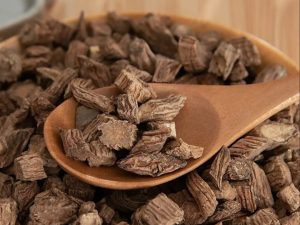
1. Black Shun Slices: Longitudinal slices, wider at the top and narrower at the bottom, 1.7–5 cm long, 0.9–3 cm wide, and 0.2–0.5 cm thick. The outer skin is blackish-brown; the cross-section is dark yellow, oily, glossy, and translucent, with longitudinal vascular bundles. The texture is hard and brittle, and the fracture surface is horn-like. Slight odor; bland taste.
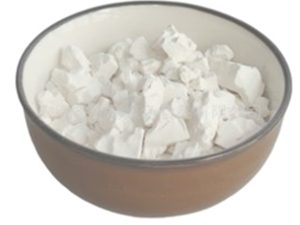
2. White Fu-pian: Devoid of outer skin, yellowish-white, translucent, and approximately 0.3 cm thick.
3. Processed Fu-pian: Resembles Black Shun-pian or White Fu-pian in shape, with a bulging, yellowish-brown surface and a loose, brittle texture. It has a faint odor and a bland taste.
4. Light-Colored Aconite Slices: Longitudinal slices, wider at the top and narrower at the bottom, 1.75 cm long, 0.9–3 cm wide, and 0.2–0.5 cm thick. The outer skin is brown. The cross-section is brown, translucent, and contains longitudinal vascular bundles. The texture is hard, and the fracture surface is horn-like. It has a faint odor and a mild taste, with no numbing sensation on the tongue when tasted.
Botanical Information
Botanical Classification
Aconitum, a plant of the genus Aconitum in the Ranunculaceae family.
Morphological Characteristics
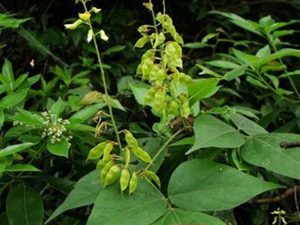
A perennial herb, 60–150 cm tall. The tuber is obconical, 2–4 cm long and 1–1.6 cm in diameter; in cultivated varieties, the lateral roots are typically enlarged, reaching up to 5 cm in diameter, with a blackish-brown outer skin. The stem is erect, sparsely covered with short, recurved soft hairs from the middle upward. Leaves are alternate; lower stem leaves wither at flowering, while middle leaves have long petioles;petioles 1–2.5 cm long, sparsely covered with short soft hairs; leaf blades pentagonal, 6–11 cm long, 9–15 cm wide, base shallowly cordate, 3-lobed almost to the base, the central lobe broadly rhomboid, obovate-rhomboid, or rhomboid, apex acute or shortly acuminate, nearly pinnately lobed, with two pairs of secondary pinnate lobes,oblique-triangular, with 1–3 teeth, occasionally entire; lateral entire lobes unequally and deeply bifid, margins of each lobe coarsely toothed or notched, upper surface sparsely covered with short appressed hairs, lower surface usually sparsely covered with short soft hairs only along the veins, leathery or papery.Inflorescences are terminal racemes, 6–25 cm long; the rachis and pedicels are covered with short, recurved, appressed pubescence; lower bracts are 3-lobed, while upper bracts are lanceolate; pedicels are 1.5–5.5 cm long; bracteoles are borne on the middle to lower part of the pedicel;Flowers are bisexual and bilaterally symmetrical; sepals are 5, petal-like; the upper sepal is tall and helmet-shaped, 2–2.5 cm tall, with a length from the base to the beak of 1.7–2.2 cm; the lower margin is slightly concave, and the beak is inconspicuous; the lateral sepals are 1.5–2 cm long, bluish-purple, and covered with short soft hairs on the outer surface;Petals 2, each ca. 1.1 cm long. Lip ca. 6 mm long, slightly concave; spur 1–2.5 mm long, usually curled, glabrous; stamens numerous, filaments with 2 small teeth or entire, glabrous or pubescent; carpels 3–5, pubescent, rarely glabrous; capsule 1.5–1.8 cm long.Seeds are numerous, trigonal, 3–3.2 cm long, with both surfaces densely covered with transverse membranous wings. Flowering period: August–September; fruiting period: September–October.
Distribution Area
Distributed in southern Liaoning, Jiangsu, Zhejiang, Anhui, Jiangxi, Shandong, Henan, Hubei, Hunan, northern Guangdong, Guangxi, Sichuan, Guizhou, Yunnan, Shaanxi, and Gansu. It is primarily cultivated in Sichuan. It is also cultivated in Hubei, Hunan, Yunnan, Shaanxi, and other regions.
Growth Habits
It prefers a warm, humid climate, is cold-tolerant, but is sensitive to high temperatures and waterlogging. It can be cultivated in both flatland and hilly areas. It is best grown in sandy loam or purple soil that is deep, loose, fertile, and well-drained, where rice or corn has been rotated for 4–5 years or more; continuous cropping should be avoided.
Propagation Methods
Propagation is primarily through Aconite tubers.
Cultivation Techniques
Selecting varieties developed by the Sichuan Institute of Traditional Chinese Medicine—Chuanyao No. 1 (pumpkin-leaf type), Chuanyao No. 6 (loofah-leaf type), and Chuanyao No. 5 (small-flowered leaf type)—yields higher production.Early to mid-December is the optimal planting period. Dig holes spaced 16 cm apart in both rows and between plants; plant one tuber per hole. For every 10 holes, plant an additional 1–2 tubers outside the rows as replacements in case of plant loss. Immediately after planting, dig furrows and mound the soil from the furrows onto the ridges to cover the Aconite tubers with a layer approximately 6 cm thick. Approximately 8,500–10,000 Aconite tubers can be planted per mu.
Pest and Disease Control
1. White Mold: This disease is prone to occur during the hot and rainy summer months. Dig up and remove diseased plants and soil, sprinkle lime to disinfect the affected holes, and water the holes around neighboring plants with a 500-fold dilution of 50% carbendazim.
2. Downy Mildew: Thoroughly pull out diseased plants during the seedling stage, and spray the upper and lower surfaces of the leaves with a 1:1:150 Bordeaux mixture.
3. Leaf spot disease: Occurs from April to September. Spray once every 10–15 days with a 500-fold dilution of carbendazim suspension concentrate or a 1:1:150 Bordeaux mixture. For wilt disease, soak seeds in a 500-fold dilution of 40% carbendazim suspension concentrate for 3 hours before planting.
4. Powdery mildew, which affects the leaves, can be controlled by spraying the leaf surfaces with a 2,000-fold dilution of 25% triazole suspension.
5. Black velvet beetle; its larvae damage aconite.
6. Aconite delphinium aphid, occurring from May to October.
7. Black leafroller moth, occurring from April to October.