August Melon is the name of a traditional Chinese medicine. It refers to the fruits of the plants Holboellia fargesii Reab. [Stauntonia longipes Hemsl.], Holboellia latifolia Wall., and Holboellia parviflora (Hemsl.) Gagnep. [Stauntornia parviflora Hemsl.]—all belonging to the genus Holboellia in the family Lardizabalaceae.It has the effects of clearing heat, draining dampness, regulating qi, and promoting blood circulation. It is primarily used to treat scanty and reddish urine, dysuria with turbid discharge, edema, rheumatic arthralgia, trauma, insufficient lactation, hernia pain, and testicular inflammation.

August Melon
August Melon is the name of a traditional Chinese medicine. It refers to the fruits of the plants Holboellia fargesii Reab. [Stauntonia longipes Hemsl.], Holboellia latifolia Wall., and Holboellia parviflora (Hemsl.) Gagnep. [Stauntornia parviflora Hemsl.]—all belonging to the genus Holboellia in the family Lardizabalaceae.It has the effects of clearing heat, draining dampness, regulating qi, and promoting blood circulation. It is primarily used to treat scanty and reddish urine, dysuria with turbid discharge, edema, rheumatic arthralgia, trauma, insufficient lactation, hernia pain, and testicular inflammation.
Chinese Name : 八月瓜
Aliases : Ox Kidney Fruit, June Melon, Small Eight-Gourd, August Fruit, Wild Man’s Gourd
Nature, Flavor & Meridian Tropism : Bitter in taste, cool in nature; enters the Bladder, Heart, and Liver meridians
Benefits & Efficacy
Benefits
It has the effects of clearing heat, draining dampness, regulating qi, and promoting blood circulation.
Indications
It is primarily used to treat scanty and reddish urine, dysuria with turbid discharge, edema, rheumatic arthralgia, trauma, insufficient lactation, hernia pain, and orchitis.
Usage and Dosage
Internal use: Decoct as a soup, 3–9 g.
Relevant Discussions
1. *Commonly Used Tibetan Herbal Medicines*: “Promotes blood circulation and relieves dysuria; regulates qi and alleviates pain. Mainly used for difficult urination, difficult childbirth, and rheumatic beriberi. Externally applied to neutralize snake and insect venoms.”
2. *Medicinal Herbs of Yunnan*: “Regulates qi and relieves pain. Mainly used to treat hernia pain, uterine prolapse, and orchitis.”
3. *Compendium of Chinese Medicinal Herbs*: “Drains dampness, promotes lactation, detoxifies, and relieves pain. Used to treat difficulty urinating, edema caused by beriberi, insufficient lactation, stomach pain, rheumatic bone pain, and trauma.”
Applications
Notes
Patients requiring treatment with Chinese herbal medicine should first consult a licensed Traditional Chinese Medicine (TCM) hospital, where a TCM practitioner will conduct a professional pattern differentiation and prescribe an herbal formula.
Processing & Preparation
Harvesting & Processing
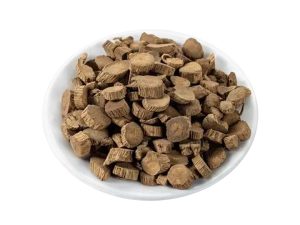
Harvested in the fall when the fruit ripens, then sun-dried.
Storage Methods
Store in a cool, dry place.
Crude Drug Identification
Botanical Information
Botanical Classification
Species of the genus *Cucumis* in the family Lardizabalaceae: *Wufengteng*, *Broad-leaved August Melon*, and *Small-flowered August Melon*.
Morphological Characteristics
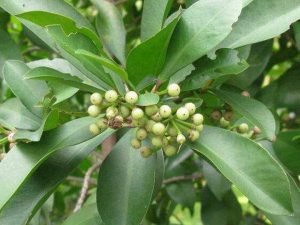
1. Wufengteng: An evergreen woody vine, 3–8 m long. The bark is yellowish-brown, and the branches are cylindrical. The leaves are palmately compound; the leaflets are narrowly oblong, obovate-lanceolate to narrowly lanceolate, varying greatly in size, with a small, short apex, a wedge-shaped base, a grayish-white underside, inconspicuous lateral veins, and entire margins.Flowers are unisexual, with male and female flowers on the same plant, arranged in corymbs clustered in the leaf axils; each main axis bears 1–3 flowers; bracteoles are small and inconspicuous;Male flowers are few, greenish-white, and relatively large; the calyx has 6 unequal sepals that are nearly fleshy, oblong-spatulate, with a blunt and thickened apex; the petals (nectaries) are scale-like, nearly circular or triangular; the stamens are shorter than the calyx, with filaments slightly fused at the base; the anthers are shorter than the filaments, and the connectives form slender, pointed projections; the rudimentary pistils are club-shaped;Female flowers resemble male flowers; they are purple and smaller, with obovate-rounded sepals (the inner whorl being smaller), triangular petals, and anther-like structures on the reduced stamens; numerous ovules are arranged in 5 rows. The fruit is purple, oblong, and bluntly rounded at the apex. Flowering occurs from April to May, and fruiting from June to October.
2. Broad-leaved August Melon: An evergreen vine-like shrub, growing up to 5 m long. Palmate compound leaves; leaflets thick and leathery, ovate or obovate-oblong to elliptic, apex acuminate or caudate-acuminate, base broadly cuneate or rounded, upper surface dark glossy green, lower surface pale green.Flowers are arranged in corymbs clustered in the leaf axils; they are highly fragrant, unisexual, and monoecious. Male flowers are greenish-white, narrowly oblong, with 6 petals; stamens are 1.2 cm long, and anthers are shorter than filaments. Female flowers are purple, with 6 petals, 6 staminodes, 3 pistils, and a 3-chambered ovary.Fruits are usually clustered in bunches of 2–3, irregularly oblong, sausage-shaped, purplish-red when ripe, and contain numerous seeds. Flowering period: May–July; fruit ripening period: August–September.
3. Small-flowered August Melon: A climbing shrub.Leaves are pinnately compound with three leaflets, thin and leathery; leaflets are lanceolate or oblong-lanceolate, with a long acuminate or caudate apex, a blunt or rounded base, a smooth upper surface, and prominent veins on the lower surface. Flowers (only male flowers observed) are small and fleshy, often forming short-stalked corymbs that cluster in the leaf axils; flower stalks are slender; bracts are nearly circular;the outer whorl of three sepals is thickened, ovate, and concave, while the inner whorl of three is thinner and lanceolate; there are six stamens, with the inner ones equal in length to the sepals and the alternate ones slightly shorter; the filaments are free, fleshy, and cylindrical; the anthers are short, with adjacent locules and non-protruding connectives. The fruit is berry-like, elliptical, and purplish-red.
Distribution Area
1. Five-wind Vine: Distributed in Zhejiang, Anhui, Fujian, Hubei, Guangdong, Sichuan, Yunnan, Shaanxi, and other areas. 2. Broad-leaved August Melon: Distributed in Sichuan, Guizhou, Yunnan, Tibet, and other areas. 3. Small-flowered August Melon: Distributed in southeastern Yunnan.