Mawei Lian is the name of a traditional Chinese medicine. It consists of the rhizomes and roots of plants from the genus Thalictrum in the Ranunculaceae family, specifically Thalictrum foliolosum DC. (multileaf meadowsweet), T. baicalense Turez. (Baikal meadowsweet), or T. delavayi Franch. (Delavay’s meadowsweet). It has the therapeutic effects of clearing heat, drying dampness, purging fire, and detoxifying.It is primarily used to treat damp-heat-induced diarrhea and dysentery, jaundice, restlessness due to febrile diseases, coughs caused by lung heat, abscesses, swellings, and toxic sores, as well as redness, swelling, and pain in the eyes.

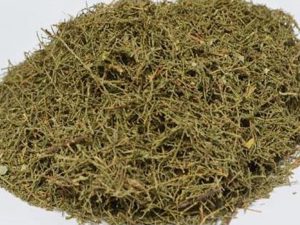
Horsetail
Mawei Lian is the name of a traditional Chinese medicine. It consists of the rhizomes and roots of plants from the genus Thalictrum in the Ranunculaceae family, specifically Thalictrum foliolosum DC. (multileaf meadowsweet), T. baicalense Turez. (Baikal meadowsweet), or T. delavayi Franch. (Delavay’s meadowsweet). It has the therapeutic effects of clearing heat, drying dampness, purging fire, and detoxifying.It is primarily used to treat damp-heat-induced diarrhea and dysentery, jaundice, restlessness due to febrile diseases, coughs caused by lung heat, abscesses, swellings, and toxic sores, as well as redness, swelling, and pain in the eyes.
Chinese Name : 马尾连
Latin Name : Radix et Rhizoma Thalictri
Aliases : Horsetail Coptis
Authentic Producing Area : Widely distributed throughout the country, with greater abundance in the northwest, southwest, and northeast
Nature, Flavor & Meridian Tropism : Bitter in taste, cold in nature; enters the Heart, Lung, Liver, Gallbladder, and Large Intestine meridians
Benefits & Efficacy
Benefits
Clears heat and dries dampness; purges fire and detoxifies.
Indications
1. Diarhea and dysentery caused by damp-heat, jaundice: This herb is bitter and cold in nature and is effective at clearing heat and drying dampness; its effects are similar to those of Coptis. 2. Restlessness in febrile diseases: This herb, being bitter and cold, enters the Heart meridian and can purge Heart fire to relieve restlessness. 3. Cough due to Lung heat: This herb enters the Lung meridian to purge Lung fire. 4. Boils, sores, swellings, and toxic infections; redness, swelling, and pain in the eyes: The *Inner Canon: Plain Questions* states, “All pain, itching, and sores belong to the Heart.” This herb enters the Heart Meridian to clear Heart fire. 5. Conditions diagnosed in Western medicine as bacterial dysentery, acute or chronic enteritis due to damp-heat in the large intestine; jaundice due to damp-heat in the liver and gallbladder; eczema due to internal accumulation of damp-heat; and acute conjunctivitis due to liver fire rising upward.
Usage and Dosage
Oral use: Decoct and take 6–12 g. Use 15–30 g of the whole herb.
Precautions
Use with caution in patients with spleen-stomach deficiency-cold.
Chemical Constituents
This herb contains tangsongoside, berberine, berberine hydrochloride, palmatifolide, and yuogenine, among others. Its aerial parts contain alkaloids, flavonoid glycosides, saponins, cardiotonic glycosides, and vitamin C.
Pharmacological Actions
An aqueous decoction of this herb exhibits inhibitory effects against Corynebacterium diphtheriae, Staphylococcus aureus, Proteus spp., and Shigella flexneri; the naphthodine it contains has an antihypertensive effect; this herb exhibits acetylcholine-like activity and possesses cholagogue, antitumor, leukocyte-enhancing, antipyretic, diuretic, and sedative effects.
Relevant Discussions
*Supplement to the Compendium of Materia Medica* states: “It removes pathogenic heat from beneath the skin, between the membranes, and from the tendons and meridians; it is used for childhood colds and smallpox.”
Applications
Clinical Applications
1. To treat diarrhea and dysentery caused by damp-heat, it can be combined with herbs such as Scutellaria baicalensis, Pueraria root, and Pulsatilla chinensis. To treat jaundice caused by damp-heat, it can be combined with herbs such as Artemisia capillaris, Gardenia, and Phellodendron.
2. To treat restlessness and agitation caused by febrile diseases, it can be combined with herbs such as Gardenia (Zhi Zi) and Bamboo Leaves (Zhu Ye).
3. To treat coughs caused by lung heat, this herb enters the Lung Meridian to clear lung fire; it can be combined with herbs such as Scutellaria baicalensis (Huang Qin), Mulberry Bark (Sang Bai Pi), and Lycium Bark (Di Gu Pi).
4. To treat abscesses, sores, swelling, and pain, as well as redness and swelling of the eyes, it can be combined with herbs such as Dandelion (Pu Gong Ying) and Wild Chrysanthemum (Ye Ju Hua).
Processing & Preparation
Harvesting & Processing
Harvest from October to December; sun-dry until 80% dry, rub off the outer layer of brown cork bark, then sun-dry completely.
Storage Methods
Store in a well-ventilated, dry place.
Crude Drug Identification
Properties of Crude Drugs
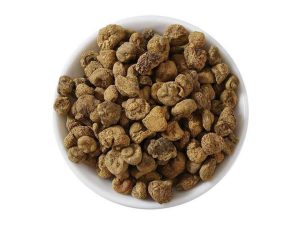
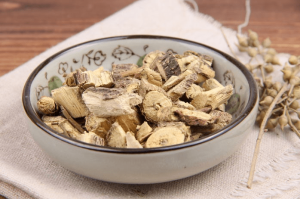
1. Multifoliate Tang Songcao: The rhizome grows horizontally and consists of several to over ten connected nodes. Each node bears a circular, hollow-like stem scar approximately 1 cm in diameter. Several to over ten fine roots grow densely from the underside of the rhizome, each 3 mm in diameter; the surface is grayish-brown; the texture is hard and easily broken, with a circular, golden-yellow pith visible at the center of the fracture. It has a faint odor and a slightly bitter taste.
2. Baikal Tang Songcao: Dozens of fine roots grow densely on the rhizome. The surface is yellowish-brown, and the fine roots are soft and twisted.
Botanical Information
Botanical Classification
Species in the genus *Tansongcao* of the Ranunculaceae family include *Tansongcao* (multifoliate), *Baikal Tansongcao*, and *Pianchi Tansongcao*.
Morphological Characteristics
1. Many-leaved Tang Song Grass: A perennial herb, 90–200 cm tall. The entire plant is glabrous. The stem is erect, with long branches in the upper part. Leaves are alternate; petioles are 1.5–5 cm long, with narrow sheaths; leaves from the middle of the stem upward are three-times ternate or pinnately compound, with leaf blades up to 36 cm long;Leaflets are herbaceous; the terminal leaflet is rhomboid-elliptic or ovate, 1–2.5 cm long and 5–15 mm wide. The apex is obtuse or rounded; the base is shallowly cordate or rounded; the leaflet is shallowly 3-lobed, with lobes bearing a few blunt teeth, each tooth ending in a small point; reticulate veins are slightly prominent; the underside of the leaf is slightly powdery green.The panicle is nearly corymbose, profusely branched, and approximately 20 cm long; the flowers are hermaphroditic and numerous, with 4 petal-like sepals that are narrowly elliptic, 3–4.5 mm long, pale yellow-green or light purple, and early deciduous;no petals; numerous stamens, 6–7 mm long, with filaments thread-like; anthers narrowly oblong, about 2.5 mm long, with a short point at the apex; 4–6 carpels, sessile, with a style nearly as long as the ovary, curved, and a linear stigma. Achenes are spindle-shaped, about 3 mm long, with 8 longitudinal ribs and a persistent style.Flowering period: August–September; fruiting period: September–October.
2. Baikal Tang Song Grass: A perennial herb, 45–80 cm tall. The entire plant is glabrous. The stem is erect and branched in the upper part. Leaves are alternate; petioles are 1–2.5 cm long, each with a narrow sheath at the base; stipules are narrow and membranous; middle stem leaves are ternate, with short petioles;leaf blades 9–16 cm long; leaflets herbaceous; terminal leaflet broadly rhomboid, flattened rhomboid, or rhomboid-obovate, 1.8–4.5 cm long, 2–5 cm wide, with a broadly cuneate or nearly rounded base, shallowly 3-lobed, lobes with rounded teeth; veins raised on the abaxial surface, reticulate veins slightly prominent.Compound, unbranched corymbs are nearly conical, 5–10 cm long; flowers are bisexual, with slender pedicels 4–9 mm long; sepals are 4, petal-like, elliptic or ovate, 2–3 mm long, greenish-white, and early deciduous;no petals; stamens 10–20, 2.5–5 mm long, filaments nearly as wide as anthers at the upper part and narrowing to a thread-like base; anthers oblong, ca. 0.8 mm long;3–7 carpels; style short, ca. 0.5 mm long; stigma elliptic, 0.2–0.3 mm long. Achenes ovoid or subellipsoid, slightly flattened, ca. 3 mm long, with 8 longitudinal ribs; fruit stalk ca. 0.2 mm long. Flowering period: May–June; fruiting period: June–July.
Distribution Area
1. Multifoliate Tang Song Grass: Distributed in Sichuan, Yunnan, and Tibet. 2. Baikal Tang Song Grass: Distributed in Heilongjiang, Jilin, Hebei, Shanxi, Shaanxi, Gansu, Qinghai, Henan, and Tibet.