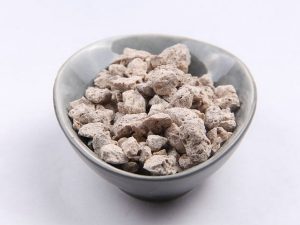
Ke Lang Mu is the name of a traditional Chinese medicine. It consists of the whole plant of Colonafloribunda (Wall.) Craib [Grewiaflorbunda Wall.], a member of the Tiliaceae family. It is distributed in southern Yunnan. It has the therapeutic effects of clearing heat, cooling the blood, promoting the eruption of rashes, and detoxifying. It is commonly used for conditions such as incomplete eruption of maculopapular rashes, failure of measles to erupt, abscesses, swellings, and toxic sores where pus has formed but has not yet ruptured.

Ke Langmu
Ke Lang Mu is the name of a traditional Chinese medicine. It consists of the whole plant of Colonafloribunda (Wall.) Craib [Grewiaflorbunda Wall.], a member of the Tiliaceae family. It is distributed in southern Yunnan. It has the therapeutic effects of clearing heat, cooling the blood, promoting the eruption of rashes, and detoxifying. It is commonly used for conditions such as incomplete eruption of maculopapular rashes, failure of measles to erupt, abscesses, swellings, and toxic sores where pus has formed but has not yet ruptured.
Chinese Name : 柯榔木
Aliases : Large-leaved Fire Rope, Wild Fire Rope, Large-blister Fire Rope, Large-hairy-leaved Fire Rope
Nature, Flavor & Meridian Tropism : Bitter in taste, cold in nature
Benefits & Efficacy
Benefits
Clears heat and cools the blood; promotes the eruption of rashes and detoxifies.
Indications
Used for rashes that fail to erupt properly, measles that do not break out, and abscesses, swellings, and toxic sores where pus has formed but the lesion has not ruptured.
Usage and Dosage
Internal use: Decoct 9–15 g. External use: Apply an appropriate amount, pounded into a paste and applied topically.
Applications
Processing & Preparation
Harvesting & Processing
Can be harvested year-round; wash thoroughly, cut into sections, and use fresh or sun-dry.
Crude Drug Identification
Botanical Information
Botanical Classification
A plant of the Tiliaceae family, known as “Yidanchai.”
Morphological Characteristics
Yidanchai: A small tree, 8–10 m tall. Young branches are covered with grayish-brown stellate soft hairs. Simple leaves are alternate; petioles are 1.5–5.5 cm long;leaf blades broadly obovate-orbicular or nearly orbicular, 14–21 cm long, 11–16 cm wide, with an acute or acuminate apex, a slightly cordate base, and sometimes 3–5 shallow lobes near the apex; both surfaces covered with coarse, grayish-brown stellate hairs, denser on the underside; 5–7 basal veins, with reticulate veins prominent on the underside.Terminal panicles up to 27 cm long; flowers small, 8 mm in diameter; sepals lanceolate, ca. 4 mm long, covered with short stellate hairs on the outside;petals are yellow, spatulate, approximately as long as the sepals, with glands at the base; stamens are numerous, approximately as long as the petals; the ovary is 3–5-chambered, with a slender, hairy style, and 2–4 ovules per chamber. The capsule is about 5 mm in diameter, with 3–5 wings, each wing approximately 5 mm long. Flowering occurs in June, and fruiting in November.
Distribution Area
Distributed in southern Yunnan.