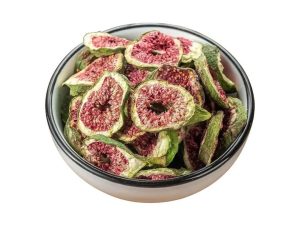
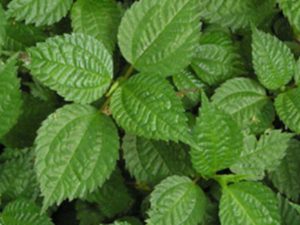
Duijieye, a name in traditional Chinese medicine. It refers to the leaves or roots of Pteracanthus latus (Nees) Bremek., a plant in the Acanthaceae family. It is distributed in Guizhou, Yunnan, and other regions. It has the effects of clearing heat and detoxifying, as well as promoting blood circulation and relieving pain. It is commonly used to treat abscesses, swellings, and toxic sores, as well as pain caused by overwork or injury.
Pteracanthus Leaf
Duijieye, a name in traditional Chinese medicine. It refers to the leaves or roots of Pteracanthus latus (Nees) Bremek., a plant in the Acanthaceae family. It is distributed in Guizhou, Yunnan, and other regions. It has the effects of clearing heat and detoxifying, as well as promoting blood circulation and relieving pain. It is commonly used to treat abscesses, swellings, and toxic sores, as well as pain caused by overwork or injury.
Chinese Name : 对节叶
Nature, Flavor & Meridian Tropism : Pungent in taste, cool in nature. Enters the Heart Meridian
Benefits & Efficacy
Benefits
Clears heat and detoxifies; promotes blood circulation and relieves pain.
Indications
Boils, swellings, and toxic sores; pain from overwork or injury.
Usage and Dosage
Internal use: Decocted as a soup, 6–15 g; or steeped in wine. External use: Apply an appropriate amount of the fresh herb, pounded and applied as a poultice.
Relevant Discussions
*Guizhou Herbal Medicine*: “Clears heat and detoxifies; promotes blood circulation and relieves pain. Primarily used to treat abscesses, swellings, and toxic sores, as well as pain from overwork or injury.”
Applications
Related Compatibility
1. For treating unexplained swellings and toxic sores: Pound the leaves of Duijieye into a paste and apply externally; it may also be simmered in water and taken orally. (*Guizhou Herbal Medicine*)
2. For treating pain from overwork: 30 g of Duijieye root and 15 g of Siberian ginseng. Steep in wine and consume. (*Guizhou Herbal Medicine*)
Processing & Preparation
Harvesting & Processing
Roots: Harvested in summer and fall; wash, cut into sections, and sun-dry; leaves: Harvested in summer and fall; use fresh.
Crude Drug Identification
Botanical Information
Botanical Classification
A plant of the Acanthaceae family, Winged-stalk Indigo.
Morphological Characteristics
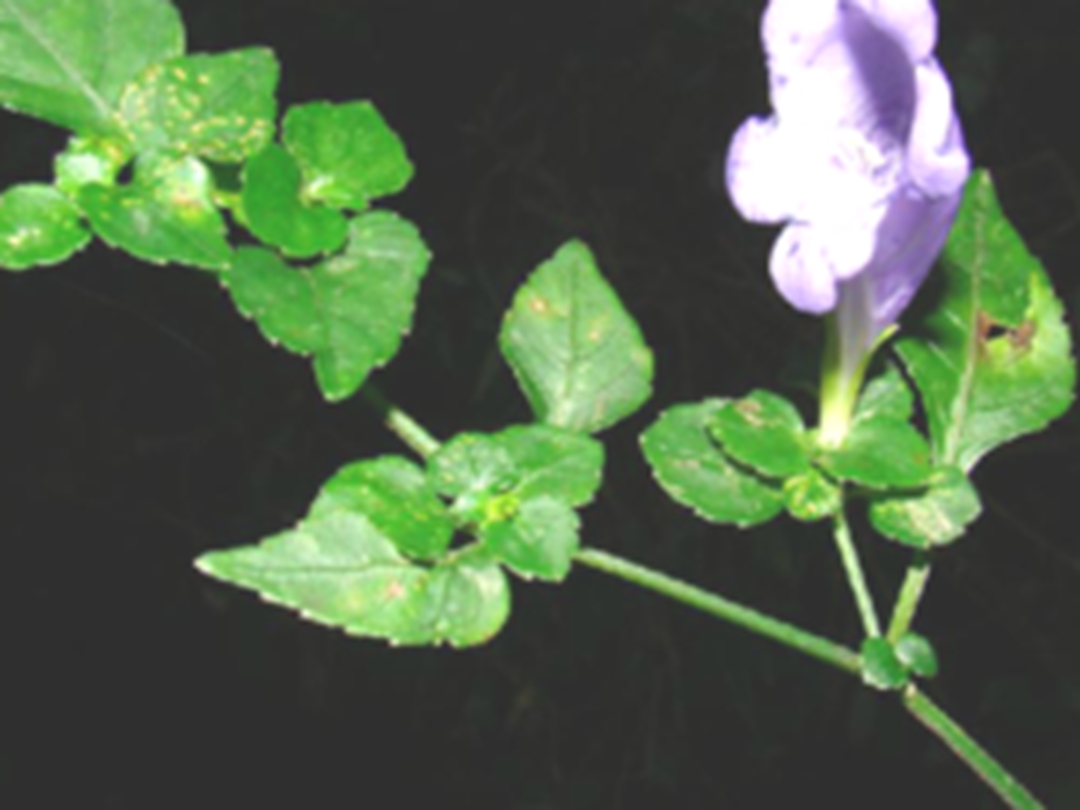
Perennial herb. Possesses creeping stems that root at the nodes; highly branched; stems are slender, quadrangular, glabrous or with fine pubescence along the ridges.Leaves are ovate, slightly unequal in size, 3.5–8 (–10) cm long, with a long, acuminate apex, a wedge-shaped base that gradually narrows, and margins bearing 4–5 (–7) rounded teeth; the upper surface is slightly pubescent or glabrous, with fine, thread-like lactifers and 5–6 pairs of lateral veins;petioles are about 1.5 cm long, winged toward the blade. The spike is one-sided, usually zigzagged, with flowers solitary or in pairs;Bracts are leaf-like, ovate or nearly cordate, decreasing in size toward the apex, with 3 veins or pinnate venation; bracteoles are linear-oblong, minute or absent; the calyx is 1–1.5 cm long, enlarging to 2 cm at fruiting, 5-lobed, with linear lobes that are completely glabrous, and fine, linear stipules arranged in a longitudinal row.The corolla is pale purple or blue-purple, nearly erect, about 3.5 cm long; the corolla tube is cylindrical and equal in length to the expanded portion; the corolla lobes are 5, short and small, rounded; the filaments and style are glabrous. The capsule is 1.2–1.8 cm long, glabrous, and contains 4 seeds. The seeds are ovate, covered with fine pubescence, and have a small basal region.
Distribution Area
Distributed in Guizhou, Yunnan, and other areas.