Bidens is a commonly used medicinal herb for clearing heat and detoxifying; it consists of the dried aerial parts of Bidens bipinnata L., a plant in the Asteraceae family.It is produced in most regions of China. It has the effects of clearing heat and detoxifying, dispelling wind and dampness, and promoting blood circulation to reduce swelling. It is used to treat sore throat, diarrhea and dysentery caused by damp-heat, jaundice with dark urine, rheumatic pain, abdominal pain from intestinal abscesses, swollen and toxic sores, snake and insect bites, and trauma from falls or blows.

Bidens
Bidens is a commonly used medicinal herb for clearing heat and detoxifying; it consists of the dried aerial parts of Bidens bipinnata L., a plant in the Asteraceae family.It is produced in most regions of China. It has the effects of clearing heat and detoxifying, dispelling wind and dampness, and promoting blood circulation to reduce swelling. It is used to treat sore throat, diarrhea and dysentery caused by damp-heat, jaundice with dark urine, rheumatic pain, abdominal pain from intestinal abscesses, swollen and toxic sores, snake and insect bites, and trauma from falls or blows.
Chinese Name : 鬼针草
Aliases : Ghost Bone Needle, Granny’s Needle
Authentic Producing Area : Found in most regions of China
Nature, Flavor & Meridian Tropism : Bitter in taste, slightly cold in nature. Enters the Lung, Heart, and Stomach meridians
Benefits & Efficacy
Benefits
It has the effects of clearing heat and detoxifying, dispelling wind and removing dampness, and promoting blood circulation to reduce swelling.
Indications
Mainly used to treat sore throat, diarrhea and dysentery caused by damp-heat, jaundice with dark urine, rheumatic arthralgia, abdominal pain due to intestinal abscess, sores and toxic swellings, snake and insect bites, and trauma from falls or blows.
Usage and Dosage
Internal use: Decoct 15–30 g in water. External use: Apply an appropriate amount—pounded into a paste and applied to the affected area, or apply the juice directly; alternatively, decoct in water for steam baths or washing.
Precautions
While using Devil’s Needle, avoid consuming spicy, greasy, or irritating foods to prevent affecting its therapeutic efficacy.
Chemical Constituents
It primarily contains flavonoids such as hyperoside, isoocananin 7-O-glucoside, and haishengchuoside; polyacetylene glycosides such as Polygonum polyacetylene glycosides I–IV; and also contains triterpenes, sterols, organic acids, lipids, alkaloids, and tannins.
Pharmacological Actions
This product possesses antimicrobial, hepatoprotective, and anti-inflammatory effects.
Relevant Discussions
1. *Supplement to the Materia Medica*: “Mainly used for snake and spider bites; pound into a paste and apply topically, or pound to extract juice and take orally.”
2. *Compendium of Materia Medica*: “Apply topically to scorpion and centipede stings.”
3. *Illustrated Compendium of Chinese Medicinal Plants*: “Treats dysentery, sore throat, dysphagia, regurgitation, pyloric spasm, and esophageal dilation; possesses detoxifying, antidiarrheal, and antipyretic effects.”
Applications
Clinical Applications
1. For acute gastroenteritis: 15–30 g of Prickly Needle Grass and 9 g of Plantain Herb. Decoct in water and drink. For vomiting, add 5 slices of ginger; for abdominal pain, add 2 pieces of rice malt.
2. For simple indigestion in children: 3–5 fresh Prickly Needle Grass plants.Decoct into a concentrated decoction; place the liquid and residue in a bucket and use the steam to wash the child’s feet while still hot. Generally, perform this treatment 3–4 times, with each session lasting about 5 minutes. For children aged 1–5, steam the soles of the feet; for those aged 6–15, steam the tops of the feet. For severe diarrhea, the steaming area may be extended appropriately up the legs.
3. Treatment for acute jaundice-type infectious hepatitis: 100 g of Devil’s-needle and 60 g of Coin-leaf. Decoct in water and take orally.
4. Treatment for boils and abscesses: Chop the whole Devil’s-needle plant into small pieces, add 75% ethanol or white liquor, and steep for about 2–3 days before applying topically to the affected area. (Formulas 1–4 are from *Compendium of Whole-Plant Chinese Herbal Medicines*)
Related Compatibility
1. Devil’s-needle combined with Sophora root: Both herbs are bitter and cold in nature, used to clear heat and eliminate toxins. Devil’s-needle also disperses wind-heat in the Lung Meridian, promotes blood circulation, and reduces swelling; Sophora root, being bitter and cold, possesses strong descending and purging properties, excelling at clearing lung fire, resolving heat toxins, soothing the throat, alleviating swelling and pain, and directly counteracting the upward rise of fire toxins—making it a key herb for treating sore throat and swelling.When used together, these two herbs are highly effective at clearing heat, detoxifying, relieving throat discomfort, and reducing swelling and pain. They are particularly suitable for conditions involving ascending fire toxins accompanied by swelling and pain.
2. Devil’s Needle combined with Coptis: Both herbs can clear heat, detoxify, and dry dampness. Devil’s Needle is also particularly effective at promoting blood circulation and reducing swelling; Coptis, with its strong bitter and cold nature, is highly potent at clearing heat, drying dampness, purging fire, and detoxifying.When combined, these two herbs demonstrate outstanding efficacy in clearing heat, drying dampness, purging fire, and detoxifying. They are suitable for treating throat swelling and pain caused by the accumulation of damp-heat and fire toxins, as well as conditions such as diarrhea and dysentery, jaundice with dark urine, intestinal abscesses with abdominal pain, and the treatment of boils and toxic swellings.
3. Devil’s-claw combined with Artemisia capillaris: Devil’s-claw functions to detoxify, dispel dampness, promote blood circulation, and reduce swelling; Artemisia capillaris excels at clearing heat, draining dampness, promoting bile secretion, and alleviating jaundice, making it a key herb for treating jaundice. When combined, these two herbs demonstrate remarkable efficacy in clearing heat, detoxifying, draining dampness, and alleviating jaundice. They are particularly suitable for jaundice with red urine resulting from the intermingling of damp-heat and fire toxins, or for diarrhea, dysentery, and abdominal pain.
Medicinal Identification
Devil’s-claw and Polygonum cuspidatum: Both herbs are bitter and cold in nature and can clear heat, eliminate toxins, promote blood circulation, and reduce swelling. They are similarly effective for treating jaundice with dark urine, intestinal abscesses with abdominal pain, rheumatic arthralgia, boils and toxic swellings, snake and insect bites, and trauma-induced injuries.However, Devil’s-claw has a slightly cold nature and can also disperse wind-heat in the Lung Meridian; it is commonly used to treat wind-heat common colds and sore throats. Polygonum cuspidatum, on the other hand, is bitter and cold with a strong heat-clearing effect; it can clear lung heat, resolve phlegm, and relieve coughs, making it suitable for treating lung-heat coughs with excessive phlegm. Furthermore, its ability to drain dampness, alleviate jaundice, clear heat, and eliminate toxins is stronger than that of Devil’s-claw, and it is frequently used for dysuria with turbid urine, leukorrhea, and burns from fire or water;It also excels at dispersing blood stasis and relieving pain, and is frequently used to treat amenorrhea, masses, and traumatic injuries; furthermore, it has a laxative effect to relieve constipation caused by heat accumulation.
Related Medicines
Fu’an Granules.
Notes
Patients requiring treatment with traditional Chinese medicine should first consult a licensed TCM hospital, where a TCM practitioner will conduct a professional diagnosis and prescribe the appropriate herbal formula.
Processing & Preparation
Harvesting & Processing
Harvest during the summer flowering season and sun-dry.
Processing Methods
Remove impurities and cut into pieces.
Crude Drug Identification
Properties of Crude Drugs
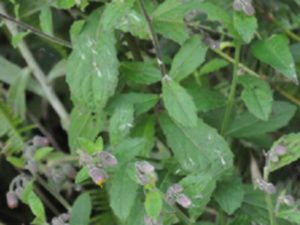
The stem is quadrangular, branched, 30–80 cm long, and 0.2–0.6 cm in diameter; the surface is yellowish-green or brownish-yellow, with longitudinal ridges; the nodes are slightly swollen and purplish; the texture is light and tough, breaking easily; the fracture surface is yellowish-white, with a central pith.Leaves are opposite, dark-colored or yellowish-green, often shriveled and fragmented; when intact, they are twice pinnately deeply lobed when spread out, with irregular, sparse teeth along the margins, and covered with short soft hairs on both surfaces. The capitula are 0.6–1 cm in diameter and yellow. The achenes are flattened and ribbed, approximately 0.15 cm long, with 3–4 awns at the apex or the awns may be absent. The taproot is inconspicuous, with fibrous roots.Slight odor; bitter taste.
Properties of Processed Slices
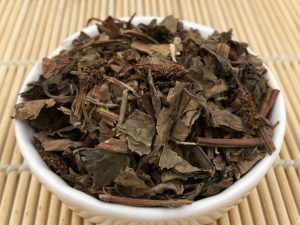
Irregular small segments consisting of a mixture of stems, leaves, and flowers.
Botanical Information
Botanical Classification
Xanthium, a plant of the Asteraceae family.
Morphological Characteristics
An annual herb, 50–100 cm tall; middle and lower stem leaves opposite; petioles 2–6 cm long; leaf blades 5–14 cm long, deeply twice pinnately lobed, with lobes further pinnately divided; small lobes triangular or flagellate-lanceolate, apex acute or acuminate, margins with irregular fine or blunt teeth, both surfaces slightly pubescent;upper leaves are alternate and pinnately lobed. Heads 5–10 cm in diameter; peduncles 2–10 cm long; phyllaries linear-elliptic, apex acute or obtuse, covered with fine short hairs; ray florets yellow, usually with 1–3 underdeveloped ones;tubular florets are yellow, well-developed, about 5 mm long, with 5 lobes. Achenes are linear, 1–2 cm long, about 1 mm wide, 3–4-angled, and pubescent; the pappus at the apex consists of 3–4 awns, 2–5 mm long. Flowering period: August–September; fruiting period: September–November.
Propagation Methods
Propagated by seed.
Cultivation Techniques
In November, when the fruits ripen, cut back the entire plant, sun-dry it, thresh the seeds, winnow them clean, and set them aside for later use. Sow seeds in holes from March to April; dig holes with a row spacing of 33 cm × 24 cm and a depth of 3–4 cm, then cover the seeds with soil. Under temperatures of 18–21°C and adequate humidity, seedlings will emerge in 10–15 days.When seedlings reach 6–8 cm in height, thin and replant as needed, leaving 3–4 seedlings per hole; also loosen the soil, remove weeds, and apply human urine as a top dressing. Apply manure once during the period of vigorous growth.