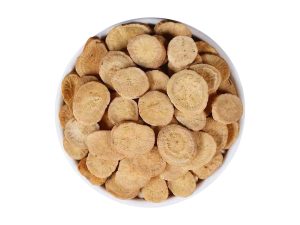
Fenxinmu is the name of a traditional Chinese medicine. It is the woody partition found inside the kernel of the walnut (Juglans regia L.), a plant of the Juglandaceae family. It is cultivated throughout China, from north to south. It has the effects of astringing semen, reducing urination, stopping bleeding, alleviating leukorrhea, and relieving diarrhea and dysentery. It is used to treat nocturnal emissions, frequent urination, enuresis, menorrhagia, leukorrhea, diarrhea, and dysentery.
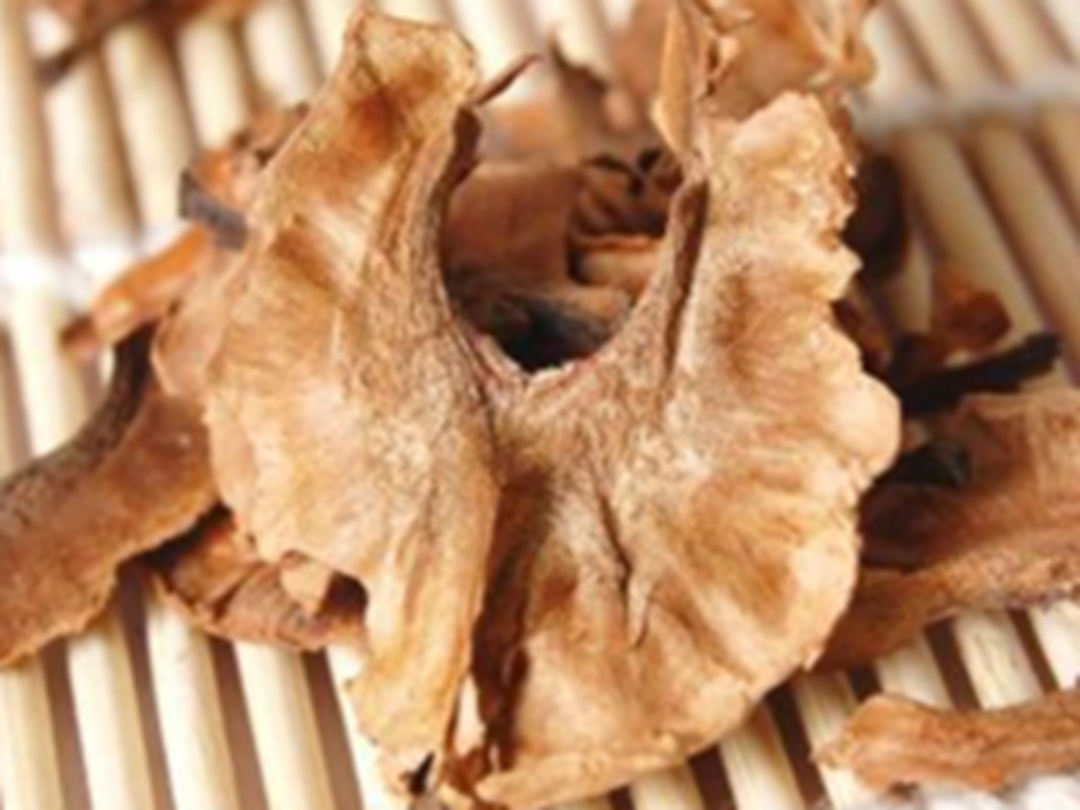
Fenxinmu
Fenxinmu is the name of a traditional Chinese medicine. It is the woody partition found inside the kernel of the walnut (Juglans regia L.), a plant of the Juglandaceae family. It is cultivated throughout China, from north to south. It has the effects of astringing semen, reducing urination, stopping bleeding, alleviating leukorrhea, and relieving diarrhea and dysentery. It is used to treat nocturnal emissions, frequent urination, enuresis, menorrhagia, leukorrhea, diarrhea, and dysentery.
Chinese Name : 分心木
Aliases : Walnut Husk, Walnut Shell, Walnut Partition, Walnut Septum
Nature, Flavor & Meridian Tropism : Taste: bitter and astringent; Nature: neutral; Enter the Spleen and Kidney meridians
Benefits & Efficacy
Benefits
It helps retain semen, reduce urination, stop bleeding, treat leukorrhea, and relieve diarrhea and dysentery.
Indications
Mainly used to treat nocturnal emissions and seminal leakage, frequent urination and enuresis, metrorrhagia and menorrhagia, leukorrhea, diarrhea, and dysentery.
Usage and Dosage
Internal use: Decocted as a soup, 3–9 g.
Precautions
Patients requiring treatment with traditional Chinese medicine should first consult a licensed TCM hospital, where a TCM practitioner will conduct a professional pattern differentiation and issue a prescription.
Relevant Discussions
1. *Ben Cao Zai Xin*: “Strengthens the spleen and fortifies the kidneys.”
2. *Compendium of Chinese Herbal Medicines*: “Tonifies the kidneys and astringes seminal fluid. Indicated for kidney deficiency-induced nocturnal emission, seminal leakage, and enuresis.”
Applications
Clinical Applications
Treatment for nephritis: 30 g of Fenxinmu, 2,500 g of rice wine. Soak for 10 minutes, then bring to a boil and strain out the residue. Take 5–10 ml per dose, three times daily. (*Selected Materials from the National Exhibition on New Therapeutic Methods for Chinese Herbal Medicine*)
Notes
References: 1. *Color Atlas of Common Chinese Herbal Medicines* 2. *Compendium of Chinese Herbal Medicines* 3. *Great Dictionary of Chinese Herbal Medicine* 4. *Chinese Materia Medica*
Processing & Preparation
Harvesting & Processing
Harvest ripe drupes in autumn or winter. Crack open the shells to extract the kernels, and collect the woody partitions inside the shells; dry them in the sun.
Processing Methods
Take the raw herbal material and remove impurities.
Crude Drug Identification
Properties of Crude Drugs
The woody septum appears as thin sheets, often curved, broken, and irregular in shape. The surface is light brown to dark brown, or brownish-black, with a slight luster. It is brittle and breaks easily. It has a faint odor and a slightly bitter taste. Pieces that are large, thin, and yellow in color are considered superior.
Properties of Processed Slices
See “Characteristics of the Medicinal Material.”
Botanical Information
Botanical Classification
Juglans regia, a plant of the Juglandaceae family.
Morphological Characteristics
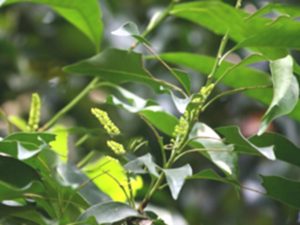
A deciduous tree, 20–25 m tall. The bark is grayish-white, smooth when young, and shallowly longitudinally fissured when old. Twigs are covered with short glandular hairs and bear distinct leaf scars and lenticels; winter buds are covered with bud scales; the pith is white and lamellar. The leaves are odd-pinnate, alternate, 40–50 cm long,with 5–9 leaflets, sometimes 13; the terminal leaflet is usually larger, elliptic-ovate to oblong-elliptic, 6–15 cm long and 3–6 cm wide, with a bluntly rounded or acute apex, an oblique, nearly rounded base, and entire margins; the upper surface is dark green and glossy, while the lower surface is pale green; there are 9–11 pairs of lateral veins,with a tuft of short, soft hairs in the axils of the veins. Flowers are unisexual; the plant is monoecious, with flowers blooming simultaneously with the leaves. Male catkins are axillary, pendulous, 5–10 cm long, with small, densely packed flowers. Each male flower has one oblong bract and two long-ovate bracteoles; 1–4 perianth segments, all covered with glandular hairs; and 6–30 stamens;The female inflorescence is spicate, erect, and borne at the tips of young branches; it typically bears 1–3 female flowers. There are three bracts, which are oblong and adnate to the ovary, expanding with the ovary after flowering; the perianth is 4-lobed, with linear lobes that extend beyond the bracts; the ovary is inferior, composed of two carpels; the style is short, and the stigma is bifid, feathery, and bright red.The fruit is nearly spherical, drupe-like, 4–6 cm in diameter. The exocarp is green, derived from the bracts and perianth, and spotted on the surface. The mesocarp is fleshy and splits irregularly. The endocarp is bony, with an uneven surface featuring two longitudinal ridges and a short, pointed tip. The inner wall of the endocarp is hollow and wrinkled, with thin septa and no internal cavities.Flowering occurs from May to June, and fruiting from September to October.
Distribution Area
It is cultivated throughout China, from north to south.