Peach Kernel, a name in traditional Chinese medicine, refers to the dried, mature seeds of the peach (Prunus persica (L.) Batsch) or mountain peach (Prunus davidiana (Carr.) Franch.), both plants of the Rosaceae family. It is primarily produced in Beijing, Shandong, Shaanxi, Henan, and Liaoning.This product has the effects of promoting blood circulation and removing blood stasis, moistening the intestines and relieving constipation, and relieving cough and wheezing. It is primarily used to treat amenorrhea and dysmenorrhea, masses and lumps, lung abscesses and intestinal abscesses, trauma from falls or blows, intestinal dryness and constipation, and cough and wheezing.
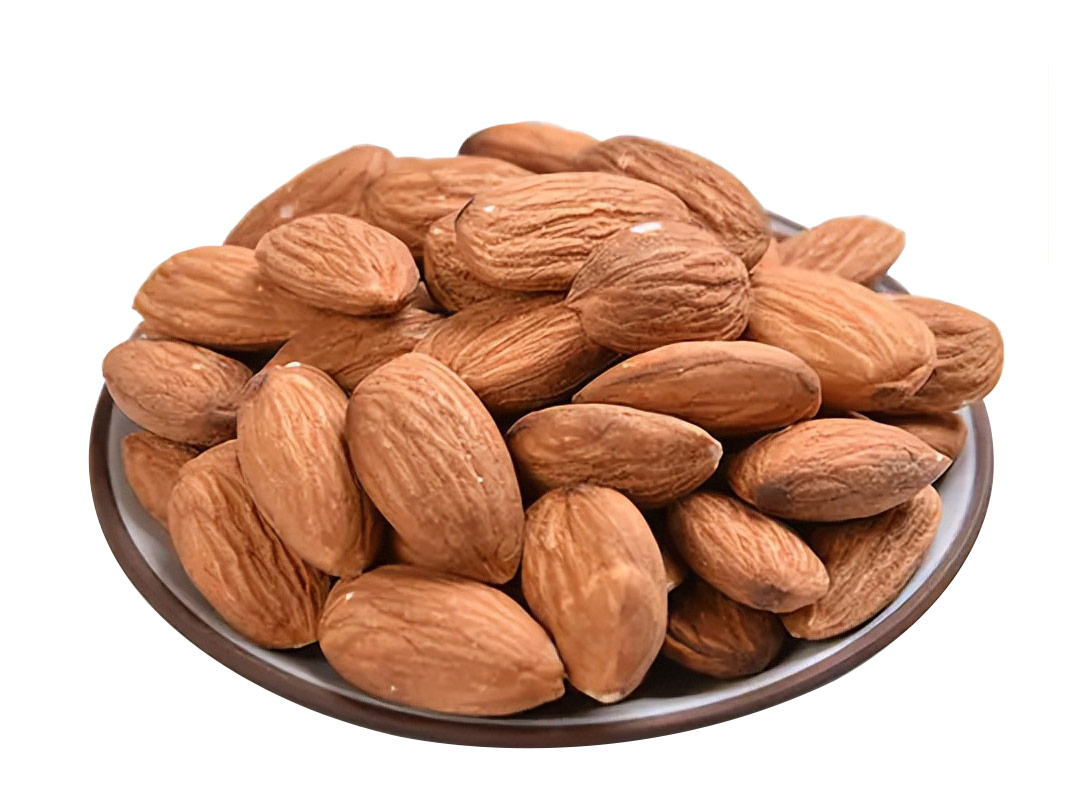
Peach Kernel
Peach Kernel, a name in traditional Chinese medicine, refers to the dried, mature seeds of the peach (Prunus persica (L.) Batsch) or mountain peach (Prunus davidiana (Carr.) Franch.), both plants of the Rosaceae family. It is primarily produced in Beijing, Shandong, Shaanxi, Henan, and Liaoning.This product has the effects of promoting blood circulation and removing blood stasis, moistening the intestines and relieving constipation, and relieving cough and wheezing. It is primarily used to treat amenorrhea and dysmenorrhea, masses and lumps, lung abscesses and intestinal abscesses, trauma from falls or blows, intestinal dryness and constipation, and cough and wheezing.
Chinese Name : 桃仁
Latin Name : Persicae Semen
Authentic Producing Area : Beijing, Shandong, Shaanxi, Henan, Liaoning
Nature, Flavor & Meridian Tropism : Taste: bitter, sweet; Nature: neutral; Enters the Heart, Liver, and Large Intestine meridians
Benefits & Efficacy
Benefits
Promotes blood circulation and removes blood stasis; moistens the intestines and relieves constipation; relieves cough and alleviates wheezing.
Indications
Peach Kernel is primarily used to treat amenorrhea and dysmenorrhea, masses and lumps, lung and intestinal abscesses, trauma from falls or blows, intestinal dryness and constipation, and coughing and wheezing.
Usage and Dosage
Internal use: Decocted, 5–10 g; use crushed. When adding peach kernel powder to a decoction, it should be wrapped before boiling.
Precautions
Patients requiring treatment with traditional Chinese medicine should first consult a licensed TCM hospital, where a TCM practitioner will conduct a professional pattern differentiation and issue a prescription.
Chemical Constituents
Peach Kernel contains amygdalin, amygdalase, volatile oils, and fatty oils (glycerides of oleic acid and linoleic acid), among others.
Pharmacological Actions
This herb possesses pharmacological effects including antithrombotic, anticoagulant, anti-myocardial ischemia, and anti-inflammatory properties.
Relevant Discussions
1. *Mingyi Bielu*: “Relieves coughing and shortness of breath, dissipates hardness beneath the heart, eliminates sudden, violent blood stasis, breaks up masses and masses, regulates menstruation, and relieves pain.”
2. *Zhenzhu Nang*: “Treats blood stasis, constipation due to blood stagnation, and blood dryness; promotes the passage of stools; and breaks up accumulated blood.”
3. *Compendium of Materia Medica*: “It is primarily used for blood stasis with wind-arthralgia, bone-consumptive fever, liver malaria with alternating chills and fever… and postpartum blood disorders.”
Applications
Clinical Applications
1. To treat amenorrhea and dysmenorrhea caused by blood stasis, it is often used in synergy with Safflower (Honghua), along with Angelica sinensis, Ligusticum chuanxiong, and Red Peony Root (Chishao), as in the Peach and Safflower Four Substances Decoction (Taohong Siwu Tang);To treat postpartum abdominal pain due to blood stasis, it is often combined with processed ginger and Chuanxiong, as in Shenghua Decoction; To treat masses, masses, and abdominal distension caused by accumulated blood stasis, it is often combined with Guizhi, Moutanpi, and Red Peony Root, as in Guizhi-Fuling Pills, or with Sanleng and E Zhu;If stasis is severe, it may be combined with rhubarb,芒硝, and cinnamon twig, as in the Peach Kernel Chengqi Decoction; to treat trauma-induced injuries, stasis-related swelling, and pain, it is often combined with angelica root, safflower, and rhubarb, as in the Fuyuan Huoxue Decoction.
2. For treating lung abscesses, it can be combined with Reed Stem and Winter Melon Seeds, as in Reed Stem Decoction; for treating intestinal abscesses, it is combined with Rhubarb and Moutan Bark, as in Rhubarb and Moutan Bark Decoction.
3. For treating constipation due to intestinal dryness, it is often combined with Angelica sinensis, Fire Hemp Seeds, and Trichosanthes Seed, as in Moistening the Intestines Pills.
4. For treating cough and wheezing, it can be used alone to make congee, or it is often combined with apricot kernels, as in the Shuangren Pills.
Related Compatibility
1. Peach Kernel combined with Rhubarb: Peach Kernel is bitter and purgative, with a neutral nature; its primary function is to invigorate blood and remove blood stasis. Rhubarb is bitter and purgative, with a cold nature; its primary functions are to clear heat, promote bowel movements, and invigorate blood to remove blood stasis. When used together, these two herbs invigorate blood to remove blood stasis and clear heat through purgation, making them suitable for conditions involving blood stasis in the lower jiao.
2. Peach Kernel Combined with Peony Bark: Peach kernel is bitter and sweet in taste, neutral in nature, and excels at promoting blood circulation and removing blood stasis; peony bark is bitter, pungent, and slightly cold in nature, and excels at cooling the blood and promoting blood circulation. When combined, these two herbs can clear blood heat and remove blood stasis, making them suitable for menstrual irregularities, amenorrhea, and dysmenorrhea caused by blood stasis with heat.
3. Peach Kernel combined with Safflower: Peach Kernel is neutral in nature and functions to invigorate blood and remove stasis; Safflower is warm in nature and functions to invigorate blood and regulate menstruation. When used together, their ability to invigorate blood and remove stasis is enhanced, making them suitable for various conditions caused by blood stasis obstruction, such as dysmenorrhea, amenorrhea, postpartum abdominal pain, pain in the chest and abdomen, and trauma-induced injuries.
Medicinal Identification
1. Raw Peach Kernel vs. Processed Peach Kernel: These are two different processed forms of the same herb, both possessing the efficacy of promoting blood circulation and removing blood stasis; both can be used for amenorrhea, dysmenorrhea, masses and lumps, lung abscesses, intestinal abscesses, and trauma.Raw peach kernels are used medicinally after impurities have been removed but before the seed coat is removed; processed peach kernels are prepared by placing raw peach kernels in boiling water to remove the seed coat before medicinal use. Since the non-medicinal parts are removed during processing, this facilitates the extraction of active compounds and enhances therapeutic efficacy.
2. Peach Kernel and Fire Hemp Seed: Both are sweet and moistening in nature and serve to moisten the intestines and relieve constipation, making them suitable for treating constipation caused by intestinal dryness. In addition to moistening the intestines, Peach Kernel enters the Blood system to promote blood circulation and remove blood stasis, making it a commonly used remedy for various blood stasis syndromes caused by stagnation; furthermore, its bitter nature helps to drain and descend qi, thereby relieving cough and wheezing.Fire hemp seeds moisten intestinal dryness and also have tonifying properties. The *Shennong Bencao Jing* states that they “tonify the middle and benefit qi; long-term use promotes weight gain and vitality,” and they are commonly used for constipation caused by blood deficiency and fluid depletion.
Related Medicines
Xuefu Zhuyu Oral Solution (Capsules), Tongjing Ganlu Pills, Runchang Pills.
Related Prescriptions
Peach Kernel Chengqi Decoction (*Treatise on Cold Damage*); Peach and Red Flower Four Substances Decoction (*Medical Fortress and Supreme Tactics*, excerpted from *Subtleties of the Jade Mechanism*, originally named “Enhanced Four Substances Decoction”); Peach Kernel and Safflower Decoction (*Causes, Symptoms, Pulse, and Treatment*); Blood-Activating and Stasis-Resolving Decoction (*Authentic Treatise on Surgery*); and Diaphragm-Below Stasis-Resolving Decoction (*Corrections to Medical Forest*).
Processing & Preparation
Harvesting & Processing
Harvest after the fruit has ripened; remove the pulp and the shell of the pit, extract the seeds, and sun-dry them.
Processing Methods
1. Peach Kernels: Take the raw herbal material and remove impurities and seeds with excessive oil. Crush before use.
2. Blanched Peach Kernels: Take clean peach kernels, place them in boiling water, and heat until the seed coat swells slightly. Remove them, soak in cold water, then separate the seed coat from the kernel by rubbing. Dry and remove the seed coat. Crush before use.
3. Roasted Peach Kernels: Take the blanched peach kernels, place them in a roasting pan, and roast over low heat until they turn a light yellow color. Remove and allow to cool. Crush before use.
Storage Methods
Store in a cool, dry place to prevent insect infestation and rancidity.
Crude Drug Identification
Properties of Crude Drugs
1. Peach Kernels: Flat and elongated oval in shape, 1.2–1.8 cm long, 0.8–1.2 cm wide, and 0.2–0.4 cm thick. The surface is yellowish-brown to reddish-brown, densely covered with granular protrusions.One end is pointed, the middle is swollen, and the other end is blunt, rounded, and slightly asymmetrical, with relatively thin edges. On one side of the pointed end is a short, linear seed scar; on the rounded end is a slightly darker, not very prominent fusion point, from which numerous longitudinal vascular bundles radiate. The seed coat is thin; there are two cotyledons, which are off-white and rich in oil. It has a faint odor and a slightly bitter taste.
2. Wild Peach Kernel: Oval-shaped, small but thick, approximately 0.9 cm long, 0.7 cm wide, and 0.5 cm thick.
Properties of Processed Slices
1. Peach Kernel: Same as “Characteristics of the Medicinal Material.”
2. Roasted Peach Kernel: This product is flattened and oblong, 1.2–1.8 cm long, 0.8–1.2 cm wide, and 0.2–0.4 cm thick. The surface is pale yellowish-white; one end is pointed, the middle is swollen, and the other end is bluntly rounded and slightly oblique; the edges are relatively thin. There are two cotyledons, rich in oil.It has a faintly fragrant odor and a slightly bitter taste.
3. Roasted Mountain Peach Kernels: These are oval-shaped, small but thick, approximately 1 cm long, 0.7 cm wide, and 0.5 cm thick.
4. Roasted Peach Kernels: This product is flat and elongated oval in shape, 1.2–1.8 cm long, 0.8–1.2 cm wide, and 0.2–0.4 cm thick.The surface is yellow to brownish-yellow, with visible scorch marks. One end is pointed, the middle is swollen, and the other end is bluntly rounded and slightly oblique, with relatively thin edges. There are two cotyledons, rich in oil. It has a faintly fragrant odor and a slightly bitter taste.
5. Roasted Wild Peach Kernels: The two cotyledons are often separated; intact ones are ovoid, small, and fleshy. They are approximately 1 cm long, 0.7 cm wide, and 0.5 cm thick.
Botanical Information
Botanical Classification
Species of the genus Prunus in the Rosaceae family, such as the common peach or wild peach.
Morphological Characteristics
1. Peach: A deciduous small tree, 3–8 m tall, with green or partially reddish-brown twigs that are glabrous. Leaves are alternate and clustered on short branches; petioles are 1–2 cm long and usually bear 1 to several glands; leaf blades are elliptic-lanceolate to obovate-lanceolate, with finely serrated margins, and glabrous on both surfaces.Flowers are usually solitary, blooming before the leaves, approximately 2.5–3.5 cm in diameter, and borne on short pedicels; there are 5 sepals, fused at the base into a short calyx tube and covered with tomentum; there are 5 petals, obovate and pink, rarely white; numerous stamens; the ovary is unilocular, with a slender style and a small, rounded stigma.The drupe is nearly spherical, with short tomentum on the surface; the flesh is white or yellow, and the seed may be free or adherent to the stone. There is a single seed, which is flattened, ovate, and heart-shaped. Flowering occurs from March to April, and the fruit ripens from June to July.
2. Mountain Peach: A deciduous small tree, 5–9 m tall. Leaves are alternate, with early-deciduous stipules; petioles are 1.5–3 cm long;leaf blades are ovate-lanceolate, 4–8 cm long and 2–3.5 cm wide. Flowers are solitary, with 5 sepals and 5 petals that are broadly obovate, ranging in color from pink to white. The drupe is nearly round, yellowish-green, and covered with yellowish-brown soft hairs on the surface. The flesh is free from the stone; the stone is small and hard. There is one seed, which is brownish-red. Flowering occurs from March to April, and fruiting from June to July.
Distribution Area
1. Peach: Native to China and widely cultivated throughout the country. 2. Wild Peach: Distributed in Hebei, Shanxi, Shandong, Henan, Sichuan, Yunnan, Shaanxi, Gansu, and other regions.
Growth Habits
1. Peach: Prefers sunlight and a warm climate; grows best in fertile, well-drained sandy loam. Intolerant of waterlogging; grows poorly in low-lying alkaline soils. Young trees have low cold hardiness and are prone to frost damage on shoots. Tolerates pruning; has a relatively short lifespan. 2. Wild Peach: Sun-loving, though it can also grow in partial shade; cold-hardy and drought-tolerant. Not particular about soil type; can be planted on barren, uncultivated hillsides.
Propagation Methods
1. Peach: Propagated primarily by grafting. 2. Wild Peach: Propagated by seed.
Cultivation Techniques
1. Peach: Propagated primarily by grafting. Using wild peach or hairy peach as rootstocks enhances its resistance to waterlogging and cold. For rootstock production, peach pits are vernalized in moist sand to soften the hard shells and facilitate germination; when sown in March, they will sprout by early April.Seeds that have not undergone sand stratification can be sown in the fall. Select a nursery site on high, dry ground to cultivate peach seedlings; the seedlings grow rapidly and can reach 20–30 cm in height by that fall. Bud grafting is generally best performed in early to mid-August, with the T-bud grafting method commonly used for high-yielding varieties. Alternatively, branch grafting can be performed in early April, typically using cleft, side, or notch grafting methods.
2.Wild Peach: Propagated by seed. Harvest ripe fruit from June to September, remove the pulp, rinse the seeds thoroughly in water, drain, air-dry, and store in sand. Sow in the spring from late March to early April. Remove the sand-stored seeds and sow them in holes 5–6 cm deep, spaced 35 cm between rows and (20–30) cm between plants. Cover with soil, water, and seedlings will emerge in about 15 days.Seedlings are grown in a nursery for 1–2 years before being transplanted to their final location. For fall sowing (mid-October to early November), seeds harvested that same year can be sown directly without sand stratification; seedlings will emerge the following spring. Wild peach seedlings are commonly used as rootstocks for peach varieties.
Pest and Disease Control
1. Peach: Peaches have low disease resistance and are highly susceptible to insect pests. Peach anthracnose primarily affects the fruit but also damages leaves and new shoots. Spray a 3° Baumé lime-sulfur solution before budbreak, and apply a 500-fold dilution of 65% zinc mancozeb 2–3 times after budbreak.Gummosis occurs on branches and trunks. Strengthen cultivation management, apply whitewash to branches and trunks to prevent frost damage and sunscald, and control pests that bore into branches and trunks. Peach aphids damage leaves; spray a 3° Baumé lime-sulfur solution before budbreak and a 2.5% cypermethrin solution diluted 5,000 times during the growing season.
2. Wild Peach: Peach leaf curl affects leaves, new shoots, and fruit; in severe cases, it causes leaf drop and even branch dieback. Spray a 5° Baumé lime-sulfur solution before budbreak. Pests include peach budworms and peach aphids.