Plowhead Grass, a name in traditional Chinese medicine. It refers to the whole plant of Viola concordifolia C. J. Wang, a species of the genus Viola in the family Violaceae. It has the effects of clearing heat and detoxifying, resolving blood stasis and draining pus, and cooling the blood and clearing the liver.It is primarily used to treat boils, abscesses, and toxic swellings; mastitis; intestinal abscesses with bloody discharge; suppurative osteomyelitis; jaundice; redness, swelling, and pain of the eyes; scrofula; traumatic bleeding; and snake bites.
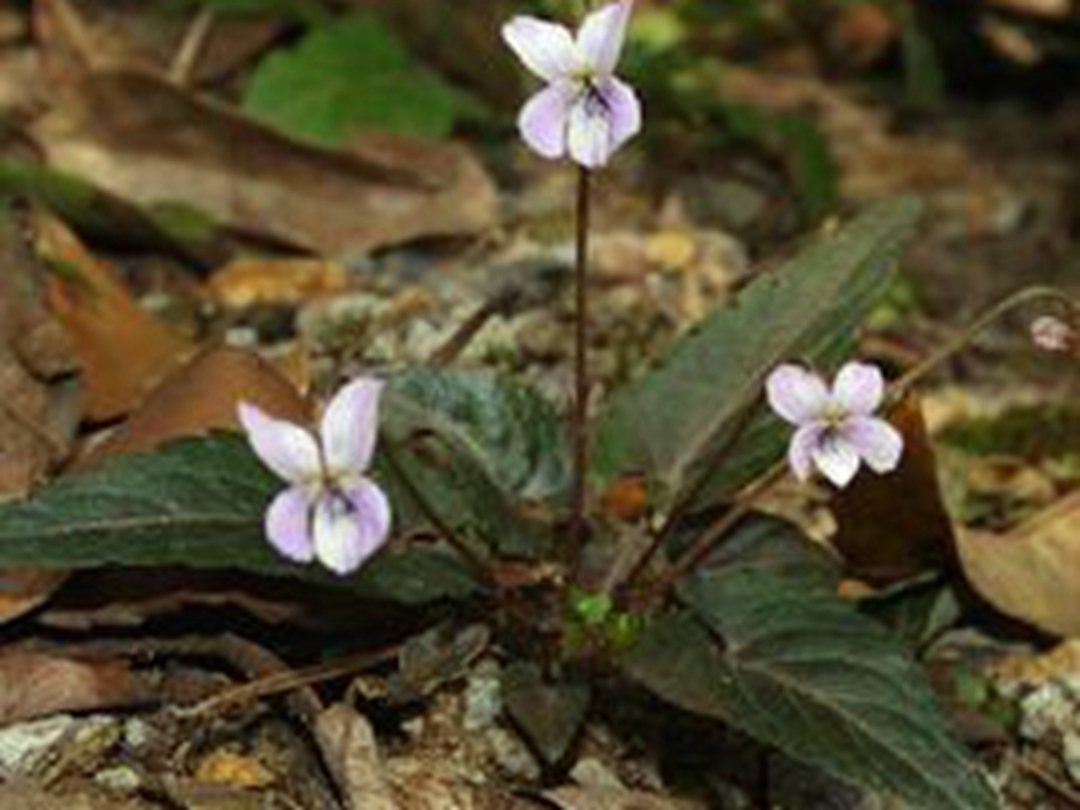
Plowhead Grass
Plowhead Grass, a name in traditional Chinese medicine. It refers to the whole plant of Viola concordifolia C. J. Wang, a species of the genus Viola in the family Violaceae. It has the effects of clearing heat and detoxifying, resolving blood stasis and draining pus, and cooling the blood and clearing the liver.It is primarily used to treat boils, abscesses, and toxic swellings; mastitis; intestinal abscesses with bloody discharge; suppurative osteomyelitis; jaundice; redness, swelling, and pain of the eyes; scrofula; traumatic bleeding; and snake bites.
Chinese Name : 犁头草
Aliases : Purple Gold Lock, Purple Ground Cherry, Small Sweet Water Eggplant, Humpback Grass, Triangle Grass, Plowshare Tip, Iron Brand Grass, Ground Cherry Grass, Purple Ground Cherry, Sheep’s Hoof, Plowshare Tip
Nature, Flavor & Meridian Tropism : Taste: bitter, slightly pungent; nature: cold; enters the Liver and Lung meridians
Benefits & Efficacy
Benefits
Clears heat and detoxifies; resolves blood stasis and expels pus; cools the blood and clears the liver.
Indications
Boils, abscesses, and toxic swellings; mastitis; intestinal abscess with bloody stools; suppurative osteomyelitis; jaundice; redness, swelling, and pain of the eyes; scrofula; traumatic bleeding; snake bites.
Usage and Dosage
1. Internal use: Decoct 9–15 g (or 30–60 g of fresh herb) in water; or crush to extract juice and drink. 2. External use: Apply an appropriate amount after crushing.
Chemical Constituents
It primarily contains flavonoids and their glycosides, coumarins, sugars, and organic acids, and is rich in trace elements such as copper, iron, manganese, zinc, calcium, phosphorus, and silicon.
Pharmacological Actions
This herb possesses antibacterial and antiviral properties and inhibits lipase activity.
Relevant Discussions
1. *Ben Cao Qiu Yuan*: “Stops bleeding, eliminates malignant and toxic sores, removes necrotic tissue to promote new tissue growth, and treats corneal ulcers and toxic sores caused by feces.”
2. *Illustrated Compendium of Chinese Medicinal Plants*: “For external use, it treats styes, heat toxins, swollen abscesses, and bleeding from knife wounds. When taken internally, it treats jaundice with internal heat and intestinal abscesses with real heat accompanied by bloody discharge.”
3. *Compendium of Chinese Herbal Medicines*: “Mainly used to treat acute conjunctivitis, pharyngitis, acute jaundice-type hepatitis, mastitis, abscesses and swellings caused by toxins, suppurative osteomyelitis, and venomous snake bites.”
4. *Chronicle of Natural Medicines from the Qinling and Ba Mountains*: “Treats scrofula.”
Applications
Clinical Applications
1. For chronic, non-healing abscesses and ulcers: Take appropriate amounts of Ploughhead Grass and Chinese Hibiscus flowers, pound them into a very fine paste, and apply to the affected area. Alternatively, roast them until dry, grind into a powder, sprinkle on the affected area, and cover with gauze. Change the dressing once daily until healed. (Jiangxi *Manual of Herbal Medicine*)
2. For appendicitis: ① 15 g each of Viola yedoensis and Patrinia scabiosa, and 30 g of Polygonum cuspidatum. Decoct in water and take orally. (*Compendium of Hubei Chinese Herbal Medicine*) ② 30 g each of fresh Ploughhead Grass, fresh dandelion, and fresh purslane. Decoct and take orally. (*Anhui Chinese Herbal Medicine*)
3. For the treatment of suppurative osteomyelitis: Equal parts fresh Ploughhead Grass and fresh Trifoliate Bitterleaf. Pound into a paste and apply externally. (*Compendium of Chinese Herbal Medicines*)
4. For red, swollen, and painful eyes; photophobia; eye discharge; headache; and cloudiness obscuring the vision: Pound fresh Plowhead Grass into a paste, add a small amount of egg white, and mix thoroughly. Apply as a poultice to the eyelids, changing the dressing 1–2 times daily. (*Folk Herbal Medicine of Jiangxi*)
5. For postpartum abdominal pain due to blood stasis in women: Take 30 g of fresh Plowhead Grass (chopped) and 2 eggs (shells removed). Mix them together in a pan, add oil, and stir-fry briefly; then decoct in water and drink the decoction. (Jiangxi *Manual of Herbal Medicine*)
Notes
Patients requiring treatment with Chinese herbal medicine should first consult a licensed Traditional Chinese Medicine (TCM) hospital, where a TCM practitioner will conduct a professional pattern differentiation and issue a herbal prescription.
Processing & Preparation
Harvesting & Processing
Harvest the whole plant during the fruit ripening period (April–May), thoroughly remove all soil, and use it fresh or dry it in the sun.
Processing Methods
Take the raw herb, remove impurities, rinse thoroughly with running water, moisten slightly, cut into sections, and dry.
Storage Methods
Store in a dry place.
Crude Drug Identification
Properties of Crude Drugs
This product is often shriveled into a clump. The root is conical and yellowish-white. Leaves are basal, gray-green; when unfolded, the leaf blades are ovate or ovate-lanceolate, 3–5 cm long and 0.5–1.2 cm wide; the apex is obtuse, the base is truncate or slightly cordate, the margins are serrate, and both surfaces are sparsely hairy or nearly glabrous;the upper part of the petiole bears narrow wings. Sometimes violet-blue flowers are visible, with a slender, tubular spur. The oval capsules are easily visible and often dehiscent; the seeds are numerous, pale brown, and sometimes bear light-colored stripes. Slight odor; slightly bitter taste.
Botanical Information
Botanical Classification
Corydalis cordata, a plant of the genus Corydalis in the family Boraginaceae.
Morphological Characteristics
Perennial herb. No aboveground stems or creeping branches. Rhizome stout and short, densely noded, approximately 4–5 mm in diameter; lateral roots numerous, relatively stout and elongated. Leaves numerous, basal; petioles usually nearly as long as the leaf blade during flowering, but considerably longer than the leaf blade during fruiting; stipules short, fused to the petiole at the base, approximately 1 cm long, with the free portion spreading;Leaf blades are ovate, broadly ovate, or triangular-ovate, rarely reniform, 3–8 cm long and 3–8 cm wide, with an acute or slightly obtuse apex, a deeply or broadly cordate base, and margins bearing numerous rounded, blunt teeth; both surfaces are glabrous or sparsely covered with short hairs.Flowers are pale purple; the pedicels do not protrude significantly beyond the leaf blades; there are two linear-lanceolate bracteoles near the middle; sepals are broadly lanceolate, with gradually tapering apices, basal appendages approximately 2 mm long, and blunt or truncate tips; the upper and lateral petals are obovate, while the lower petal is long obcordate; the spur is cylindrical, 4–5 mm long, and approximately 2 mm thick.The capsule is elliptical, about 1 cm long. The valves are ribbed; flowering occurs in April, and fruiting occurs from May to August.
Distribution Area
Distributed in Southwest China, as well as Jiangsu, Anhui, Zhejiang, Jiangxi, and Hunan.