Angelica dahurica, a name in traditional Chinese medicine, refers to the root of the plant Angelica dahurica (Fisch. ex Hoffm.) Benth. et Hook. f. or Angelica dahurica (Fisch. ex Hoffm.) Benth. et Hook. f. var. formosana (Boiss.) Shan et Yuan, both belonging to the Apiaceae family. It is primarily produced in Zhejiang, Sichuan, Henan, Hebei, and other regions.This herb has the effects of relieving exterior syndromes and dispelling cold, expelling wind and alleviating pain, unblocking the nasal passages, drying dampness and stopping leukorrhea, and reducing swelling and draining pus. It is primarily used to treat common cold headaches, pain along the brow ridge, nasal congestion and runny nose, nasal discharge, chronic sinusitis, toothache, leukorrhea, and swollen and painful sores.

White Angelica
Angelica dahurica, a name in traditional Chinese medicine, refers to the root of the plant Angelica dahurica (Fisch. ex Hoffm.) Benth. et Hook. f. or Angelica dahurica (Fisch. ex Hoffm.) Benth. et Hook. f. var. formosana (Boiss.) Shan et Yuan, both belonging to the Apiaceae family. It is primarily produced in Zhejiang, Sichuan, Henan, Hebei, and other regions.This herb has the effects of relieving exterior syndromes and dispelling cold, expelling wind and alleviating pain, unblocking the nasal passages, drying dampness and stopping leukorrhea, and reducing swelling and draining pus. It is primarily used to treat common cold headaches, pain along the brow ridge, nasal congestion and runny nose, nasal discharge, chronic sinusitis, toothache, leukorrhea, and swollen and painful sores.
Chinese Name : 白芷
Latin Name : Angelicae Dahuricae Radix
Aliases : Zhi, Fragrant, Fulü, Zefen, Bai Zhi, Fragrant White Zhi
Authentic Producing Area : Zhejiang, Sichuan, Henan, Hebei
Nature, Flavor & Meridian Tropism : Warm in nature, pungent in taste; enters the Stomach, Large Intestine, and Lung meridians
Benefits & Efficacy
Benefits
Relieves exterior syndromes and dispels cold; expels wind and alleviates pain; opens the nasal passages; dries dampness and stops leukorrhea; reduces swelling and drains pus.
Indications
1. Primarily used to treat headaches associated with the common cold, pain along the brow ridge, nasal congestion and runny nose, nasal discharge, chronic sinusitis, toothache, leukorrhea, and swollen, painful sores. 2.Conditions diagnosed in Western medicine as the common cold or influenza that present as wind-cold exterior syndromes; headaches, migraines, and periodontal disease accompanied by exterior syndrome manifestations; rheumatic arthritis, rheumatoid arthritis, neuropathic muscular atrophy, adhesive capsulitis of the shoulder, synovitis and tenosynovitis, other aseptic necrosis of bone, and gouty arthritis—all of which involve obstruction of the meridians by wind-damp pathogens;acute sinusitis and chronic sinusitis presenting with wind-cold exterior syndrome; acute salpingitis, oophoritis, and endometritis resulting from dampness pathogenic factors descending into the Yangming meridian; and contact dermatitis, other forms of eczema, boils, and carbuncles presenting with exterior syndrome.
Usage and Dosage
1. Internal Use: Decoct and take 3–10 g; or incorporate into pills or powders. 2. External Use: Apply as a powder or as a paste.
Precautions
1. This herb is pungent, aromatic, warm, and drying; it should be avoided by patients with yin deficiency and blood heat. 2. This herb should not be combined with Inula flower.
Chemical Constituents
The chemical composition of Angelica dahurica (Bai Zhi) is similar to that of Hangzhou Angelica dahurica (Hang Bai Zhi). It primarily contains essential oils, as well as various coumarin compounds such as angelicin and angelicins, and also contains angelicotoxin, Sichuan pepper toxin, sterols, stearic acid, and other components.
Pharmacological Actions
This product has antipyretic, analgesic, anti-inflammatory, antimicrobial, and antioxidant effects.
Relevant Discussions
1. *Shennong Bencao Jing*: “Mainly treats women’s leukorrhea with red or white discharge, amenorrhea with genital swelling, fever and chills, wind-induced headaches with tearing eyes, and promotes skin and muscle growth and nourishment.”
2. *Diannan Bencao*: “Dispels wandering wind from the skin; alleviates cold-induced stomach pain, abdominal pain, and pain caused by cold; and relieves pain throughout the body caused by cold and dampness.”
Applications
Clinical Applications
1. For treating external invasion by wind-cold, manifested as pain in the head and body, nasal congestion, and runny nose, it is often used in combination with wind-dispelling, cold-dispelling, and pain-relieving herbs such as Fangfeng, Qianghuo, and Chuanxiong, as in the Nine-Ingredient Qianghuo Decoction (*This Matter Is Hard to Know*).
2. For treating Yangming-type headaches, pain along the brow ridge, and headaches caused by wind, it can be used alone—as in the Duliang Pills (from *Baiyi Xuanfang*)—when the condition is due to exogenous wind-cold; or it can be combined with wind-dispelling and pain-relieving herbs such as Fangfeng, Xixin, and Chuanxiong, as in the Chuanxiong Cha Tiao San (from *Heji Jufang*);For conditions caused by exogenous wind-heat, it may be combined with herbs such as Bo He, Ju Hua, and Man Jing Zi. To treat wind-cold toothache, it may be used in combination with Xi Xin, Quan Xie, and Chuan Xiong, as in Yi Nian Jin San (from *Formulas of the Imperial Pharmacy*);To treat wind-heat toothache, it may be combined with herbs such as gypsum and Schizonepeta spikelets, as in the Wind-Heat Powder (from *Xian Nian Ji*). For wind-cold-damp bi syndrome characterized by joint pain and restricted flexion and extension, it may be used in combination with herbs such as Atractylodes, Aconite, and Chuanxiong, as in the Divine Immortal Flying Step Pill (from *Xiu Zhen Fang*).
3. For treating nasal congestion, blocked nasal passages, persistent thick nasal discharge, and forehead pain, it is often combined with herbs that dispel wind-cold and unblock the nasal passages, such as Xian’erzi and Xinyi, as in the Xian’erzi Powder (from *Jisheng Fang*).
4. To treat cold-dampness descending to the lower jiao with excessive leukorrhea, it can be combined with herbs that warm yang, dispel cold, strengthen the spleen, and eliminate dampness, such as Lu Jiao Shuang, Bai Zhu, and Shan Yao;if damp-heat descends, causing yellow or reddish vaginal discharge, it should be combined with herbs such as Plantain Seed (Cheqianzi) and Phellodendron Bark (Huangbo) that clear heat, drain dampness, and dry dampness.
5. For the initial stage of skin ulcers and abscesses characterized by redness, swelling, heat, and pain, it can help resolve nodules, reduce swelling, and relieve pain. It is often combined with herbs such as Honeysuckle (Jinyinhua), Chinese Angelica (Danggui), and Pangolin Scale (Chuanshanjia), as in the Immortal Formula for Preserving Life Decoction (Xianfang Huoming Yin) from *Annotated Effective Formulas for Women* (Jiaozhu Furen Liangfang); if pus has formed but the ulcer is slow to rupture, it is often used in combination with herbs that tonify qi and nourish blood to jointly promote the expulsion of toxins and pus, such as the “To Li Disinfection Powder” from *Authentic Treatise on Surgery* and the “To Li Penetrating Pus Powder” from *The Golden Mirror of Medicine*, both of which are used in combination with herbs such as Ginseng, Astragalus, and Angelica sinensis.
Related Compatibility
1. Angelica dahurica combined with Asarum: Both are pungent, warm, and aromatic; they can dispel wind and relieve exterior syndromes, disperse cold and alleviate pain, and clear the nasal passages. When used in synergy, their therapeutic effects are enhanced. This combination is suitable for chills and fever caused by external invasion of wind-cold, headache and nasal congestion, as well as sinus headaches, pain along the brow ridge, and toothache.
2. Angelica dahurica combined with Chuanxiong: Angelica dahurica is pungent and warm, dispelling wind, relieving exterior symptoms, dispersing cold, and alleviating pain; Chuanxiong is pungent and warm, promoting blood circulation, regulating qi, dispelling wind, and relieving pain. When used together, Angelica dahurica assists Chuanxiong in promoting blood circulation, while Chuanxiong assists Angelica dahurica in dispersing exterior pathogens. Consequently, wind-cold is eliminated, qi and blood flow are restored, and the headache subsides.This combination is suitable for cases of exogenous wind-pathogen invasion with pronounced headaches. For cases dominated by wind-cold, add Xixin and Gaoben; for cases dominated by wind-heat, add Chrysanthemum and Mulberry Leaf.
3. Angelica dahurica combined with Phellodendron and Qinpi: Angelica dahurica is pungent and warm, excelling at drying dampness and stopping leukorrhea; Phellodendron and Qinpi are bitter and cold, excelling at clearing heat, drying dampness, and stopping leukorrhea. When used together, these three herbs clear heat, dry dampness, and stop leukorrhea.Indicated for damp-heat leukorrhea characterized by yellow, thick, foul-smelling discharge.
4. Angelica dahurica combined with Plantain Seed: Angelica dahurica has a fragrant aroma and can dry dampness and stop leukorrhea; Plantain Seed excels at clearing and draining damp-heat from the lower jiao. When combined, these two herbs work in tandem—one using its aromatic properties to dry dampness while the other promotes diuresis and drains dampness—to dispel damp-heat. Together, they clear and drain damp-heat, transform turbidity, and stop leukorrhea.Indicated for yellow, thick vaginal discharge accompanied by vaginal itching and swelling caused by damp-heat descending to the lower jiao.
5. Angelica dahurica combined with Platycodon grandiflorus: Both herbs have the effect of draining pus. Angelica dahurica also reduces swelling, while Platycodon grandiflorus lifts and elevates qi and blood. When used together, their effects in reducing swelling and draining pus are enhanced. Indicated for sores and abscesses where pus has formed but is not easily discharged.
Medicinal Identification
Qianghuo, Bai Zhi, Xi Xin, and Gao Ben: All four are pungent, warm, aromatic, and drying herbs that can release the exterior to dispel cold, expel wind, and relieve pain, with particularly effective analgesic properties. Among them, Qianghuo, Bai Zhi, and Gao Ben can also overcome dampness. All four are commonly used to treat wind-cold colds or colds complicated by wind-cold and dampness, characterized by severe pain in the head and body, as well as wind-cold-damp bi syndrome with pain in the limbs and joints.Because Bai Zhi and Xi Xin have a fragrant aroma that can both disperse wind-cold and clear the nasal passages, they are particularly suitable for wind-cold colds accompanied by nasal congestion and a runny nose. At the same time, Bai Zhi and Xi Xin are also frequently used to treat nasal congestion, a runny nose, and headaches associated with nasal disorders such as chronic sinusitis, making them excellent remedies for this condition.Qianghuo has a strong, pungent aroma and taste; it relieves exterior syndromes, dispels cold, expels wind, overcomes dampness, and possesses potent analgesic effects. In treating bi pain, it excels at entering the Foot Taiyang Bladder Meridian to alleviate pain in the head, neck, shoulders, and back; thus, it is particularly frequently used for wind-cold-damp bi syndrome affecting the upper body, as well as pain in the shoulders, back, and joints.Angelica dahurica (Bai Zhi) penetrates the Foot Yangming Stomach Meridian, making it particularly useful for treating headaches and forehead pain associated with this meridian, as well as swollen and painful gums. It also dries dampness to stop leukorrhea, reduces swelling, and expels pus. Additionally, it can be used for leukorrhea caused by cold and dampness, as well as for abscesses and toxic swellings. Furthermore, Angelica dahurica dispels wind and relieves itching, making it suitable for treating itchy skin conditions caused by wind-dampness.Xixin has a pungent, aromatic nature that moves rapidly through the body, reaching both the exterior and the interior; it possesses a strong ability to dispel cold and can be used for both exterior and interior cold syndromes.Xixin can also warm the lungs and transform phlegm; it is suitable for yang-deficiency with exogenous pathogens, characterized by aversion to cold, fever, absence of sweat, and a deep pulse; for Shaoyin-type headaches, unilateral or bilateral headaches, and toothaches; as well as for cough and wheezing due to lung cold. Gaoben, with its ascending nature and properties, reaches the crown of the head and is particularly effective for treating severe headaches at the crown caused by exogenous wind-cold.
Related Medicines
Exterior-Excess Common Cold Granules, Tianma Headache Tablets, Fengshuiding Tablets (Capsules), Tongqiao Rhinitis Tablets (Granules, Capsules), Kangfu Ointment.
Related Prescriptions
Nine-Ingredient Qianghuo Decoction (*This Matter Is Hard to Know*), Duliang Pills (*Selected Formulas from the Hundred and One*), Chuanxiong Tea-Adjusting Powder (*Formulas of the Bureau of Harmonious Preparations*), Xanthium Seed Powder (*Formulas for Saving Lives*), and Immortal Formula for Preserving Life Decoction (*Annotated Effective Formulas for Women*).
Notes
Patients requiring treatment with traditional Chinese medicine should first consult a licensed TCM hospital, where a TCM practitioner will conduct a professional diagnosis and prescribe the appropriate herbal formula.
Processing & Preparation
Harvesting & Processing
Harvest during the summer and fall when the leaves turn yellow; remove fibrous roots and soil, then sun-dry or dry at low temperature.
Processing Methods
Remove impurities, sort by size, soak briefly until thoroughly moistened, cut into thick slices, and dry.
Storage Methods
Store in a dry container in a cool, dry place. Protect from mold and insect infestation.
Crude Drug Identification
Identification
1. The powder of this product is yellowish-white. Starch granules are very numerous; single granules are spherical, polygonal, elliptical, or helmet-shaped, with a diameter of 3–25 μm; the hilum is punctate, fissured, cruciform, tridentate, stellate, or chevron-shaped; compound granules are mostly composed of 2–12 subgranules. Reticulate and spiral vessels have diameters of 10–85 μm.Cork cells are polygonal or nearly rectangular, pale yellowish-brown. Oil ducts are mostly fragmented and contain pale yellowish-brown secretions.
2. Take 0.5 g of the powdered sample, add 10 mL of ether, soak for 1 hour while shaking occasionally, filter, and evaporate the filtrate to dryness. Dissolve the residue in 1 mL of ethyl acetate to prepare the test solution.Separately, take 0.5 g of Angelica dahurica reference material and prepare a reference material solution using the same method. Then, take the reference standards for angelic acid and isoangelic acid, dissolve them in ethyl acetate to prepare a mixed solution containing 1 mg of each per 1 mL, and use this as the reference standard solution.Perform the test according to the thin-layer chromatography method (General Chapter 0502). Pipette 4 μL of each of the three solutions mentioned above and apply them separately onto the same silica gel G thin-layer plate. Use a developing system of petroleum ether (30–60 °C) and diethyl ether (3:2) to develop the plate at a temperature below 25 °C. Remove the plate, allow it to air-dry, and examine it under ultraviolet light (365 nm).In the chromatogram of the test sample, fluorescent spots of the same color appear at positions corresponding to those in the chromatograms of the reference herbal material and the reference standard.
Properties of Crude Drugs
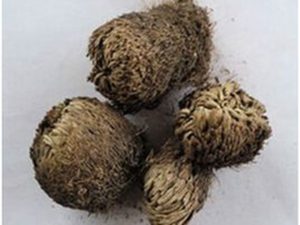
This product is oblong-conical in shape, 10–25 cm long and 1.5–2.5 cm in diameter. The surface is grayish-brown or yellowish-brown; the root head is bluntly quadrangular or nearly circular, with longitudinal wrinkles, traces of lateral roots, and lenticel-like transverse protrusions, some of which are arranged in four longitudinal rows. There is a depressed stem scar at the apex.The texture is firm; the fracture surface is white or grayish-white and powdery. The cambium ring is brown, nearly square or nearly circular, and the cortex is scattered with numerous brown oil dots. It has an aromatic odor and a pungent, slightly bitter taste.
Properties of Processed Slices
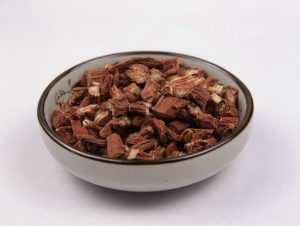
This product consists of thick, nearly circular slices. The outer surface is grayish-brown or yellowish-brown. The cross-section is white or grayish-white, powdery in texture; the cambium ring is brown, nearly square or nearly circular; the cortex is scattered with numerous brown oil dots. It has an aromatic odor and a pungent, slightly bitter taste.
Botanical Information
Botanical Classification
Plants of the genus Angelica in the family Apiaceae: Angelica dahurica and Hangzhou Angelica.
Morphological Characteristics
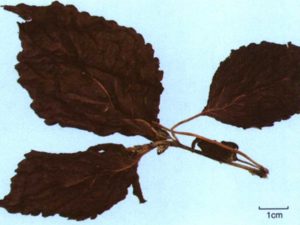
A tall, perennial herb, 1–2.5 m tall. The root is cylindrical and branched, with a yellowish-brown to brown outer surface and a strong odor. The stem base has a diameter of 2–5 cm, sometimes reaching 7–8 cm; it is usually purplish, hollow, and has longitudinal grooves.Basal leaves are once-pinnately lobed, with long petioles; the lower part of the petiole bears a tubular, stem-clasping leaf sheath with membranous margins. Upper stem leaves are twice or thrice pinnately lobed; the leaf blades are ovate to triangular in outline, and the lower part of the petiole forms a saccate, membranous sheath that is glabrous or sparsely hairy and often purplish.terminal segments are oblong, ovate, or linear-lanceolate, mostly sessile, acuminate, with irregular white cartilaginous coarse teeth along the margins, bearing a short apex; the base is often asymmetrical on both sides, extending downward along the leaf axis to form wings; the leaves below the inflorescence are reduced to leafless, conspicuously swollen saccate sheaths, glabrous on the outside.Compound umbels are terminal or lateral, 10–30 cm in diameter; peduncles are 5–20 cm long; peduncles, rays, and pedicels are all covered with short, rough hairs; rays number 18–40, with the central main umbel sometimes having as many as 70 rays;Bracts are usually absent or present in 1–2, forming elongated, ovate, swollen sheaths; bracteoles number 5–10 or more, linear-lanceolate, membranous; flowers are white; no calyx teeth; petals are obovate, with the apex incurved into a concave tip; ovary is glabrous or with short hairs; the style is twice as long as the short, conical style base.The fruit is oblong to ovoid, yellowish-brown, sometimes with a purplish tinge, glabrous; the dorsal ridge is flattened, thick, and bluntly rounded, nearly spongy, much wider than the ridge groove; the lateral ridges are wing-like and narrower than the fruit body; the ridge groove contains 1 oil tube, and the fused surface contains 2 oil tubes. Flowering occurs from July to August, and fruiting from August to September.
Distribution Area
It is distributed in Northeast and North China, and is cultivated in Central China as well as in Hebei, Shanxi, Anhui, Sichuan, and other regions.