Taxillus chinensis, a name in traditional Chinese medicine, refers to the dried stems and branches with leaves of Taxillus chinensis (DC.) Danser, a plant in the genus Taxillus of the family Taxillaceae.This product is effective in dispelling wind-dampness, tonifying the liver and kidneys, strengthening tendons and bones, and stabilizing the fetus. It is primarily used to treat rheumatic pain, soreness and weakness in the lower back and knees, weakness of tendons and bones, excessive menstrual bleeding, bleeding during pregnancy, fetal restlessness, and dizziness.

Taxillus
Taxillus chinensis, a name in traditional Chinese medicine, refers to the dried stems and branches with leaves of Taxillus chinensis (DC.) Danser, a plant in the genus Taxillus of the family Taxillaceae.This product is effective in dispelling wind-dampness, tonifying the liver and kidneys, strengthening tendons and bones, and stabilizing the fetus. It is primarily used to treat rheumatic pain, soreness and weakness in the lower back and knees, weakness of tendons and bones, excessive menstrual bleeding, bleeding during pregnancy, fetal restlessness, and dizziness.
Chinese Name : 桑寄生
Latin Name : Taxilli Herba
Aliases : Tong, Yu Mu, Wan Tong, Mulberry Parasite, Ji Xie, Parasitic Tree, Tong Mu
Authentic Producing Area : Guangdong, Guangxi
Nature, Flavor & Meridian Tropism : Neutral in nature; bitter and sweet in taste; enters the Liver and Kidney meridians
Benefits & Efficacy
Benefits
Dispels wind-dampness, tonifies the liver and kidneys, strengthens tendons and bones, and stabilizes the fetus.
Indications
Mainly used for rheumatic pain, soreness and weakness in the lower back and knees, weakness of tendons and bones, excessive menstrual bleeding, bleeding during pregnancy, fetal restlessness, and dizziness.
Usage and Dosage
Oral use: Decoct and take 9–15 g.
Precautions
Contraindications for Combination with Western Medicines: Mulberry mistletoe contains quercetin; when combined with Western medicines containing various metal ions—such as aluminum hydroxide preparations, calcium preparations, and ferrous preparations—it may form complexes that impair absorption.
Chemical Constituents
This product primarily contains flavonoids (such as Guangjisheng glycoside, quercetin, hyperoside, and quercetin glycoside) and essential oils (such as benzyl acetate, benzene diene, aromatricinene, and eucalyptol).
Pharmacological Actions
This product possesses certain analgesic, anti-inflammatory, and lipid-lowering effects.
Relevant Discussions
1. *Shennong’s Classic of Materia Medica*: “Treats lower back pain, stiffness of the back in children, abscesses and swellings; stabilizes the fetus; nourishes the skin and muscles; strengthens hair and teeth; and promotes the growth of facial hair.”
2. *Treatise on the Nature of Medicinal Substances*: “It can stabilize the fetus and is indicated for unstoppable vaginal bleeding during pregnancy.”
3. *Seeking the Truth in Materia Medica*: “Mullein is regarded as an essential remedy for tonifying the kidneys and nourishing the blood.Since the kidneys govern the bones and hair is governed by blood, and bitter flavors enter the kidney meridian, when the kidneys are tonified, the tendons and bones become strong, preventing atrophy, numbness, and aching. Sweet flavors nourish the blood; when the blood is replenished, the hair is nourished and does not wither or fall out. Therefore, whether for internal conditions such as lower back pain, chronic tendon and bone disorders, or threatened miscarriage, or external conditions such as traumatic injuries or rheumatic skin ailments—is there any condition that does not rely on this herb as the primary treatment?”
Applications
Clinical Applications
1. It dispels wind-dampness and excels at tonifying the liver and kidneys while strengthening tendons and bones. It is particularly suitable for chronic bi syndrome that has damaged the liver and kidneys, manifesting as soreness and weakness in the lower back and knees, and weakness of the tendons and bones. It is often combined with Duhuo, Duzhong, Niuxi, and Guixin, as in the Duhuo Jisheng Decoction (*Qianjin Fang*).
2. To treat liver and kidney deficiency, menorrhagia, metrorrhagia, bleeding during pregnancy, and fetal restlessness, it is often combined with Ejiao, Xuduan, Danggui, and Xiangfu, as in the Sangjisheng Powder (from *Zhengzhi Zhunsheng*); or combined with Ejiao, Xuduan, and Tusizi, as in the Shoutai Pills (from *Yixue Zhongzhong Canxi Lu*).
Related Compatibility
1. Mulberry Parasite combined with Qin Jiao: Mulberry Parasite dispels wind and dampness, tonifies the liver and kidneys, and strengthens the tendons and bones; Qin Jiao dispels wind and dampness, unblocks the meridians, and relieves pain. When used together, they dispel wind and dampness, tonify the liver and kidneys, and treat arthralgia and pain. This combination is suitable for weakness in the lower back and knees, as well as pain in the tendons and bones, caused by deficiency of the liver and kidneys or wind-cold-dampness arthralgia.
2. Mulberry Mistletoe Combined with Gastrodia: Mulberry Mistletoe regulates and tonifies the liver and kidneys, nourishes essence, and enriches blood; Gastrodia pacifies liver yang. When combined, these two herbs nourish yin and subdue yang, making them suitable for treating dizziness and headaches caused by liver and kidney yin deficiency or hyperactive liver yang.
3. Mulberry Mistletoe Combined with Achyranthes: Both herbs have the effects of tonifying the liver and kidneys and strengthening tendons and bones.Mulberry Parasite nourishes the blood, dispels wind, and eliminates dampness to treat bi syndrome; Achyranthes root promotes blood circulation, removes blood stasis, strengthens tendons and bones, and restores function in cases of atrophy or paralysis. When used together, they tonify the liver and kidneys, strengthen tendons and bones, and promote blood circulation to unblock the meridians. This combination is suitable for treating weakness and atrophy in the lower back and knees, weakness in both legs, and numbness and loss of sensation in the skin caused by deficiency of the liver and kidneys, as well as blood deficiency and blood stasis.
4. Mulberry Parasite combined with Angelica sinensis: Mulberry Parasite tonifies the liver and kidneys, nourishes blood, stabilizes the fetus, and dispels wind and dampness; Angelica sinensis replenishes and harmonizes blood, and sufficient blood nourishes the fetus. When used together, they form a commonly employed combination for nourishing blood and stabilizing the fetus, used for fetal restlessness due to blood deficiency. Additionally, this combination is also suitable for rheumatic arthralgia.
5. Mulberry Parasite Combined with Donkey-Hide Gelatin: Mulberry Parasite regulates and tonifies the liver and kidneys, nourishes the blood, and stabilizes the fetus; Donkey-Hide Gelatin nourishes yin, stops bleeding, and nourishes the blood to stabilize the fetus. When combined, these two herbs are highly effective in nourishing the blood, stabilizing the fetus, and stopping bleeding. They are suitable for cases of restless fetus due to blood deficiency and persistent spotting.
Medicinal Identification
Mulberry Parasite and Mulberry Twig: Both herbs are used to dispel wind and dampness, and are effective for treating rheumatic pain and joint soreness. However, Mulberry Parasite has a bitter-sweet taste and a neutral nature; it enters the Liver and Kidney meridians. It not only dispels wind and dampness but also tonifies the Liver and Kidneys and strengthens the tendons and bones. Therefore, it is particularly suitable for conditions such as deficiency of the Liver and Kidneys, deficiency of nourishing blood,rheumatic arthralgia, weakness and atrophy of tendons and bones, and soreness and weakness in the lower back and knees; it is also effective for nourishing the blood, stabilizing the Chong and Ren meridians, and securing the fetus, and is used for fetal restlessness and spotting caused by deficiency of the liver and kidneys and instability of the Chong and Ren meridians.Mulberry twigs have a bitter taste and a neutral-to-cool nature; they enter the Liver meridian, readily penetrate the joints, and specialize in dispelling wind-dampness and relieving stiffness and spasms. They are particularly suitable for treating wind-damp-heat arthralgia in the upper limbs.
Related Medicines
Duke Shi’s Medicinal Wine, Wind-Dispelling and Meridian-Activating Tablets, Tendon-Relaxing and Meridian-Activating Wine, Kidney-Strengthening and Pain-Relieving Pills, and Waist-Strengthening and Kidney-Nourishing Oral Liquid (Pills).
Related Prescriptions
Fetal Preservation Pills (*Medicine: Integrating Chinese and Western Principles*), Mulberry Parasite Powder (*Sacred Beneficial Formulas*), and Angelica and Parasite Decoction (*Essentials for Expanding Offspring*).
Medicinal Diet Therapy
Health-Promoting Beef Soup:
1. Benefits: Strengthens the spleen and nourishes the stomach; tonifies the liver and kidneys; stabilizes the pregnancy.
2. Ingredients: 12g Mulberry Parasite, 5g Scutellaria baicalensis, 12g Eucommia ulmoides, 250g beef, salt to taste.
3. Preparation: Wash all herbs thoroughly and place them in a muslin bag. Wash the beef and cut it into small pieces. Blanch the beef in water first, then remove the blood and scum before setting it aside. Place the muslin bag and beef together in a pot, add an appropriate amount of water, and simmer until the beef is tender. Remove the muslin bag, add an appropriate amount of salt to season, and it is ready to serve.
4. Usage: Drink the soup and eat the meat.
Notes
Patients requiring treatment with traditional Chinese medicine should first consult a licensed TCM hospital, where a TCM practitioner will conduct a professional diagnosis and prescribe the appropriate herbal formula.
Processing & Preparation
Harvesting & Processing
Harvest from winter through early spring; remove coarse stems, cut into sections, and dry, or steam before drying.
Processing Methods
1. Mulberry Parasite: Take the raw herb, remove impurities, separate by coarseness, rinse thoroughly with running water, moisten thoroughly, cut into thick slices or short segments, and dry.
2. Wine-Processed Mulberry Parasite: Take clean slices or segments of Mulberry Parasite, spray with wine and mix evenly, let stand until thoroughly infused, then place in a pot and stir-fry over low heat until the surface turns deep yellow. Use 10 kg of wine for every 100 kg of Mulberry Parasite.
Storage Methods
Store in a well-ventilated, dry place to prevent insect infestation.
Crude Drug Identification
Identification
1. Cross-section of the stem: Epidermal cells are sometimes present. The cork layer consists of more than 10 rows of cells, some of which contain brown substances. The cortex is narrow; older stems contain clusters of stone cells, and the parenchyma cells contain brown substances. In the region of the pericycle, clusters of stone cells and fiber bundles are arranged in discontinuous rings. The phloem is very narrow, and the rays contain scattered stone cells. The vascular cambium within the bundles is distinct.The rays of the xylem are 1–4 cells wide, and sclereids are also visible near the pith; vessels are either scattered singly or clustered in groups of 2–3. The pith contains sclereid clusters, and the parenchyma cells contain brown substances. Some sclereids contain calcium oxalate rhomboids or brown substances. The powder is pale yellowish-brown.Stone cells are square- or round-shaped, occasionally branched; some have thick walls on three sides and a thin wall on one side, containing calcium oxalate prisms. Fibers occur in bundles, with a diameter of approximately 17 μm. Vessels with marginal pores, reticulate vessels, and spiral vessels are commonly observed. Fragments of branched stellate trichomes are rarely seen.
2. Take 5 g of the powdered specimen,add 60 mL of methanol-water (1:1), heat and reflux for 1 hour, filter while hot, concentrate the filtrate to approximately 20 mL, add 10 mL of water, then add approximately 0.5 mL of dilute sulfuric acid, boil and reflux for 1 hour, extract twice with ethyl acetate by shaking, 30 mL each time, combine the ethyl acetate solutions, and concentrate to 1 mL to prepare the test solution.Separately, take a quercetin reference standard and dissolve it in ethyl acetate to prepare a solution containing 0.5 mg per mL; use this as the reference solution. Perform the test according to the Thin-Layer Chromatography method (General Chapter 0502). Pipette 10 μL of each of the two solutions and apply them separately to the same silica gel G thin-layer plate prepared with a 0.5% sodium hydroxide solution. Develop the plate using a mobile phase of toluene(saturated with water)–ethyl formate–formic acid (5:4:1) as the developing agent, remove the plate, allow it to air-dry, spray with a 5% aluminum trichloride solution in ethanol, and examine under ultraviolet light (365 nm). In the test solution chromatogram, fluorescent spots of the same color appear at positions corresponding to those in the reference standard chromatogram.
Properties of Crude Drugs
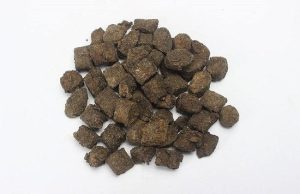
The stems and branches of this product are cylindrical, 3–4 cm long and 0.2–1 cm in diameter; the surface is reddish-brown or grayish-brown, with fine longitudinal striations and numerous small, raised brown lenticels; some young branches may have brownish-red pubescence; the texture is hard, with an irregular fracture surface; the cortex is reddish-brown, and the xylem is lighter in color.The leaves are mostly curled and have short petioles; when flattened, the leaf blades are ovate or elliptical, 3–8 cm long and 2–5 cm wide; the surface is yellowish-brown, with young leaves covered in fine downy hairs; the apex is bluntly rounded, the base is rounded or broadly cuneate, and the margin is entire; the texture is leathery. It has a faint odor and a astringent taste.
Properties of Processed Slices
1. Mulberry Mistletoe: This product consists of thick slices or irregular short segments. The outer surface is reddish-brown or grayish-brown, with fine longitudinal striations and numerous small, raised brown lenticels; some young branches may exhibit brownish-red downy hairs. The cross-section shows reddish-brown phloem and lighter-colored xylem.The leaves are mostly curled or fragmented; when flattened, intact leaves are ovate or elliptical, with a yellowish-brown surface. Young leaves are covered with fine downy hairs; the apex is bluntly rounded, the base is rounded or broadly cuneate, and the margin is entire; the texture is leathery. It has a faint odor and an astringent taste.
2. Wine-soaked Mulberry Mistletoe: Similar in appearance to Mulberry Mistletoe, but deep yellow in color.
Botanical Information
Botanical Classification
A plant of the genus *Mistletoe* (Cuscuta) in the family Cuscutaceae.
Morphological Characteristics
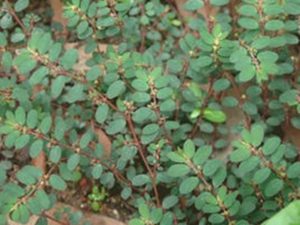
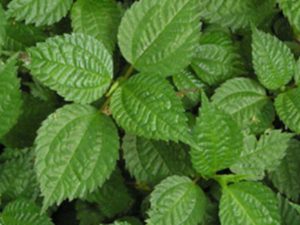
A shrub, 0.5–1 m tall. Young branches and leaves are densely covered with rust-colored stellate hairs, sometimes with sparse, superimposed stellate hairs, later becoming glabrous; twigs are grayish-brown with minute lenticels.Leaves are opposite or nearly opposite; petioles are 8–10 mm long; leaf blades are thick papery, ovate to long-ovate, 2.5–6 cm long, 1.5–4 cm wide, with a rounded-obtuse apex and a cuneate or broadly cuneate base; lateral veins are 3–4 pairs, slightly prominent.Umbel-like inflorescences, 1–2 axillary or arising from the axils of defoliated twigs, bearing 1–4 flowers, usually 2; inflorescence and perianth covered with stellate hairs; peduncle 2–4 mm long; pedicel 6–7 mm long; bracts scaly;flowers brown; receptacle elliptic or ovoid; epicalyx annular; corolla tubular in bud, 2.5–2.7 cm long, slightly curved, expanded in the lower half, apex ovoid, with 4 spoon-shaped, reflexed lobes; filaments 2/3 shorter than anthers; anther chambers with transverse septa; disk cup-shaped;the style is linear, with a capitate stigma. The berry is elliptic or nearly spherical, with the pericarp densely covered with small tubercles and sparsely hairy; when ripe, the fruit is pale yellow, up to 1 cm long, and the pericarp becomes smooth. Flowering and fruiting occur from April to January of the following year.
Distribution Area
Distributed in Fujian, Guangdong, Guangxi, and other areas.