Evodia is a commonly used medicinal herb for warming the interior. It consists of the dried, nearly ripe fruits of the Rutaceae plants Evodia rutaecarpa (Juss.) Benth., Evodia rutaecarpa (Juss.) Benth. var. officinalis (Dode) Huang, or Evodia rutaecarpa (Juss.) Benth. var. bodinieri (Dode) Huang. It has the therapeutic effects of dispelling cold and relieving pain, subduing counterflow and stopping vomiting, and tonifying yang to stop diarrhea. It is used to treat Jueyin-type headaches, abdominal pain due to cold hernia, cold-damp beriberi, menstrual abdominal pain, epigastric and abdominal distension and pain, vomiting and regurgitation of acid, and early-morning diarrhea.

Evodia
Evodia is a commonly used medicinal herb for warming the interior. It consists of the dried, nearly ripe fruits of the Rutaceae plants Evodia rutaecarpa (Juss.) Benth., Evodia rutaecarpa (Juss.) Benth. var. officinalis (Dode) Huang, or Evodia rutaecarpa (Juss.) Benth. var. bodinieri (Dode) Huang. It has the therapeutic effects of dispelling cold and relieving pain, subduing counterflow and stopping vomiting, and tonifying yang to stop diarrhea. It is used to treat Jueyin-type headaches, abdominal pain due to cold hernia, cold-damp beriberi, menstrual abdominal pain, epigastric and abdominal distension and pain, vomiting and regurgitation of acid, and early-morning diarrhea.
Chinese Name : 吴茱萸
Latin Name : Euodiae Fructus
Aliases : Edible Cornelian Cherry, Wu-yu, Tea Pepper, Lacquer Pepper, Premium Pepper, Fermented Pepper, Qi Pepper
Authentic Producing Area : Mainly produced in Guizhou, Hunan, Sichuan, Yunnan, and Shaanxi
Nature, Flavor & Meridian Tropism : Pungent and bitter in taste; warm in nature; enters the Liver, Spleen, Stomach, and Kidney meridians
Benefits & Efficacy
Benefits
Dispels cold and relieves pain; subdues counterflow and stops vomiting; supports yang and stops diarrhea.
Indications
Mainly used to treat Jueyin-type headaches, abdominal pain due to cold hernia, cold-damp beriberi, menstrual abdominal pain, epigastric and abdominal distension and pain, vomiting with regurgitation of acid, and early-morning diarrhea.
Usage and Dosage
Take 2–5 g as a decoction; use an appropriate amount for external application.
Precautions
1. This herb is pungent, hot, and intensely drying; it can easily deplete qi and stir up internal heat, so it should not be used in large doses or for prolonged periods. 2. Use with caution during pregnancy.
Chemical Constituents
This product primarily contains alkaloids and essential oils. 1. Alkaloids: Evodiamine, evodiamine-II, evodiamine-III, hydroxyevodiamine, evodiamide, etc. 2. Essential oils: Evodianene, linalool, limonin (evodianolide), evodianolide alcohol, etc. 3. Others: Also contains evodianic acid, evodianone, evodianin, etc.
Pharmacological Actions
This product has effects such as inhibiting gastrointestinal motility, preventing ulcers, relieving diarrhea, protecting against myocardial damage, lowering blood pressure, reducing inflammation and pain, inhibiting tumor growth, and preventing blood clots.
Relevant Discussions
1. *Shennong’s Classic of Materia Medica*: “Primarily warms the middle burner, descends qi, relieves pain, treats coughing, hiccups, chills, and fever, removes dampness, alleviates blood-stagnation-induced arthralgia, expels wind-pathogens, and opens the pores.”
2. *Compendium of Materia Medica*: “Relieves stagnation and dispels stagnant qi; treats acid regurgitation, Jueyin-type phlegm-induced headaches, yin-toxin-induced abdominal pain, hernias, bloody dysentery, and sores of the throat, tongue, and mouth.”
3. *Commentary on the Classic of Materia Medica*: “Eucommia fruit, being pungent and warm, warms the spleen and stomach while dispelling cold pathogens; thus, the middle jiao is naturally warmed, qi descends naturally, and all symptoms are eliminated.”
Applications
Clinical Applications
1. To treat Jueyin-type headaches, dry retching with frothy saliva, white tongue coating, and slow pulse, it is often used in combination with Ginger and Ginseng, as in the Wu Zhu Yu Decoction (*Treatise on Cold Damage*); to treat abdominal pain caused by cold hernia, it is commonly combined with Fennel, Sichuan Melia Fruit, and Wood Fragrance, as in the Qi-Guiding Decoction (*Concise Explanation of Medical Formulas*);It can treat dysmenorrhea caused by deficiency-cold in the Chong and Ren Vessels and stasis of blood, when used with Guizhi, Danggui, and Chuanxiong, as in the Wending Decoction (*Jingui Yaolue*); to treat swelling and pain from cold-dampness-induced beriberi, or when the condition ascends into the abdomen, it is combined with Mugua, Suye, and Binlang, as in the Jiming Powder (*Leibian Zhu Shi Jiyan Yifang*).
2. To treat abdominal pain and unceasing vomiting caused by cholera, it is often used in combination with Dried Ginger (Gan Jiang) and Licorice (Gan Cao), as in the Wu Zhu Yu Decoction (from *Sheng Ji Zong Lu*);It can treat vomiting caused by external cold invading the body and disrupting the stomach’s harmonious descent; it can also treat rib-side pain, a bitter taste in the mouth, vomiting, and acid regurgitation resulting from liver qi stagnation transforming into fire and disharmony between the liver and stomach. When used with Pinellia and fresh ginger, and combined with Coptis, it forms the Zuo Jin Pills (Danxi’s Heart Methods).
3. A commonly used herb for treating spleen-kidney yang deficiency and early-morning diarrhea; it is often combined with Psoralea corylifolia, Myristica fragrans, and Schisandra chinensis, as in the Four Gods Pills (from *Annotated Effective Formulas for Women*).
Related Compatibility
1. Evodia with Ginger: Both herbs warm the stomach, dispel cold, and stop vomiting. Evodia focuses on descending rebellious qi, while ginger tends to promote circulation. When combined, their efficacy in descending rebellious qi is excellent. This combination is suitable for Jueyin-type headaches, dry heaving with frothy saliva, a white tongue coating, and a slow pulse.
2.Eucommia Ulmoides Combined with Melia Azedarach: Both Eucommia Ulmoides and Melia Azedarach can soothe the liver, regulate qi, and relieve pain. Eucommia Ulmoides, which is pungent and warm, tends to disperse stagnation and descend qi, while Melia Azedarach, which is bitter and cold, tends to clear heat and regulate qi. When combined, they effectively disperse stagnation, regulate qi, and relieve pain. This combination is suitable for conditions such as pain caused by the stagnation of cold and heat, disharmony between the liver and stomach, and hernias.
3. Eucommia Ulmoides Combined with Papaya: Eucommia Ulmoides is warm and descending, dispersing cold and drying dampness; Papaya harmonizes the middle burner, removes dampness, and relaxes tendons and activates meridians. When combined, they can both soothe the liver and unblock the meridians, as well as expel pathogenic cold and dampness. This combination is used to treat cold-damp beriberi, lower abdominal distension with cold pain, and vomiting and diarrhea.
4. Eucommia Ulmoides Combined with Coptis: Eucommia Ulmoides is pungent and warm; it can soothe the liver and relieve depression, descend counterflow to stop vomiting, and also neutralize acidity to relieve pain; Coptis clears and drains liver fire and stomach heat, thereby clearing liver fire and subduing stomach fire. When used together, these two herbs not only soothe the liver and relieve depression, regulating liver qi and resolving stagnation;but they also utilize their ability to descend qi to harmonize the stomach and reverse counterflow. Furthermore, Wu Zhu Yu acts as a counter-adjuvant to temper Huang Lian’s cold nature, guiding Huang Lian into the Liver Meridian so that it can clear fire without the drawback of excessive cooling. Together, they achieve the effects of clearing and purging Liver fire, as well as reversing counterflow and stopping vomiting. This combination can be used to treat rib pain, a bitter taste in the mouth, vomiting, and acid regurgitation caused by Liver depression transforming into fire and disharmony between the Liver and Stomach.
5. Eucommia Bark Combined with White Peony Root: Eucommia Bark is pungent and warm, capable of regulating the liver and relieving stagnation; White Peony Root is sweet and sour, astringent and yin-nourishing, capable of nourishing blood, softening the liver, and alleviating acute pain.When combined, these two herbs—one warming and one cooling, one pungent and dispersing, the other sour and astringent—not only use White Peony’s ability to tonify deficiency and harmonize the nutritive qi to mitigate Evodia’s tendency to injure yin, but also enhance Evodia’s ability to regulate the liver and descend qi while promoting White Peony’s tonifying properties, allowing their opposing qualities to complement one another. This combination is used to treat cramping and spasmodic pain in the epigastrium and abdomen.
6. Eucommia Bark Combined with Angelica Root: Eucommia Bark is pungent, hot, and intensely drying; it primarily enters the Liver meridian and also affects the Spleen and Stomach meridians. It regulates the Liver and promotes the flow of Qi, warms the middle burner and dispels cold, and naturally descends to warm the Liver and Kidneys while warming the uterus. Angelica Root is pungent, sweet, and warm; it both tonifies and promotes blood circulation. As a “Qi herb within the blood,” it is commonly used in gynecology to nourish blood and regulate menstruation.When used together, Wu Zhu Yu’s warming and dispersing action is supported by Dang Gui’s ability to promote blood circulation; Dang Gui’s warming and tonifying effect is complemented by Wu Zhu Yu’s ability to warm the meridians and facilitate blood flow.Eucommia, when combined with Angelica, warms and disperses without harming yin and blood; Angelica, when combined with Eucommia, tonifies blood without impeding its flow. They complement each other, blending firmness and suppleness, to warm the meridians, invigorate blood circulation, regulate menstruation, and relieve pain. This combination is used to treat delayed menstruation, scanty and dark menstrual flow, and cold pain in the lower abdomen caused by deficiency-cold in the Chong and Ren meridians.
Medicinal Identification
Raw Evodia and Processed Evodia: Raw Evodia is pungent and hot, slightly toxic, and is primarily used externally; it excels at dispelling cold and drying dampness, and is used for mouth ulcers, toothaches, eczema, and similar conditions.Processed Evodia has reduced toxicity and a milder drying effect, and is commonly used internally; it has the effects of dispelling cold and relieving pain, subduing counterflow and stopping vomiting, and assisting yang to stop diarrhea. It is frequently used for Jueyin-type headaches, menstrual abdominal pain, cold pain in the epigastrium and abdomen, vomiting and acid regurgitation, abdominal pain due to cold hernia, cold-damp beriberi, and early-morning diarrhea.
Related Medicines
Compound Berberine Tablets, Si Shen Pills (Tablets), Wu Ji Pills, Pediatric Spleen-Strengthening Plaster, and Si Fang Wei Tablets.
Related Prescriptions
Zuojin Pills (*Danxi’s Heart Methods*), Wu Zhu Yu Decoction (*Treatise on Cold Damage*), Dang Gui Si Ni Decoction with Added Wu Zhu Yu and Ginger (*Treatise on Cold Damage*), Wending Decoction (*Essentials of the Golden Cabinet*), Xianglian Pills (*Formulas of the Bureau of Medicinal Preparations*).
Medicinal Diet Therapy
A medicinal dish associated with Evodia is Evodia Porridge.
1. Effects: Tonifies the spleen and warms the stomach; warms the middle burner and dispels cold; relieves pain and stops vomiting. Suitable for cold-deficiency-type dysmenorrhea, as well as cold pain in the epigastrium and abdomen, and vomiting with acid regurgitation.
2. Ingredients: 2 grams of Evodia, 50 grams of japonica rice, 2 slices of ginger, and 2 sections of scallion white.
3. Preparation: Grind the Evodia fruit into a fine powder. First, cook the japonica rice into porridge. Once the rice is cooked, add the Evodia powder, ginger, and scallion whites, and continue cooking until the porridge is ready.
4. Usage: Take twice daily, in the morning and evening, while still warm.
Notes
Patients requiring treatment with traditional Chinese medicine should first consult a licensed TCM hospital, where a TCM practitioner will conduct a professional diagnosis and prescribe the appropriate herbal formula.
Processing & Preparation
Harvesting & Processing
From August to November, before the fruits have split open, cut the fruit-bearing branches, sun-dry or dry them at a low temperature, and remove impurities such as twigs, leaves, and fruit stalks. Process with licorice decoction before use.
Processing Methods
1. Wu Zhu Yu: Take the raw herbal material and remove impurities, fruit stalks, and twigs.
2. Processed Wu Zhu Yu: Place clean licorice slices in a pot, add water (1:5), and decoct twice. Strain out the residue. While still hot, add Wu Zhu Yu and mix thoroughly until slightly moistened. Wait until the liquid is fully absorbed, then stir-fry over low heat until dry. Remove and allow to cool.For every 100 kg of Evodia, use 6 kg of licorice.
3. Salt-Roasted Evodia: Place the cleaned Evodia in a suitable container, add salt water and mix thoroughly until evenly moistened. Transfer to a pot and roast over low heat until the fruits crack open and swell slightly; remove and allow to cool. For every 100 kg of Evodia, use 2 kg of table salt.
4. Coptis-processed Evodia: Take cleaned Coptis slices or fragments, place them in a pot, add an appropriate amount of water, and decoct to make a decoction. Strain out the Coptis residue, add the cleaned Evodia, and let it sit until the Coptis liquid is fully absorbed. Then, stir-fry over low heat until slightly dry, remove, and sun-dry. For every 100 kg of Evodia, use 12 kg of Coptis.
5. Wine-Stir-Fried Evodia: Take cleaned Evodia and mix thoroughly with yellow wine. Let it sit until the wine is fully absorbed. Place in a pot and stir-fry over low heat until the pieces crack open. Remove and let cool. For every 100 kg of Evodia, use 20 kg of yellow wine.
6. Vinegar-stir-fried Evodia: Mix cleaned Evodia with rice vinegar until evenly coated; let stand until the vinegar is fully absorbed; place in a wok and stir-fry over low heat until the berries crack open; remove and let cool. For every 100 kg of Evodia, use 18 kg of rice vinegar.
7. Ginger-processed Evodia: Mix cleaned Evodia berries thoroughly with ginger juice, then stir-fry over low heat until dry. Use 25 kg of fresh ginger for every 100 kg of Evodia berries.
Storage Methods
Store in a dry container. Processed Evodia, salt-fried Evodia, Coptis-processed Evodia, wine-fried Evodia, vinegar-fried Evodia, and ginger-processed Evodia should be kept in airtight containers and stored in a cool, dry place.
Crude Drug Identification
Properties of Crude Drugs
The fruits are spherical or slightly pentagonal and flattened, with a diameter of 2–5 mm. The surface is dark greenish-yellow to brown, rough, with numerous punctate protrusions or sunken oil dots. The apex has a pentagonal, star-shaped fissure; the base has a calyx and fruit stalk, covered with yellow downy hairs. The texture is hard and brittle.It has a strong, aromatic scent and a pungent, bitter taste. The best quality specimens are plump, green in color, and have a strong aroma.
Properties of Processed Slices
1. Evodia Fruit: See the “Medicinal Material” entry.
2. Processed Evodia Fruit: Darker in color, with a slightly milder aroma and flavor.
3. Salt-Roasted Evodia Fruit: Surface is charred black; rich in color and aroma; pungent in taste, with a slightly bitter and salty aftertaste.
4. Coptis-Processed Evodia Fruit: Surface is yellowish-brown; fragrant; bitter in taste.
5. Wine-fried Evodia: Cracked, with a darker color and a faint aroma of wine.
6. Vinegar-fried Evodia: Cracked, with a dark brown surface and a faint aroma of vinegar.
7. Ginger-processed Evodia: Cracked, with a darker color and a ginger-like aroma.
Botanical Information
Botanical Classification
Species of the genus Evodia in the Rutaceae family, including Evodia officinalis, Evodia hupehensis, and Evodia pubescens.
Morphological Characteristics
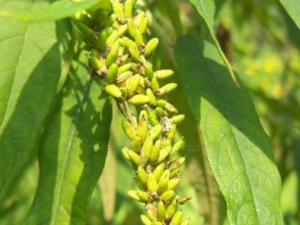
1. Evodia: An evergreen shrub or small tree, 3–10 m tall. The bark is bluish-grayish-brown; young branches are purplish-brown with tiny, round lenticels; young branches, leaf rachis, and flower stalks are all covered with rust-colored tomentum.The leaves are odd-pinnate, opposite, and 20–40 m long including the petiole; the petiole is 4–8 cm long, and the leaflet petioles are 2–5 mm long; there are 5–9 leaflets,elliptic to ovate, 5.5–15 cm long, 3–7 cm wide, abruptly narrowing to a short point at the apex, with a cuneate to broadly cuneate or rounded base; margins entire or with indistinct blunt teeth; lateral veins inconspicuous; both surfaces covered with pale yellowish-brown long soft hairs, particularly dense along the veins; bearing distinct oil dots; thick papery or papery in texture.Dioecious; corymbose panicles, terminal; flower axis stout, covered with yellowish-brown long soft hairs; at the base of the flower axis, there are two narrow, opposite, leaf-like bracts; sepals 5, broadly ovate, ca. 1–2 mm long, covered with short soft hairs;5 white, oblong petals, 4–6 mm long; male flowers bear 5 stamens inserted on a very small disk; anthers basifixed and elliptic; filaments stout and short, hairy; the apical part of the rudimentary ovary is 4–5-lobed;In female flowers, the petals are larger than those of male flowers; the staminodes are scale-like; the ovary is superior, oblong, with 5 carpels; after flowering, it widens into a flattened orbite, bearing coarse glandular dots; the style is stout and short, with the stigma shallowly 4–5-lobed at the apex.The fruit is flattened-globose; when ripe, it splits into 5 mericarps, resembling a capsule, purplish-red in color, with large oil gland dots on the surface. Each mericarp contains a single seed, which is black and glossy. Flowering occurs from June to August, and fruiting from September to October.
2. Shi Hu: This variety is very similar to the nominate species. The distinguishing feature is that this variety possesses a distinctive pungent odor. There are 3–11 leaflets; the leaf blades are relatively narrow, oblong to narrowly lanceolate, with an acuminate or long-acuminate apex. The leaflets are spaced relatively far apart; the lateral veins are fairly prominent; the margins are entire; both surfaces are densely covered with long soft hairs, which are densest along the veins; and the oil glands are large.The inflorescence axis is often covered with pale yellow or colorless long soft hairs. The mature fruit clusters are less dense than those of the nominate species. The seeds are bluish-black. Flowering occurs from July to August, and fruiting from September to October.
3. Sparsely-haired Evodia: Similar to the previous species.Twigs are covered with sparse, long, yellow-rust-colored or silky hairs. The leaf rachis is covered with long soft hairs; there are 5–11 leaflets, with leaf shapes varying considerably—oblong, lanceolate, or ovate-lanceolate. The upper surface of the midvein is slightly covered with sparse, short hairs, while the lower surface along the veins is covered with short soft hairs; lateral veins are distinct, and oil gland dots are small. Flowering occurs from July to August, and fruiting from September to October.
Distribution Area
1. Chinese Cornel: Distributed in Zhejiang, Anhui, Fujian, Hubei, Hunan, Guangdong, Guangxi, Sichuan, Guizhou, Yunnan, Shaanxi, Gansu, and Taiwan. 2. Stone Tiger: Distributed in Zhejiang, Jiangxi, Hubei, Hunan, Guangxi, Sichuan, and Guizhou. 3. Sparsely-haired Chinese Cornel: Distributed in Jiangxi, Hunan, Guangdong, Guangxi, and Guizhou.
Growth Habits
Prefers a warm and humid climate; does not tolerate cold or dry conditions. Cultivation is best suited to sunny locations with deep, loose, fertile, well-drained sandy loam or humus-rich loam; low-lying, waterlogged areas are unsuitable.
Propagation Methods
Propagation is by seed, division, or cuttings.
Cultivation Techniques
1. Seed Propagation: Select vigorous, high-yielding plants. Harvest the fruits after they have ripened, then air-dry them in the shade. Avoid direct sunlight, as this can cause the seeds to lose their germination capacity. Sow in spring, from late March to early April, using the row-sowing method. Dig furrows 15–20 cm apart and 3–5 cm deep, sow the seeds evenly, cover lightly with fine soil, cover with a layer of straw, and water to maintain moisture.Due to its slow propagation rate, this method is now rarely used in commercial production.
2. Division: In late December, dig up the topsoil around the lateral roots at a distance of 0.6 m from the mother plant to expose the thicker lateral roots. Make an incision approximately every 7 cm, then cover with soil and apply manure. In the spring, seedlings will emerge from the incisions; once the seedlings have grown large enough, they can be separated from the mother plant.
3. Propagation by Cuttings: For stem cuttings, in November–December or January–February before bud break, cut healthy 1- to 2-year-old branches into cuttings 20–25 cm long with 3–4 buds. Trim both ends at an angle, plant them in a nursery bed so that 5–10 cm remains above ground, cover with a layer of straw, and ensure adequate watering and shade.Roots will form approximately 1–2 months after planting. Transplant the seedlings when they reach 30 cm in height in the second year. For root cuttings, select trees aged 4–6 years. Around early February, choose relatively thick lateral roots, cut them into 15–18 cm segments to serve as cuttings, dig holes with a row and plant spacing of 15 cm × 15 cm, insert one segment diagonally into each hole, cover with soil, and water.The seedlings can be transplanted in their second year. The optimal transplanting periods are March–April or November–December. Dig planting holes with a row and plant spacing of (1.5–2) m × (1.5–2) m, a diameter of 60 cm, and a depth of 45 cm. Apply well-rotted manure to the holes. Dip the roots of the seedlings in yellow mud slurry before planting, then cover with soil, firm it down, and water.
Pest and Disease Control
1. Sooty mold: To eliminate the source of infection in May–June, spray a 1:1:200 solution of Bordeaux mixture.
2. Rust: When symptoms appear in mid-May, spray a 0.2–0.3° Baumé lime-sulfur mixture or a 100-fold dilution of 25% triazole fungicide. Other diseases include resin disease, etc.
3. Brown longhorn beetle: Active from July to October; larvae bore into the trunk and feed on the xylem. They can be controlled by manual removal.
4. Orange swallowtail butterfly: In March, larvae feed on buds and tender leaves or chew notches and holes into them. Spray a 300-fold dilution of Bt emulsion. Other pests include aphids and red wax scale.