Oxtail Vine, a name in traditional Chinese medicine. It refers to the roots and rhizomes of Smilax riparia A. DC., a plant in the Liliaceae family. It is distributed in Guangdong, Guangxi, Shaanxi, Zhejiang, Jiangsu, Jiangxi, Guizhou, and other regions. It has the effects of dispelling wind-dampness, unblocking meridians, and eliminating phlegm to relieve coughs. It is commonly used for rheumatic arthralgia, lumbago due to overwork, trauma, and coughs with wheezing.

Oxtail Vine
Oxtail Vine, a name in traditional Chinese medicine. It refers to the roots and rhizomes of Smilax riparia A. DC., a plant in the Liliaceae family. It is distributed in Guangdong, Guangxi, Shaanxi, Zhejiang, Jiangsu, Jiangxi, Guizhou, and other regions. It has the effects of dispelling wind-dampness, unblocking meridians, and eliminating phlegm to relieve coughs. It is commonly used for rheumatic arthralgia, lumbago due to overwork, trauma, and coughs with wheezing.
Chinese Name : 牛尾菜
Aliases : Horsetail Root, Cross-River Fern, Old Dragon’s Beard, Diamond Bean Vine, Large Tendon-Stretching Herb, Back Spine Bone, Thousand-Layer Pagoda, Carp’s Beard, Mountain Cowpea, Wavy-Edge Bamboo, White-Bearded Old Man, Soft-Leafed Smilax.
Nature, Flavor & Meridian Tropism : Sweet and slightly bitter in taste; neutral in nature. Enters the Liver and Lung meridians
Benefits & Efficacy
Benefits
Dispels wind-dampness, unblocks meridians, and eliminates phlegm to relieve cough.
Indications
Rheumatic arthralgia, lumbago due to overwork, trauma from falls or blows, cough, and shortness of breath.
Usage and Dosage
Internal use: Decocted as a soup, 9–15 g; larger doses of up to 30–60 g may be used; infused in wine or stewed with meat. External use: Apply an appropriate amount, pounded and applied as a poultice.
Precautions
Patients requiring treatment with Chinese herbal medicine should first consult a licensed Traditional Chinese Medicine (TCM) hospital to receive a prescription following a professional TCM differential diagnosis.
Chemical Constituents
The rhizome and roots contain xingtigaosapogenin-3-O-α-L-rhamnopyranosyl-(1-6)-β-D-glucopyranoside,Xintigaosapogenin-3-O-β-D-glucopyranosyl-(1-4)-O-[α-L-rhamnopyranosyl-(1-6)]-β-D-glucopyranoside.
Pharmacological Actions
1. Antibacterial activity. 2. Antitussive, expectorant, and bronchodilatory effects.
Relevant Discussions
1. *Jiangxi Herbal Medicine*: “Dispels wind and dissipates blood stasis. Treats rheumatic arthralgia and trauma-induced injuries.”
2. *Guizhou Herbal Medicine*: “Clears heat and relieves cough; tonifies deficiency and restores vitality.”
3. *Shaanxi Chinese Herbal Medicine*: “Dispels wind-dampness, promotes blood circulation and unblocks meridians, reduces inflammation, and relieves pain. Primarily used to treat rheumatoid arthritis, pain in tendons and bones, hemiplegia caused by hypertension, osteomyelitis, and bone tuberculosis.”
Applications
Related Prescriptions
1. For rheumatic joint pain and trauma: 30 g of *Yao Bian Zhu* root, 15 g each of *Hu Ci*, *Shui Long Gu*, and *Ba Jiao Feng*, 9 g of *Zhu Sha Gen*, and 3 g of *Cao Wu*. Soak in wine and take orally. Take twice daily, 10 ml each time; do not exceed the recommended dose.
2. For lower back and leg pain due to kidney deficiency: 15–30 g of (Yao Bian Zhu) root. Stew with pig’s feet and consume. (Recipes 1–2 are from *Hunan Materia Medica*)
3. For sciatica: 21 g of *Cao Bao Wu*, 15 g of *Pai Qian Cao* root, and 12 g of *Jie Gu Jin Li Lan*. Add an appropriate amount of water and wine, decoct, and take orally. (*Fujian Materia Medica*)
4. For headaches and dizziness: 60 g of Oxtail Vegetable root, 15 g of Wa’er Vine root, and 2 eggs. Decoct in water; drink the broth and eat the eggs. (*Jiangxi Herbal Medicine*)
5. For chronic bronchitis and lymphadenitis: 9–15 g of *Yao Bian Zhu* root and 30 g of Small-Leaf San Dian Jin. Decoct in water and take the decoction. (*Hunan Materia Medica*)
6. For kidney-deficiency cough: 9g each of Diamond Bean Vine, Hungry Leech Root, Big Fire Grass Root, and Wild Goji Root; 3g of Prostrate Palm Root. Steam with chicken and eat.
7. For hemoptysis: 9g each of Diamond Bean Vine, Big Mountain Goat, Rock Lily, and Guanyin Grass; 6g of One Cloud. Simmer in water and drink the decoction.
8. For treating edema due to qi deficiency: 9 g each of Diamond Bean Vine, Hairy Candle, and Ground Ginseng; 6 g of Water Sorghum Root; and 3 g of Sunflower Stem Pith. Use mung beans as a guide; stew with meat and consume. (Formulas 6–8 are from *Guizhou Herbal Medicine*)
Notes
References: 1. *Medicinal Herbs of Guangxi*. 2. *Medicinal Herbs of Jiangxi*. 3. *Compendium of Chinese Medicinal Herbs*.
Processing & Preparation
Harvesting & Processing
Harvest in summer and fall; wash thoroughly and air-dry.
Crude Drug Identification
Properties of Crude Drugs
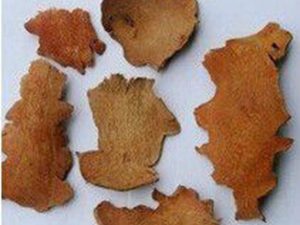
The rhizome is irregularly nodular, creeping, and branched; its surface ranges from yellowish-brown to dark brown, with each node bearing an indented stem scar or a short, hard remnant.The roots grow from one side of the rhizome; they are cylindrical, slender, and twisted, 20–30 cm long and approximately 2 mm in diameter, with a few small lateral roots. The surface is grayish-yellow to light brown, with fine longitudinal striations and transverse fissures; the cortex often splits transversely, exposing the xylem. The texture is tough; the cross-section reveals a yellow woody core in the center.It has a faint odor and a slightly bitter, astringent taste. Specimens with numerous, long, and tough roots are considered superior.
Botanical Information
Botanical Classification
A plant of the Liliaceae family, known as Cowtail Herb.
Morphological Characteristics
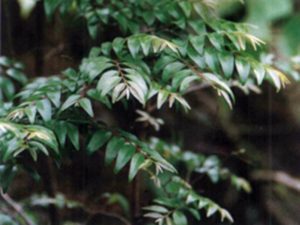
A perennial herbaceous vine. Possesses a rhizome. The stem is hollow, with a small amount of pith; when dried, it becomes concave and grooved, and is thornless. Leaves are alternate; petioles are 7–20 mm long, with the point of detachment located toward the upper part, and tendrils present below the middle;leaf blades are relatively thick, ovate, elliptic to oblong-lanceolate, 7–15 cm long and 2.5–11 cm wide, green on the underside, and glabrous. Umbellate inflorescences are axillary; the main peduncle is relatively slender, and the bracteoles generally do not fall off during flowering; flowers are unisexual, with separate male and female plants; the perianth consists of 6 free segments, 4–5 mm long, and pale green;Male flowers have 6 stamens, 2–3 mm long, with linear anthers that are more or less curved, approximately 1.5 mm long; female flowers are slightly smaller than male flowers, lacking or bearing reduced, awl-shaped stamens, with a 3-chambered ovary and a 3-lobed stigma. The berry is spherical, 7–9 mm in diameter, and black when ripe. Flowering occurs from June to July, and fruiting in October.
Distribution Area
Distributed in Guangdong, Guangxi, Shaanxi, Zhejiang, Jiangsu, Jiangxi, Guizhou, and other regions.