Ghost Arrow Feather is a name for a traditional Chinese medicine. It consists of winged branches or wing-like appendages from the plant Euonymus latus (Thunb.) Sieb., of the Celastraceae family. It is distributed in Northeast China, as well as in Hebei, Shaanxi, Gansu, Shandong, Jiangsu, Anhui, Zhejiang, Hubei, Hunan, Sichuan, Guizhou, and Yunnan.It has the therapeutic effects of promoting blood circulation, regulating menstruation, detoxifying, reducing swelling, and killing parasites. It is used to treat masses and lumps, pain in the chest and abdomen, amenorrhea, dysmenorrhea, metrorrhagia and menometrorrhagia, postpartum abdominal pain due to blood stasis, retained lochia, hernias, arthralgia, boils and swellings, pain from falls and blows, abdominal pain caused by parasitic infestations, burns and scalds, and venomous snake bites.

Ghost Arrow Feather
Ghost Arrow Feather is a name for a traditional Chinese medicine. It consists of winged branches or wing-like appendages from the plant Euonymus latus (Thunb.) Sieb., of the Celastraceae family. It is distributed in Northeast China, as well as in Hebei, Shaanxi, Gansu, Shandong, Jiangsu, Anhui, Zhejiang, Hubei, Hunan, Sichuan, Guizhou, and Yunnan.It has the therapeutic effects of promoting blood circulation, regulating menstruation, detoxifying, reducing swelling, and killing parasites. It is used to treat masses and lumps, pain in the chest and abdomen, amenorrhea, dysmenorrhea, metrorrhagia and menometrorrhagia, postpartum abdominal pain due to blood stasis, retained lochia, hernias, arthralgia, boils and swellings, pain from falls and blows, abdominal pain caused by parasitic infestations, burns and scalds, and venomous snake bites.
Chinese Name : 鬼箭羽
Aliases : Euonymus, Ghost Arrow, June Ling, Four-Sided Blade, Biji Chai, Four-Sided Tree, Pheasant Twig, Four-Sided Halberd, Swelling-Reliever, Anesthetic
Nature, Flavor & Meridian Tropism : Taste: bitter, pungent; Nature: cold; Enters the Liver and Spleen meridians
Benefits & Efficacy
Benefits
Promotes blood circulation and regulates menstruation; detoxifies and reduces swelling; kills parasites.
Indications
Mainly used to treat masses and lumps, pain in the chest and abdomen, amenorrhea, dysmenorrhea, metrorrhagia and menometrorrhagia, postpartum abdominal pain due to blood stasis, retained lochia, hernias, arthralgia, boils and swellings, pain from falls and blows, abdominal pain caused by parasitic infestations, scalds and burns, and venomous snake bites.
Usage and Dosage
Internal use: Decocted as a soup, 4–9 g; or steeped in wine, or incorporated into pills or powders. External use: Apply an appropriate amount as a pounded poultice or use the decoction for washing; or grind into a powder and apply as a paste.
Precautions
Ghost Arrow Feather contains potentially toxic components; excessive use or accidental ingestion may cause toxic reactions, so dosage must be strictly controlled under medical supervision.
Chemical Constituents
Ghost Arrow Feather contains compounds such as flavonoids and their glycosides, cardiac glycosides, triterpenes, steroids, and organic acids.
Pharmacological Actions
Water and ethanol extracts of Ghost Arrow Feather exhibit a wide range of pharmacological effects, including hypoglycemic, lipid-regulating, anti-myocardial ischemia, antihypertensive, and nephroprotective actions. They also possess antiallergic, anti-inflammatory, and antibacterial properties. The n-butanol fraction exhibits antitumor activity, while the total flavonoid extract of Ghost Arrow Feather prevents lipid peroxidation.
Relevant Discussions
1. *The Classic of Herbal Medicine*: “Treats excessive uterine bleeding and vaginal bleeding in women, abdominal distension with sweating; expels pathogenic factors; and eliminates ghostly toxins, witchcraft, and malevolent influences.”
2. *The Supplementary Record*: “Treats sudden abdominal pain caused by evil influences; expels white worms; alleviates wind-toxin swelling of the skin; and relieves vaginal discomfort.”
Applications
Clinical Applications
1. For treating abdominal masses: 6 g of Euonymus, 9 g of red peony root, 9 g of safflower, and 3 g of red wood; decoct in water and take orally. (*Manual of Commonly Used Chinese Herbs in Liaoning*)
2. For amenorrhea and abdominal pain due to blood stasis: 9 g of Ghost Arrow Feather, 15 g of Salvia miltiorrhiza, 12 g of Red Peony Root, 30 g of Motherwort, and 9 g of Cyperus rotundus. Decoct in water and take orally. (*Manual of Shandong Medicinal Herbs*)
3. For irregular menstruation: 15 g of Euonymus stems and branches. Decoct in water, mix with brown sugar, and take orally. (*Hunan Pharmacopoeia*)
4. For menorrhagia: 10 g of Euonymus, 10 g of Angelica sinensis, and 10 g of Glycyrrhiza. Decoct in water and take twice daily. (*Medicinal Plants of Northeast China*)
5. For nephritis: 60 g of Euonymus stem bark. Decoct in water to extract the juice. Mix the medicinal juice with an egg and drink as tea. (*Manual of Henan Chinese Herbal Medicines*)
Related Compatibility
Ghost Arrow Feather is often combined with herbs such as Angelica sinensis, Safflower, and Motherwort to enhance its ability to promote blood circulation and dispel blood stasis.
Notes
Patients requiring treatment with traditional Chinese medicine should first consult a licensed TCM hospital, where a TCM practitioner will conduct a professional diagnosis and prescribe the appropriate herbal formula.
Processing & Preparation
Harvesting & Processing
It can be harvested year-round. After cutting the branches, select the tender shoots and sun-dry them. Alternatively, collect the wing-like structures and sun-dry them.
Processing Methods
Take the raw material, remove impurities, wash thoroughly, moisten thoroughly, cut into sections or thick slices, and dry.
Storage Methods
Store in a well-ventilated, dry place.
Crude Drug Identification
Properties of Crude Drugs
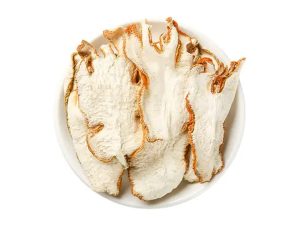
This product consists of cylindrical branches with wing-like structures, highly branched at the tips, approximately 40–60 cm long, with a branch diameter of 2–6 mm. The surface is relatively rough, ranging in color from dark gray-green to grayish-yellow-green, with longitudinal striations and lenticels. The lenticels are arranged longitudinally, grayish-white in color, slightly raised, and slightly curled outward.The wing-like structures are flat, slightly thicker near the base and gradually thinner toward the tip; they are 4–10 mm wide and approximately 2 mm thick. Their surface ranges from dark grayish-brown to dark brownish-red, with slender, straight longitudinal striations or slightly wavy curves. The wings detach very easily, and break marks are commonly seen on the branches. The branches are hard and tough, difficult to break; the cross-section is pale yellowish-white and coarse-fibrous.It has a faint odor and a slightly bitter taste. Additionally, commercially available products may include “wood wings,” which are broken, flat, thin slices of varying lengths and sizes, approximately 4–10 mm wide,with uneven thickness on both sides; the side attached to the branch can be up to 2 mm thick, gradually thinning outward. The surface is earthy brownish-yellow with a slight sheen, and both sides feature fine, dense longitudinal striations or slight wavy curves; occasional transverse grooves may be visible. The texture is light and brittle, breaking easily; the fracture surface is smooth and dark red. It has a faint odor and a slightly astringent taste.When using the branches, those with tender stems, uniform segments, and prominent, complete wing-like structures are preferred. When using the wing-like structures, those that are pure, reddish-brown in color, free of branches and impurities, and thoroughly dried are preferred.
Properties of Processed Slices
This product consists of small cylindrical segments or thick slices. The surface is grayish-green with longitudinal wrinkles, and grayish-brown, arrow-feather-like wings extend from all four sides. It is loose and brittle, breaking or flaking off easily, with a brown cross-section. The twigs are woody and hard, with a yellowish-white cross-section. It is odorless, with a slightly bitter and astringent taste.
Botanical Information
Botanical Classification
Celastrus, a plant of the Celastraceae family.
Morphological Characteristics
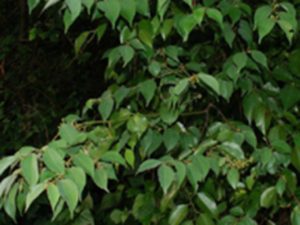
Euonymus is a deciduous shrub with a smooth, glabrous stem, reaching a height of 2–3 m. It is highly branched. The twigs are typically quadrangular, often bearing flat, corky, strap-like wings along the ridges; these wings are approximately 1 cm wide or wider.Leaves are simple and opposite; petioles are extremely short; leaf blades are thin, slightly membranous, obovate, elliptic to broadly lanceolate, 2–6 cm long and 1.5–3.5 cm wide, with a short acuminate or acuminate apex, finely serrate margins, and a cuneate or broadly cuneate base; the upper surface is dark green, and the lower surface is pale green.Cymes are axillary, bearing 3–9 flowers; the flowers are small, bisexual, pale yellowish-green, and about 3 mm in diameter; the calyx is shallowly 4-lobed, with semicircular lobes bearing irregular hair-like teeth along the margins; there are 4 petals, nearly circular, sometimes with slightly wavy margins; there are 4 stamens with short filaments attached to a thick, square disk, which is fused with the ovary.The capsule is elliptical, green or purple, 1–3-chambered, and dehiscent. The seeds are elliptical or ovate, pale brown, and covered externally by an orange-red aril. Flowering occurs from May to June, and fruiting from September to October.
Distribution Area
Distributed in Northeast China, as well as Hebei, Shaanxi, Gansu, Shandong, Jiangsu, Anhui, Zhejiang, Hubei, Hunan, Sichuan, Guizhou, and Yunnan.
Propagation Methods
Propagation is by seed or cuttings.
Cultivation Techniques
1. Seed Propagation: After collecting seeds in the fall, sun-dry them to separate the seeds from the pod. Rub off the aril with wood ash, wash the seeds, and air-dry them in the shade. Then, mix them with sand and store them in a layered pile. In the following spring, sow the seeds in rows, covering them with soil and straw to retain moisture.
2. Cuttings: Take cuttings from semi-mature branches in June or July.
3. Field Management: Seedlings should be transplanted in their second year and cultivated for an additional 3–4 years before being ready for final planting. Water and fertilize cuttings after planting; from mid-October to mid-November, cover the seedlings with plastic sheeting, ensuring they are thoroughly watered before covering to prepare for winter. Around the Qingming Festival, depending on weather and temperature changes, ventilate the seedlings during midday.
Pest and Disease Control
There are no significant diseases. Pests include scale insects, scarab beetles, Euonymus arrowhead scale, and Euonymus inchworms. Control scale insects with a 1,500–2,000-fold dilution of 40% Sometex emulsifiable concentrate;a 2,500–3,000-fold dilution of Beauveria bassiana (containing 40 billion spores per gram) to control scarab beetles, a 2,000–3,000-fold dilution of 40% imidacloprid emulsifiable concentrate to control Euonymus arrowhead scale, and a 2,000-fold dilution of 45% cypermethrin to control Euonymus inchworms.