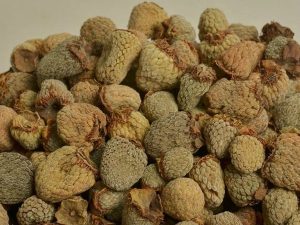
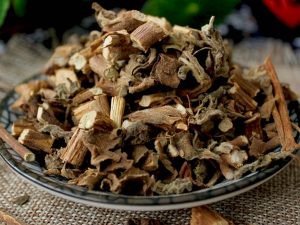
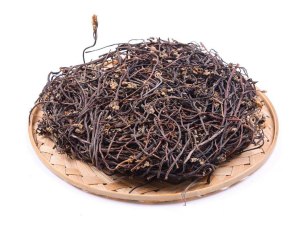
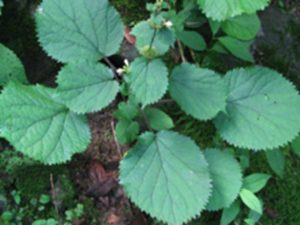
Eclipta prostrata, a traditional Chinese medicine. It is the dried aerial parts of Eclipta prostrata L., a plant in the genus Eclipta of the Asteraceae family. It has the effects of tonifying the liver and kidneys, cooling the blood, and stopping bleeding.It is primarily used to treat liver and kidney yin deficiency, loose teeth, premature graying of hair, dizziness and tinnitus, soreness and weakness in the lower back and knees, hemoptysis, epistaxis, hematuria, bloody diarrhea, metrorrhagia and menorrhagia, and bleeding from external injuries caused by yin deficiency and blood heat.

Eclipta
Eclipta prostrata, a traditional Chinese medicine. It is the dried aerial parts of Eclipta prostrata L., a plant in the genus Eclipta of the Asteraceae family. It has the effects of tonifying the liver and kidneys, cooling the blood, and stopping bleeding.It is primarily used to treat liver and kidney yin deficiency, loose teeth, premature graying of hair, dizziness and tinnitus, soreness and weakness in the lower back and knees, hemoptysis, epistaxis, hematuria, bloody diarrhea, metrorrhagia and menorrhagia, and bleeding from external injuries caused by yin deficiency and blood heat.
Chinese Name : 墨旱莲
Latin Name : Ecliptae Herba
Aliases : Jinling Grass, Lotus Seed Grass, Dry Lotus Grass, Dry Lotus Seed, White Dry Lotus, Pig’s Tooth Grass, Dry Lotus Pod, Monkey’s Head, Lotus Grass, Ink-Dropper Grass, Ink-Smoke Grass, Ink Vegetable, White Flower Grass, White-Flowered Crabgrass, Ink-Marked Vegetable, Wild Water Impatiens, Ink-Juice Grass, Jointed Black, White Field Black Grass, Ink Grass
Authentic Producing Area : Mainly produced in Jiangsu, Jiangxi, Zhejiang, Guangdong, and other regions.
Nature, Flavor & Meridian Tropism : Sweet and sour in taste; cold in nature; enters the Liver and Kidney meridians
Benefits & Efficacy
Benefits
Nourishes the liver and kidneys; cools the blood and stops bleeding.
Indications
Used for liver and kidney yin deficiency, loose teeth, premature graying of hair, dizziness and tinnitus, soreness and weakness in the lower back and knees, yin deficiency with blood heat manifesting as hemoptysis, epistaxis, hematuria, bloody dysentery, metrorrhagia and menorrhagia, and bleeding from external injuries.
Usage and Dosage
1. Internal use: Decocted as a soup, 9–30 g; or prepared as a paste; or pounded to extract juice; or incorporated into pills or powders. 2. External use: Pounded and applied as a poultice; or pounded into a fine powder and packed into the nose; or ground into a fine powder and applied topically.
Precautions
Contraindicated for those with spleen and kidney deficiency-cold.
Chemical Constituents
It primarily contains flavonoids (quercetin, luteolin, apigenin, isorhamnetin,luteolin-7-O-glucoside, etc.), coumarin compounds (chrysanthemum lactone, demethylchrysanthemum lactone, etc.), triterpenes (spiny-sac acid, oleanolic acid, early lotus glycosides A, B, and C, etc.), as well as alkaloids and sulfur-containing compounds.
Pharmacological Actions
This product has hemostatic, immunomodulatory, and hepatoprotective effects.
Relevant Discussions
1. *Commentary on the Classic of Materia Medica*: The intestines of the snakehead fish are excellent for cooling the blood.Those with white beards and hair suffer from blood heat; those with loose teeth suffer from kidney deficiency with heat. By cooling and nourishing the blood, the beard and hair turn black, and the teeth consequently become firm. Therefore, among herbs used throughout history to treat whitening, this one is considered the most effective. According to *The Classic of Materia Medica*, it is indicated for bloody dysentery, sores caused by acupuncture or moxibustion, and uncontrollable profuse bleeding; when applied topically, it provides immediate relief, and when applied to the eyebrows and hair, it promotes rapid and abundant growth.Xiao Bing further states that it can stop bleeding, expel pus, unblock the small intestine, and treat all types of sores. This is because bloody dysentery results from the blood being damaged by damp-heat; sores caused by acupuncture and moxibustion, as well as uncontrollable profuse bleeding, also stem from the patient’s pre-existing blood heat, which is further intensified by the heat of moxa. When the blood is cooled, bleeding ceases; when heat and stagnation in the nutritive blood lead to pus formation, cooling the blood causes the pus to dissipate on its own;The small intestine corresponds to the Fire of Bing; when heat is present, it becomes obstructed. Once the heat in the nutritive blood is resolved, all sores will heal on their own. These effects—are they not all due to the action of cooling and nourishing the blood? The snake eel intestine is cold in nature and possesses a yin-cold quality; although it is effective at cooling the blood, it does not nourish the spleen and stomach. Even if a patient has blood heat, if there is evident spleen-stomach deficiency—manifesting as difficulty digesting food or a tendency toward loose stools and diarrhea—this remedy should not be administered lightly.Sun Simiao’s formula incorporates ginger juice to counteract its cold nature and prevent harm to the stomach and intestines. If prepared without ginger juice and combined with red pepper, those who take it will inevitably experience abdominal pain and diarrhea; careful consideration is therefore essential.
2. *Ben Cao Zheng Yi*: Snakehead intestine enters the Kidney to nourish Yin and promote hair growth; it also enters the Blood, serving as a herb to cool the blood and stop bleeding, while also resolving heat-related diseases and abscesses.However, as it is purely yin in nature, it should not be used in large quantities by those without a strong yang constitution, and is especially contraindicated for spleen deficiency with diarrhea. For all conditions involving physical debility and yin deficiency with excessive fire, one must not treat the symptoms exclusively with such yin-nourishing herbs; rather, they must be combined with formulas that tonify the middle and strengthen the spleen to achieve complementary results. This is the most thorough and safe approach.
Applications
Clinical Applications
1. To treat massive hemoptysis (enough to fill a basin): Pound Eclipta prostrata with children’s urine and Huizhou ink to extract the juice, then dissolve in lotus root node decoction before administration. (*Essentials of the Properties of Raw Herbs*)
2. To treat hemoptysis: Four liang of fresh Eclipta prostrata. Pound into a paste and mix with children’s urine; adding raw cypress leaves is particularly effective. (*Record of Medicinal Herb Collection in Lingnan*)
3. For coughing up blood: 2 liang of fresh Eclipta prostrata. Pound into a paste, squeeze out the juice, and mix with boiling water before drinking. (*Verified Folk Herbal Formulas of Jiangxi*)
4. For nosebleeds: A handful of fresh Eclipta prostrata. Wash thoroughly, pound into a paste, and squeeze out the juice. Heat five wine cups of the juice each time and drink it warm after meals, twice daily. (*Folk Herbal Medicine of Fujian*)
5. For blood in the urine: Plantain leaves and Jinling grass leaves. Pound these two ingredients to extract one zhan of natural juice; drink on an empty stomach. (*The Correct Transmission of Medicine*)
6. For intestinal wind and internal toxins causing unstoppable bloody stools: Dry lotus grass seeds, roasted on a tile, then ground into powder. Take two qian per dose, washed down with rice water. (*Family-Treasured Empirical Formulas*)
7. For treating febrile dysentery: One liang of Huanliancao. Decoct in water and take orally. (*Chronicle of Hunan Medicinal Herbs*)
8. For treating bleeding from knife wounds: Pound fresh Huanliancao into a paste and apply to the wound; if using dried Huanliancao, grind it into a powder and sprinkle it on the wound. (*Chronicle of Hunan Medicinal Herbs*)
9. To tonify the lower back and knees, strengthen tendons and bones, invigorate kidney yin, and darken the beard and hair: Wintergreen berries (i.e., Ligustrum fruit, harvested on the Winter Solstice)—any amount—dry in the shade, mix with honey and wine, steam, leave overnight, rub off the skin with a coarse bag, sun-dry and grind into powder, then store in a clay jar; Eclipta prostrata (harvested on the Summer Solstice)—any amount—pound to extract juice, boil down to a paste, and mix with the previous medicine to form pills.Take with wine before bedtime. (*Collection of Medical Formulas: Erzhi Pills*)
10. To treat migraines and cluster headaches: Instill the juice of a snakehead fish intestine into the nostrils. (*Comprehensive Record of Holy Remedies*)
11. To treat red and white vaginal discharge: One liang of Houttuynia cordata. Decoct with chicken broth or meat broth and take orally. (*Verified Folk Herbal Remedies of Jiangxi*)
12. For treating cloudy white discharge: 5 qian of Eclipta prostrata, 3 qian of Plantago seed, 5 qian of honeysuckle, and 5 qian of Smilax glabra. Decoct in water and take orally. (*Lu Chuan Bencao*)
13. For treating vaginal itching in women: 4 liang of Eclipta prostrata. Decoct in water and take orally; or add a small amount of Uncaria root, decoct together, and use the decoction with a small amount of white alum for external washing. (*Chongqing Herbal Medicine*)
14. For toothache due to kidney deficiency: Dry lotus grass, roasted and ground into a powder; apply to the gums. (《Herbal Medicine of Southern Yunnan》)
15. For hematuria: Dry lotus grass and plantain root (finely chopped), 2 liang each. Coarsely pound and sift the two ingredients.Take five qian per dose. Decoct in one and a half zhan of water until reduced to eight fen; strain and drink while warm, twice daily. (From *Shengji Zonglu*: Eclipta Seed Decoction)
16. For diphtheria: Take two to three liang of Eclipta prostrata, pound into a paste, add a small amount of salt, pour boiling water over it, strain, and drink. After taking the remedy, spit out the saliva and foam. (From *Lingnan Herbal*)
Related Compatibility
1. Combining Black Houttuynia with Ligustrum Fruit: Black Houttuynia is sweet, sour, and cold in nature, nourishing the liver and kidneys; Ligustrum Fruit is sweet, bitter, and cool in nature, also nourishing the liver and kidneys. When combined, these two herbs enhance their ability to nourish the liver and kidneys. This formula is suitable for symptoms such as dizziness, blurred vision, premature graying of hair, and soreness and weakness in the lower back and knees caused by yin deficiency of the liver and kidneys.
2. Black Scrophularia combined with Plantain Herb: Black Scrophularia is cold in nature and excels at cooling the blood and stopping bleeding; Plantain Herb is cold in nature and excels at promoting urination and relieving dysuria. When combined, these two herbs can cool the blood, stop bleeding, promote urination, and relieve dysuria. This combination is suitable for conditions such as hematuria and bloody urine.
Medicinal Identification
Goji Berries and Eclipta Prostrata: Both have a sweet taste and enter the Liver and Kidney meridians; both are effective at nourishing the yin of the liver and kidneys. Together, they treat dizziness, blurred vision, premature graying of hair, soreness and weakness in the lower back and knees, and tinnitus caused by liver and kidney yin deficiency.However, Goji Berries have a neutral nature and also enter the Lung meridian; their action is mild, providing balanced tonification to the Three Yin meridians with a particular emphasis on essence and blood, while also moistening the lungs. They are effective for treating erectile dysfunction, seminal emission, pallor due to blood deficiency, and consumptive cough caused by Yin deficiency. Eclipta Prostrata has a cold nature and a sour taste; it excels at clearing deficient heat, cooling the blood, and stopping bleeding, and is effective for treating various bleeding disorders caused by Yin deficiency with excessive fire or uncontrolled blood flow due to blood heat.
Related Medicines
Compound Shouwu-Dihuang Pills, Jianshen Tablets, Weixuening, Hemostatic Tablets, Jia’angling Tablets, Qilin Pills.
Related Prescriptions
Er Zhi Pills (from *Collection of Explanations of Medical Formulas*).
Notes
Patients requiring treatment with traditional Chinese medicine should first consult a licensed TCM hospital, where a TCM practitioner will conduct a professional diagnosis and prescribe the appropriate herbal formula.
Processing & Preparation
Harvesting & Processing
Harvest during flowering and sun-dry.
Processing Methods
1. Eclipta prostrata: Take the raw herb, remove impurities and residual roots, lightly moisten with water, cut into sections, and dry.
2. Charred Eclipta prostrata: Place the cleaned Eclipta prostrata sections in a pan and stir-fry over medium heat until charred brown; sprinkle with a small amount of clean water to extinguish all embers, then remove and allow to cool completely.
Storage Methods
Store in a dry container in a cool, dry place. Charred Eclipta Prostrata releases heat to prevent reignition.
Crude Drug Identification
Identification
1. Take this product, soak it in water, and rub the stems and leaves; they will turn dark green.
2. Microscopic examination of the leaf surface: Non-glandular trichomes are mostly 3-celled, 260–700 μm long, with slightly enlarged basal cells, relatively long middle cells with thickened walls and distinct wart-like projections, and short, abruptly pointed apical cells that are nearly triangular. Stomata are irregular; there are 3–4 subsidiary cells.
3. Take 2 g of the powdered sample, add 20 mL of 70% methanol, sonicate for 45 minutes, filter, and use the filtrate as the test solution. Separately, take 2 g of the reference material (Eclipta prostrata) and prepare a reference solution using the same method.Next, take an appropriate amount of Houttuynoside A reference standard, dissolve it in methanol to prepare a solution containing 0.5 mg per mL, and use this as the reference standard solution. Perform the test according to the thin-layer chromatography method (General Chapter 0502). Pipette 10 μL each of the test solution and the reference herbal material solution, and 5 μL of the reference standard solution, and apply them separately onto the same silica gel G thin-layer plate. Develop the plate using dichloromethane-ethyl acetate-methanol-water (30:40:15:3) as the developing agent, develop the plate, remove it, allow it to air-dry, spray with vanillin-sulfuric acid solution, and heat at 105°C until the spots become clearly visible.In the chromatogram of the test sample, spots of the same color appear at positions corresponding to those in the chromatograms of the reference herbal material and the reference standard.
Properties of Crude Drugs
The entire plant is covered with white downy hairs. The stem is cylindrical with longitudinal ridges, 2–5 mm in diameter; the surface is greenish-brown or dark green. Leaves are opposite, nearly sessile; the leaf blades are shriveled, curled, or fragmented; when flattened, intact leaves are long-lanceolate, entire or with shallow teeth, and dark green.The capitula are 2–6 mm in diameter. The achenes are elliptical and flattened, 2–3 mm long, brown or light brown. The odor is faint, and the taste is slightly salty.
Properties of Processed Slices
This product consists of irregular segments. The stem is cylindrical, with a greenish-brown or dark green surface, bearing longitudinal ridges and white hairs; the cross-section is hollow or contains white pith. The leaves are mostly shriveled or fragmented, dark green, and densely covered with white hairs; when flattened, the margins are seen to be entire or slightly serrated. The inflorescence is a capitulum. It has a faint odor and a slightly salty taste.
Botanical Information
Botanical Classification
A plant of the genus *Ligularia* in the Asteraceae family.
Morphological Characteristics
An annual herb, 10–60 cm tall. The entire plant is covered with coarse white hairs; the sap exuded when the stem is broken turns blue-black within a few minutes. The stem is erect or prostrate at the base, rooting where it touches the ground, and is green or reddish-brown.Leaves are opposite; leaf blades are linear-elliptic to lanceolate, 3–10 cm long and 0.5–2.5 cm wide, entire or slightly finely toothed, and covered with coarse white hairs on both surfaces. Capitula are axillary or terminal; the involucre is campanulate, with 5–6 phyllaries; the receptacle is flat, bearing a few ray flowers and numerous disk flowers;The ray florets are female; the corolla is white, either well-developed or underdeveloped; the disk florets are bisexual, green, and fully developed. The achenes are yellowish-black, approximately 3 mm long, and lack pappus. Flowering occurs from July to September, and fruiting from September to October.
Distribution Area
Distributed throughout China.
Growth Habits
Prefers a humid climate and tolerates shade and damp conditions. It is best cultivated in moist, loose, fertile, humus-rich sandy loam or loam.
Propagation Methods
Propagated by seed.
Cultivation Techniques
In April, dig furrows 2–3 cm deep with a row spacing of 30 cm. Sow the seeds evenly, cover lightly with fine soil until the seeds are no longer visible, press down gently, and water. Seedlings will emerge in about 15 days.When seedlings reach 3–5 cm in height, thin them out to a spacing of 8–10 cm between plants. Be sure to loosen the soil, remove weeds, and water frequently to keep the soil moist. Apply diluted human urine as a top dressing. Apply human and animal manure once more in May–June, and increase the application of superphosphate during the vigorous growth period.