Acorus tatarinowii, a name in traditional Chinese medicine, refers to the dried rhizome of Acorus tatarinowii Schott, a plant in the genus Acorus of the Araceae family. This product has the effects of opening the orifices and resolving phlegm, reviving the mind and enhancing intelligence, and transforming dampness and stimulating the appetite.It is primarily used to treat mental confusion and epilepsy, forgetfulness and insomnia, tinnitus and deafness, epigastric fullness with loss of appetite, and lockjaw with dysentery.
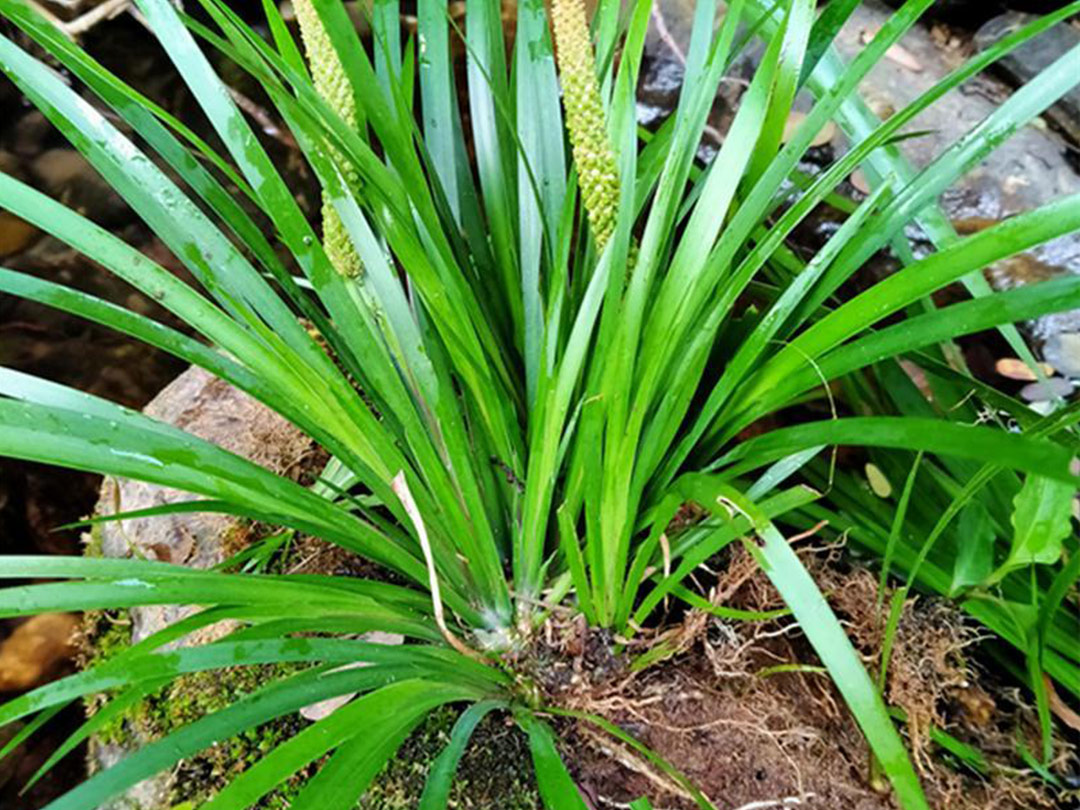
Stone Acorus
Acorus tatarinowii, a name in traditional Chinese medicine, refers to the dried rhizome of Acorus tatarinowii Schott, a plant in the genus Acorus of the Araceae family. This product has the effects of opening the orifices and resolving phlegm, reviving the mind and enhancing intelligence, and transforming dampness and stimulating the appetite.It is primarily used to treat mental confusion and epilepsy, forgetfulness and insomnia, tinnitus and deafness, epigastric fullness with loss of appetite, and lockjaw with dysentery.
Chinese Name : 石菖蒲
Latin Name : Acori Tatarinowii Rhizoma
Aliases : Acorus leaf, Mountain Acorus, Water Sword Grass, Fragrant Acorus, Medicinal Acorus
Authentic Producing Area : Sichuan, Zhejiang, Jiangsu
Nature, Flavor & Meridian Tropism : Warm in nature; pungent and bitter in taste; enters the Heart and Stomach meridians
Benefits & Efficacy
Benefits
Opens the orifices and resolves phlegm; revives the mind and enhances cognitive function; transforms dampness and stimulates the appetite.
Indications
Mainly used for mental confusion and epilepsy, forgetfulness and insomnia, tinnitus and deafness, epigastric fullness without hunger, and lockjaw with diarrhea.
Usage and Dosage
1. Internal use: Decoct 3–6 g; double the dose for fresh material; or incorporate into pills or powders. 2. External use: Decoct in water for washing; or grind into a powder and apply as a poultice.
Precautions
Use with caution in cases of yin deficiency with yang hyperactivity, restlessness with profuse sweating, cough, hemoptysis, or seminal emission.
Chemical Constituents
This product contains 0.11%–0.42% essential oil, primarily consisting of β-Asarone, α-Asarone, Dianthene, α-Humulene, Asarone, and Asarone ether, as well as amino acids, organic acids, and sugars.
Pharmacological Actions
This product has sedative, anticonvulsant, and antidepressant effects, and helps improve learning and memory, as well as providing protection against hypoxia, fatigue, and brain injury.
Relevant Discussions
1. *Shennong’s Classic of Materia Medica*: “It treats wind, cold, and dampness-induced arthralgia; coughing and shortness of breath; opens the heart orifices; tonifies the five viscera; unblocks the nine orifices; sharpens hearing and vision; and enhances the voice. Long-term use lightens the body, prevents forgetfulness and confusion, and prolongs life.”
2. *Compendium of Materia Medica*: “It treats sudden death from internal disorders, epilepsy caused by external pathogens, hemorrhage and uterine bleeding, stabilizes pregnancy and stops spontaneous abortion, and disperses abscesses and swellings.”
3. *Ben Cao Cong Xin*: “Pungent, bitter, and warm; aromatic and dispersing; it opens the orifices of the heart, unblocks the nine orifices, sharpens hearing and vision, enhances vocal projection, dispels dampness and wind, expels phlegm and resolves stagnation, stimulates the appetite and soothes the middle burner, and treats lockjaw and toxic dysentery.”
Applications
Clinical Applications
1. Phlegm Obstructing the Clear Orifices, Leading to Mental Confusion: This herb is pungent and opening, bitter and drying, warm and unblocking, and aromatic and penetrating. It not only opens the orifices and revives the spirit but also transforms dampness, resolves phlegm, and dispels foulness. Therefore, it is particularly effective in treating mental confusion caused by pathogenic factors of phlegm-dampness and foulness obscuring the clear orifices.For treating stroke with phlegm obscuring the heart orifices, resulting in mental confusion and a stiff tongue preventing speech, it is often combined with herbs that dry dampness and resolve phlegm, such as Pinellia, Aconite, and Tangerine Peel, as in the Phlegm-Clearing Decoction (from *Jisheng Fang*).; for treating phlegm-heat obscuring the mind, accompanied by high fever, mental confusion, and delirium, it is often combined with Curcuma, Pinellia, and Bamboo Sap, as in the Acorus and Curcuma Decoction (from *Complete Book of Warm Diseases*); for treating phlegm-heat-induced epilepsy and convulsions, it can be combined with Zhi Shi, Bamboo Shavings, and Coptis, as in the Clear the Heart and Warm the Gallbladder Decoction (from *Medical Mirror of Ancient and Modern Times*);to treat mania and madness caused by internal excess of phlegm-heat, it may be used with Polygala, cinnabar, and raw iron filings, as in the Raw Iron Filings Decoction (from *Insights into Medicine*); when used to treat conditions such as dizziness, drowsiness, forgetfulness, tinnitus, and deafness caused by damp turbidity obscuring the mind, it is often combined with Poria, Polygala, and dragon bone, as in the Calming the Spirit and Stabilizing the Mind Pills (from *Insights into Medicine*).
2. Dampness obstructing the middle jiao, with epigastric and abdominal fullness, distension, oppression, and pain: This herb is pungent, warm, and aromatic; it excels at transforming dampness and turbidity, invigorating the spleen and stomach, regulating qi stagnation, and relieving distension and fullness.It is used to treat dampness obstructing the middle jiao, manifesting as epigastric oppression, abdominal distension, fullness, and pain, and is often combined with Amomum villosum, Atractylodes lancea, and Magnolia officinalis. If dampness has transformed into heat, resulting in latent damp-heat with fever, vomiting, and diarrhea, accompanied by epigastric and chest oppression and a yellow, greasy tongue coating, it may be combined with Coptis chinensis and Magnolia officinalis, as in the Coptis-Magnolia Decoction (from *Treatise on Cholera*).
3. Lockjaw Dysentery: This herb dispels dampness through its aromatic properties, dries dampness, and regulates gastrointestinal qi. To treat refusal to eat or drink and tenesmus caused by the accumulation of damp turbidity and heat toxins in the large intestine, it may be combined with Coptis, Poria, and Euryale seed, as in the Kai Jin San (from *Insights into Medicine*).
4. Forgetfulness, Insomnia, Tinnitus, and Deafness: This herb enters the Heart Meridian, opening the orifices of the heart, enhancing mental faculties, calming the spirit, and improving hearing and vision; thus, it can be used for the aforementioned conditions. To treat forgetfulness, it is often combined with Ginseng, Poria, and Acorus, as in the “Bu Wang San” (from *Zheng Zhi Zhun Sheng*) and “Kai Xin San” (from *Qian Jin Fang*);To treat insomnia, frequent dreaming, and palpitations caused by excessive mental exertion and deficiency of heart-spirit nourishment, it is often combined with Ginseng, Atractylodes macrocephala, longan flesh, as well as Ziziphus jujuba seed, Poria cocos, and cinnabar, as seen in the Anshen Dingzhi Pills (from *Xichu: Source and Course of Miscellaneous Diseases*);; to treat deficiency of both the heart and kidneys, tinnitus, deafness, dizziness, and palpitations, it is often combined with dodder seed, ligustrum fruit, eupatorium, as well as salvia root and night-blooming cereus, as in the Calming the Spirit and Nourishing the Heart Pills (Manual of Chinese Herbal Formulations).
Related Compatibility
1. Acorus tatarinowii combined with Cyperus rotundus: Acorus tatarinowii warms the middle burner, transforms turbidity, stimulates appetite, and relieves bloating; Cyperus rotundus soothes the liver, regulates qi, and alleviates pain. When combined, these two herbs warm the middle burner, regulate qi, relieve bloating, and alleviate pain, making them effective for treating epigastric and abdominal distension and pain caused by cold in the middle burner and qi stagnation.
2. Acorus tatarinowii combined with Curcuma zedoaria: Acorus tatarinowii opens the orifices, disperses qi, relieves depression, and transforms dampness; Curcuma zedoaria relieves liver depression, clears heart heat, cools the blood, and eliminates blood stasis. When used together, these two herbs open the orifices, relieve depression, clear the heart, and restore mental clarity; they can be used for conditions such as febrile diseases where phlegm obscures the heart orifices, leading to mental confusion.
3. Acorus tatarinowii combined with Magnolia officinalis: Both herbs can transform dampness; Acorus tatarinowii also dispels foul odors, while Magnolia officinalis promotes qi circulation and relieves epigastric fullness. When combined, they strengthen the spleen and stomach, promote qi circulation, and transform dampness, effectively treating epigastric and abdominal fullness and loss of appetite caused by damp-turbidity obstructing the middle jiao.
4. Acorus tatarinowii combined with Agastache rugosa: Acorus tatarinowii uses its aromatic properties to open the orifices, warm and transform damp turbidity, and harmonize the middle jiao; Agastache rugosa uses its aromatic properties to dispel turbidity, transform dampness, harmonize the middle jiao, and invigorate the spleen and stimulate the appetite.When used together, these two herbs achieve the combined effects of promoting appetite through their aromatic properties, regulating Qi, and harmonizing the middle jiao. They are used to treat symptoms such as epigastric oppression and abdominal distension, vomiting, nausea, diarrhea, and costal pain with a greasy tongue coating, resulting from dampness obstructing the middle jiao and disharmony between the liver and stomach.
Medicinal Identification
1. Acorus tatarinowii and Musk: Both herbs are pungent and warm, capable of opening the orifices and reviving the spirit, and are used to treat conditions characterized by closed orifices and mental confusion.Acorus tatarinowii excels at eliminating phlegm and transforming dampness; it is particularly effective for treating mental confusion caused by turbid phlegm obscuring the orifices. It can also transform damp turbidity to open the orifices, treating conditions such as forgetfulness, deafness, epigastric fullness, and loss of appetite resulting from the stagnation of damp turbidity.Musk, with its pungent aroma and strong penetrating action, is the premier herb for reviving consciousness. Although inherently warm in nature, when combined with other herbs, it can be applied to treat both cold-induced and heat-induced obstruction of the orifices. Furthermore, musk’s pungent aroma penetrates into the blood system, where it can invigorate blood circulation, disperse nodules, reduce swelling, and relieve pain; thus, it is effective in treating conditions involving blood stasis such as abscesses, toxic sores, sore throat, trauma, amenorrhea, and difficult labor or stillbirth.
2. Acorus tatarinowii and Styrax: Both herbs are aromatic and warm in nature, used to open the orifices and revive the spirit. They are similarly effective in treating conditions where phlegm-turbidity, cold, and dampness obstruct the orifices of the mind, such as stroke with phlegm-induced confusion and coma due to sudden illness.However, Acorus tatarinowii, with its pungent and dispersing nature and bitter and draining properties, excels at transforming dampness and turbidity, eliminating phlegm, and opening the orifices. It is suitable for conditions such as phlegm obstructing the orifices leading to mental confusion and delirium, or internal wind combined with phlegm causing epileptic convulsions.Furthermore, Acorus tatarinowii can revive the spirit and strengthen the brain, dispel dampness, and harmonize the stomach. It is particularly effective for treating various conditions of deafness and forgetfulness caused by deficiency of heart qi, deficiency of kidney essence, or phlegm obstructing the clear orifices, as well as epigastric and abdominal fullness, poor appetite, and lockjaw dysentery.Suhexiang has a pungent and dispersing nature and is a commonly used herb for warming and opening the orifices; it is primarily indicated for conditions where cold pathogens and phlegm-turbidity internally obstruct the spirit. Furthermore, Suhexiang has the ability to warm, unblock, and relieve pain; it ascends to the Heart Meridian and returns to the Spleen Meridian, and can treat chest pain and constriction caused by cold凝 and qi stagnation, as well as cold pain in the epigastrium and abdomen resulting from phlegm obstruction and blood stasis.
3. Acorus tatarinowii and Atractylodes lancea: Both herbs possess aromatic properties that dispel dampness, harmonize the stomach, and stabilize the middle jiao; they are similarly used to treat conditions caused by damp turbidity obstructing the middle jiao. Acorus tatarinowii resolves phlegm-turbidity and opens the orifices of the mind, treating conditions such as mental confusion and epilepsy caused by damp turbidity obscuring the clear orifices.In addition, Acorus tatarinowii can dispel turbidity and open the orifices, enhance mental clarity and improve hearing, and is used to treat forgetfulness, deafness, epigastric fullness with loss of appetite due to damp turbidity obstructing the middle jiao, or lockjaw dysentery caused by excessive damp-heat toxins.Atractylodes, on the other hand, primarily acts on the middle jiao; internally, it dries dampness and strengthens the spleen, while externally, it dispels wind, disperses cold, and removes dampness. It is used to treat conditions such as impaired spleen function, excessive internal accumulation of dampness, epigastric fullness and distension, beriberi and edema, phlegm-fluid retention, and diarrhea, as well as external invasion by wind, cold, and dampness, damp-heat fever, and rheumatic arthralgia.Additionally, Atractylodes lancea has the ability to improve vision and can treat night blindness and dry, sore eyes.
4. Acorus tatarinowii and Curcuma: Both herbs can open the orifices and revive the spirit, treating conditions characterized by closed orifices and mental confusion.However, Acorus tatarinowii is pungent and bitter in taste and warm in nature; it excels at transforming turbidity and opening the orifices, treating conditions where phlegm obscures the heart orifices, leading to mental confusion and mania. It can also transform damp-turbidity to strengthen the brain and enhance intelligence, unblock the orifices to improve hearing, and remove dampness to stimulate the appetite. It is used to treat forgetfulness and deafness caused by phlegm-dampness obstruction and the entrapment of clear yang, as well as conditions involving dampness stagnation in the middle jiao, epigastric fullness, vomiting, and diarrhea.Curcuma, on the other hand, is pungent and bitter in taste and cold in nature. It excels at clearing heat and opening the orifices, treating conditions such as heat invading the pericardium or phlegm-heat obscuring the clear orifices, leading to mental confusion and mania. Curcuma also has the functions of promoting blood circulation and regulating qi, reducing swelling and relieving pain, clearing the liver and promoting bile secretion, and cooling the blood. It is particularly effective for treating qi and blood stasis, various chest and abdominal pains, vomiting and nosebleeds caused by heat forcing the blood to flow, and jaundice due to damp-heat in the liver and gallbladder.
5. Acorus tatarinowii and Bamboo Sap: Both herbs can resolve phlegm and are used to treat conditions such as phlegm obscuring the heart orifices leading to orifice obstruction and mental confusion, or liver wind accompanied by phlegm causing epileptic convulsions and stroke with phlegm-induced confusion.However, Acorus tatarinowii is a pungent, bitter, and warm herb that can resolve phlegm-dampness and open obstructed orifices, treating conditions such as mental confusion caused by turbid phlegm obscuring the orifices. Furthermore, due to its ability to resolve phlegm and open orifices, it can treat phlegm-dampness obstruction, as well as conditions such as forgetfulness, deafness, epigastric fullness with loss of appetite, and lockjaw dysentery.Bamboo sap, on the other hand, is sweet and cold in nature, excelling at clearing heat and resolving phlegm; it is particularly effective for treating lung heat with excessive phlegm, cough with yellow phlegm, and chest tightness.
6. Acorus tatarinowii and Polygala tenuifolia: Both herbs possess the ability to eliminate phlegm-dampness; they can both open the orifices and revive the spirit, as well as calm the mind and enhance mental clarity. They are used for mental confusion, mania, dementia, restlessness, insomnia, and forgetfulness caused by phlegm-dampness obscuring the clear orifices.However, Acorus tatarinowii is primarily used to transform dampness and also harmonizes the stomach; it is commonly used for conditions such as epigastric fullness, distension, and pain caused by damp-turbidity obstructing the middle burner, as well as lockjaw dysentery. Polygala tenuifolia is primarily used to resolve phlegm and also relieves cough; it is commonly used for coughs with copious phlegm and is particularly effective at dispersing abscesses and swellings, making it excellent for treating boils, carbuncles, swellings, and toxic sores, as well as breast swelling and pain.
Related Medicines
Naomai Tai Capsules, Biqi Fenqing Pills.
Related Prescriptions
Dingxian Pills (*Medical Insights*), Sangpiao Xiao Powder (*Extended Commentary on the Materia Medica*), Ganlu Disinfection Pill (*Continuation of Famous Physicians’ Case Records*), and Biqi Fenqing Decoction (*Yang Family’s Private Prescriptions*).
Notes
Patients requiring treatment with Chinese herbal medicine should first consult a licensed Traditional Chinese Medicine (TCM) hospital to receive a prescription following a professional TCM differential diagnosis.
Processing & Preparation
Harvesting & Processing
Harvest 3–4 years after planting. Dig up the rhizomes in early spring or late winter, trim off the leaves and fibrous roots, wash them thoroughly, sun-dry them, and brush off the hairs to complete the process.
Processing Methods
1. Fresh Acorus tatarinowii: Take freshly harvested material, trim off the leaves and fibrous roots, wash thoroughly, and cut into sections as needed.
2. Acorus tatarinowii: Take the raw herb, remove impurities, wash thoroughly, moisten thoroughly, slice thinly, dry, and sift out any dust or debris.
3. Ginger-Processed Acorus tatarinowii: Take clean Acorus tatarinowii slices, mix thoroughly with ginger juice, place in a pan, and stir-fry over low heat until dry. Remove and allow to cool. Use 12.5 kg of fresh ginger for every 100 kg of Acorus tatarinowii.
4. Wheat Bran-Roasted Acorus: Sprinkle wheat bran into a wok; when the bran begins to smoke, add the cleaned Acorus slices and roast over medium heat until yellow. Remove, sift out the wheat bran, and allow to cool. Use 12.5 kg of wheat bran per 100 kg of Acorus.
Storage Methods
Store in a dry container to prevent moisture. Keep wheat bran-fried Acorus tatarinowii and ginger-processed Acorus tatarinowii in airtight containers. Plant fresh Acorus tatarinowii in sandy soil to prevent drying out.
Crude Drug Identification
Identification
1. Cross-section of this product: The outer walls of the epidermal cells are thickened and brown; some contain reddish-brown substances. The cortex is broad, with scattered fiber bundles and leaf-scar vascular bundles; the leaf-scar vascular bundles are of the exarch type, with the vascular bundle sheath fibers arranged in a ring and lignified; the endodermis is distinct.The vascular bundles in the stele are of the perivascular and exarch types, with few sheath fibers. Cells surrounding the fiber bundles and vascular bundle sheath fibers contain calcium oxalate rhomboids, forming crystalline fibers. The parenchyma tissue contains scattered subcircular oil cells and starch grains.
The powder is grayish-brown. Starch grains are single, spherical, elliptical, or oblong, with a diameter of 2–9 μm;compound grains consist of 2–20 (or more) subgrains. Cells surrounding fiber bundles contain calcium oxalate prisms, forming crystalline fibers. The calcium oxalate prisms are polyhedral, polygonal, or biconical in shape, with diameters of 4–16 μm. Secretory cells are subcircular or oblong, with cell cavities filled with yellow-green, orange-red, or red secretions.
2. Take 0.2 g of the powdered sample, add 20 mL of petroleum ether (60–90 °C), heat and reflux for 1 hour, filter, and evaporate the filtrate to dryness. Dissolve the residue in 1 mL of petroleum ether (60–90 °C) to prepare the test solution. Separately, take 0.2 g of Acorus tatarinowii reference material and prepare the reference solution using the same method.Perform the test according to the thin-layer chromatography method (General Chapter 0502). Pipette 2 μL of each of the two solutions and apply them separately onto the same silica gel G plate. Develop the plate using a mobile phase of petroleum ether (60–90°C) and ethyl acetate (4:1), remove the plate, allow it to air-dry, let it stand for about 1 hour, and examine it under ultraviolet light (365 nm).In the test sample chromatogram, fluorescent spots of the same color appear at positions corresponding to those in the reference herbal material chromatogram; after fumigation with iodine vapor until the spots become clearly visible, spots of the same color appear in the test sample chromatogram at positions corresponding to those in the reference herbal material chromatogram.
Properties of Crude Drugs
This product is flattened and cylindrical in shape, often curved and frequently branched, 3–20 cm long and 0.3–1 cm in diameter. The surface is brownish or grayish-brown, rough, with nodes of varying density; internodes are 0.2–0.8 cm long and bear fine longitudinal striations, with one side showing residual fibrous roots or dot-like root scars;Leaf scars are triangular and arranged alternately on either side; some bear hair-like or scale-like remnants of the leaf bases. The texture is hard; the cross-section is fibrous, off-white or slightly reddish, with a distinct endodermis ring and numerous vascular bundle dots and brown oil cells visible. It has an aromatic odor and a bitter, slightly pungent taste.
Properties of Processed Slices
1. Fresh Acorus tatarinowii: See “Characteristics of the Medicinal Material.”
2. Acorus tatarinowii: This product consists of thick, flat-round or oblong slices. The outer surface is brownish or grayish-brown; some slices show nodes and root scars. The cross-section is fibrous, off-white or slightly reddish, with distinct annular rings and oil dots. It has an aromatic odor and a bitter, slightly pungent taste.
3. Ginger-processed Acorus tatarinowii: Resembles Acorus tatarinowii in appearance, with a slight ginger-like pungency.
4. Bran-fried Acorus tatarinowii: Resembles Acorus tatarinowii in appearance, with a yellow surface.
Botanical Information
Botanical Classification
Acorus gramineus, a plant of the genus Acorus in the Araceae family.
Morphological Characteristics
A perennial herb. The rhizome is prostrate, aromatic, 5–8 mm in diameter, with a yellowish-brown outer skin; internodes are 3–5 mm long. The roots are fleshy and bear numerous fibrous roots. The upper part of the rhizome branches very densely, giving the plant a tufted appearance; the branches are often covered with fibrous, persistent leaf bases.Leaves are thin and linear, folded in half at the base and spreading from the middle upward; 7–13 mm wide, tapering gradually toward the apex, with membranous margins at the base; leaf sheaths up to 5 mm wide, extending almost to the middle of the leaf, dark green, without a midrib, and bearing numerous slightly raised parallel veins. Inflorescence peduncles are axillary, 4–15 cm long, and trigonal.The leaf-like spathe is 13–25 cm long; the caryopsis is cylindrical, 2.5–8.5 cm long, 4–7 mm thick, and tapers to a point at the top. The flowers are white. Mature caryopses are 7–8 cm long, yellowish-green or yellowish-white. Flowering and fruiting occur from February to June.
Distribution Area
It is distributed throughout areas south of the Yellow River basin.
Growth Habits
It prefers cool, moist, and shaded environments; it is cold-tolerant but intolerant of drought. It is best cultivated in sandy loam or humus-rich loam soils found in marshy wetlands or areas with convenient irrigation.
Propagation Methods
Propagation is by rhizomes.
Cultivation Techniques
Propagation by rhizomes: In spring, dig up the rhizomes and select small rhizomes with fibrous roots and leaves as planting stock. Plant them in holes spaced 30 cm × 15 cm apart, placing 2–3 rhizomes per hole. Cover with soil and press firmly after planting.
Pest and Disease Control
Pests include rice locusts, which damage the leaves; control can be achieved using a 1,000-fold dilution of 90% crystal diazinon.