Touguxiang is the name of a traditional Chinese medicine. It consists of the whole plant or the roots of Gaultheria yunnanensis (Franch.) Rehd., a plant in the Ericaceae family. It has the effects of dispelling wind and dampness, alleviating cold and relieving pain, promoting blood circulation and unblocking meridians, and resolving phlegm and suppressing cough. It is primarily used to treat rheumatic arthralgia, stomach pain caused by cold, trauma, and cough with excessive phlegm.

Touguxiang
Touguxiang is the name of a traditional Chinese medicine. It consists of the whole plant or the roots of Gaultheria yunnanensis (Franch.) Rehd., a plant in the Ericaceae family. It has the effects of dispelling wind and dampness, alleviating cold and relieving pain, promoting blood circulation and unblocking meridians, and resolving phlegm and suppressing cough. It is primarily used to treat rheumatic arthralgia, stomach pain caused by cold, trauma, and cough with excessive phlegm.
Chinese Name : 透骨香
Latin Name : Cacumen Gaultheriae Yunnanensis
Aliases : Tougucao, Manshanxiang, Soushanhu, Meitanzi, Meitanguo, Wanlixiang, Jiulixiang, Fangxiangcao, Mantianxiang, Touguxiao, Xiaotougucao, Jiuxiang, Jiguxiang (Guangdong)
Authentic Producing Area : Mainly produced in Sichuan, Yunnan, Shaanxi, Guizhou, and other regions
Nature, Flavor & Meridian Tropism : Pungent in taste, warm in nature; enters the Lung, Liver, and Kidney meridians
Benefits & Efficacy
Benefits
It has the effects of dispelling wind and dampness, dispersing cold and relieving pain, promoting blood circulation and unblocking meridians, and resolving phlegm and relieving cough.
Indications
It is primarily used to treat rheumatic arthralgia, stomach pain due to cold, trauma, and cough with excessive phlegm.
Usage and Dosage
Internal use: Decoct 9–15 g (or 30 g of fresh material); or steep in wine. External use: Apply an appropriate amount; decoct in water for washing; or steep in wine and rub on the affected area; or pound into a paste and apply as a poultice.
Precautions
1. *Yunnan Chinese Herbal Medicine*: “Avoid sour and cold foods, fishy-smelling foods, and buckwheat flour.” 2. *Selected Compendium of Guangxi Materia Medica*: “Contraindicated for pregnant women.” 3. Tougu Xiang is mildly toxic; unauthorized use is strictly prohibited. Its clinical application must strictly follow a physician’s prescription and be conducted under the guidance of a professional. Use strictly according to the dosage and treatment duration prescribed by the doctor; avoid making changes on your own.
Chemical Constituents
Dianbaizhuyue contains 0.5%–0.8% essential oil. Its main component is methyl salicylate.
Pharmacological Actions
Modern pharmacological research has found that Touguxiang possesses anti-inflammatory, antipyretic, analgesic, antirheumatic, blood-activating, meridian-unblocking, phlegm-resolving, and cough-suppressing effects.
Relevant Discussions
1. *Herbal Compendium of Southern Yunnan*: “Seeds: Treat phlegm-fire-induced pain in tendons and bones; excellent when steeped in wine. The roots and stems wash away wind, cold, and dampness-induced bi syndrome and pain in tendons and bones; they warm the tendons and penetrate the bones; boil in water for washing.”
2. *Herbal Compendium of Tianbao*: “Dispels wind and cold; reduces fever. (Treats) pain in tendons and bones, and beriberi.”
3. *Classified Herbal Properties*: “Treats stomach pain caused by cold qi, rheumatic numbness, pain in tendons and bones, hemoptysis, and trauma from falls or blows.”
4. *Chronicle of Sichuan Chinese Medicinal Herbs* (1960 edition): “(The root) promotes blood circulation and removes blood stasis; it mends tendons and sets bones. Treats rheumatic pain in tendons and bones, as well as fractures and overuse injuries.”
5. *Guizhou Herbal Medicine*: “Dispels wind and dampness; relaxes tendons and promotes blood circulation.”
6. *Yunnan Chinese Herbal Medicine*: “Treats amenorrhea and eczema.”
7. *Compendium of Chinese Herbal Medicine*: “Primarily treats cold-induced stomach pain and wind-cold common cold.”
8. *Hunan Pharmacopoeia*: “Strengthens the stomach, relieves exterior syndromes, eliminates phlegm, and suppresses cough.”
Applications
Clinical Applications
1. For rheumatic joint pain: ① 30 g of Tuoguxiang root, 15 g of Xiao Xue Teng, 3 g of Bai Long Xu, and 15 g of Niuxi. Steep in 1,000 ml of wine. Take approximately 30 ml per dose; additionally, decoct Tuoguxiang stems and leaves with ginger and scallions to make a wash for external application.(From *Guiyang Folk Medicinal Herbs*) ② 30g each of White Pearl Tree root, Golden Rice Orchid, and Chinese Barberry; 15g of Weilingxian. Decoct in water and take orally. (From *Jiangxi Herbal Manual*)
2. For trauma and contusions: 30g of White Pearl Tree root, 18g of Eight-Ribbed Hemp. Decoct equal parts water and wine, then take orally. (From *Jiangxi Herbal Manual*)
3. For wind-cold colds and stomach pain due to cold: 30–60 g of the whole plant (Yunnan White Pearl). Decoct in water and drink.
4. For loss of appetite due to chronic illness: 30 g of the whole plant (Yunnan White Pearl) and 60 g of white茅 root. Decoct in water and drink. (Formulas 3–4 are from *Hunan Materia Medica*)
5. For eczema: (Tougucao) Decoct the whole plant in water and use the decoction to wash the affected area. (*Yunnan Chinese Herbal Medicine*)
6. For sores and ulcers: Grind Touguxiang into a powder, add a small amount of borneol, and apply topically to the affected area.
7. For ascites: 15 g of Touguxiang, 9 g of Plantain Herb. Decoct in water and take orally. (Recipes 6–7 are from *Guizhou Herbal Medicine*)
Notes
Patients requiring treatment with Chinese herbal medicine should first consult a licensed Traditional Chinese Medicine (TCM) hospital, where a TCM practitioner will conduct a professional pattern differentiation and prescribe an herbal formula.
Processing & Preparation
Harvesting & Processing
Can be harvested year-round; slice the roots and chop the whole plant, then sun-dry.
Storage Methods
Store in a cool, dry place.
Crude Drug Identification
Properties of Crude Drugs
1. The stem is cylindrical, highly branched, approximately 35 cm long, and 3–5 mm in diameter. Its surface is pale reddish-brown to reddish-brown, with distinct longitudinal striations; the lenticels are transverse and prominent. Leaf scars are nearly circular or triangular; the stem is hard and brittle, breaking easily with an irregular fracture surface. The xylem is pale brown to nearly white, and the pith is pale yellowish-brown.Leaves are leathery and often shed; intact leaves are elliptical or narrowly ovate, 1.5–9 cm long and 1.3–4.5 cm wide, with a pale green to reddish-brown surface, a pointed, tail-like apex, a heart-shaped base, and finely serrated margins.In some specimens, inflorescences or fruit clusters are visible; they are racemose and axillary. The florets are white, and the capsules are spherical, surrounded by purplish-black sepals. The seeds are numerous, small, and pale yellow. It has a fragrant aroma and a sweet, pungent taste.
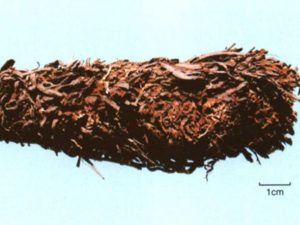
2. The roots are curved and branched, quite long, with the thickest reaching up to 2 cm in diameter. The outer surface is reddish-brown; the dark cork layer peels off very easily, while the inner part is lighter in color. Fine roots, approximately 1 mm thick, are scattered throughout. The texture is hard and brittle, breaking easily; the cross-section is grayish-yellow with distinct rays, and the wood is dense. It has an aromatic odor.
Botanical Information
Botanical Classification
Yunnan White Pearl Tree (Dendrobium yunnanense), genus Dendrobium, family Ericaceae.
Morphological Characteristics
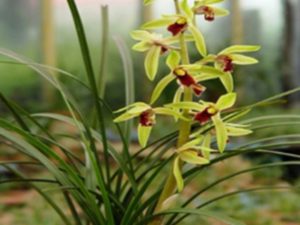
An evergreen shrub, 1–3 m tall, rarely reaching 5 m. The bark is grayish-black; the branches are slender and long, twisting to the left and right, with longitudinal striations, reddish or reddish-green in color, and glabrous. Simple leaves are alternate; the petioles are short, stout, and approximately 5 mm long;leaf blades are leathery, ovate-oblong, rarely ovate or long-ovate, fragrant, 7–9 (–12) cm long, 2.5–3.5 (–5) cm wide, with a caudate-acuminate apex, a bluntly rounded or cordate base, and serrate margins; the upper surface is green and glossy, while the lower surface is paler and densely covered with brown spots; the midvein is raised on the lower surface and sunken on the upper surface;with 4–5 pairs of lateral veins that ascend in an arc; both the lateral and reticulate veins are prominent on both surfaces. The raceme is axillary, with a slender, pubescent rachis bearing 10–15 sparsely arranged flowers; the bracts are ovate, acuminate, and covered with white marginal hairs; the bracteoles are 2, opposite or nearly opposite, attached to the upper part of the pedicel near the calyx, and lanceolate-triangular;Calyx lobes 5, ovate-triangular, with a blunt apex; corolla white-green, campanulate, mouth lobed, lobes 2 mm long and wide; stamens 10, filaments short and thick, anthers 2-celled, each cell bearing 2 awns at the apex; ovary globose, hairy, shorter than the corolla. Capsule berry-like, globose, black, 5-lobed.Seeds are numerous, minute, and pale yellow. Flowering period: May–June; fruiting period: July–November.
Distribution Area
It is distributed in Shaanxi and areas south of the Yangtze River basin.
Growth Habits
Sandy or clay soils are best suited for cultivation.
Propagation Methods
Propagated by seed.
Cultivation Techniques
Touguxiang is propagated by seed; April is the most suitable time for sowing.