Wood Butterfly is the name of a traditional Chinese medicine. It consists of the dried, mature seeds of Oroxylum indicum (L.) Vent., a plant belonging to the genus Oroxylum in the family Bignoniaceae. It commonly grows on slopes, along streams, in valleys, or in shrubbery at altitudes below 1,000 meters and is distributed in Fujian, Taiwan, Guangdong, Hainan, Guangxi, Sichuan, Guizhou, and Yunnan. It has a bitter and sweet taste and a cool nature.It has the effects of clearing lung heat, relieving throat discomfort, regulating liver qi, and harmonizing the stomach. It is commonly used to treat coughs caused by lung heat, sore throat, hoarseness, and liver-stomach qi pain.

Wood Butterfly
Wood Butterfly is the name of a traditional Chinese medicine. It consists of the dried, mature seeds of Oroxylum indicum (L.) Vent., a plant belonging to the genus Oroxylum in the family Bignoniaceae. It commonly grows on slopes, along streams, in valleys, or in shrubbery at altitudes below 1,000 meters and is distributed in Fujian, Taiwan, Guangdong, Hainan, Guangxi, Sichuan, Guizhou, and Yunnan. It has a bitter and sweet taste and a cool nature.It has the effects of clearing lung heat, relieving throat discomfort, regulating liver qi, and harmonizing the stomach. It is commonly used to treat coughs caused by lung heat, sore throat, hoarseness, and liver-stomach qi pain.
Chinese Name : 木蝴蝶
Latin Name : Oroxyli Semen
Aliases : Thousand-Layer Paper, Douleng, Leidao Tree, 300 Liang of Silver Medicine, Jade Butterfly, Cloud Old Paper, Rags, White Old Paper, Sea Ship Fruit Core, White Jade Paper, White Thousand-Layer, Paper Meat, Old Paper, Foreign Old Paper, Duck Ship Layered Paper, Thousand-Layer Paper Meat, Sea Ship Skin, Flying All Over the Sky
Authentic Producing Area : Mainly produced in Yunnan, Guangxi, Guizhou, and other provinces.
Nature, Flavor & Meridian Tropism : Bitter and sweet in taste; cool in nature; enters the Lung, Liver, and Stomach meridians
Benefits & Efficacy
Benefits
Clears the lungs and soothes the throat; regulates the liver and harmonizes the stomach.
Indications
Mainly used for lung-heat cough, sore throat, hoarseness, and liver-stomach qi pain.
Usage and Dosage
1. Internal use: Decocted as a soup, 6–9 g; ground into powder, 1.5–3 g. 2. External use: Applied as a poultice; or ground into powder and sprinkled on the affected area.
Precautions
Not yet established.
Chemical Constituents
Contains fatty oil, baicalin, papilagin A, tetroside, papilagin A, papilagin B, populin, and benzoic acid, among others.
Pharmacological Actions
The seeds and stem bark contain scutellarin, which has anti-inflammatory, anti-allergic, diuretic, cholagogue, and cholesterol-lowering effects. The seeds and stem bark also contain salicin, which exhibits cytotoxic activity against human nasopharyngeal carcinoma (KB) cells, with a half-maximal effective concentration (EC₅₀) of 13 mg/mL.
Relevant Discussions
1. *Herbal Compendium of Southern Yunnan*: Relieves wheezing, eliminates phlegm, breaks up toxic accumulations caused by witchcraft, and removes the toxins of blood-based and qi-based witchcraft. It also tonifies deficiency, soothes the stomach, and stimulates appetite.
2. *Supplements to the Compendium of Materia Medica*: Treats chest pain caused by heart qi stagnation, liver qi pain, and damp-heat in the lower jiao. Xiang Qiuzhi noted that for abscesses that fail to heal, applying this herb as a poultice will promote healing.
3. *Modern Practical Chinese Materia Medica*: Suppresses coughs and treats whooping cough and dry bronchitis.
Applications
Clinical Applications
1. Laryngeal obstruction with hoarseness, and cough due to lung heat: This herb is bitter, sweet, cold, and cooling in nature. It clears lung heat and soothes the throat, making it a commonly used remedy for sore and swollen throats.It is often combined with Scrophularia root, Ophiopogon tuber, and Borneol to treat throat swelling and pain, as well as hoarseness caused by pathogenic heat damaging yin. This herb also clears lung heat, resolves phlegm, and relieves cough; it is frequently combined with Platycodon root, Mulberry Bark, and Tussilago flower to treat coughs caused by lung heat or whooping cough in children, such as in cough syrup (Modern Practical Chinese Materia Medica).
2. Liver and Stomach Qi Pain: This herb has a sweet and mild nature that soothes, and a bitter nature that drains; it enters the Liver and Stomach meridians and can regulate the Liver, harmonize the Stomach, and relieve pain. According to *Supplements to the Compendium of Materia Medica*, using this herb alone—ground into powder and taken with wine—treats liver qi stagnation, liver and stomach qi pain, and distending pain in the epigastrium, abdomen, and flanks.
Related Compatibility
1. Wood Butterfly combined with Platycodon: Wood Butterfly excels at clearing the lungs and soothing the throat, while Platycodon is particularly effective at dispersing lung heat and eliminating phlegm. When combined, these two herbs can clear and disperse lung heat, while also resolving phlegm, soothing the throat, and relieving cough. This combination is suitable for coughs caused by lung heat and sore, swollen throats.
2. Wood Butterfly combined with Scrophularia: Wood Butterfly clears lung heat, soothes the throat, and restores the voice, while Scrophularia detoxifies, clears fire, and nourishes yin. When combined, these two herbs enhance the ability to clear and disperse lung heat, nourish yin, and soothe the throat. This combination is suitable for conditions where pathogenic heat has injured yin, resulting in a dry, sore throat and hoarseness.
3. Wood Butterfly combined with Wood Fragrance: Wood Butterfly can regulate the liver and harmonize the stomach, while Wood Fragrance excels at promoting the flow of qi and relieving pain. When combined, these two herbs enhance the effects of regulating the liver, strengthening the spleen, harmonizing the stomach, and relieving pain. This combination is suitable for conditions involving liver-stomach qi stagnation, epigastric and abdominal distension and pain.
Medicinal Identification
Wood Butterfly and Golden Lantern: Both possess the ability to clear heat and soothe the throat, and can be used to treat symptoms of throat swelling, pain, and hoarseness caused by pathogenic heat injuring the lungs.However, Wood Butterfly is bitter, sweet, and cool in nature; it is light and tends to rise, making it particularly effective at clearing the lungs, soothing the throat, and restoring the voice. In contrast, Golden Lantern is bitter, cold, and descending in nature; it excels at clearing heat, detoxifying, soothing the throat, and resolving phlegm. Additionally, Wood Butterfly can regulate the liver and harmonize the stomach, and is often used for liver-stomach qi pain; whereas Golden Lantern can also promote urination and relieve dysuria, and is commonly used for painful and scanty urination caused by heat.
Related Medicines
Throat Protection Tablets, Golden Throat Voice-Clearing Pills, Golden Throat Dispersing-Nodule Pills (capsules), Pharyngitis Tablets, Guangdong Herbal Tea.
Notes
Patients requiring treatment with Chinese herbal medicine should first consult a licensed Traditional Chinese Medicine (TCM) hospital, where a TCM practitioner will conduct a professional pattern differentiation and prescribe an herbal formula.
Processing & Preparation
Harvesting & Processing
Harvest ripe fruits from October to December; sun-dry them until the fruits split open, then remove the seeds and dry them in the sun or in an oven.
Processing Methods
Remove impurities from the raw herbal material and sift out ash and debris.
Storage Methods
Store in a well-ventilated, dry place.
Crude Drug Identification
Identification
1. The powder of this product is yellow or yellow-green. Seed wing cells are long and fibrous, with wavy, thickened walls and a diameter of 20–40 μm. Endosperm cells are polygonal, with bead-like thickened walls.
2. Take 0.1 g of the powdered sample, add 25 mL of methanol, sonicate for 30 minutes, filter, and use the filtrate as the test solution. Separately, take standard samples of woodbutterfly glycoside B and scutellarin, and prepare solutions containing 0.1 mg and 1 mg per mL, respectively, using methanol, as the reference solutions.Perform the test according to the thin-layer chromatography method (General Chapter 0502). Pipette 5 μl of each of the three solutions and apply them separately onto the same polyamide membrane. Develop with acetic acid as the developing agent, remove the membrane, allow it to air-dry, and examine it under ultraviolet light (365 nm).In the chromatogram of the test sample, spots of the same color appear at positions corresponding to those in the reference chromatogram; when sprayed with a 1% iron(III) chloride solution in ethanol, they show the same dark green spots under sunlight.
Properties of Crude Drugs
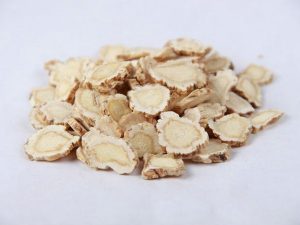
The seeds are butterfly-shaped thin slices; except for the base, three sides extend into broad, thin wings, 5–8 cm long and 3.5–4.5 cm wide.The surface is pale yellowish-white; the “wings” are translucent with a silky luster and feature radial striations, and the edges are often fractured. The seed is light in weight; upon removal of the seed coat, a thin, membranous layer of endosperm tightly encloses the cotyledons. There are two cotyledons, butterfly-shaped, yellowish-green or yellow, with a longest dimension of approximately 1.5 cm. It has a faint odor and a slightly bitter taste.
Properties of Processed Slices
The wood butterfly is a thin, butterfly-shaped slice that is white, translucent, and lustrous, with radiating patterns. It is fragile and easily cracked; the central portion is thicker and oval-shaped, pale yellowish-brown. Inside are two seed kernels, slightly kidney-shaped and pale yellow. It has a faint odor and a slightly bitter taste.
Botanical Information
Botanical Classification
A plant of the genus *Butterfly Tree* in the family Bignoniaceae.
Morphological Characteristics
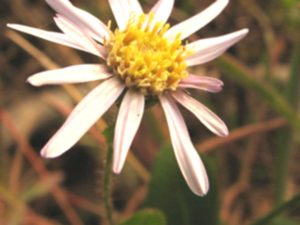
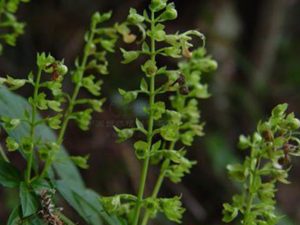
A small tree, 7–12 m tall. The bark is thick and has lenticels. The lenticels on young branches are extremely numerous and prominent; leaf scars are distinct and large. Leaves are opposite; large, odd-pinnate, 2–4-times compound leaves, arising near the apex of the stem, 60–160 cm long and 20–80 cm wide;with numerous leaflets; petiolules 5–10 mm long; leaflets triangular-ovate, 6–14 cm long, 4–9 cm wide, with a short acuminate apex, a rounded or broadly cuneate and oblique base, entire margins, green above, pale green below, glabrous on both surfaces, turning blue when dry. Terminal racemose corymbs, 40–150 cm long, with pedicels approximately 7 cm long;The calyx is bell-shaped, 2.2–4.5 cm long and 2–3 cm wide, purple, with a flat-truncated apex, and persistent; the corolla is orange-red, fleshy, 3–9 cm long, bell-shaped, 5–8.5 cm in diameter, and shallowly 5-lobed at the apex; there are 5 stamens, inserted in the middle of the corolla tube and protruding beyond the corolla;The nectary is large and fleshy; the style is 5–7 cm long, and the stigma is bifid. The capsule is woody, flattened, broadly linear, pendulous, 40–120 cm long, 5–8.5 cm wide, brownish-yellow when mature, splitting along the ventral suture, with the fruit valves bearing a midrib.Seeds are numerous; each seed, including the wing, is 6–7.5 cm long and 3.5–4 cm wide, and is entirely surrounded by a thin, white, translucent wing except at the base. Flowering occurs from July to October, and fruiting from October to December.
Distribution Area
It is distributed in Fujian, Guangdong, Guangxi, Hainan, Sichuan, Guizhou, Yunnan, Taiwan, and other regions.