Anlongxiang Family—a name in traditional Chinese medicine. It refers to the whole plant of the genus Anlongxiang within the Lamiaceae family. It is distributed in Taiwan, Hubei, Guangxi, Sichuan, Guizhou, and Yunnan. It has the therapeutic effects of regulating qi and strengthening the stomach. It is commonly used to treat indigestion and epigastric and abdominal distension.
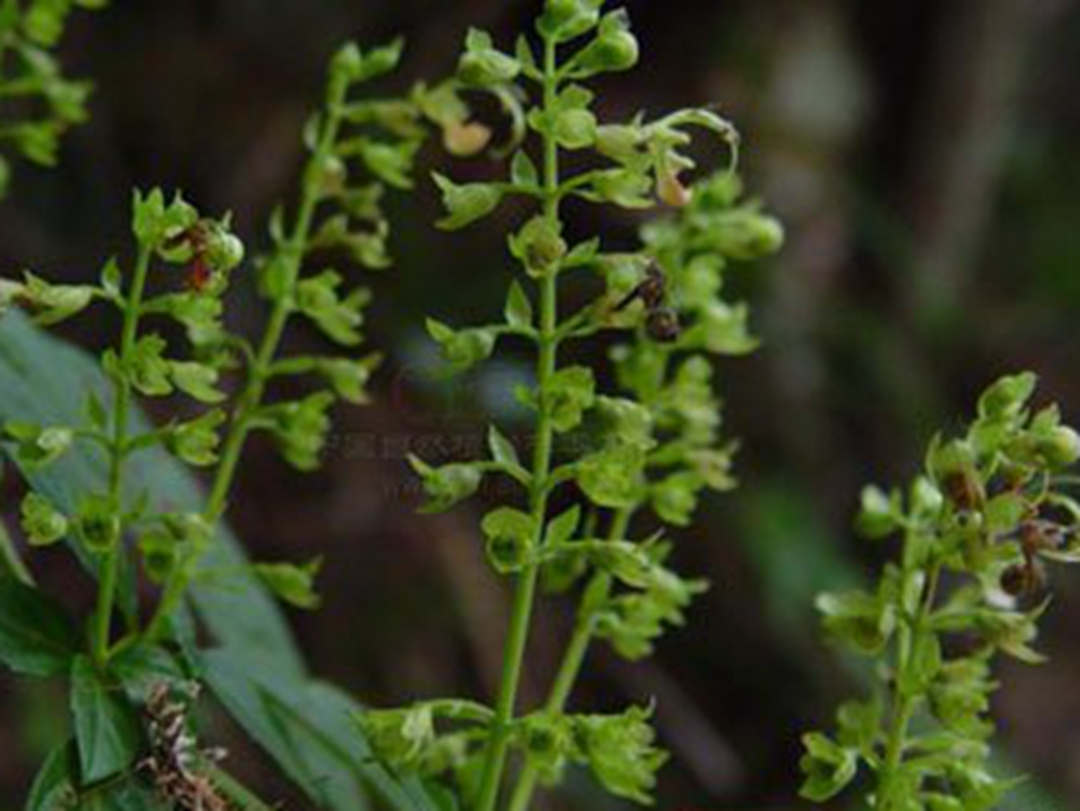
Anlongxiang Family
Anlongxiang Family—a name in traditional Chinese medicine. It refers to the whole plant of the genus Anlongxiang within the Lamiaceae family. It is distributed in Taiwan, Hubei, Guangxi, Sichuan, Guizhou, and Yunnan. It has the therapeutic effects of regulating qi and strengthening the stomach. It is commonly used to treat indigestion and epigastric and abdominal distension.
Chinese Name : 安龙香科科
Aliases : Wild Perilla, Wild Perilla Seed
Nature, Flavor & Meridian Tropism : Pungent and slightly bitter in taste; slightly warm in nature
Benefits & Efficacy
Benefits
Regulates qi and strengthens the stomach.
Indications
Mainly used to treat indigestion and epigastric and abdominal distension.
Usage and Dosage
Oral use: Decoct 3–9 g. Please note that due to differences in each patient’s condition, constitution, age, and other factors, the specific dosage of Anlong Xiangke may vary from person to person. Patients should strictly follow the dosage prescribed by their doctor.
Precautions
1. Patients requiring treatment with traditional Chinese medicine should first seek consultation at a licensed traditional Chinese medicine hospital and obtain a prescription following a professional TCM differential diagnosis. 2. If you need to take other medications concurrently while using this product, consult your doctor or pharmacist first. Do not take other medications on your own to avoid drug interactions that may affect efficacy or increase the risk of adverse reactions. 3. Pregnant women, women planning to become pregnant, and breastfeeding women must proactively inform their doctor of their physiological status (such as stage of pregnancy or breastfeeding status) before taking this medication. The doctor will then assess the safety and suitability of the medication based on individual circumstances.
Applications
Notes
References for this entry: [1] Chinese Materia Medica http://www.zydcd.com/zhongyi/zy42zb/ [2] Hui Yongzheng. Encyclopedia of Natural Products in Traditional Chinese Medicine, Vol. 11, Part 2: Traditional Chinese Medicines [M]. Shanghai: Shanghai Science and Technology Press, 2011: 8362.
Processing & Preparation
Harvesting & Processing
Harvested in autumn, washed, and sun-dried.
Crude Drug Identification
Botanical Information
Botanical Classification
Family: Lamiaceae; Genus: Anlongxiang.
Morphological Characteristics
Perennial herb.
1. Stem: Erect or ascending, highly branched, slender and curved, 60–70 cm long, covered with small hooked hairs.
2. Leaves: Petioles 3–9 mm long, covered with rough appressed hairs or small hooked hairs;leaf blades small, ovate or obovate, 1.2–3.8 cm long, 0.8–2.2 cm wide, with appressed rough appressed hairs on the upper surface and rough stiff hairs on the lower surface; apex rounded or obtuse; base cuneate and extended downward; margin with wavy-rounded or rounded teeth; lateral veins 2–3 pairs, sunken relative to the midrib on the upper surface and raised on the lower surface.
3. Flowers: Spicate inflorescences are terminal on the upper parts of the branches, composed of one-sided, extremely loose whorls of two flowers; bracts are elliptic to nearly circular, 1.5–5 mm long, 1.2–3.8 mm wide, short-stalked, entire, and ciliate;The pedicels are slender, 2 mm long, and covered with rough, appressed hairs or small hooked hairs. The calyx is campanulate, 5 mm long and 3.5 mm wide; the outer surface is sparsely pubescent along the veins at the base, with pale yellow glandular dots elsewhere; the inner surface bears a ring of cilia at the throat.The corolla is white or pale purple, with white vesicular hairs on the outer surface and vesicular hairs below the throat on the inner surface; the corolla tube is 6 mm long; the lip extends up to 1 cm, projecting at a right angle from the corolla tube; the median lobe is obovate to nearly circular, about 3.8 mm wide; the lateral lobes are shorter in the anterior pair (0.7 mm long) and longer in the posterior pair (about 1 mm long).Both the stamens and the style are exserted. The disk is small and disc-shaped. The ovary is shallowly 4-lobed and covered with vesicular hairs.
4. Fruit: The small nuts are obovate, approximately 1 mm long; usually 2–3 develop per fruit; they are yellowish-brown and reticulate.
5. Flowering period: Flowers in October.
Distribution Area
Found in Taiwan, Hubei, Guangxi, Sichuan, Guizhou, and Yunnan.