Tripterygium is a commonly used medicinal herb for dispelling wind and damp-heat; it is the dried root bark of Tripterygium wilfordii Hook. f., a plant belonging to the genus Tripterygium in the family Celastraceae. It has the effects of dispelling wind and dampness, promoting blood circulation and unblocking meridians, and reducing swelling and relieving pain. It is primarily used to treat rheumatic pain, joint stiffness, difficulty in flexing and extending joints, pain in the lower back and knees, and itchy skin.

Thunder God Vine
Tripterygium is a commonly used medicinal herb for dispelling wind and damp-heat; it is the dried root bark of Tripterygium wilfordii Hook. f., a plant belonging to the genus Tripterygium in the family Celastraceae. It has the effects of dispelling wind and dampness, promoting blood circulation and unblocking meridians, and reducing swelling and relieving pain. It is primarily used to treat rheumatic pain, joint stiffness, difficulty in flexing and extending joints, pain in the lower back and knees, and itchy skin.
Chinese Name : 雷公藤
Latin Name : Radix et Rhizoma Tripterygii
Aliases : Zhenlong Root, Steamed Dragon Grass, Mangcao, Water Mangzi, Water Mangdou, Huangteng, Large Tea Leaf, Water Mang, Huangteng Grass, Red Chai Root, Vegetable Worm Medicine, Broken Intestine Grass, Huangteng Root, Huangyao, Water Naozi Root, Southern Snake Root, Sanling Flower, Early Rice Flower, Red-Purple Root, Huangla Teng,Water Mang Grass, Red Medicine, Mountain Arsenic, Yellow Vine Wood
Authentic Producing Area : Mainly produced in Zhejiang, Anhui, Fujian, and Hunan
Nature, Flavor & Meridian Tropism : Bitter in taste, cold in nature; enters the Liver and Kidney meridians
Benefits & Efficacy
Benefits
Dispels wind and dampness; promotes blood circulation and unblocks the meridians; reduces swelling and relieves pain.
Indications
Indicated for rheumatic arthralgia, joint stiffness, difficulty in flexing and extending, pain in the lower back and knees, and skin itching.
Usage and Dosage
Decoct and take 1–3 g; add to the decoction first.
Precautions
During treatment, patients should undergo regular follow-up visits and have their blood and urine tests, electrocardiogram (ECG), and liver and kidney function checked.
Chemical Constituents
Main alkaloid constituents: Tripterygiine, Tripterygiine B, Tripterygiine E, Tripterygiine F, Tripterygiine A, Tripterygiine D, Tripterygiine E, etc.;Diterpenoids: Tripterygiol (tripterygiol alcohol), tripterygiol B, tripterygiol ketone, tripterygiol lactone, tripterygiol phenylterpene, etc.;Triterpenoid components: Tripterygiol A, Tripterygiol B, Tripterygiol acid, etc.; it also contains fatty oils, essential oils, anthraquinones, and polysaccharides. This product is highly toxic; its toxic components, which are also its active ingredients, consist primarily of diterpenoids and alkaloids.
Pharmacological Actions
This product exhibits immunosuppressive, anti-inflammatory, analgesic, neuroprotective, antitumor, nephroprotective, and antifibrotic effects.
Relevant Discussions
1. *Formulas of Herbal Medicine*: “Steamed with wine and taken orally to treat wind-related disorders.”
2. *Hunan Materia Medica*: “Anthelmintic, anti-inflammatory, and detoxifying.”
3. *Fujian Materia Medica*: “Dispels wind and unblocks the meridians; breaks up blood stasis and relieves pain. Primarily used to treat rheumatoid arthritis, rheumatic arthritis, sciatica, peripheral neuritis, leprosy, osteomyelitis, and digital scrofula.”
Applications
Clinical Applications
1. For treating stubborn rheumatic arthralgia, it is commonly used in combination with Weilingxian, Duhuo, and Fangfeng. It should also be combined with qi-tonifying and blood-nourishing herbs such as Huangqi, Dangshen, Danggui, and Jixueteng to prevent the depletion of vital energy from prolonged use.
2. For treating leprosy, it may be used alone as a decoction or combined with Jin Yin Hua, Huang Bai, and Danggui;For treating stubborn tinea and similar conditions, it may be used alone or, depending on the specific symptoms, combined with herbs such as Fangfeng, Jingjie, and Cili to dispel wind and relieve itching, either for internal or external use.
3. For treating abscesses, swellings, and carbuncles caused by heat toxins, it is often used in combination with Chansu.
Related Compatibility
Thunder God Vine combined with Toad Venom: Thunder God Vine is bitter and cold in nature and highly toxic; using “toxin to counteract toxin,” it can clear heat, eliminate toxins, reduce swelling, and relieve pain. Toad Venom has excellent detoxifying, anti-inflammatory, anesthetic, and analgesic effects. When combined, these two herbs enhance their detoxifying and anti-inflammatory effects. This combination is suitable for various types of abscesses, swellings, and carbuncles caused by heat toxins.
Medicinal Identification
Acanthopanax and Sea Wind Vine: Both herbs are used to dispel wind and dampness; they function to dispel wind and remove dampness, unblock meridians, and invigorate collaterals, and can both be used to treat rheumatic arthralgia.However, Lei Gong Teng is bitter and cold in nature with a strong heat-clearing effect; it is highly effective at dispelling wind and dampness, invigorating blood circulation, unblocking meridians, reducing swelling, and relieving pain. It excels in treating heat-induced arthralgia and intractable arthralgia, and is commonly used for chronic rheumatic arthralgia that has not healed over time, characterized by redness, swelling, heat, and pain in the joints, persistent swelling that is difficult to resolve, and even joint deformity;Because of its ability to eliminate dampness and reduce swelling, and its principle of “using poison to counter poison,” it is often used to treat skin itching and similar conditions. Sea Wind Vine is bitter and pungent with a slightly warm nature; it excels at dispelling wind and dampness, promoting the flow of meridians, harmonizing the blood vessels, and relieving arthralgia. It is frequently used for wind-cold-damp arthralgia, joint soreness, restricted flexion and extension, and stiffness of tendons and meridians.
Related Medicines
Tripterygium tablet, Tripterygium glycoside tablet.
Notes
Patients requiring treatment with traditional Chinese medicine should first consult a licensed TCM hospital, where a TCM practitioner will conduct a professional pattern differentiation and issue a prescription.
Processing & Preparation
Harvesting & Processing
The roots are harvested in spring and fall; the root bark is peeled off, sun-dried, and cut into sections.
Processing Methods
Take the raw material, remove impurities, wash thoroughly with clean water, steam until thoroughly softened, cut into thick slices, and dry.
Storage Methods
Store in a dry container in a well-ventilated, dry place.
Crude Drug Identification
Properties of Crude Drugs
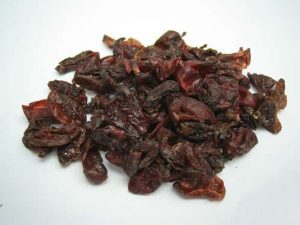
The root is cylindrical and twisted, often bearing remnants of the stem. It measures 0.5–3 cm in diameter; commercially available roots are typically cut into segments of varying lengths. The surface is earthy yellow to yellowish-brown, rough, with fine, dense longitudinal grooves and annular or semi-annular fissures; the cork layer often peels off, revealing an orange-yellow color where it has been removed. The cortex peels off easily, exposing the yellowish-white xylem.The texture is hard; when broken, it produces a cloud of dust, and the fracture surface is fibrous. In cross-section, the cork layer is orange-yellow and distinctly layered; the phloem is reddish-brown; the xylem is yellowish-white, densely covered with pinhole-like pores, and the rays are relatively prominent. The rhizome has characteristics similar to the root, is mostly straight, and has a white or pale red pith. It has a faint, distinctive odor and a bitter, slightly pungent taste.
Properties of Processed Slices
It is in the form of round or oval slices, 2–4 mm thick. The cross-section shows wood rays; the outer bark is pale yellow with faint longitudinal striations. It is brittle and breaks easily. It has a faint odor and a bland, slightly bitter taste.
Botanical Information
Botanical Classification
Thunbergiella, a plant of the genus Thunbergiella in the Celastraceae family.
Morphological Characteristics
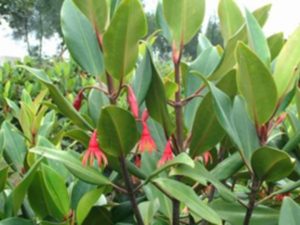
A deciduous, climbing shrub, up to 3 m long. Twigs are reddish-brown, with 4–6 ridges, densely covered with tuberculate lenticels and rust-colored short hairs.Simple leaves are alternate and sub-leathery; petioles are approximately 5 mm long; leaf blades are elliptical or broadly ovate, 4–9 cm long and 3–6 cm wide, with a short acute apex, a nearly rounded or broadly cuneate base, and finely serrated margins; the upper surface is smooth, while the lower surface is pale green; both the main and lateral veins are slightly prominent on the upper surface and sparsely covered with rust-brown soft hairs along the veins.Cymose panicles are terminal or axillary, 5–7 cm long, covered with rust-colored hairs. Flowers are bisexual, white-green, up to 5 mm in diameter; the calyx is 5-lobed; petals are 5, elliptic;5 stamens, with filaments wider near the base, attached to the margin of the cup-shaped disk; the style is short, with a 6-lobed stigma; the ovary is superior and trigonal. The capsule bears 3 membranous wings, is oblong, up to 14 mm long, and about 13 mm wide, with oblique lateral veins on the wings. The seed is single, slenderly cylindrical, and black. Flowering occurs from July to August, and fruiting from September to October.
Distribution Area
It is distributed throughout areas south of the Yangtze River basin and in the southwestern region.
Growth Habits
It prefers relatively shaded mountain slopes, wooded areas, or stream banks. It thrives in slightly acidic, fertile, deep sandy or yellow loam soils.
Propagation Methods
Propagated by cuttings.
Cultivation Techniques
Propagation by cuttings: Between the time the plant loses its leaves and early February of the following year (during the early dormant period), select 1- to 2-year-old branches and cut them into 10–20 cm segments; each cutting should have 2–3 nodes.then dip the lower end of each cutting (approximately 2 cm) into a 100 × 10⁻⁶ naphthaleneacetic acid (NAA) solution for about 1 hour. The cuttings can then be planted at a spacing of 10 cm × 10 (–15) cm. Lean the cuttings at a 60° angle into the planting trench, cover with soil, and press firmly, leaving the upper end exposed above ground to about 1/4–1/3 of the cutting’s length.Water immediately after planting and cover with a shade structure. After 40 days, the cuttings will sprout and develop roots. They can be transplanted after one year, interplanted in young stands of cedar, pine, or fruit trees. Dig holes with a row and plant spacing of 50 cm × 50 cm. Between early February and early April, dig up the seedlings, plant one seedling per hole, cover with 6 cm of soil and firm it down, then water thoroughly.