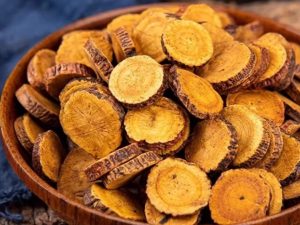
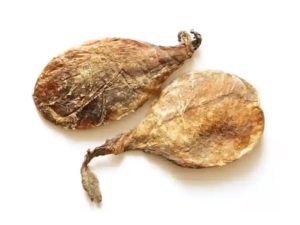
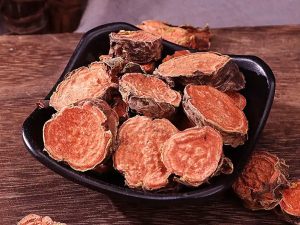
Southwest Camellia, a name in traditional Chinese medicine. It refers to the flower of the Southwest Red Camellia (Camellia pitardii Coh.-St.), a plant belonging to the genus Camellia in the family Theaceae.It is distributed in Hunan, Guangxi, Sichuan, Yunnan, and Guizhou. It has the effects of detoxifying and reducing inflammation, astringing to stop dysentery, promoting blood circulation to stop bleeding, and regulating menstruation. It is used for dysentery, intestinal bleeding, acute gastroenteritis, irregular menstruation, nosebleeds, hemoptysis, rheumatic pain, arthritis, rectal prolapse, and burns and scalds.

Southwest Camellia
Southwest Camellia, a name in traditional Chinese medicine. It refers to the flower of the Southwest Red Camellia (Camellia pitardii Coh.-St.), a plant belonging to the genus Camellia in the family Theaceae.It is distributed in Hunan, Guangxi, Sichuan, Yunnan, and Guizhou. It has the effects of detoxifying and reducing inflammation, astringing to stop dysentery, promoting blood circulation to stop bleeding, and regulating menstruation. It is used for dysentery, intestinal bleeding, acute gastroenteritis, irregular menstruation, nosebleeds, hemoptysis, rheumatic pain, arthritis, rectal prolapse, and burns and scalds.
Chinese Name : 西南山茶
Aliases : Camellia, Tea Flower, Red Camellia, Four-sided Mark
Nature, Flavor & Meridian Tropism : Slightly pungent, bitter, and astringent in taste; neutral in nature. Entering the Liver and Spleen meridians
Benefits & Efficacy
Benefits
Detoxifies and reduces inflammation; astringes and stops dysentery; promotes blood circulation and stops bleeding; regulates menstruation.
Indications
Used for dysentery, intestinal bleeding, acute gastroenteritis, irregular menstruation, epistaxis, hematemesis, rheumatic pain, arthritis, rectal prolapse, and burns and scalds.
Usage and Dosage
Flowers and roots: 15–30 g; leaves: 3 g. Grind into powder and take with warm wine. External use: Apply an appropriate amount as a paste or dry powder.
Precautions
*Yunnan Chinese Herbal Medicine*: “Avoid sour and cold foods.”
Pharmacological Actions
Hepatotoxicity: At substantial doses, Southwest Red Camellia causes significant liver damage.
Relevant Discussions
*Yunnan Chinese Herbal Medicine*: “Promotes blood circulation and stops bleeding; astringes and stops diarrhea.”
Applications
Related Compatibility
1. For menorrhagia, epistaxis, hematemesis, rectal bleeding, and rheumatism: 15 g of Southwest Red Camellia. Decoct and drink, or grind into a powder and take with boiling water, 6 g per dose.
2. For leukorrhea, nocturnal emission, and irregular menstruation: 9–15 g of Southwest Red Camellia flowers, with brown sugar as a vehicle; decoct and drink.
3. For acute gastroenteritis, dysentery, and rectal prolapse: 15–30 g of Southwest Red Camellia flowers or roots. Decoct and drink.
4. For arthritis: 3 g of Southwest Red Camellia roots or leaves. Grind into a powder and take with warm wine.
5. For burns and scalds: An appropriate amount of Southwest Red Camellia flowers. Grind into a powder and sprinkle on the affected area. (Formulas 1–5 are from *Yunnan Chinese Herbal Medicine*)
Processing & Preparation
Harvesting & Processing
Harvest in winter and sun-dry.
Crude Drug Identification
Botanical Information
Botanical Classification
Southwest Red Camellia, a plant of the genus Camellia in the family Theaceae.
Morphological Characteristics
Southwest Red Camellia, also known as Southwest Camellia. A shrub to small tree, growing up to 7 meters tall, with glabrous young branches. Leaves are leathery, lanceolate or oblong, 8–12 cm long and 2.5–4 cm wide, sometimes longer; apex acuminate or long-caudate; base cuneate; upper surface bright green when dry, lower surface yellowish-green, glabrous; 6–7 pairs of lateral veins visible on both surfaces.The margins bear sharp, coarse teeth spaced 2–3.5 mm apart, with tooth tips 0.5–1.5 mm long; the petiole is 1–1.5 cm long and glabrous.Flowers are terminal, red, and sessile; there are 10 bracts and sepals forming a 2.5–3 cm bracteole tuft; the lowest 1–2 bracts are semilunar, while the inner ones are nearly circular, about 2 cm long, hairy on the back, and deciduous;There are 5–6 petals; the flower is 5–8 cm in diameter, with the base fused to the stamens for about 1.3 cm; the stamens are 2–3 cm long and glabrous; the filaments of the outer whorl are connate, with a filament tube 1–1.5 cm long, the base of which is adnate to the petals; the ovary is densely hairy; the style is 2.5 cm long, hairy at the base, and shallowly 3-lobed at the apex.The capsule is flattened-globose, 3.5 cm tall and 3.5–5.5 cm wide, 3-chambered, splitting into 3 valves, with thick valves; the seeds are semicircular, 1.5–2 cm long, and brown. Flowering period: February–May.
Distribution Area
Distributed in Hunan, Guangxi, Sichuan, Yunnan, and Guizhou.