Dense-flowered Cycleade, a name in traditional Chinese medicine. It refers to the root of Cycleadebiliflora Miers, a plant in the genus Cycleade of the Menispermaceae family. The plant Cycleadebiliflora is distributed in Hainan and Guangxi. It has the effects of clearing heat and detoxifying, promoting diuresis and relieving dysuria, and dispersing blood stasis to alleviate pain. It is primarily used to treat wind-heat common cold, sore throat, toothache, damp-heat diarrhea, painful urination, and trauma.

Dense-flowered Cycleadebiliflora
Dense-flowered Cycleade, a name in traditional Chinese medicine. It refers to the root of Cycleadebiliflora Miers, a plant in the genus Cycleade of the Menispermaceae family. The plant Cycleadebiliflora is distributed in Hainan and Guangxi. It has the effects of clearing heat and detoxifying, promoting diuresis and relieving dysuria, and dispersing blood stasis to alleviate pain. It is primarily used to treat wind-heat common cold, sore throat, toothache, damp-heat diarrhea, painful urination, and trauma.
Chinese Name : 密花轮环藤
Nature, Flavor & Meridian Tropism : Bitter in taste, cold in nature. Enters the Lung, Liver, and Bladder meridians
Benefits & Efficacy
Benefits
Clears heat and detoxifies; promotes the elimination of dampness and relieves dysuria; disperses blood stasis and alleviates pain.
Indications
Wind-heat common cold, sore throat, toothache, damp-heat diarrhea, painful urination, and trauma.
Usage and Dosage
Internal use: Decocted as a soup, 3–15 g.
Relevant Discussions
*Xinhua Compendium of Materia Medica*: “Its effects are the same as those of *Mao Ye Lun Huan Teng*.”
Applications
Processing & Preparation
Harvesting & Processing
Harvest in autumn or winter; remove soil and fibrous roots, wash thoroughly, cut into small sections, and sun-dry.
Crude Drug Identification
Properties of Crude Drugs
Characteristics of the herbal material: The root is slender and cylindrical, slightly curved, with a diameter of 4–10 mm. The surface is yellowish-brown, with shallow longitudinal grooves; transverse cracks are present at the curved sections. The texture is tough and resilient, making it difficult to break. It has a faint odor and a bitter taste.
Botanical Information
Botanical Classification
Dense-flowered Lianhuan藤 (Lianhuan藤), a plant of the genus Lianhuan藤 in the family Menispermaceae.
Morphological Characteristics
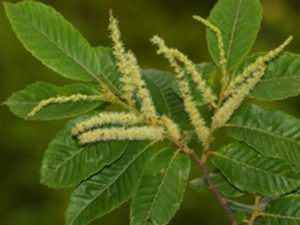
A twining vine. Stems and branches are herbaceous, with striated surfaces; young branches are pubescent, becoming glabrous with age. Petioles are slender, 1–4 cm long, and pubescent;leaf blades are papery, cordate-ovate to triangular-ovate, 2–8 cm long and 1.5–5.5 cm wide, with an acuminate apex, a deeply cordate to truncate base, entire or slightly shallowly undulate margins, glabrous above, tomentose below, and with 5 palmate veins. Cymose panicles are axillary, sometimes arranged in racemes;Male inflorescences are delicate, solitary or clustered in groups of 2–3, densely covered with long soft hairs; male calyx lobes 5, fused at the base, ca. 1 mm long, upper part often inrolled, base thickened, abaxially covered with long soft hairs; petal 1, minute, nearly round; stamens with fused anthers, ca. 3 mm long;The female calyx has 1 sepal, broadly triangular, about 1 mm long, with stiff hairs on the back; the petal is single, nearly the same shape and size as the sepal, with stiff hairs on the back; the ovary is covered with stiff hairs, the style is extremely short, and the stigma lobes are curved outward. The fruit is a drupe, about 4 mm long, covered with stiff hairs. Flowering period: April–June; fruiting period: June–August.
Distribution Area
Distributed in Hainan and Guangxi.