Ferula, a name in traditional Chinese medicine. It is the resin of Ferula sinkiangensis K. M. Shen (Xinjiang Ferula) or Ferula fukanensis K. M. Shen (Fukang Ferula), plants belonging to the genus Ferula in the Apiaceae family. It has the effects of resolving masses, dispersing abdominal distension, eliminating food stagnation, and killing parasites. It is primarily used to treat blood stasis-induced masses, abdominal distension and lumps, food stagnation caused by meat consumption, and abdominal pain due to parasitic infestation.

Asafoetida
Ferula, a name in traditional Chinese medicine. It is the resin of Ferula sinkiangensis K. M. Shen (Xinjiang Ferula) or Ferula fukanensis K. M. Shen (Fukang Ferula), plants belonging to the genus Ferula in the Apiaceae family. It has the effects of resolving masses, dispersing abdominal distension, eliminating food stagnation, and killing parasites. It is primarily used to treat blood stasis-induced masses, abdominal distension and lumps, food stagnation caused by meat consumption, and abdominal pain due to parasitic infestation.
Chinese Name : 阿魏
Latin Name : Ferulae Resina
Aliases : Xunqu, Wei Quji, Haxini, Wucaiwei, Chou’wei
Nature, Flavor & Meridian Tropism : Bitter and pungent in taste; warm in nature; enters the Liver, Spleen, and Stomach meridians
Benefits & Efficacy
Benefits
Dissolves masses, disperses fullness, eliminates food stagnation, and kills parasites.
Indications
1. Blood stasis-induced masses and abdominal masses: This herb is bitter and draining, pungent and warm, and promotes circulation and dispersion; it is effective in resolving masses and dispersing abdominal masses. 2. Indigestion caused by meat consumption: This herb aids in digestion and relieves food stagnation. 3. This herb can also be used to treat abdominal pain caused by parasitic infestations.
Usage and Dosage
Oral use: 1–1.5 g; typically used in pills or powders; not suitable for decoctions. External use: As needed; typically used in plasters.
Precautions
1. Contraindicated for individuals with spleen and stomach deficiency and for pregnant women. 2. Except for *Ben Cao Zheng*, which records Asafoetida as “toxic,” other materia medica texts consider it non-toxic, a fact now confirmed by experiments. However, due to its exceptionally pungent odor, it is rarely taken internally in modern times and is mostly used externally. Although *Lei Gong’s Treatise on Medicinal Processing* states, “First grind it into a powder in a clean bowl, then soak it in a vessel of hot wine, and use it as needed,” it is now used only in its raw form in clinical practice.
Chemical Constituents
Asafoetida contains 20.74% essential oil; some of the sulfur-containing ether compounds in this oil are the source of its distinctive odor. It also contains coumarin-type compounds, while its resin contains ferulic acid, ferulic acid esters, and other compounds.
Pharmacological Actions
Asafoetida can significantly inhibit spontaneous uterine contractions in non-pregnant animals, but it exerts a stimulatory effect on the isolated uterus of pregnant rabbits; these opposing effects may be related to progesterone levels in the animal’s body.The fat-soluble components of Asafoetida have an anti-fertility effect. Its essential oil exhibits strong anti-inflammatory activity and possesses anti-allergic and immunomodulatory properties; this product has a relaxing effect on the smooth muscles of various organs, including the intestinal tract in animals, and may serve as an antispasmodic and analgesic.
Relevant Discussions
1. *Newly Revised Materia Medica*: “Primarily used to kill various small parasites, eliminate foul odors, disperse masses and accumulations, and expel pathogenic qi.”
2. *Supplementary Notes to the Elucidation of the Materia Medica*: “Dissolves food stagnation.”
Applications
Clinical Applications
1. It is commonly used in combination with White Mustard Seed (Bai Jie Zi) and Acorus Zingiberifolius (San Leng) to treat abdominal masses and blood stasis-related masses. It can also be combined with Realgar (Xiong Huang), Cinnamon Bark (Rou Gui), and Frankincense (Ru Xiang) to make a hard ointment for external application, such as the Asafoetida Ointment for Dispelling Masses (He Zhongri’s *Collection of Prescriptions*).
2. It is often combined with hawthorn (Shanzha), Coptis (Huanglian), and forsythia (Lianqiao) to treat food stagnation caused by meat consumption, such as the Asafoetida Pills (Zhengzhi Zhunsheng).
Related Medicines
Asafoetida Mass-Resolving Ointment, Asafoetida and Musk Stagnation-Resolving Ointment.
Related Prescriptions
Asafoetida Pills (*Jisheng Fang*), Asafoetida and Musk Powder (*Zhang’s Medical Compendium*), Minor Asafoetida Pills (*Effective Prescriptions of Generations of Physicians*), and Effective Malaria Pill (*Direct Pointers to Prescriptions*).
Processing & Preparation
Harvesting & Processing
From late spring to early summer, during the peak flowering period through the early fruit-setting stage, make diagonal cuts in stages from the upper part of the stem downward, collect the oozing milky resin, and air-dry it in the shade.
Processing Methods
1. Asafoetida: Take the raw material, remove impurities, and cut into small pieces or crush. Alternatively, add water to the raw material to melt it, then filter out impurities and residues, dry, and cut into small pieces or crush.
2. Processed Asafoetida: Place the purified asafoetida in a pot and stir-fry over low heat until the smoke dissipates and it turns grayish-black while retaining its properties; remove and allow to cool.
Storage Methods
Store in a dry container, tightly sealed, in a cool, dry place. Protect from moisture.
Crude Drug Identification
Identification
1. Take 0.2 g of the powdered sample, place it in a 25-mL volumetric flask, add an appropriate amount of anhydrous ethanol, subject it to ultrasonic treatment for 10 minutes, dilute with anhydrous ethanol to the mark, shake well, and filter. Transfer 0.2 mL of the filtrate to a 50-mL volumetric flask, add anhydrous ethanol to the mark, shake well, and determine the absorbance using the UV-Vis spectrophotometric method (General Rules 0401).A maximum absorption should be observed at a wavelength of 323 nm.
2. Take 0.5 g of the powdered sample, add 20 mL of dilute hydrochloric acid, sonicate for 10 minutes, and collect the supernatant (centrifuge if necessary). Shake to extract twice with ether (40 mL and 20 mL), combine the ether extracts, and evaporate to dryness. Dissolve the residue in 1 mL of anhydrous ethanol to prepare the test solution.Separately, take a reference standard of ferulic acid, add a mixture of ethanol and 5% glacial acetic acid (1:4) to prepare a solution containing 1 mg per mL, and use this as the reference solution. Perform thin-layer chromatography (General Chapter 0502): pipette 2 μL of each of the two solutions and apply them separately onto the same silica gel G plate. Develop the plate using a mobile phase of cyclohexane-dichloromethane-glacial acetic acid (8:8:1) as the developing agent, remove the plate, allow it to air-dry, and spray with a mixture of 1% ferric chloride in ethanol and 1% potassium ferricyanide (1:1) (prepared immediately before use). In the test solution chromatogram, spots of the same color as those in the reference standard chromatogram appear at the corresponding positions.
Properties of Crude Drugs
1. Asafoetida (Imported): Consists of spherical granules agglomerated into lumps of varying sizes. The surface is rough, and the color is variable, consisting of alternating shades of white, yellow, dark yellow, brown, or reddish-brown; it is dull.The dried product is relatively hard, while the fresh product is softer; the cross-section is milky white or pale yellowish-brown, gradually turning red or reddish-brown when exposed to air. It has a strong, persistent garlic-like odor, a slightly pungent and bitter taste, and sticks to the teeth when chewed. It softens when heated. When ground with water, it forms a white milky emulsion.
2. Asafoetida (domestically produced, primarily from Xinjiang, with a small amount from Fukang): It appears in irregular lumps and paste-like forms, varying in color, with surfaces ranging from waxy yellow to brownish. The lump form is light in weight, with a waxy texture; the cross-section is slightly porous, and the fresh cut surface is lighter in color, gradually darkening with time. The paste-like form is viscous and grayish-white.It possesses a strong and persistent, distinctive garlic-like odor; it has a pungent taste; when chewed, it sticks to the teeth and causes a burning sensation. When ground with water, it also forms a white milky emulsion. The best quality specimens are lump-shaped, with a colored surface, a milky white or slightly reddish cross-section, a strong and persistent odor, and are pure and free of impurities.
Properties of Processed Slices
1. Asafoetida: See the “Medicinal Materials” section.
2. Processed Asafoetida: Resembles asafoetida in shape, with a grayish-black surface and a brownish-black interior; it is light in weight and has a distinctive garlic-like odor.
Botanical Information
Botanical Classification
Plants of the genus Asafoetida in the Apiaceae family, specifically Xinjiang Asafoetida and Fukang Asafoetida.
Morphological Characteristics
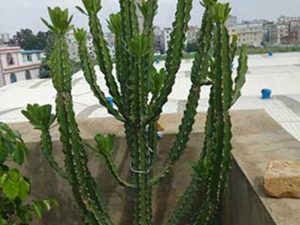
1. Xinjiang Asafoetida: A perennial, once-fruiting herb reaching 0.5–1.5 m in height. The entire plant emits a strong, distinctive garlic-like odor. The root is large, spindle-shaped or conical, with fibers from withered leaf sheaths remaining at the root crown.The stem is robust, usually solitary, rarely branched 2–5 times; it is pubescent and branches conically from the base upward, with lower branches arranged alternately and upper branches in whorls, typically tinged with purplish-red. The leaves are soft; the leaf blade is triangular-broadly elliptic, ternately and three- to four-times pinnately lobed; the terminal lobes are broadly elliptic, 10 mm long, extending downward at the base, and toothed or shallowly lobed at the apex;gray-green, sparsely hairy above, and densely covered with short soft hairs below; the axillary leaves have short petioles with sheath-like bases; the cauline leaves are smaller, with ovate-lanceolate sheaths that partially clasp the stem. Compound umbels are borne at the tips of stems and branches, 8–12 cm in diameter, without involucral bracts; the rays number 5–25, are nearly equal in length, and densely covered with soft hairs;The central inflorescence is nearly sessile; lateral inflorescences number 1–4, are smaller, and are arranged oppositely or in whorls on the branches, rarely solitary, and often extend beyond the central inflorescence; each umbel bears 10–20 flowers, with broad-lanceolate bracts that are deciduous; calyx teeth are small; petals are elliptic, yellow, up to 2 mm long, and hairy on the outer surface;The style base is flattened-conical, with a widened, undulate margin; the style is elongated, and the stigma is capitate. The schizocarp is elliptic, flattened dorsoventrally, 10–12 mm long, 5–6 mm wide, sparsely hairy, with prominent ridges; each ridge groove contains 3–4 oil tubes of varying sizes, and the fused face has 12–14 oil tubes.Flowering period: April–May; fruiting period: May–June.
2. Fukang Asafoetida: A perennial, once-fruiting herb, 0.5–1 m tall. The entire plant emits a strong onion- and garlic-like odor. The root is conical and stout, with fibers from the sheaths of withered leaves remaining at the root crown. The stem is solitary, stout, nearly glabrous, branching upward from the base to form a panicle; lower branches are alternate, while those further down are whorled.Basal leaves have short petioles that expand into sheaths at the base; the leaf blade is broadly ovate in outline, three- or twice-pinnately deeply lobed, with oblong lobes extending downward from the base, 20 mm long; the lower part of the lobes is deeply lobed, while the upper part is shallowly lobed or toothed; the base extends downward; the upper surface is glabrous, and the lower surface is pubescent with short soft hairs; cauline leaves gradually become simplified and smaller, with lanceolate leaf sheaths.Compound umbels are borne at the tips of stems and branches, 6–10 cm in diameter, without involucral bracts; rays 5–18 (–31), of unequal length; the central inflorescence has a long peduncle, 3–5 cm long; lateral inflorescences 1–4, with peduncles 6–15 cm long, arranged alternately or in whorls on the branches; each umbel bears 7–21 flowers;the small bracts are lanceolate and early deciduous; the calyx teeth are superior; the petals are yellow, oblong-lanceolate, 1.5–2 mm long, sparsely hairy on the outside; the style base is flattened-conical, with thickened margins that are shallowly lobed or undulate; the style is elongated, and the stigma is capitate.Schizocarps are elliptical, flattened dorsoventrally, 12–16 mm long, and 6–8 mm wide; the fruit ridges are prominent, with 4–5 oil tubes of varying sizes in each ridge groove, and 10–12 oil tubes on the fused surface. Flowering occurs from April to May, and fruiting from May to June.
Distribution Area
1. Xinjiang Asafoetida: Found in Yili and other areas of Xinjiang. 2. Fukang Asafoetida: Found in Fukang, Xiquan, and other areas of Xinjiang.