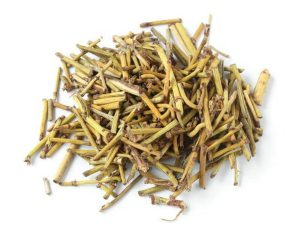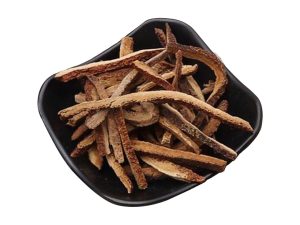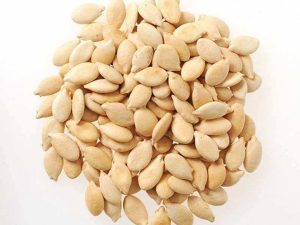
Bawang Root is the name of a traditional Chinese medicine. It comes from plants of the genus Bawang in the family Zygophyllaceae. It is distributed in Inner Mongolia, Gansu, Ningxia, Xinjiang, Qinghai, and other regions. The root is used medicinally; it is warm in nature and pungent in taste, and has the efficacy of regulating qi and relieving abdominal distension. It is commonly used to treat qi stagnation and abdominal distension.

Bawang Root
Bawang Root is the name of a traditional Chinese medicine. It comes from plants of the genus Bawang in the family Zygophyllaceae. It is distributed in Inner Mongolia, Gansu, Ningxia, Xinjiang, Qinghai, and other regions. The root is used medicinally; it is warm in nature and pungent in taste, and has the efficacy of regulating qi and relieving abdominal distension. It is commonly used to treat qi stagnation and abdominal distension.
Chinese Name : 霸王根
Nature, Flavor & Meridian Tropism : Pungent in taste, warm in nature. Enters the Stomach Meridian.
Benefits & Efficacy
Benefits
Promotes the flow of qi and relieves abdominal distension.
Indications
Qi stagnation and abdominal distension.
Usage and Dosage
3–6 g.
Precautions
Patients requiring treatment with Chinese herbal medicine should first consult a licensed Traditional Chinese Medicine (TCM) hospital to receive a prescription following a professional TCM differential diagnosis.
Applications
Processing & Preparation
Harvesting & Processing
Harvest in spring or fall; cut into sections, wash, and sun-dry.
Crude Drug Identification
Botanical Information
Botanical Classification
A plant of the family Zygophyllaceae, known as “Bawang.”
Morphological Characteristics
A shrub, 50–100 cm tall. Branches are curved and spreading, with pale gray bark and yellow wood; the tips are sharp and spiny, and the branches are hard. Leaves are clustered on old branches and opposite on young branches; petioles are 8–25 mm long;one pair of leaflets, long-spatulate, narrowly oblong, or linear, 8–24 mm long, 2–5 mm wide, with a rounded-blunt apex, gradually narrowing at the base, fleshy, borne in the leaf axils of old branches; 4 sepals, obovate, green, 4–7 mm long; 4 petals, obovate or nearly round, pale yellow, 8–11 mm long;8 stamens, longer than the petals. The capsule is nearly spherical, 18–40 mm long, with wings 5–9 mm wide; it is usually 3-chambered, each chamber containing 1 seed. The seeds are reniform, 6–7 mm long, and about 2.5 mm wide. Flowering occurs from April to May; fruiting occurs from July to August.
Distribution Area
Native to western Inner Mongolia, western Gansu, western Ningxia, Xinjiang, and Qinghai. Also found in Mongolia.