
Benefits and Functions
function
supports Qi and Yang vitality, helps maintain normal perspiration and surface defenses, promotes healthy fluid balance and reduces occasional water retention, encourages the production of body fluids and nourishes blood, supports smooth energy flow and flexible joints, assists the body’s natural cleansing processes and healthy discharge, and helps maintain healthy skin and wound recovery.
Main Indications
supports vitality and energy levels in cases of Qi deficiency with fatigue; helps maintain healthy appetite and normal stool consistency; supports the proper ascending of Spleen Qi for normal organ positioning; helps maintain regular bowel function and pelvic floor support; supports healthy blood circulation in the lower body for occasional blood in stool and normal menstrual flow; helps maintain normal sweating patterns for those with exterior deficiency; supports healthy fluid balance in Qi deficiency-related puffiness; helps maintain balanced internal heat and normal thirst response; supports healthy blood production for a vibrant complexion; supports balanced movement and coordination on one side of the body; supports comfortable joint function and normal sensation; helps promote healthy tissue response and normal suppuration; supports normal wound supports and skin recovery.
Usage and Dosage
Oral administration: Decoct in water, 10-15g; for higher doses, up to 30-60g. Alternatively, prepare into pills, powder, or paste.
Precautions
1. It should not be used in cases of Exterior Excess with prevailing pathogenic factors, early-stage sores, or post-ulceration with persistent heat toxin.
2. Herb combination contraindications: antagonistic to Testudinis Carapax et Plastrum (Guijia) and Dictamnus dasycarpus (Baixianpi).
3. Incompatibilities in Combined Use of Chinese and Western Medicine
(1) Should not be used together with antihypertensive drugs, as this may cause a sudden drop in blood pressure when standing up.
(2) Not recommended for concurrent use with cardiac glycoside drugs, as the effects may accumulate and increase toxicity.
(3) When used together with drugs such as heparin, warfarin, and aspirin, it may increase bleeding tendency. It can reduce the pressor effect of epinephrine, so concurrent use is not recommended.
4. Dietary contraindications: Avoid radish, mung beans, and strongly alkaline foods such as grapes, tea, wine, seaweed sprouts, kelp, etc.
Chemical composition
Mainly contains triterpenoid saponins such as astragaloside I, II, III, IV (astragaloside IV), soyasaponin I, and astragaloside I, II from the capsule; flavonoids such as formononetin and calycosin-7-O-β-D-glucoside; and also contains polysaccharides, amino acids, and other components.
Pharmacological Actions
This product supports immune function, helps maintain energy levels, and aids the body in adapting to stress. It supports normal gastrointestinal motility, Lung health, urinary function, and Kidney health. It also promotes healthy blood production, supports healthy aging, and contributes to Liver health, healthy lipid levels, and normal blood sugar levels.
Related Discussion
1. *Bencao Huiyan* (Collected Herbal Statements): “It is a herb that supports the health of the Lungs and Spleen, helps maintain normal defensive Qi and healthy sweating, and supports the body’s natural balance against environmental factors and toxins.”
Yixue Zhongzhong Canxi Lu (Records of Chinese Medicine with Reference to Western Medicine) states: “It can tonify Qi and simultaneously raise Qi, and helps maintain the proper elevation of chest Qi (i.e., pectoral Qi) to helps maintain sinking.”
Clinical Application
Clinical Application
1. To support Spleen Qi health in cases of fatigue, lack of strength, poor appetite, and loose stools, one may use a single herb decocted into a paste alone, or combine it with herbs such as Codonopsis pilosula (Dangshen) and Atractylodes macrocephala (Baizhu).
2. For patterns of Spleen Deficiency with Sinking of Middle Qi, which may manifest as occasional bowel irregularity and a sensation of sagging in the pelvic or abdominal region, it is combined with *Panax ginseng* (Renshen), *Cimicifuga foetida* (Shengma), and *Bupleurum chinense* (Chaihu), as in the formula Buzhong Yiqi Tang (Supplement the Middle and Augment the Qi Decoction, from *Piwei Lun*).
3. For Lung Qi Deficiency presenting with chronic cough, shortness of breath, and spirit fatigue, it is often combined with *Aster tataricus* (Ziwan), *Tussilago farfara* (Kuandong), and *Prunus armeniaca* (Xingren), as in Bufei Tang (Lung-Supplementing Decoction) from the *Yonglei Qianshu* (Prescriptions of the Yonglei Era).
4. This herb helps maintain the Qi of the Spleen and Lung to support the body’s defensive Qi and strengthen the exterior defense. It is often combined with Ostrea gigas (Mu Li) and Ephedra sinica (Ma Huang Gen), as found in the formula Mu Li San (Oyster Shell Powder) from the *Prescriptions of the Peaceful Benevolent Dispensary* (Heji Jufang).
5. For supporting those with Defensive Qi not consolidating, superficial deficiency, occasional spontaneous sweating, and susceptibility to wind, it is often used together with Atractylodes macrocephala (Baizhu) and Saposhnikovia divaricata (Fangfeng), as in Yupingfeng San (Jade Windscreen Powder) from Danxi Xinfa.
6. For supporting the body’s water metabolism in cases of Qi deficiency with fluid retention, it is often combined with Baizhu (Atractylodes macrocephala), Fuling (Poria cocos), and Fangji (Stephania tetrandra), as in the formula Fangji Huangqi Tang (Stephania and Astragalus Decoction) from the *Jingui Yaolue* (Synopsis of Prescriptions of the Golden Chamber).
7. For patterns of Qi and Blood Deficiency, it is often combined with Angelica sinensis (Danggui), such as in the formula Danggui Buxue Tang (Angelica Sinensis Decoction for Nourishing Blood) from *Secrets of the Orchid Chamber*.
8. For mid-stage sores and ulcers presenting with Right Qi Deficiency and Excessive Toxin, where the body is unable to support the expulsion of the toxin — resulting in flat, depressed lesions with a scattered root and difficulty in festering or necrotizing — it is commonly combined with herbs such as Panax ginseng (Renshen) and Angelica sinensis (Danggui), as seen in the formula Tuoli Tounong San (Interior-Tonifying Pus-Draining Powder) from the *Golden Mirror of Medicine*. In the late stage of ulceration, when Qi and Blood Deficiency leads to thin, clear pus and difficulty in wound closure, this herb supports healthy tissue regeneration and wound supports. It is then often used together with Panax ginseng (Renshen), Angelica sinensis (Danggui), and Cinnamomum cassia (Rougui), as in the formula Shiquan Dabu Tang (All-Inclusive Great Tonifying Decoction) from the *Formulary of the Bureau of Taiping People’s Welfare Pharmacy*.
9. For patterns of Wind-Cold-Damp Bi, it is appropriate to combine with herbs such as Aconitum carmichaelii (Chuanwu), Angelica pubescens (Duhuo), and Achyranthes bidentata (Niuxi). For patterns of sequelae following Wind-stroke, it is often combined with Angelica sinensis (Danggui), Ligusticum chuanxiong (Chuanxiong), and Pheretima (earthworm) (Dilong), as in the formula Buyang Huanwu Tang (Yang-Supplementing and Five-Returning Decoction) from Yilin Gaicuo (Corrections of Errors in Medical Classics).
Related Compatibility
1. Astragalus membranaceus (Huangqi) combined with Panax ginseng (Renshen): Astragalus is adept at supplementing Qi and raising Yang, as well as consolidating the exterior and securing the defensive Qi, with a tendency toward warming and fortifying. Ginseng excels at greatly supplementing primordial Qi, generating fluids, and quenching thirst, with a tendency toward nourishing and strengthening. When used together, these two herbs enhance each other’s actions, forming an important sweet-warm Qi-supplementing combination. This pairing supports individuals experiencing occasional fatigue, reduced appetite, and spontaneous sweating associated with Qi deficiency, thereby promoting general well-being.
2. Astragalus membranaceus (Huangqi) with Angelica sinensis (Danggui): Astragalus tonifies the Qi of the Spleen and Lung to nourish the source of blood generation; Angelica nourishes the blood of the Heart and Liver to supplement blood and harmonize the nutritive (Ying) level. The combination enhances the effect of supplementing Qi and generating blood. It supports recovery from fatigue and internal stress, helps maintain normal body temperature and complexion, supports normal thirst response, and promotes pulse strength and vitality. Additionally, it aids in maintaining healthy skin integrity, supports normal body warmth related to blood health, and supports overall Qi and blood balance for general well-being.
3. Astragalus membranaceus (Huangqi) paired with Cimicifuga foetida (Shengma): Huangqi is sweet and warm, excels at tonifying Qi and raising Yang; Shengma is acrid, sweet, and slightly cold, adept at raising Yang. Together, they enhance the effect of raising Yang and lifting sinking (举陷). This combination is suitable for patterns of Qi Deficiency with Sinking, helping to support the body’s ability to maintain normal organ positioning and overall structural integrity.
4. Astragalus membranaceus (Huangqi) combined with Saposhnikovia divaricata (Fangfeng): Astragalus tonifies Qi and secures the exterior, while Saposhnikovia dispels Wind and releases the exterior. When used together, Saposhnikovia can carry the Qi-tonifying effect of Astragalus throughout the body. Astragalus, with the dispersing action of Saposhnikovia, does not retain pathogenic factors, while Saposhnikovia, with the exterior‑securing action of Astragalus, does not over‑disperse. This combination embodies dispersion within tonification and tonification within dispersion, exemplifying mutual assistance (Xiang Shi) in herbal pairing. It is traditionally used to support individuals with a deficient constitution experiencing occasional soreness in the limbs and a tendency to sweat without exertion, associated with exterior deficiency.
5. Astragalus membranaceus (Huangqi) paired with Cinnamomum cassia (Guizhi): Huangqi is known for supporting Qi and promoting healthy blood circulation, while Guizhi excels at warming the meridians and supporting smooth flow through the channels. Their combination may enhance the benefits of supporting Qi flow, warming the meridians, and harmonizing blood. This pairing helps maintain the balance of Qi, Blood, Nutritive (Ying) and Defensive (Wei) aspects, and supports muscular comfort and flexibility in the shoulders and arms.
Differentiation of Medicinal Application
Raw Astragalus membranaceus (Huangqi) and honey-processed Astragalus: Both processed forms have a sweet and warm nature and attribute, and enter the Lung and Spleen Meridians. They both support Qi and help maintain a strong defensive exterior, promote normal urinary function, support the body’s natural detoxification and healthy discharge processes, and contribute to the health of skin and tissues. However, raw Astragalus is particularly adept at securing the exterior and supporting balanced sweating, promoting healthy fluid metabolism to help reduce occasional swelling, and supporting the body’s natural discharge processes. It is traditionally used for patterns of Defensive Qi Insecurity (Wei Qi Bu Gu) with occasional spontaneous sweating, general weakness with susceptibility to external pathogens, edema, and non-supports or slow-supports sores. Honey-processed Astragalus excels in supplementing Qi and strengthening the Middle Burner, and is traditionally used for Qi deficiency patterns such as fatigue, poor appetite with loose stools, and Sinking of Middle Qi (Zhong Qi Xia Xian).
Related Medicinal Products
清暑益气丸 – Qingshu Yiqi Wan (Clear Summer-Heat and Boost Qi Pill) 净石灵胶囊 – Jingshiling Jiaonang (Stone-Cleansing Capsule) 三两半药酒 – Sanliangban Yaojiu (Three Liang and a Half Medicinal Wine) 黄芪健胃膏 – Huangqi Jianwei Gao (Astragalus Stomach-Strengthening Paste) 正心泰胶囊 – Zhengxintai Jiaonang (Heart-Calming Capsule) 补中益气丸 – Buzhong Yiqi Wan (Supplement the Middle and Boost Qi Pill)
Related Formulas
Buzhong Yiqi Tang (Center-Supplementing Qi-Boosting Decoction) from *Treatise on the Differentiation of Endogenous and Exogenous wellness* (Neiwaishang Bianhuo Lun), Yupingfeng San (Jade Wind-Barrier Powder) from *Classified Collection of Medical Prescriptions* (Yifang Leiju), Huangqi Guizhi Wuwu Tang (Astragalus and Cinnamon Twig Five-Substance Decoction) from *Synopsis of Prescriptions of the Golden Chamber* (Jinkui Yaolüe), Baoyuan Tang (Source-Supporting Decoction) from *Benevolent Love’s Mirror* (Bo’ai Xinshang), Danggui Buxue Tang (Angelica Blood-Supplementing Decoction) from *Treatise on the Differentiation of Endogenous and Exogenous wellness* (Neiwaishang Bianhuo Lun).
Medicinal Dietary Regimen
1. Astragalus membranaceus (Huangqi) and Eel Soup
(1) Action: supports Qi and Blood, promotes a healthy complexion. helps maintain normal energy levels and a healthy appearance.
(2) Raw materials: Astragalus membranaceus (Huangqi) 30g, eel 300g, ginger 1 slice (shredded), red dates 5 pieces (pitted), garlic 2 cloves.
(3)Preparation: Wash *Astragalus membranaceus* (Huangqi) and *Ziziphus jujuba* (Hongzao). Wash and cut *Allium sativum* (garlic) into sections. Remove the intestines of the eel (*Monopterus albus*), wash, and cut into pieces. Heat oil in a wok, add eel, *Zingiber officinale* (ginger), and salt, and stir-fry until the eel is half-cooked. Place all ingredients into a pot, add an appropriate amount of water. Bring to a boil over high heat, then simmer over low heat for 1 hour. Adjust seasoning to taste.
(4) Usage: Consume as a side dish with meals, drink the soup and eat the eel meat.
2. Fangji Huangqi Congee (Stephania tetrandra and Astragalus membranaceus Congee)
(1) supports blood nourishment and Spleen function, and promotes healthy fluid balance. helps maintain a healthy body weight.
(2) Raw materials: Stephania tetrandra (Fangji) 10g, Astragalus membranaceus (Huangqi) 12g, Atractylodes macrocephala (Baizhu) 6g, Glycyrrhiza uralensis (Gancao) 3g, and Oryza sativa (japonica rice) 50g.
(3) Method: Place all the above medicinal herbs into a pot, add enough clean water to cover all the ingredients. Bring to a boil over high heat, then simmer over low heat for about 30 minutes. Then add japonica rice and cook until it becomes a congee.
(4) Usage: Take warm, 1-2 times daily.
3.Astragalus and Beef Congee (Huangqi Niurou Zhou)
(1)Functions: supports healthy Spleen and stomach function, promotes Qi energy and helps maintain a strong body surface, and harmonizes the nutritive and defensive aspects. Used for patterns of Spleen and Stomach Qi Deficiency, reduced appetite, fatigue and limb weakness, lack of strength and reluctance to speak, pale complexion, loose stools, and a large, deficient pulse.
(2) Raw materials: 30g prepared *Astragalus membranaceus* (Huangqi), 100g beef, 30g rice, 10 pieces of *Ziziphus jujuba* (Dazao, red dates), and appropriate amount of salt.
(3) Method: Dice the beef into small cubes. Place the beef and processed astragalus (Zhi Huangqi) into a pot, cook for half an hour, then remove the astragalus. Then add rice, cook on low heat until it becomes a thin porridge, and season with salt to taste.
(4) Usage: Take warm, 1-2 times daily.
Notes
For patients requiring herbal medicine therapy, they should first visit a regular TCM hospital. After professional TCM pattern differentiation, an herbal formula prescription will be provided.
Processing and Preparation
Harvesting and Processing
Harvest in spring and autumn, remove rootlets and root crown, then dry in the sun.
Processing Methods
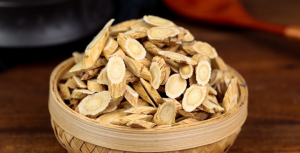
1. Astragalus membranaceus (Huangqi): Take the raw material, remove impurities, wash clean, moisten thoroughly, cut into thick slices, and dry.
2. Stir-fried Astragalus (Huangqi): Place Astragalus membranaceus (Huangqi) slices in a pot, stir-fry over low heat until deep yellow with slight charred spots, then remove and let cool.
3. Honey-fried Astragalus (Mi Huangqi): Take refined honey, add an appropriate amount of boiling water to dilute, then mix well with sliced Astragalus membranaceus (Huangqi). Allow to moisten briefly. Place in a pot and heat over low heat, stir-frying until deep yellow and no longer sticky to the touch. Remove and allow to cool. For every 100 kg of Astragalus slices, use 25 kg of refined honey.
4. Wine-processed Astragalus membranaceus (Huangqi): Take Astragalus membranaceus (Huangqi) slices, mix well with rice wine, let stand for 1 hour, then stir-fry. For every 100 kg of Astragalus membranaceus (Huangqi) slices, use 12.4 kg of rice wine.
5. Salt-processed Astragalus membranaceus (Huangqi): Take Astragalus membranaceus (Huangqi) slices, mix well with salt water, and allow to moisten until the salt water is fully absorbed. Then place in a pan and stir-fry over low heat until slightly done, remove, and let cool. For every 100 kg of Astragalus membranaceus (Huangqi) slices, use 1.8 kg of table salt.
Storage Method
Store in a dry container. Seal tightly for stir-fried Astragalus (Huangqi), honey-fried Astragalus, wine-fried Astragalus, and salt-fried Astragalus, and keep in a cool, dry place.
Identification of Medicinal Materials
Morphological characteristics of medicinal materials
This product is cylindrical in shape, sometimes branched, with a thicker upper end, measuring 30-90 cm in length and 1-3.5 cm in diameter. The surface is pale brownish-yellow or pale brownish-tan, with irregular longitudinal wrinkles or grooves. It is hard and tough, not easily broken. The transverse section is strongly fibrous and starchy, with a yellowish-white bark (cortex) and a pale yellow wood (xylem) that shows radial striations and cracks. In older roots, the center may appear decayed, blackish-brown, or hollow. The odor is slight, the taste is slightly sweet, and it has a mild beany flavor when chewed.
Characteristics of Prepared Herbal Slices (Yinpin Xingzhuang)
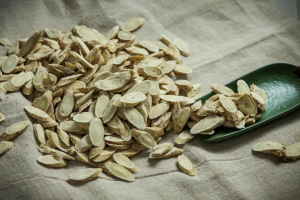
1. Astragalus membranaceus (Huangqi): It appears as roundish or oval thick slices. The surface is yellowish-white, with brown ring lines and radial striations in the inner layer, and tortuous fissures in the outer layer, with a yellow center. The periphery is grayish-yellow or light brown, with longitudinal wrinkles. The odor is slight, and the taste is slightly sweet. When chewed, it has a bean-like smell.
2. Stir-fried Astragalus (Astragalus membranaceus): Shaped like Astragalus slices, with a deep yellow surface and slight scorched spots.
3. Honey-fried Astragalus membranaceus (Huangqi): Similar in shape to slices of Astragalus, with a deep yellow surface, slight gloss, mild stickiness, a honey aroma, and a sweet taste.
4.Wine-processed Astragalus membranaceus (Huangqi): similar in shape to slices of Astragalus, with a yellow surface and a slight aroma of wine.
5. Salt-processed Astragalus membranaceus (Huangqi): shaped like slices of Huangqi, with a yellow surface and a slightly salty taste.
Botanical Information
Plant genus and species
Plants of the Fabaceae family, Astragalus genus: Astragalus membranaceus (Huangqi) and Astragalus membranaceus var. mongholicus (Mongolian Huangqi).
Morphological characteristics
1. *Astragalus membranaceus* (Mongolian milkvetch): Perennial herb, 50–150 cm tall. Root straight and long, cylindrical, slightly woody, surface pale brownish-yellow to dark brown. Stem erect, branched in upper part, covered with long soft hairs. Odd-pinnate compound leaves, alternate; petiole base with lanceolate stipules; leaflets 25–37, broadly elliptic, 4–9 mm long, apex slightly obtuse with a short tip, base cuneate, entire margin, both surfaces with white long soft hairs. Raceme axillary, with 10–25 flowers; pedicel short, with black stiff hairs; bract linear-lanceolate; calyx tubular; corolla yellow, papilionaceous; stamens 10, diadelphous; ovary stipitate, glabrous, style glabrous. Legume membranous, inflated, ovoid-oblong, 1.1–1.5 cm wide, glabrous, apex beaked, with prominent reticulate veins. Seeds 5–6, reniform, black. Flowering period June–July, fruiting period August–September.
2. *Astragalus membranaceus* (Milkvetch Root): This species is very similar in form to the above, with the main differences being that the leaflets are 13–31 in number, ovate-lanceolate or elliptic, 7–30 mm long, 4–10 mm wide. The corolla is light yellow; the ovary is sparsely hairy. The legume is ovate-oblong, 2–2.5 cm long, 0.9–1.2 cm wide, covered with short black hairs.
Distribution area
1. Astragalus membranaceus var. mongholicus (Mongolian Milkvetch): Distributed in Heilongjiang, Jilin, Liaoning, Inner Mongolia, Hebei, Shanxi, Xinjiang, and Tibet. Cultivated in Northeast China, Inner Mongolia, Hebei, Shanxi, and other areas.
2. Astragalus membranaceus (Huangqi): Distributed in Heilongjiang, Jilin, Liaoning, Inner Mongolia, Beijing, Tianjin, Hebei, Shanxi, Shaanxi, Ningxia, Gansu, Qinghai, Shandong, Sichuan, Tibet, and other areas. Cultivated in Northeast China, Inner Mongolia, Hebei, Shanxi, and other regions.
authentic producing region (Daodi chanqu)
Mainly produced in Shanxi, Gansu, Heilongjiang, and Inner Mongolia.
Growth Environment
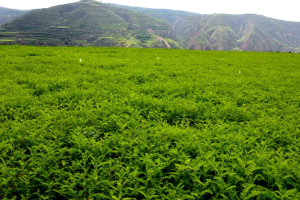
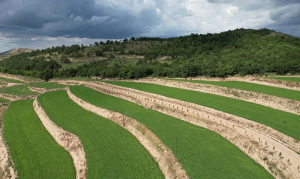
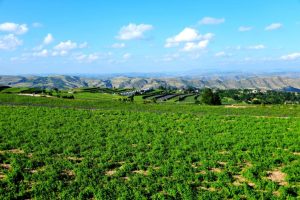
1. Astragalus membranaceus (Huangqi): Grows on hillsides, by ditches, or under sparse forests.
2. Astragalus membranaceus (Huangqi): Grows on sunny slopes or edges of thickets, or in sandy soil along riverbanks.
Growth and Clinical Observation
This plant prefers dry conditions and full sunlight. It thrives in deep, humus-rich soil with good drainage, ideally neutral to slightly alkaline sandy loam. During the peak flowering period, the soil should not be too dry to helps maintain flower and fruit drop. The weight per thousand seeds is 5.8 grams.
Propagation Method
Propagate using seeds.
Cultivation Techniques
Northern region: spring sowing from late March to early April; autumn sowing from September to October. Due to the high proportion of hard seeds with poor water absorption, germination rate may be affected. In production, sand rubbing can be used to improve germination rate. Drill sowing with row spacing of 30 cm, open shallow furrows about 3 cm deep, evenly scatter seeds into the furrows, cover with about 2 cm of soil. Seeding rate: 15–22.5 kg per hectare. After sowing, water regularly to maintain moisture. Seedlings emerge in approximately 2–3 weeks. When seedlings reach a height of 10–15 cm, thin them to a spacing of 10–15 cm between plants and rows. For autumn sowing, seedlings emerge in the following spring.
Pest and wellness Management
1. For wellness: Astragalus membranaceus (Huangqi) powdery mildew. During the wellness period, spray with a 1000-fold dilution of 50% thiophanate-methyl or BO-10 biological agent.
2. Pests include the Astragalus seed wasp, blister beetles (Cantharis), and aphids. Spraying carbaryl powder during the flowering period is most effective for control.

Great info! I’ve been adding astragalus to my soups for years—really helps keep my energy steady during cold season. Love that it supports Wei Qi naturally. Anyone else use
Love using astragalus in my winter soups! It really helps keep my energy up during cold season. Great herb for building immunity and overall vitality.
漢方に興味があるので、黄芪(オウギ)の記事は参考になりました。気を補って免疫力を高める効果があると聞きますが、実際に試した方の体験談も知りたいです。毎日のスープに少し加えるだけで手軽に摂れるそうなので、今度挑戦してみようと思います!
Nice overview! I’ve been adding astragalus to my soups lately and definitely feel more balanced. Anyone else use it for seasonal immune support?