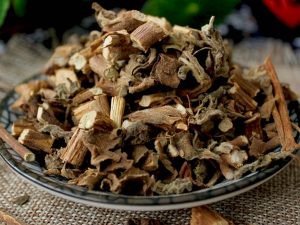
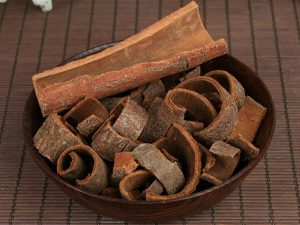
Liriodendron chinense, a name in traditional Chinese medicine.It refers to the roots and bark of Liriodendron chinense (Hemsl.) Sargent, a plant in the Magnoliaceae family. It is distributed in Shaanxi, Anhui, Zhejiang, Jiangxi, Fujian, Hubei, Hunan, Guangxi, Sichuan, Guizhou, Yunnan, and other regions. It has the effects of dispelling wind and dampness, relieving coughs, and strengthening tendons and bones. It is commonly used to treat rheumatic joint pain, muscle weakness, and coughs caused by wind and cold.

Chinese Tulip Tree
Liriodendron chinense, a name in traditional Chinese medicine.It refers to the roots and bark of Liriodendron chinense (Hemsl.) Sargent, a plant in the Magnoliaceae family. It is distributed in Shaanxi, Anhui, Zhejiang, Jiangxi, Fujian, Hubei, Hunan, Guangxi, Sichuan, Guizhou, Yunnan, and other regions. It has the effects of dispelling wind and dampness, relieving coughs, and strengthening tendons and bones. It is commonly used to treat rheumatic joint pain, muscle weakness, and coughs caused by wind and cold.
Chinese Name : 鹅掌楸
Latin Name : Liriodendron chinense (Hemsl.) Sarg.
Aliases : Horse-Coat Tree, Double-Flowering Tree
Nature, Flavor & Meridian Tropism : Pungent in taste, warm in nature. Enters the Lung Meridian
Benefits & Efficacy
Benefits
Dispels wind and dampness, relieves cough, and strengthens tendons and bones.
Indications
Rheumatic joint pain, muscle weakness and atrophy, and wind-cold cough.
Usage and Dosage
15–30 g.
Precautions
Not suitable for those with yin deficiency.
Pharmacological Actions
Antibacterial activity.
Relevant Discussions
*Compendium of Chinese Herbal Medicines*: “Dispels wind and dampness, and relieves cough. Primarily used to treat rheumatic joint pain and wind-cold cough.”
Applications
Clinical Applications
Used to treat rheumatic diseases, muscle atrophy, and the common cold, among other conditions.
Related Compatibility
1. For atrophy (muscle wasting): 50 g each of Liriodendron root and Sargentodoxa cuneata; 15 g each of Rubia root and Sargentodoxa cuneata; 25 g each of Phaseolus vulgaris and Akebia; 1.5 g of Carthamus tinctorius. Steep in wine and consume. (*Guizhou Herbal Medicine*)
2. For rheumatic joint pain: 50g each of Liriodendron root and Ceiba root. Simmer in water and drink the decoction. (*Guizhou Herbal Medicine*)
Processing & Preparation
Harvesting & Processing
Harvest the bark in summer and fall, cut into strips; harvest the roots in fall, slice, and sun-dry.
Crude Drug Identification
Botanical Information
Botanical Classification
Liriodendron, a plant of the Magnoliaceae family.
Morphological Characteristics
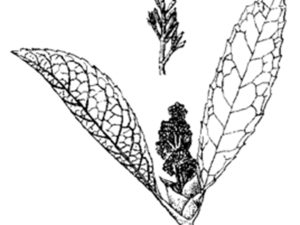
A tree reaching up to 40 meters in height, with a breast height diameter of over 1 meter; young branches are gray or grayish-brown. Leaves are coat-shaped, 4–12 (18) cm long, with one lateral lobe on each side near the base and two shallow lobes at the apex; the underside is pale grayish-white; petioles are 4–8 (–16) cm long.Flowers are cup-shaped, with 9 perianth segments: the outer whorl of 3 segments is green, sepals-like, and curved outward; the inner two whorls consist of 6 segments, erect, petal-like, obovate, 3–4 cm long, green, with yellow longitudinal stripes; anthers are 10–16 mm long, filaments 5–6 mm long; during flowering, the gynoecium extends beyond the perianth, and the carpels are yellowish-green.The aggregate fruit is 7–9 cm long; the winged nutlets are about 6 mm long, with a blunt or bluntly pointed apex, and contain 1–2 seeds. Flowering occurs in May; fruiting occurs from September to October.
Distribution Area
It is distributed in Shaanxi, Anhui, Zhejiang, Jiangxi, Fujian, Hubei, Hunan, Guangxi, Sichuan, Guizhou, Yunnan, and other regions.