Goat Liver: A name for a traditional Chinese medicinal material. It refers to the liver of the goat (Capra hircus Linnaeus) or sheep (Ovis aries Linnaeus) of the Bovidae family. It has the effects of nourishing the blood, tonifying the liver, and improving eyesight. It is primarily used to treat blood deficiency with sallow complexion, emaciation and weakness, liver deficiency with blurred vision, night blindness, color blindness, and corneal opacities.

Goat Liver
Goat Liver: A name for a traditional Chinese medicinal material. It refers to the liver of the goat (Capra hircus Linnaeus) or sheep (Ovis aries Linnaeus) of the Bovidae family. It has the effects of nourishing the blood, tonifying the liver, and improving eyesight. It is primarily used to treat blood deficiency with sallow complexion, emaciation and weakness, liver deficiency with blurred vision, night blindness, color blindness, and corneal opacities.
Chinese Name : 羊肝
Nature, Flavor & Meridian Tropism : Taste: sweet and bitter; nature: cool; enters the Liver meridian
Benefits & Efficacy
Benefits
Nourishes the blood, tonifies the liver, and improves vision.
Indications
Pale complexion due to blood deficiency, emaciation and weakness, blurred vision due to liver deficiency, night blindness, color blindness, and corneal opacities.
Usage and Dosage
Internal use: Boil and eat, 30–60 g; or incorporate into pills or powders.
Precautions
1. *Collected Annotations to the Classic of Materia Medica*: “Must not be consumed with pork, plums, or adzuki beans, as it harms the heart and is harmful to the seriously ill.” 2. *Thousand Gold: Dietary Therapy*: “Eating any raw sheep liver with pepper damages the five viscera, harms the heart, and is particularly harmful to young children.” 3. *Essentials of Diet and Nutrition*: “Eating it with bitter bamboo shoots causes blindness. If consumed by pregnant women, it brings misfortune to the child.” 4. *De Pei Bencao*: “Avoid combining with copper or iron.” 5. *Chronicle of Sichuan Chinese Medicinal Herbs* (1962 edition): “Those with excessive liver fire should avoid it.”
Chemical Constituents
The liver of a goat or sheep contains, per 100 g, approximately 68 g of water, 18.5 g of protein, 7.2 g of fat, 4 g of carbohydrates, 1.4 g of ash, 9 mg of calcium, 414 mg of phosphorus, 6.6 mg of iron, 0.42 mg of thiamine, 3.57 mg of niacin, 18.9 mg of ascorbic acid, and 29,900 IU of vitamin A.
Pharmacological Actions
1. Antitumor Effects: Antitumor immunoribonucleic acid (iRNA) extracted from sheep liver exhibits a significant inhibitory effect on S180 sarcoma transplanted into mice, with an inhibition rate ranging from 31.11% to 42.89%.In patients with advanced, life-threatening cancer, sheep liver iRNA can halt the growth of lesions, cause them to shrink, or even cause them to regress; it can also reduce, to varying degrees, the enlargement of the liver, spleen, and lymph nodes caused by leukemic cell infiltration, increase hemoglobin, platelet, and white blood cell counts, and improve both cellular and humoral immune parameters to varying degrees, with effects no less effective than those of spleen iRNA. 2. Effects on Immune Function: Anti-hepatitis B iRNA prepared from goat liver immunized with the hepatitis B vaccine enhances the specific phagocytic function of mouse macrophages (MΦ), resulting in a phagocytosis rate and phagocytosis index for HBsAg-sensitized sheep red blood cells that are significantly higher than those of the control group.The indirect hemagglutination assay showed that anti-hepatitis B iRNA can induce the production of anti-HBs in normal mice, indicating that iRNA possesses adoptive humoral immune activity.The leukocyte adhesion inhibition (LAI) assay showed that, following HBsAg stimulation, spleen cells from iRNA-immunized mice exhibited transfer activity in 6 out of 9 mice, whereas the normal control group was entirely negative, indicating that iRNA can transfer cell-mediated immune responses to specific antigens in vitro, without being limited by species.The above experiments suggest that anti-hepatitis B iRNA prepared from sheep liver has similar effects to that prepared from the spleen and lymph nodes. Immunoribonucleic acid (iRNA) isolated from the liver, spleen, and other tissues of sheep immunized with BCG demonstrated significant efficacy against acute serum sickness nephritis in white rabbits, with the disappearance of proteinuria and a marked reduction in both complement CH50 and circulating immune complexes (CIC) compared to the control group.Pathological analysis revealed no change in glomerular volume, but a corresponding reduction in cell count. The experiment demonstrated that the efficacy of nonspecific iRNA in treating acute serum sickness nephritis in rabbits is equivalent to that of cortisone, with satisfactory results.
Relevant Discussions
1. *Qianjin·Dietary Therapy*: “Nourishes the liver and improves eyesight.”
2. *Newly Revised Materia Medica*: “Treats liver wind with deficient heat, red and dim eyes with impaired vision; consume seven raw chicken livers.”
3. *Dietary Therapy Materia Medica*: “Treats blindness following illness.”
4. Wu Rui: “Neutralizes poison from witchcraft.” (Quoted from *Compendium of Materia Medica*)
5. *Essentials of Medical Literature: Properties of Medicinal Substances*: “Calms liver wind and purges ministerial fire.”
6. *Dietary Spectrum of Suixi Residence*: “Clears deficient heat, calms internal wind, kills parasites, cures epilepsy, eliminates malnutrition, relieves anger, and treats various eye diseases.”
7. *Illustrated Compendium of Medicinal Plants of the Qinghai-Tibet Plateau*: “Clarifies vision.”
8. *Medicinal Animals of Northeast China*:“Nourishes and strengthens the body. Treats night blindness, anemia, and weakness with emaciation.”
9. *Medicinal Animals of Inner Mongolia*: “Nourishes the blood. Treats liver deficiency-induced blurred vision, night blindness, and corneal opacities.”
10. *Yi Medicine: Animal-Based Medicines*: “Removes jaundice, nourishes the blood, relieves pain, and reduces swelling. Primarily treats liver diseases (liver region pain, hepatomegaly, hepatitis, cirrhosis, etc.).”
Applications
Related Compatibility
1. For various eye diseases, corneal opacities, and blindness: One da liang of Coptis chinensis powder and one white sheep liver (membrane removed). Grind both together in a sand mortar until extremely fine, then roll into pills the size of goji berries by hand. Take two pills with warm water after each meal; continue for five doses. Avoid pork and cold water. (*Chuanxin Fang*: Sheep Liver Pills)
2. For blurred vision, corneal opacities, and tearing in the wind: 120g fresh sheep liver, 30g cicada slough, 30g Eupatorium, 30g Angelica sinensis, and 30g night-bright sand. Grind all ingredients except the sheep liver into a fine powder. Boil the sheep liver until tender, mash it, mix with the powder, and form into 10g pills using a binding agent. Take one pill twice daily.(From *Chinese Animal Medicines*: Goat Liver Pills)
3. For inability to see distant objects: One goat liver (membranes removed, finely sliced) and one spoonful of scallion seeds (stir-fried and ground into powder). Boil in water until tender, strain out the residue, then add rice and cook into porridge to eat. (From *Compendium of Materia Medica*, citing *Miscellaneous Matters of Versatility*)
4. For night blindness, where objects cannot be seen even at close range: Purple mustard seeds (roasted until black, then ground into a fine powder) and one sheep’s liver (divided into eight doses). For each dose, take three qian of the powder, pinch it onto the liver, cover with a lotus leaf, wrap it, and boil until cooked. Let it cool before consuming, washed down with the broth from boiling the liver; take before bedtime. (Boiled Liver Powder from *Shengji Zonglu*)
5. For treating dilated pupils accompanied by blurred vision and fatigue, or a sensation of weakness when gazing at objects, which is exacerbated by heat: one whole sheep’s liver (sliced and sun-dried). Grind the liver into a fine powder, mix with pig bile to form pills the size of a tung seed, and coat with cinnabar. Take 2 qian per dose with hot water, twice daily. (From *Zhongzhong Canxi Lu*: Sheep’s Liver and Pig Bile Pills)
6. For red, swollen, and painful eyes: 12g fresh sheep liver, 15g goji berries, 15g chrysanthemum flowers, 30g raw rehmannia root, 15g scrophularia root, and 9g cassia seeds. Decoct in water and take orally. (Qingdao Handbook of Chinese Herbal Medicine)
7. For chronic cough: 60g of sheep liver, 30g of sesame oil. Stir-fry together until cooked, add a pinch of salt, and take orally. (*Medicinal Animals of Northeast China*)
8. For swollen and painful gums: One male sheep liver. Boil until cooked, dip in powdered cinnabar, and eat as desired. (*Compendium of Materia Medica*, citing *Essentials of Medical Forest*)
Processing & Preparation
Harvesting & Processing
When slaughtering a sheep, open the abdomen to remove the liver; wash it thoroughly and use it fresh. Alternatively, slice it and sun-dry or oven-dry it.
Processing Methods
Take the raw material, remove impurities, wash thoroughly, slice, and dry.
Storage Methods
Store in a dry container in a cool, dry place to prevent insect infestation and mold.
Crude Drug Identification
Properties of Crude Drugs
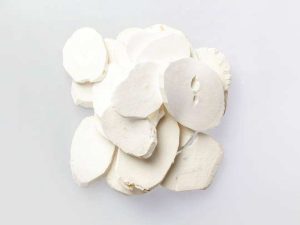
Goat liver appears in slices of varying sizes. The surface is wrinkled and uneven, purplish-black in color, and glossy. It is brittle and breaks easily; the fracture surface is purplish-black and dull. It has a gamey odor.
Botanical Information
Morphological Characteristics
1. Mountain Goat: Body length 1–1.2 m; weight 10–35 kg. Long head, short neck, large ears, and a narrow, elongated muzzle. Both males and females have a pair of horns on the forehead, with males having larger horns; the base of the horns is slightly triangular, the tips curve slightly backward, and the horns are hollow with a horny texture, featuring ring-like patterns or tubercles on the front surface. Males have a long, tufted beard under the jaw.The limbs are slender, and the tail is short and does not hang down much. The entire body is covered with coarse, straight, short hair, and coat colors include white, black, gray, and various black-and-white patterns. 2. Sheep: Sheep were among the earliest domesticated livestock. Their body weight varies by breed, ranging from a minimum of 20 kg to a maximum of 150–200 kg. Physical characteristics also vary widely. In some breeds, both males and females have horns; in others, neither has horns;in others, only the males have horns. Horn shape and tail structure also vary by breed. The coat of breeds closer to their wild ancestors consists of two layers: an outer layer of coarse hair that repels rain, and an inner layer of fine undercoat that retains heat. However, improved breeds retain only the inner undercoat. There is a gland between the two toes of the front and hind limbs, opening toward the front. They also possess tear glands.
Distribution Area
1. Goats: Found throughout the country. 2. Sheep: Found almost everywhere in the country, with higher concentrations in the northern and northwestern regions.