Guava is a name used in traditional Chinese medicine. It refers to the leaves or fruit of Psidium guajava Linn., a plant in the Myrtaceae family. It is distributed or cultivated in Fujian, Taiwan, Guangdong, Guangxi, Sichuan, and Yunnan. Dried young fruit has astringent, antidiarrheal, and hemostatic effects and is commonly used to treat uncontrollable diarrhea and dysentery, as well as metrorrhagia and menorrhagia.Ripe fruits have the effects of strengthening the spleen, eliminating food stagnation, and astringing the intestines to stop diarrhea; they are commonly used to treat food stagnation with bloating, malnutrition, diarrhea, dysentery, rectal prolapse, and menorrhagia.The leaves have the effects of dispelling dampness, strengthening the spleen, clearing heat, and detoxifying; they are commonly used to treat abdominal pain associated with diarrhea and dysentery, abdominal distension due to food stagnation, diabetes insipidus, swollen and painful gums, rheumatic arthralgia, eczema and chronic leg sores, boils and abscesses, swelling and pain from falls and blows, external bleeding, and snake and insect bites.Fresh leaves have hemostatic properties and are commonly used to treat contusions and bruises, bleeding from external injuries, and chronic, non-healing leg sores.
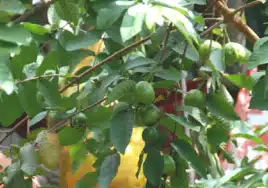
Guava
Guava is a name used in traditional Chinese medicine. It refers to the leaves or fruit of Psidium guajava Linn., a plant in the Myrtaceae family. It is distributed or cultivated in Fujian, Taiwan, Guangdong, Guangxi, Sichuan, and Yunnan. Dried young fruit has astringent, antidiarrheal, and hemostatic effects and is commonly used to treat uncontrollable diarrhea and dysentery, as well as metrorrhagia and menorrhagia.Ripe fruits have the effects of strengthening the spleen, eliminating food stagnation, and astringing the intestines to stop diarrhea; they are commonly used to treat food stagnation with bloating, malnutrition, diarrhea, dysentery, rectal prolapse, and menorrhagia.The leaves have the effects of dispelling dampness, strengthening the spleen, clearing heat, and detoxifying; they are commonly used to treat abdominal pain associated with diarrhea and dysentery, abdominal distension due to food stagnation, diabetes insipidus, swollen and painful gums, rheumatic arthralgia, eczema and chronic leg sores, boils and abscesses, swelling and pain from falls and blows, external bleeding, and snake and insect bites.Fresh leaves have hemostatic properties and are commonly used to treat contusions and bruises, bleeding from external injuries, and chronic, non-healing leg sores.
Chinese Name : 番石榴
Aliases : Chicken-Dung Fruit, Ba Zi, Fan Ren, Hua Ren, Fan Tao Tree, Myanmar Peach
Nature, Flavor & Meridian Tropism : Taste: sweet and astringent; Nature: neutral; Enters the Large Intestine Meridian
Benefits & Efficacy
Benefits
1. Dried young fruits have astringent properties that stop diarrhea and hemorrhage. 2. Ripe fruits strengthen the spleen, eliminate food stagnation, and astringe the intestines to stop diarrhea. 3. The leaves dry dampness, strengthen the spleen, clear heat, and detoxify; fresh leaves stop hemorrhage.
Indications
1. Dried young fruits are primarily used to treat uncontrollable diarrhea and dysentery, as well as metrorrhagia and menorrhagia. 2. Ripe fruits are primarily used to treat food stagnation and bloating, malnutrition in children, diarrhea, dysentery, rectal prolapse, and metrorrhagia. 3. The leaves are used to treat diarrhea and dysentery with abdominal pain, abdominal distension due to food stagnation, diabetes insipidus, swollen and painful gums, rheumatic arthralgia, eczema and chronic leg sores, boils and abscesses, swelling and pain from falls and blows, bleeding from external injuries, and snake and insect bites; fresh leaves are used to treat injuries from falls and blows, bleeding from external injuries, and chronic leg sores that do not heal.
Usage and Dosage
1. Dried young fruits: 9–15 g, or burned to ash and taken with boiling water. 2. Ripe fruits: 3–9 g, or ground into powder, or eaten raw—2–3 fruits per dose, 2–3 times daily. 3. Leaves: 5–15 g; fresh leaves may be used in amounts up to 24–30 g; or ground into a powder. External use: Apply an appropriate amount as a poultice, use as a decoction for washing, use as a mouthwash, or sprinkle the powder directly on the affected area.
Precautions
Do not exceed the recommended dosage.
Chemical Constituents
This product primarily contains β-sitosterol, quercetin, guajuside, protein, fat, carbohydrates, vitamin A, vitamin B1, vitamin B2, vitamin B6, ascorbic acid, calcium, phosphorus, iron, magnesium, zinc, and other components.
Pharmacological Actions
1. Antibacterial effects. 2. Antispasmodic and antidiarrheal effects. 3. Hypoglycemic effects. 4. Anticancer effects. 5. Hemostatic effects. 6. Antioxidant effects. 7. Protective effects against colitis-induced damage. 8. Antiviral effects.
Relevant Discussions
1. *Compendium of Lingnan Herbal Medicine*: “Astringent; stops uncontrolled vomiting and diarrhea. Treats metrorrhagia and menorrhagia.”
2. *Compendium of Fujian Medicinal Herbs*: “Strengthens the stomach and regulates the intestines; treats cold-induced diarrhea.”
3. *Compendium of Medicinal Plants of Taiwan*: “Strengthens the spleen. Treats indigestion in children.” “Expels parasites; stops bleeding.”
Applications
Clinical Applications
1. For enteritis and dysentery: 1–2 liang of fresh guava leaves, decocted and taken orally. (*Selected Yunnan Chinese Herbs*)
2. For contusions and bleeding from knife wounds: Pound fresh guava leaves into a paste and apply externally to the affected area. (Guangzhou Air Force *Manual of Common Chinese Herbs*)
3. For excessive uterine bleeding in women: Burn dried guava leaves to ash; take 9g per dose with boiling water. (*Compendium of Lingnan Herbal Medicine*)
4. To counteract croton seed toxicity: Take 9g each of dried guava, white atractylodes (roasted with soil), and pomegranate peel. Simmer in 1.5 bowls of water until reduced to 1 bowl, then drink. (*Major Toxic Plants of the South*)
Medicinal Diet Therapy
1. Low-Calorie Fruit and Vegetable Juice
(1) Benefits: Fruit and vegetable juice not only quenches thirst but can also be made into a low-calorie weight-loss drink. It purifies the blood and helps maintain an alkaline pH balance. Regular consumption of this juice can aid in weight loss and help maintain a slim figure.
(2) Ingredients: 1 tomato, half a lemon, 1 guava, and 60 grams of bean sprouts.
(3) Preparation: Wash all ingredients. Cut the tomato and guava into appropriate-sized pieces. Peel the lemon and place all ingredients into a juicer to blend. Add a pinch of salt to taste, then stir until well mixed.
2. Stir-Fried Guava with Longan Meat
(1) Benefits: Nourishes the body and promotes lactation.
(2) Ingredients: 5 guavas, 30 grams of longan meat.
(3) Preparation: Wash the guavas and cut them into chunks. Place a wok over high heat, add peanut oil, and heat until it reaches 80% heat. Add the guava chunks and longan meat, stir-fry briefly, and serve.
Notes
Patients requiring treatment with traditional Chinese medicine should first consult a licensed TCM hospital, where a TCM practitioner will conduct a professional diagnosis and prescribe the appropriate herbal formula.
Processing & Preparation
Harvesting & Processing
Harvest young fruits in spring and fall, then sun-dry them. Harvest leaves in spring and summer; sun-dry or use them fresh. Harvest ripe fruits in fall; use them fresh or sun-dry them.
Processing Methods
1. Guava fruit: Remove impurities, clean thoroughly, and break open when using.
2. Guava leaves: Remove impurities, sun-dry, and chop finely.
Storage Methods
Store in a cool, dry place.
Crude Drug Identification
Properties of Crude Drugs
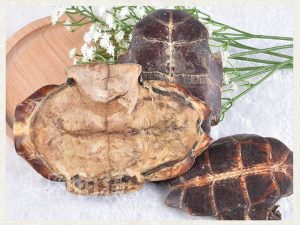
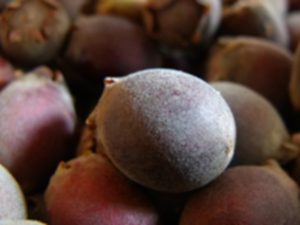
1. Dried Guava (dried young guava fruit): These are dried, immature young fruits, varying in shape from spherical to oval or pear-shaped, with a diameter of 2–3 cm. When fresh, they are greenish-yellow; when dried, they are dark brown. The surface is slightly rough and hard, with a persistent calyx and remnants of the style at the apex.The flesh is firm and light brown, with five chambers containing numerous seeds densely embedded within; the seeds are grayish-brown, about the size of mung beans, and irregularly flattened-round or triangular in shape. They have a slightly sour and astringent taste with a faintly fragrant aroma. Plump, firm specimens are considered the best.
2.Guava Leaves: The leaves are leathery, oblong or obovate, 5–10 cm long and 2.5–4 cm wide, with a blunt or short-pointed apex and a rounded base; most have a short petiole approximately 1 cm long. The upper surface is yellowish-green, while the lower surface is slightly paler, rough, and covered with fine soft hairs; the midrib and lateral veins are very prominent. They have a faint odor and a astringent taste.
Properties of Processed Slices
1. Dried Guava Fruit: See “Characteristics of the Medicinal Material.”
2. Guava Leaves: Irregular fragments; the upper surface is pale brownish-gray and glabrous, while the lower surface is grayish-brown and densely covered with short soft hairs. Leathery and brittle, they break easily. Slight odor; astringent taste.
Botanical Information
Botanical Classification
Passion fruit, a plant of the Myrtaceae family.
Morphological Characteristics
A tree reaching up to 13 m in height; the bark is smooth, gray, and peels off in flakes; young branches are ribbed and hairy.Leaves are leathery, oblong to elliptic, 6–12 cm long and 3.5–6 cm wide, with an acute or obtuse apex and a nearly rounded base; the upper surface is slightly rough, while the lower surface is hairy; there are 12–15 pairs of lateral veins, often sunken, with prominent reticulate venation; the petiole is 5 mm long.Flowers are solitary or arranged in cymes of 2–3; the calyx tube is bell-shaped, 5 mm long, hairy; the calyx cap is nearly circular, 7–8 mm long, irregularly lobed;Petals 1–1.4 cm long, white; stamens 6–9 mm long; ovary inferior, fused with the calyx; style as long as the stamens. Berries spherical, ovoid, or pear-shaped, 3–8 cm long, with persistent calyx lobes at the apex; flesh white and yellow; placenta enlarged, fleshy, pale red; numerous seeds.
Distribution Area
It is distributed or cultivated in Fujian, Taiwan, Guangdong, Guangxi, Sichuan, and Yunnan.
Propagation Methods
Propagation is by seed, cuttings, layering, and grafting; in China, high-branch layering is the primary method.
Cultivation Techniques
1. Propagation by Grafting: Use guava seedlings as rootstock, with a stem diameter of 0.7 cm or more. Scions should be taken from mother plants of superior varieties; select vigorous, disease- and pest-free branches, preferably those that have just shed their bark and whose four ridges have not yet rounded off.About 15 days before collecting the scions, remove the leaves from the selected branches; the best results are achieved when the scions are cut just as the axillary buds are about to sprout. Common grafting methods include cleft grafting, whip grafting, side grafting, bud grafting, and patch bud grafting.Grafting in late fall or early spring, when sap flow is minimal, can improve graft survival rates. Grafting during periods of vigorous growth is not recommended, as heavy sap flow can reduce survival rates. For bud grafts, the binding is typically removed 30 days after grafting. Once the bud has healed and taken root, the rootstock above the grafting site is pruned to promote bud break and growth of the scion; one-year-old seedlings can then be removed from the nursery for field planting.
2. Propagation by Cuttings: This should be carried out in March, before the guava tree begins to bud. Select vigorous, disease- and pest-free branches with a diameter of 1–1.5 cm from high-quality mother trees. Cut the branches into segments approximately 15 cm long, retaining 1–2 pairs of leaves on each cutting and trimming two-thirds off each leaf.Before planting, soak the base of the cuttings in a 2,000 mg/L indolebutyric acid solution or ABT rooting powder solution for 3–5 minutes to improve survival rates. After treatment, insert the cuttings diagonally into a prepared, moist sand bed at a spacing of 12 cm × 15 cm, with the insertion depth being 1/2 to 2/3 of the cutting’s length.After planting, mist the cuttings to maintain moisture. New roots will begin to grow in about 45 days; once the root system has developed, transplant the cuttings to a nursery bed or containers for further cultivation. Cuttings have relatively sparse root systems and tend to lean to one side; for the first 2–3 years, their roots remain shallow and are susceptible to wind damage. Therefore, when planting cuttings, select a sheltered site with loose, fertile soil.
3. Layering Propagation: Layering can be performed year-round.Select vigorous 1- to 2-year-old branches with a diameter of 1–1.5 cm from a high-quality mother plant. Make a ring cut 35–50 cm below the branch tip, removing the bark in a band approximately 2.5 cm wide. Apply a 2,000 mg/L indolebutyric acid (IBA) solution or ABT rooting powder solution to the cut epithelium, then wrap the area with moist, fertile soil,moss, or coconut coir, and wrap it with a piece of plastic film, securing both ends tightly so that the middle bulges outward. Roots will form approximately 60 days after layering. Once the root system has developed, cut the layer away from the mother plant and transplant it into a nursery bed. When transplanting, first trim some of the leaves, set up a shade structure for sparse shade, carefully regulate moisture to keep the soil moist, and apply appropriate fertilizer to promote vigorous growth of the seedlings.