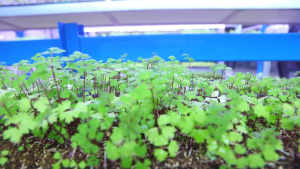
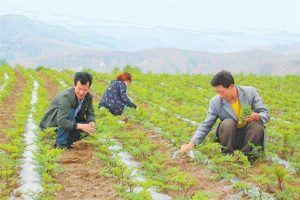
Dong Quai is a blood-nourishing medicinal herb derived from the root of Angelica sinensis (Oliv) Diels, a plant belonging to the genus Angelica in the Apiaceae family. It has the effects of nourishing and invigorating the blood, regulating menstruation and relieving pain, and moistening the intestines to promote bowel movements.It is primarily used to treat blood deficiency with pallor, dizziness and palpitations, irregular menstruation, amenorrhea and dysmenorrhea, abdominal pain due to deficiency-cold, rheumatic arthralgia, trauma from falls or blows, boils, abscesses, and sores, as well as constipation caused by intestinal dryness.

Dong Quai
Dong Quai is a blood-nourishing medicinal herb derived from the root of Angelica sinensis (Oliv) Diels, a plant belonging to the genus Angelica in the Apiaceae family. It has the effects of nourishing and invigorating the blood, regulating menstruation and relieving pain, and moistening the intestines to promote bowel movements.It is primarily used to treat blood deficiency with pallor, dizziness and palpitations, irregular menstruation, amenorrhea and dysmenorrhea, abdominal pain due to deficiency-cold, rheumatic arthralgia, trauma from falls or blows, boils, abscesses, and sores, as well as constipation caused by intestinal dryness.
Chinese Name : 当归
Latin Name : Angelicae Sinensis Radix
Aliases : Angelica Sinensis,Dry Angelica, Horsetail Angelica, Qin Angelica, Horsetail-leaved Angelica, Yun Angelica, Western Angelica, Min Angelica
Authentic Producing Area : Mainly produced in Gansu
Nature, Flavor & Meridian Tropism : Sweet and pungent in taste; warm in nature; enters the Liver, Heart, and Spleen meridians
Benefits & Efficacy
Benefits
This herb has the effects of nourishing and invigorating blood, regulating menstruation and relieving pain, and moistening the intestines to promote bowel movements.
Indications
It is primarily used to treat blood deficiency with pallor, dizziness and palpitations, irregular menstruation, amenorrhea and dysmenorrhea, abdominal pain due to deficiency-cold, rheumatic arthralgia, trauma from falls or blows, boils, abscesses, and sores, as well as intestinal dryness and constipation.
Usage and Dosage
Decoct and take 6–12 g.
Precautions
Raw and cold foods can damage the yang qi of the spleen and stomach, impairing Danggui’s blood-nourishing effects; therefore, one should avoid consuming raw and cold foods—such as ice cream and cold beverages—while taking Danggui.
Chemical Constituents
Dong Quai contains neutral oil components such as β-pinene, α-pinene, and camphene. It also contains acidic oil components such as p-methylbenzyl alcohol and 5-methoxy-2,3-dimethylphenol, as well as organic acids, sugars, vitamins, and amino acids.
Pharmacological Actions
This product promotes hematopoiesis, regulates blood pressure, inhibits uterine smooth muscle contractions, protects against liver damage, provides anti-inflammatory and analgesic effects, and lowers blood lipids.
Relevant Discussions
1. *Shennong Bencao Jing*: Treats coughing and shortness of breath; warms the body against malaria with alternating chills and fever that manifest as a tingling sensation in the skin; treats uterine bleeding and infertility in women; and heals various malignant sores and wounds, including traumatic injuries.
2. *Compendium of Materia Medica*: Treats headaches and various pains in the chest and abdomen; moistens the intestines, stomach, tendons, bones, and skin; treats boils and abscesses; drains pus and relieves pain; harmonizes and nourishes the blood.
3. *Source of Medical Knowledge*: Angelica sinensis has a warm nature and sweet taste; it harmonizes and nourishes the blood—the root tip dispels blood stasis, while the main body harmonizes the blood.
Applications
Clinical Applications
1. For deficiency of both qi and blood: Often combined with Astragalus (Huangqi) and Ginseng (Ren Shen) to tonify qi and generate blood, such as in the Danggui Bu Xue Decoction (*Lan Shi Mi Cang*) and the Ginseng Yang Rong Decoction (*Treatise on Epidemic Fevers*).
2. For blood deficiency manifesting as sallow complexion, palpitations, and insomnia: Often combined with Prepared Rehmannia (Shu Dihuang), White Peony (Bai Shao), and Sichuan Lovage (Chuanxiong), such as in the Four Substances Decoction (*Formulas of the Bureau of Harmonious Preparations*).
3. For blood deficiency with blood stasis, irregular menstruation, amenorrhea, and dysmenorrhea: It is often used in combination with herbs that nourish blood and regulate menstruation, such as Siwu Decoction from *Heji Jufang*. If accompanied by qi deficiency, it can be combined with ginseng and astragalus; if accompanied by qi stagnation, it can be combined with cyperus and corydalis; if accompanied by
blood heat, it may be combined with Scutellaria baicalensis and Coptis chinensis, or with Paeonia suffruticosa and Lycium barbarum; if amenorrhea is due to blood stasis, it may be combined with Prunus persica seeds and Carthamus tinctorius; if blood deficiency is accompanied by cold stagnation, it may be combined with donkey-hide gelatin and Artemisia argyi, among others.
4. For abdominal pain caused by blood deficiency, blood stasis, and cold stagnation: Combine with Cinnamomum twig, Paeonia, and Zingiber officinale, as in the Angelica, Ginger, and Mutton Decoction (*Jin Gui Yao Lue*) or the Angelica and Jianzhong Decoction (*Qian Jin Fang*).
5. For treating pain caused by blood stasis resulting from trauma: Use in combination with Frankincense, Myrrh, Peach Kernel, and Safflower, as in the Fuyuan Huoxue Decoction (*Medical Inventions*) and the Huoluo Xiaoling Pill (*A Synthesis of Chinese and Western Medicine*).
6. For initial swelling and pain in skin ulcers and abscesses: Used in combination with detoxifying and abscess-resolving herbs such as Lonicera japonica, Paeonia rubra, and Trichosanthes kirilowii to promote blood circulation, reduce swelling, and relieve pain, as in the Immortal Formula for Preserving Life Decoction (*Effective Prescriptions for Women*).
7. For abscesses and sores that have become purulent but have not ruptured, or that fail to heal after rupture: Used in combination with Astragalus, Ginseng, and Cinnamon, as in the Ten-Ingredient Great Tonifying Decoction (*Formulas of the Bureau of Harmonious Preparations*).
8. For gangrene with ulceration and depletion of yin and blood: May be used in combination with Honeysuckle, Scrophularia, and Licorice, as in the Four-Miracle Courage-Restoring Decoction (*New Compilation of Proven Formulas*).
9. For treating pain from wind-cold bi syndrome and numbness in the limbs: It is suitable for promoting blood circulation, dispelling cold, and relieving pain; it is often used in combination with Qianghuo, Fangfeng, and Astragalus, as in the Juanbi Decoction (*Selected Formulas from the Hundred and One*).
10. For blood deficiency-induced intestinal dryness and constipation: It is often used in combination with Cistanche, Achyranthes, and Cimicifuga, as in the Jichuan Decoction (*Jingyue Quanshu*).
Related Compatibility
1. Dong Quai combined with Paeonia lactiflora: Angelica sinensis excels at nourishing blood, soothing the liver, promoting blood circulation, and relieving pain; Paeonia lactiflora excels at nourishing blood, soothing the liver, consolidating yin, and relieving pain. When combined, these two herbs nourish and regulate blood. This combination is suitable for palpitations and restlessness caused by deficiency of heart blood; dizziness, tinnitus, and muscle spasms caused by deficiency of liver blood; and irregular menstruation and dysmenorrhea in women caused by blood deficiency and blood stasis.
2. Dong Quai combined with Cistanche deserticola: Angelica sinensis excels at nourishing and replenishing blood, as well as moistening dryness and lubricating the intestines; Cistanche deserticola excels at tonifying yang and nourishing yin, as well as moistening the intestines and promoting bowel movements. When combined, these two herbs enhance the warming, moistening, and laxative effects. This combination is suitable for constipation caused by yin deficiency and qi weakness.
3. Dong Quai combined with Rehmannia glutinosa (prepared): Angelica sinensis tonifies blood and promotes blood circulation to regulate menstruation; Rehmannia glutinosa (prepared) tonifies blood and replenishes essence and marrow. When combined, these two herbs enhance the effects of tonifying blood and nourishing yin. This combination is suitable for various symptoms of blood deficiency complicated by yin deficiency.
4. Dong Quai combined with Schizonepeta tenuifolia: Angelica sinensis excels at nourishing and invigorating the blood; Schizonepeta tenuifolia excels at dispelling wind and stopping bleeding. When combined, these two herbs enhance the effects of nourishing the blood, stopping bleeding, dispelling wind, and invigorating the blood. This combination is suitable for postpartum blood deficiency; emergency treatment for fainting and loss of consciousness caused by wind-induced dizziness; or conditions such as blood deficiency leading to wind, including hand and foot spasms, limb tremors, and itchy skin.
5. Dong Quai combined with Chishao: Danggui excels at nourishing blood, soothing the liver, promoting blood circulation, and relieving pain; Chishao excels at clearing heat, cooling the blood, dispersing blood stasis, and relieving pain. When combined, these two herbs enhance the effects of promoting blood circulation and relieving pain. This combination is suitable for abdominal pain caused by dysentery, bloody and purulent stools, disharmony between the liver and spleen, abdominal cramping, and persistent, dull pain.
6. Dong Quai combined with Aconite root: Angelica sinensis excels at nourishing blood, soothing the liver, promoting blood circulation, and relieving pain; Aconite root excels at warming the kidneys, strengthening yang, dispelling cold, and relieving pain. When combined, these two herbs enhance the effects of nourishing blood, soothing the liver, warming the kidneys, and strengthening yang. This combination is suitable for conditions such as spleen deficiency resulting in an inability to control blood flow, blood loss leading to yin deficiency and subsequent yang deficiency, chronic conditions that are difficult to treat, and yang deficiency with blood loss complicated by blood stasis.
7. Dong Quai combined with fire hemp seeds: Angelica sinensis replenishes and activates blood circulation, while also moistening the intestines and promoting bowel movements; fire hemp seeds are sweet, neutral, and oily, and also moisten the intestines and promote bowel movements. When combined, these two herbs enhance the effect of moistening the intestines and promoting bowel movements. This combination is suitable for conditions such as constipation due to blood deficiency and intestinal dryness.
Medicinal Identification
1. Raw Dong Quai, Wine-Processed Dong Quai, Stir-Fried Dong Quai, and Charred Dong Quai: These four are different processed forms of Dong Quai. Due to their distinct processing methods, each has its own specific therapeutic focus. Raw Angelica has a moist nature and excels at nourishing the blood, regulating menstruation, and moistening the intestines to relieve constipation; it is commonly used for blood deficiency syndromes, constipation due to blood deficiency, and abscesses, boils, and skin ulcers.Wine-processed Angelica is particularly effective at promoting blood circulation and regulating menstruation; it is commonly used for amenorrhea due to blood stasis, dysmenorrhea, rheumatic arthralgia, and trauma-induced injuries. Stir-fried Angelica can tonify blood without causing loose stools; it is frequently used for loose stools due to blood deficiency, intermittent abdominal pain, and abdominal pain caused by deficiency-cold in the middle jiao. Charred Angelica primarily focuses on stopping and harmonizing blood; it is often used for metrorrhagia, menorrhagia, and bleeding due to blood deficiency.
2. Dong Quai Head, Body, and Tail vs. Whole Angelica Root: Dong Quai root can be divided into three parts—the head, body, and tail—which can be used separately as Angelica Root Head, Angelica Root Body, and Angelica Root Tail, or combined as Whole Angelica Root. According to traditional Chinese medicine, the Angelica Root Head and Tail are more effective at promoting blood circulation and breaking up blood stasis, while the Angelica Root Body is more effective at nourishing the blood; Whole Angelica Root is effective for both nourishing the blood and promoting blood circulation.
3. Dong Quai and Notoginseng: Both have a sweet taste and warm nature, entering the Liver and Heart meridians, and are capable of promoting blood circulation and relieving pain. They are both used to treat contusions, bruises, and swelling and pain caused by blood stasis. However, Angelica sinensis has a pungent taste and enters the Spleen meridian; it excels at nourishing blood, regulating menstruation, and moistening the intestines. It is particularly effective for treating various symptoms of blood deficiency, abdominal pain due to deficiency-cold, rheumatic arthralgia, boils, abscesses, and sores, as well as intestinal dryness and constipation.Sanqi dissipates blood stasis and stops bleeding; it has a slightly bitter taste and enters the Stomach meridian, while also possessing tonifying properties. It is characterized by its ability to stop bleeding without leaving residual stasis and to dissipate stasis without harming the body’s vital energy. It is particularly effective for treating various types of internal and external bleeding, especially when accompanied by blood stasis.
4. Dong Quai and Jixueteng: Both have a sweet taste and warm nature, entering the Liver Meridian. They both possess the functions of nourishing and invigorating the blood, regulating menstruation, and relieving pain. They treat not only blood deficiency with pallor and weakness but also menstrual irregularities, dysmenorrhea, and amenorrhea caused by blood deficiency or blood deficiency combined with blood stasis and cold, as well as trauma and rheumatic arthralgia.However, Angelica sinensis has a pungent taste and enters the Heart and Spleen meridians; its medicinal potency is relatively strong, and it also relieves pain. It is suitable for cases of severe pain due to blood stasis accompanied by cold pathogens, as well as for treating abdominal pain caused by deficiency-cold, and sores and swellings—whether in the early stages, those that have not ulcerated despite prolonged duration, or those that have been ulcerated for a long time without healing. It can also moisten the intestines and is used to treat constipation caused by blood deficiency and intestinal dryness.Milk-Vine has a bitter taste and enters the Kidney meridian; its medicinal potency is relatively mild, and it excels at relaxing tendons and unblocking meridians. It is suitable for conditions involving blood deficiency or obstruction of the meridians.
Related Medicines
1. Dong Quai Fluid Extract (from *Clinical Guidelines for the Use of Traditional Chinese Medicine Formulations*, 2020 Edition)
(1) Composition: This product is a fluid extract prepared from processed Angelica sinensis.
(2) Functions and Indications: Nourishes blood and regulates menstruation. Used for irregular menstruation and dysmenorrhea caused by blood deficiency and blood stasis.
2. Dong Quai Blood-Nourishing Oral Liquid (Pills) (from *Clinical Guidelines for Medication Use: Traditional Chinese Medicine Formulated Preparations*, 2020 Edition)
(1) Composition: Astragalus, Dong Quai.
(2) Functions and Indications: Tonifies qi and blood. Indicated for conditions of deficiency of both qi and blood.
3. Danggui Blood-Nourishing Pills (from *Clinical Guidelines for Medication Use: Traditional Chinese Medicine Formulated Preparations*, 2020 Edition)
(1) Composition: Dong Quai, Fried Astragalus, Fried White Peony Root, Rehmannia, Ejiao, Atractylodes, Poria, Fried Eucommia, Moutan Bark, Processed Cyperus.
(2) Functions and Indications: Tonifies qi, nourishes blood, and regulates menstruation. Indicated for menstrual irregularities caused by deficiency of both qi and blood, manifested as early menstruation, scanty or excessive menstrual flow, prolonged menstrual periods, and physical weakness.
4. Danggui-Kushen Pills (from *Clinical Guidelines for the Use of Traditional Chinese Medicine: Formulated Preparations*, 2020 Edition)
(1) Composition: Dong Quai, Sophora flavescens.
(2) Functions and Indications: Promotes blood circulation and removes blood stasis; dries dampness and clears heat. Indicated for acne and rosacea caused by damp-heat and blood stasis obstruction, manifested as acne and nodules on the face, chest, and back; red, hot skin; or accompanied by pus-filled lesions, hard nodules, a “wine-nose,” and a red nose.
5. Dong Quai Longhuai Pills (from *Essential Guidelines for Clinical Medication: Traditional Chinese Medicine Formulations*, 2020 Edition)
(1) Composition: Gentiana (wine-roasted), Rheum palmatum (wine-processed), Aloe vera, Coptis chinensis (wine-processed), Scutellaria baicalensis (wine-processed), Phellodendron amurense (salt-processed), Gardenia jasminoides, Indigo naturalis, Angelica sinensis (wine-processed), Aquilaria agallocha, synthetic musk.
(2) Functions and Indications: Clears fire and relieves constipation. Indicated for excessive liver and gallbladder fire, restlessness, dizziness, vertigo, tinnitus, deafness, pain in the flanks, epigastric and abdominal distension and pain, and chronic constipation.
Related Prescriptions
1. Dong Quai Bu Xue Decoction (from *Discussions on Distinguishing Confusions in Internal and External Injuries*)
(1) Composition: Astragalus, Angelica sinensis.
(2) Functions and Indications: Tonifies qi and generates blood. Indicated for blood deficiency with floating yang and fever, manifested as muscle heat and facial flushing, restlessness with thirst and a desire to drink, a洪大而虚 pulse that is large and hollow but weak upon firm pressure;It also treats fever and headache due to blood deficiency in women during menstruation or postpartum, or in cases where ulcers or sores have not healed for a prolonged period.
2. Dong Quai Sini Decoction (*Treatise on Cold Damage*)
(1) Composition: Danggui, Guizhi, Shaoyao, Xixin, Gancao, Tongcao, Dazao.
(2) Functions and Indications: Warms the meridians and dispels cold; nourishes blood and unblocks the meridians. Indicated for blood-deficiency with cold-induced cold extremities, manifested as cold hands and feet, or pain in the lower back, thighs, legs, feet, shoulders, and arms; no thirst; pale tongue with a white coating; and a deep, fine pulse or a fine pulse that is nearly imperceptible.
3. Huoluo Xiaoling Dan (from *Medicine: Integrating Chinese and Western Principles*)
(1)Composition: Angelica sinensis, Salvia miltiorrhiza, raw Frankincense, raw Myrrh.
(2) Functions and Indications: Activates blood circulation and removes blood stasis; unblocks meridians and relieves pain. Indicated for patterns of qi and blood stagnation, manifested as pain in the chest and abdomen, pain in the legs and arms, bruising and swelling from trauma, internal and external sores and ulcers, as well as masses and accumulations.
4. Shenghua Decoction (from *Fu Qingzhu’s Gynecology*)
(1) Composition: Angelica sinensis, Chuanxiong, Peach Kernel, Dried Ginger, Licorice.
(2) Functions and Indications: Nourishes blood and removes blood stasis; warms the meridians and relieves pain. Indicated for conditions of blood deficiency with cold stagnation and blood stasis obstruction, manifested as retained lochia after childbirth and cold pain in the lower abdomen.
5. Dong Quai Liu Huang Decoction (from *Lan Shi Mi Cang*)
(1) Ingredients: Angelica sinensis, Raw Rehmannia, Scutellaria baicalensis, Phellodendron amurense, Coptis chinensis, Prepared Rehmannia, Astragalus membranaceus.
(2) Functions and Indications: Nourishes yin and clears fire; consolidates the exterior and stops sweating. Indicated for yin deficiency with excessive fire and night sweats, manifested as fever, night sweats, flushed face, restlessness, dry mouth and lips, dry and hard stools, yellowish-red urine, red tongue with yellow coating, and rapid pulse.
Medicinal Diet Therapy
1. Dong Quai and Old Hen Soup
(1) Effects: Nourishes blood and yin; moistens dryness and stops bleeding. Suitable for blood deficiency with sallow complexion, dizziness and palpitations, restlessness and insomnia due to internal wind caused by deficiency, dry cough due to lung dryness, and chronic cough with hemoptysis.
(2) Ingredients: 15 g each of Angelica sinensis and Codonopsis pilosula; 1 old hen; scallions, ginger, cooking wine, and salt to taste.
(3) Preparation: Slaughter the hen, wash it thoroughly, and cut it into pieces. Place the hen, Angelica sinensis, and Codonopsis pilosula in a pot. Add water, scallions, ginger, and cooking wine, then simmer over low heat. Season with salt when cooked.
(4) Usage: Consume both the meat and the broth in several portions. Patients with general weakness may take this once a week.
2. Notoginseng and Dong Quai Soup
(1)Effects: Nourishes and invigorates blood, removes blood stasis, and regulates qi. Suitable for symptoms of cyclic intermenstrual bleeding accompanied by dark purple menstrual blood (possibly with clots), stabbing pain in the lower abdomen that worsens with pressure, emotional depression, distending pain in the chest, flanks, and breasts, a dark purple tongue, and petechiae on the tongue body or under the tongue.
(2) Ingredients: 5 g Panax notoginseng, 15 g Angelica sinensis, 10 g Cyperus rotundus,100g lean pork, and an appropriate amount of rice wine.
(3) Preparation: Wash the lean pork and cut it into small pieces; place the Panax notoginseng, Angelica sinensis, Cyperus rotundus, and lean pork into a pot together, then add an appropriate amount of water. Bring to a boil over high heat, then reduce to low heat and simmer for 1 hour. Add an appropriate amount of rice wine to season, then serve.
(4) Usage: Consume warm in the morning and evening, beginning one week before the expected onset of menstruation.
Notes
Patients requiring treatment with traditional Chinese medicine should first consult a licensed TCM hospital, where a TCM practitioner will conduct a professional diagnosis and prescribe the appropriate herbal formula.
Processing & Preparation
Harvesting & Processing
The plant is typically harvested after two years of growth. It is dug up in late October, shaken to remove soil, and stripped of any remaining leaf stalks. After allowing some moisture to evaporate, the roots are bundled and hung under a shelter to be smoked-dried. First, they are smoked with damp firewood to impart color, until the outer skin turns reddish-brown; then, they are dried using coal or firewood smoke.
Processing Methods
1. Angelica Root: Take the raw herb, remove impurities, wash thoroughly, slice thinly, and sun-dry or dry at a low temperature.
2. Angelica Root Tip: Take the cleaned Angelica root, wash it, moisten it slightly, cut the root tip into 6 slices, and sun-dry or dry at a low temperature.
3. Angelica Root Body: Take the Angelica root with the tip and tail removed, slice thinly, and sun-dry or dry at a low temperature.
4. Angelica Root Tail: Take the cleaned root tail, slice it thinly, and sun-dry or dry at a low temperature.
5. Roasted Angelica: Take cleaned Angelica slices, place them in a pan, and roast over low heat until they turn a dark yellow color. Remove and allow to cool completely.
6. Wine-Marinated Angelica: Take cleaned Angelica slices, mix thoroughly with yellow wine, let them marinate thoroughly, place them in a pan, heat over low heat, and stir-fry until dry. Remove and allow to cool. Use 10 kg of yellow wine for every 100 kg of Angelica slices.
7. Earth-Roasted Angelica: Take cleaned Angelica slices and stir-fry them with fine Fuluogan powder until the surface takes on an earthy color. Sift off the earth powder, remove the slices, and let them cool. Use 20 kg of fine Fuluogan powder for every 100 kg of Angelica slices.
8. Charred Angelica: Place cleaned Angelica slices in a pan and stir-fry over medium heat until they turn a charred brown color. Spray a small amount of water to extinguish any remaining embers, remove the slices, and let them cool completely.
Storage Methods
Store in a dry, airtight container in a cool, dry place to protect against moisture and insect infestation. Charred Angelica should be kept separate to prevent heat transfer and reignition.
Crude Drug Identification
Identification
1. Cross-section of this product: The cork layer consists of several rows of cells. The inner cork layer is narrow and contains a few oil cells. The phloem is broad and fissured; the oil cells and oil tubes are subcircular, 25–160 μm in diameter, larger on the outer side and gradually smaller toward the center, surrounded by 6–9 secretory cells. The cambium forms a ring.The rays of the xylem are 3–5 cell-wide; vessels are solitary and scattered or grouped in clusters of 2–3, arranged radially; parenchyma cells contain starch grains.
The powder is pale yellowish-brown. Phloem parenchyma cells are spindle-shaped with slightly thickened walls; their surfaces exhibit extremely fine, oblique, crisscrossing striations, and thin transverse septa are sometimes visible. Scalariform and reticulate vessels are common, with diameters up to approximately 80 μm. Fragments of oil cells are sometimes visible.
2. Take 0.5 g of the powdered sample, add 20 mL of ether, sonicate for 10 minutes, filter, and evaporate the filtrate to dryness. Dissolve the residue in 1 mL of ethanol to prepare the test solution. Separately, take 0.5 g of Angelica sinensis reference material and prepare the reference solution using the same method.Test by thin-layer chromatography (General Chapter 0502): Pipette 10 μL of each of the two solutions and apply them separately to the same silica gel G plate. Develop with n-hexane–ethyl acetate (4:1) as the developing solvent, remove the plate, allow it to air-dry, and examine under ultraviolet light (365 nm).In the chromatogram of the test sample, fluorescent spots of the same color appear at positions corresponding to those in the chromatogram of the reference herbal material.
3. Take 3 g of the test article powder, add 50 mL of 1% sodium bicarbonate solution, sonicate for 10 minutes, centrifuge, and collect the supernatant. Adjust the pH of the supernatant to 2–3 with dilute hydrochloric acid. Extract twice with ether by shaking, using 20 mL each time. Combine the ether extracts, evaporate to dryness, and dissolve the residue in 1 mL of methanol to prepare the test solution.Separately, take standard samples of ferulic acid and ligustilide, and dissolve them in methanol to prepare solutions containing 1 mg of each per 1 mL; use these as the standard solutions. Perform thin-layer chromatography (General Chapter 0502). Pipette 10 μL of each of the three solutions and apply them separately onto the same silica gel G plate. Develop the plate using a mobile phase of cyclohexane–dichloromethane-ethyl acetate-formic acid (4:1:1:0.1) as the developing agent, remove the plate, allow it to air-dry, and examine it under ultraviolet light (365 nm). In the test solution chromatogram, fluorescent spots of the same color appear at positions corresponding to those in the reference chromatogram.
Properties of Crude Drugs
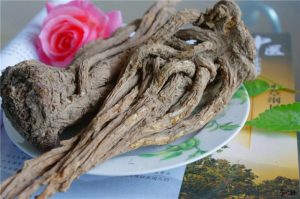
The root crown and primary root are thick and short, slightly cylindrical, 1.5–3.5 cm long and 1.5–3 cm in diameter. The lower part has 3–5 or more lateral roots, which are mostly curved, of varying lengths, and 0.4–1 cm in diameter. The surface is yellowish-brown or brownish-black, with irregular longitudinal wrinkles and elliptical lenticels;The root head is cross-ribbed, with multiple layers of scale-like leaf bases remaining at the apex. The texture is hard but softens easily when exposed to moisture; the cross-section is yellowish-white or pale yellowish-brown, with a yellowish-brown cambium ring. The cortex contains numerous brown oil dots and fissures, and the xylem rays are fine and dense.It has a strong aroma and tastes sweet, pungent, and slightly bitter. The best quality specimens are those with a thick, long main root that is oily and lustrous, with a yellowish-brown outer skin, plump flesh, a yellowish-white cross-section, and a strong aroma.
Properties of Processed Slices
1. Angelica sinensis, Angelica sinensis root head, Angelica sinensis root body: See “Characteristics of Medicinal Materials.”
2. Stir-fried Angelica sinensis: Resembles Angelica sinensis; the surface is scorched yellow, the interior is yellowish-brown, and it has a slight aroma.
3. Wine-processed Angelica sinensis: Resembles Angelica sinensis; it is a deep yellow color, has slight scorched spots, and has a faint aroma of wine.
4. Earth-roasted Angelica: Resembles raw Angelica, with a surface coated in earth, a deep yellow color, and a fragrant aroma.
5. Charred Angelica: Resembles raw Angelica, with a charred black surface, a brownish-black interior, a crisp and brittle texture, a charred aroma, and a bitter, pungent taste.
Botanical Information
Botanical Classification
Angelica sinensis, a plant of the genus Angelica in the Apiaceae family.
Morphological Characteristics
A perennial herb, 0.4–1 m tall. The root is cylindrical and branched, with numerous fleshy fibrous roots; it is yellowish-brown and has a strong aroma. The stem is erect, green or purplish, with deep longitudinal grooves, and is smooth and glabrous.Leaves are ternate, pinnately compound two to three times; petioles are 3–11 cm long, with the base swollen into a tubular, membranous sheath; basal and upper stem leaves are ovate in outline, 8–18 cm long and 15–20 cm wide, with three pairs of leaflets,the lower pair of leaflets has petioles 0.5–1.5 cm long, while the upper pair near the apex is sessile; the terminal segments are ovate or ovate-lanceolate, 1–2 cm long and 5–15 mm wide, 2–3 shallowly lobed, with notched serrations along the margins and pointed tips on the teeth; the underside and margins of the leaves are covered with sparse, papillate white hairs;Upper stem leaves reduced to saccate sheaths and pinnately divided leaflets. Compound umbels terminal; peduncle 4–7 cm long, densely covered with fine soft hairs; rays 9–30; involucral bracts 2, linear, or absent; umbellules bearing 13–36 flowers;small bracts 2–4, linear; calyx teeth 5, dentate; petals long-ovate, apex narrowly acute, reflexed; style short, style base conical.The fruit is elliptic to ovate, 4–6 mm long and 3–4 mm wide; the dorsal ridge is linear and raised; the lateral ridges form broad, thin wings that are as wide as or slightly wider than the fruit body; the margins of the wings are pale purple; there is one oil tube in the ridge groove and two oil tubes at the point of fusion. Flowering occurs from June to July, and fruiting from July to September.
Distribution Area
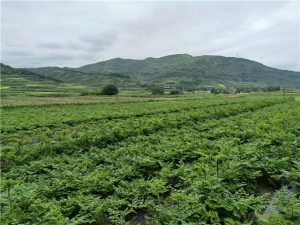
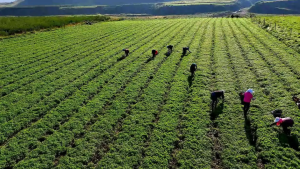
Cultivated in Hubei, Sichuan, Yunnan, Guizhou, Shaanxi, Gansu, and other regions.
Growth Habits
Seedlings prefer shade with 10% light transmission and should be protected from direct, intense sunlight; mature plants can tolerate strong light. It is best cultivated in deep, loose, well-drained, fertile sandy loam rich in humus; it should not be planted in low-lying, waterlogged areas, clay soils prone to compaction, or poor sandy soils, and continuous cropping should be avoided.
Propagation Methods
Propagated by seed, either by direct seeding or by raising seedlings and transplanting them.
Cultivation Techniques
1. Direct Seeding: In high-altitude areas (above 1,700 m) with low temperatures, sowing can take place from late July to early August; in low-altitude areas (below 1,700 m) with slightly higher temperatures, sowing can take place from mid-August to early September. Before sowing, dig transverse furrows on prepared beds, spaced 30 cm apart and 3–5 cm deep, and sow the seeds evenly into the furrows.Use 11.25–15 kg of seed per hectare. Lightly tamp the soil, cover with fine soil or fine powdered fertilizer, and then cover with a thin layer of short straw.
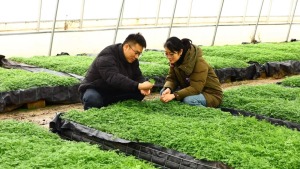
2. Seedling Transplanting: In Gansu, sow in early to mid-June; in Yunnan, sow in late June. Broadcast the seeds evenly on the seedbed, cover with fine soil, and then cover with straw.Remove the straw cover in early August and weed 1–2 times. Dig up the seedlings in early October, bundle them, and store them in piles or pits. Deeply plow the planting site in the fall and apply ample base fertilizer. Before planting in April of the following year, till the soil and level it with a harrow. Dig holes with row and plant spacing of 25–35 cm, plant 2–3 seedlings per hole, and cover with 2–4 cm of soil.If seedlings grow too large and have sufficient nutrients during overwintering, they are prone to vernalization, causing them to bolt prematurely in the second year, leading to root lignification and loss of medicinal value; conversely, if medicinal seedlings are too small, this directly affects root yield and quality. Therefore, regions should select an appropriate seeding rate to cultivate medium-sized seedlings, thereby reducing the bolting rate and achieving high yields. Additionally, seeds of medium maturity should be selected, and seeds from plants that bolted prematurely should not be used.
Pest and Disease Control
1. Root rot: Select disease-free, vigorous seedlings; promptly remove diseased plants at the first sign of infection; disinfect the affected planting holes with lime; and irrigate the affected areas with a 500-fold dilution of 50% carbendazim.
2. Brown Spot Disease: The disease is more severe under high temperatures and high humidity. At the onset of the disease, spray a 1:1:150 Bordeaux mixture or a 500-fold dilution of 65% zinc dithion.
3. Pests include peach aphids, seed flies, and wireworms.