Hymenophyllum khasyanum, a name in traditional Chinese medicine. It refers to the whole plant of Hymenophyllum khasyanum Hook. et Bak., a member of the Hymenophyllaceae family. It is distributed in Southwest China and Guangxi, among other regions. It has the efficacy of stopping bleeding and promoting tissue regeneration. It is commonly used to stop bleeding and promote tissue regeneration.
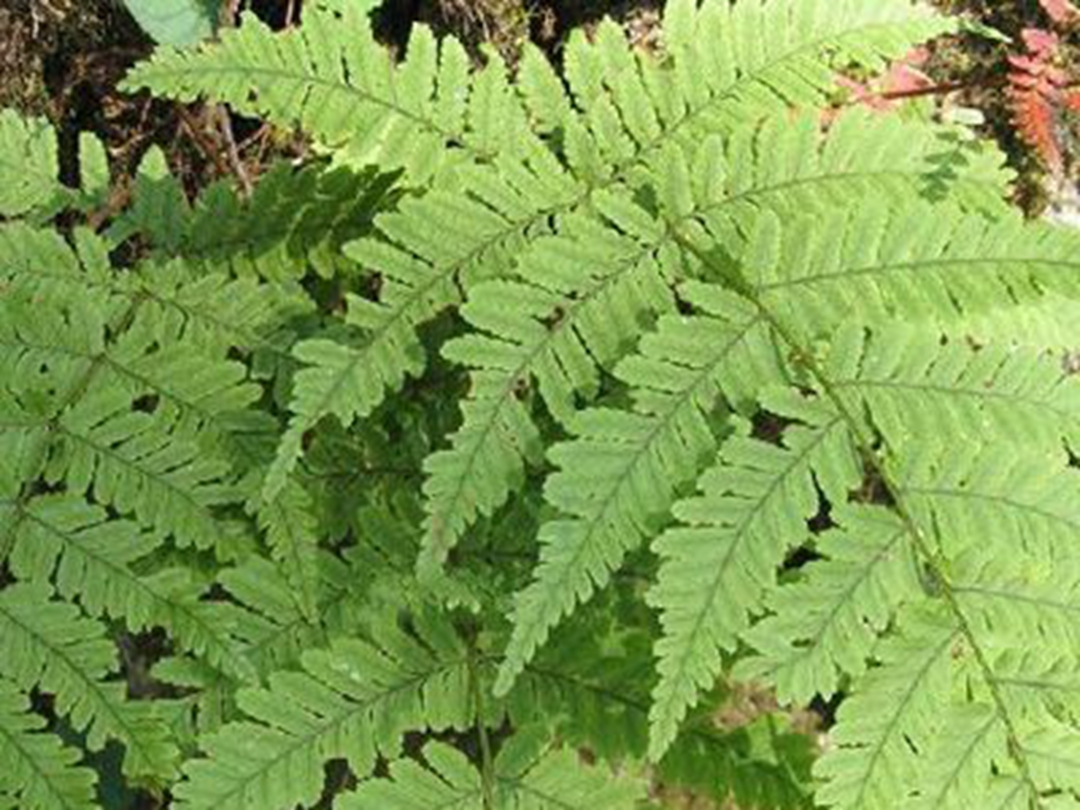
Hymenophyllum khasyanum
Hymenophyllum khasyanum, a name in traditional Chinese medicine. It refers to the whole plant of Hymenophyllum khasyanum Hook. et Bak., a member of the Hymenophyllaceae family. It is distributed in Southwest China and Guangxi, among other regions. It has the efficacy of stopping bleeding and promoting tissue regeneration. It is commonly used to stop bleeding and promote tissue regeneration.
Chinese Name : 顶果膜蕨
Nature, Flavor & Meridian Tropism : Slightly astringent in taste; neutral in nature
Benefits & Efficacy
Benefits
Stops bleeding and promotes tissue regeneration.
Indications
Bleeding from external injuries.
Usage and Dosage
External use: Apply an appropriate amount of the fresh plant, pounded and applied as a poultice; or apply as a powder.
Relevant Discussions
*Medicinal Spore Plants of China*: “Stops bleeding and promotes tissue regeneration. Treats bleeding from external injuries.”
Applications
Processing & Preparation
Harvesting & Processing
Harvested in summer and fall; sun-dried or used fresh.
Crude Drug Identification
Botanical Information
Botanical Classification
A plant of the Polypodiaceae family, *Polypodium verticillatum*.
Morphological Characteristics
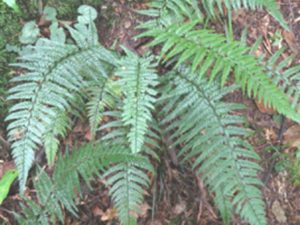
Top-fruited Membrane Fern, also known as Small Ground Cypress Branch or Rolling Dragon Grass. A small lithophytic fern, with a plant height of 8–10 cm. The rhizome is dark brown, creeping, slender and filamentous, approximately 0.3 mm thick, sparsely hairy or nearly glabrous.Leaves are distichous, spaced 1–2 cm apart; petioles are 2–2.5 cm long, wingless, and sparsely pubescent; leaf blades are membranous, translucent, dark brown when dry, narrowly lanceolate, 7–10 cm long, and 12–15 cm wide;twice deeply pinnately lobed; pinnae 10–12 pairs, obliquely oblong, 8–10 mm long, 5–6 mm wide, with several basal pairs nearly sessile, the remainder closely appressed and alternate, deeply pinnately lobed nearly to the rachis; lobes 3–4 pairs, linear, with sharp teeth along the margins, the upper basal lobes longer and often forked;Veins are forked; the rachis bears narrow wings throughout except at the base. Sporangia clusters occur only at the apex of the leaf, located at the tips of the upper lobes of the pinnae; the lobes bearing sporangia clusters are distinctly narrowed beneath the indusium;The spore sac is narrowly oblong, 1.5–2 mm long and about 1 mm wide; the two lips are split nearly to the base, with acute tips and sharp teeth.