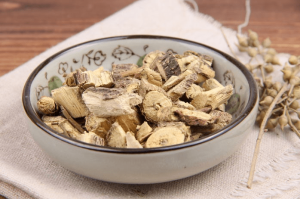
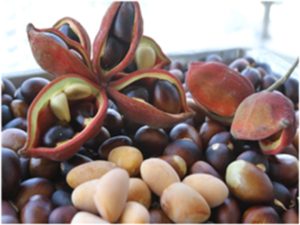
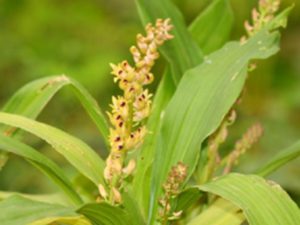
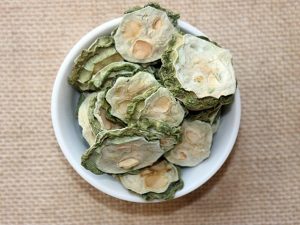
Qizhaofeng is the name of a traditional Chinese medicine. It refers to the root of Rubus reflexus Ker. (family Rosaceae). It is distributed in Guangxi. It has the effects of dispelling wind and dampness, and promoting blood circulation to unblock the meridians. It is commonly used for wind-cold-damp bi syndrome, pain in the joints of the limbs, hemiplegia due to stroke, numbness of the limbs, impaired mobility, and difficulty turning over in bed.

Seven-Claw Wind
Qizhaofeng is the name of a traditional Chinese medicine. It refers to the root of Rubus reflexus Ker. (family Rosaceae). It is distributed in Guangxi. It has the effects of dispelling wind and dampness, and promoting blood circulation to unblock the meridians. It is commonly used for wind-cold-damp bi syndrome, pain in the joints of the limbs, hemiplegia due to stroke, numbness of the limbs, impaired mobility, and difficulty turning over in bed.
Chinese Name : 七爪风
Latin Name : Rubus reflexus Ker
Authentic Producing Area : Guangxi
Nature, Flavor & Meridian Tropism : Tastes bitter, astringent, and sour; neutral in nature; enters the Lung and Liver meridians
Benefits & Efficacy
Benefits
Dispels wind and dampness; promotes blood circulation and unblocks the meridians.
Indications
Wind-cold-damp bi syndrome, pain in the joints of the limbs, hemiplegia due to stroke, numbness in the limbs, impaired mobility, and difficulty turning over in bed.
Usage and Dosage
Internal use: Decoct 6–9 g.
Precautions
Not yet established.
Relevant Discussions
*Catalog of Guangxi Plants*: “It has the effects of dispelling wind and dampness and strengthening tendons and bones; it is used for rheumatoid arthritis, numbness in the limbs, and paralysis.”
Applications
Related Compatibility
1. Rheumatic joint pain, numbness, and paralysis of the limbs: Use 1–2 liang of the root, decocted in water, or soaked in wine.
2. Dysentery: Use 0.5–1 liang of the root, decocted in water with an appropriate amount of brown sugar.
Processing & Preparation
Harvesting & Processing
Can be harvested year-round; wash thoroughly, sun-dry, and store for future use.
Crude Drug Identification
Botanical Information
Botanical Classification
Rosaceae, *Hedera helix*.
Morphological Characteristics
A climbing, thornless, evergreen shrub. The stems are densely covered with long, stiff, brownish-black hairs. Both surfaces of the leaves, the petioles, and the calyx are densely covered with long, soft, yellowish-brown or grayish-white hairs; the leaves are palmately 5–7-lobed, with the undersides grayish-white. Inflorescences grow on lateral branches, bearing many flowers; they bloom from May to June and are white. The fruit is spherical, ripening in the fall; it is red and juicy.
Distribution Area
Distributed in Guangxi.