Jingangteng is a medicinal herb with diuretic and urinary tract-clearing properties; it is the dried rhizome of Smilax china L., a plant in the Liliaceae family. It is primarily produced in Jiangsu, Zhejiang, and Hubei.This herb has a sweet, slightly bitter, and astringent taste; it is neutral in nature and enters the Liver and Kidney meridians. It has the effects of draining dampness and removing turbidity, dispelling wind and alleviating arthralgia, and detoxifying and dispersing blood stasis. It is primarily used to treat turbid and painful urination, excessive vaginal discharge, rheumatic arthralgia, and boils and abscesses.

Jingangteng
Jingangteng is a medicinal herb with diuretic and urinary tract-clearing properties; it is the dried rhizome of Smilax china L., a plant in the Liliaceae family. It is primarily produced in Jiangsu, Zhejiang, and Hubei.This herb has a sweet, slightly bitter, and astringent taste; it is neutral in nature and enters the Liver and Kidney meridians. It has the effects of draining dampness and removing turbidity, dispelling wind and alleviating arthralgia, and detoxifying and dispersing blood stasis. It is primarily used to treat turbid and painful urination, excessive vaginal discharge, rheumatic arthralgia, and boils and abscesses.
Chinese Name : 金刚藤
Aliases : Jinganggen, Wanggucao, Jinganggu, Baotu
Authentic Producing Area : Jiangsu, Zhejiang, Hubei
Nature, Flavor & Meridian Tropism : Taste: sweet, slightly bitter, and astringent; nature: neutral; enters the Liver and Kidney meridians
Benefits & Efficacy
Benefits
Drains dampness and removes turbidity; dispels wind and alleviates arthralgia; detoxifies and disperses blood stasis.
Indications
Jingangteng is primarily used to treat cloudy and painful urination, excessive vaginal discharge, rheumatic arthralgia, and boils and abscesses.
Usage and Dosage
Decoct and take 10–15 g.
Precautions
While taking this medication, avoid raw, cold, and greasy foods, as well as vinegar and tea.
Chemical Constituents
It primarily contains steroidal saponins: dioscidin, dioscidin-13-O-methyl, dioscidin-13-O-methyl-1-O-methyl, dioscidin-1-O-methyl, and pseudo-dioscidin, among others;flavonoids: delphinidin, quercetin, etc.; it also contains polysaccharides, among other compounds.
Pharmacological Actions
This product possesses anti-inflammatory, hypoglycemic, hypolipidemic, antitumor, and antioxidant effects.
Relevant Discussions
1. *Mingyi Bielu*: “Treats lower back and waist pain, wind-induced arthralgia, nourishes blood and qi, and regulates urination and defecation.”
2. *Rihua Zi Bencao*: “Treats epidemic diseases and miasma.”
3. *Bencao Gangmu*: “Treats diabetes insipidus, menorrhagia, and diarrhea.”
Applications
Related Compatibility
1. Combining Jin Gang Teng with Shi Chang Pu: Jin Gang Teng functions to drain dampness and eliminate turbidity; Shi Chang Pu, with its aromatic properties, opens the orifices and is particularly effective at removing dampness and turbidity. When used together, these two herbs exhibit a strong ability to drain dampness, separate clear from turbid, and eliminate turbidity, making them suitable for treating turbid and painful urination and excessive vaginal discharge in women.
2. Diamond Vine combined with Mulberry Parasite: Diamond Vine excels at draining dampness, eliminating turbidity, dispelling wind, and relieving arthralgia. Mulberry Parasite dispels wind-dampness, tonifies the liver and kidneys, and strengthens the tendons and bones. When used together, their efficacy in dispelling wind-dampness is enhanced, making this combination suitable for conditions such as weakness and limpness in the lower back and knees, weakness in both legs, and numbness and loss of sensation in the skin and limbs resulting from liver and kidney deficiency or blood deficiency and blood stasis.
Medicinal Identification
Jingangteng and Fenbixie: These two herbs have similar functions, both excelling at dispelling wind and draining dampness. They can be used for pain in the tendons and bones of the lower back and knees, rheumatic arthralgia, dribbling urination, and vaginal discharge. However, Fenbixie is more effective at clearing dampness and descending turbidity; therefore, it is particularly suitable for conditions such as greasy urine, cloudy white discharge, and excessive vaginal discharge caused by excessive dampness;Jingangteng is also effective at detoxifying and dispersing blood stasis, making it particularly suitable for treating boils, abscesses, and swellings.
Related Medicines
Sanjin Tablets (granules, capsules).
Related Prescriptions
Bawei Decoction with Smilax (from *Wai Tai Mi Yao*).
Notes
Patients requiring treatment with Chinese herbal medicine should first consult a licensed Traditional Chinese Medicine (TCM) hospital, where a TCM practitioner will conduct a professional pattern differentiation and prescribe an herbal formula.
Processing & Preparation
Harvesting & Processing
Harvest from late autumn to the following spring; remove the fibrous roots, wash thoroughly, and sun-dry, or slice while fresh and then dry.
Processing Methods
Remove impurities, wash thoroughly, moisten thoroughly, slice, and dry.
Storage Methods
Store in a well-ventilated, dry place.
Crude Drug Identification
Properties of Crude Drugs
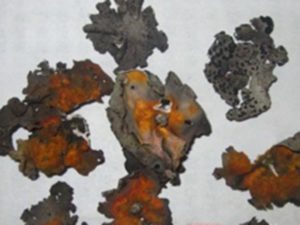
This product is an irregular lump or a curved, flattened column with nodular protrusions, 10–20 cm long and 2–4 cm in diameter. The surface is yellowish-brown or purplish-brown, with a conical protrusion at the stem base scar and residual hard, spiny fibrous root remnants or fine roots.The texture is hard and difficult to break; the fracture surface is brownish-yellow or reddish-brown, fibrous, with visible punctate vascular bundles and numerous small specks. Slices are irregular in shape, 0.3–1 cm thick, with irregular edges; the fracture surface is coarsely fibrous; the texture is hard, and dust flies when broken. The odor is faint; the taste is slightly bitter and astringent.
Properties of Processed Slices
This product consists of irregular slices. The outer surface is yellowish-brown or purplish-brown, with residual spiny fibrous roots or fine roots visible. The cross-section is brownish-yellow or reddish-brown, fibrous, with punctate vascular bundles visible. It is hard in texture, and a fine powder is released when broken. It has a faint odor and a slightly bitter, astringent taste.
Botanical Information
Botanical Classification
The plant *Smilax* of the Liliaceae family.
Morphological Characteristics
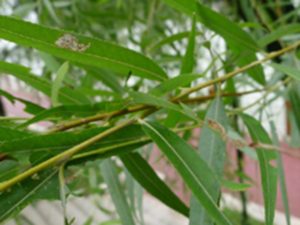
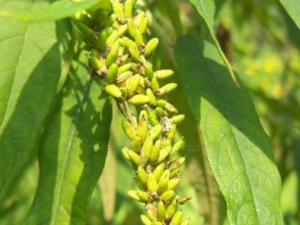
A climbing shrub. The rhizome is thick, hard, and tuberous. The stem bears sparse thorns. Dried leaves are typically reddish-brown or nearly bronze in color, and are round, ovate, or broadly ovate; leaf petioles almost always bear tendrils, with the point of detachment located near the tendril. The inflorescence is umbellate, often spherical; the receptacle is nearly spherical;flowers are greenish-yellow, with three outer perianth segments and three inner perianth segments, the latter being slightly narrower. The berries are red when ripe and covered with a powdery bloom. Flowering occurs from February to May, and fruiting from September to November.
Distribution Area
Distributed in East China, Central and South China, Southwest China, and Taiwan.