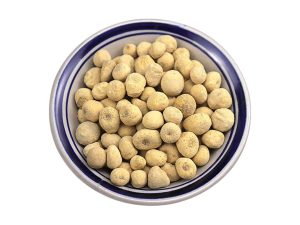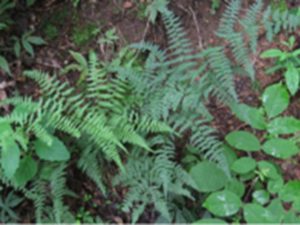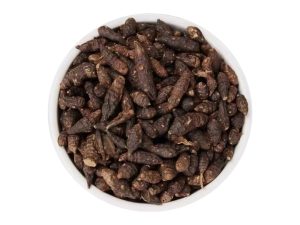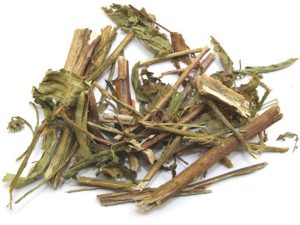
Ma Jiazi Leaves, a name for a traditional Chinese medicine. These are the leaves of Paliurus ramosissimus (Lour.) Poir., a plant in the Rhamnaceae family. It is distributed in southwestern China, as well as in Jiangsu, Anhui, Zhejiang, Jiangxi, Fujian, Taiwan, Hubei, Hunan, Guangdong, and Guangxi. It has the efficacy of clearing heat and detoxifying.It is commonly used to treat conditions characterized by excessive heat and toxins congested at the skin surface, resulting in abscesses and boils that are swollen and painful but fail to ulcerate for a prolonged period, or to treat damp sores accompanied by uncontrollable itching and persistent oozing.

Ma Jiazi Ye
Ma Jiazi Leaves, a name for a traditional Chinese medicine. These are the leaves of Paliurus ramosissimus (Lour.) Poir., a plant in the Rhamnaceae family. It is distributed in southwestern China, as well as in Jiangsu, Anhui, Zhejiang, Jiangxi, Fujian, Taiwan, Hubei, Hunan, Guangdong, and Guangxi. It has the efficacy of clearing heat and detoxifying.It is commonly used to treat conditions characterized by excessive heat and toxins congested at the skin surface, resulting in abscesses and boils that are swollen and painful but fail to ulcerate for a prolonged period, or to treat damp sores accompanied by uncontrollable itching and persistent oozing.
Chinese Name : 马甲子叶
Nature, Flavor & Meridian Tropism : Bitter in taste, cool in nature. Enters the Heart and Liver meridians
Benefits & Efficacy
Benefits
Clears heat and detoxifies.
Indications
For conditions of intense heat and toxin stagnation in the superficial layers of the skin, resulting in swollen and painful boils and abscesses that fail to ulcerate for a prolonged period; or for treating damp sores characterized by uncontrollable itching and continuous oozing.
Usage and Dosage
External use: Pound into a paste and apply to the affected area.
Relevant Discussions
*Nanning Materia Medica*: “Applied externally to treat eye inflammation and pain, as well as abscesses and boils that have ruptured and are discharging pus.”
Applications
Related Compatibility
For treating abscesses and swellings: Pound fresh Ma Jia Zi leaves with a small amount of brown sugar into a paste and apply to the affected area; replace when dry. (*Anhui Chinese Herbal Medicine*)
Processing & Preparation
Harvesting & Processing
Harvest in summer and sun-dry.
Crude Drug Identification
Botanical Information
Botanical Classification
Ma Jiazi, a plant of the Rhamnaceae family.
Morphological Characteristics
A shrub growing up to 6 m tall. Twigs are brown and covered with short soft hairs. Leaves are alternate; petioles are 5–9 mm long, hairy, with two purplish-red spines at the base, 0.4–7 cm long;Leaf blades are papery, broadly ovate, ovate-elliptic, or round, 3–7 cm long and 2–5 cm wide, with a blunt or rounded apex, a broadly cuneate or nearly rounded base that is slightly oblique, and finely serrated margins; the upper surface is dark green, the lower surface pale green and dull; both surfaces are covered with short, brownish-black soft hairs along the veins or glabrous; there are three basal veins.Flowers are bisexual, borne in axillary cymes, covered with yellow tomentum; small, 6 mm in diameter, yellowish-green; sepals 5, triangular, 2 mm long; petals 5, spatulate, shorter than the sepals; stamens 5, equal in length to or slightly longer than the petals; disk circular, margin 5- or 10-lobed;The ovary is 3-chambered; the style is deeply 3-lobed, and the stigma is globose. The drupe is cup-shaped, covered with yellowish-brown or brownish-yellow tomentum, and surrounded by 3 shallowly lobed, narrow, corky wings; it measures 1–1.7 cm in diameter and 7–8 mm in length. The seeds are purplish-red or reddish-brown and flattened-round. Flowering occurs from May to August, and fruiting from September to October.
Distribution Area
Distributed in Southwest China, as well as Jiangsu, Anhui, Zhejiang, Jiangxi, Fujian, Taiwan, Hubei, Hunan, Guangdong, and Guangxi.