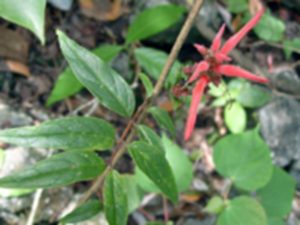
Niudali is the name of a traditional Chinese medicine. It is derived from the root of Millettia speciosa Champ., a plant in the genus Millettia of the Fabaceae family. The root is used medicinally. It can be harvested year-round, though autumn is the optimal time for digging up the roots. Wash thoroughly, slice, and sun-dry, or steam until tender before sun-drying.

Niu Dali
Niudali is the name of a traditional Chinese medicine. It is derived from the root of Millettia speciosa Champ., a plant in the genus Millettia of the Fabaceae family. The root is used medicinally. It can be harvested year-round, though autumn is the optimal time for digging up the roots. Wash thoroughly, slice, and sun-dry, or steam until tender before sun-drying.
Chinese Name : 牛大力
Aliases : Pig’s Foot Hat, Mountain Lotus Root, Golden Bell Root
Nature, Flavor & Meridian Tropism : Sweet in taste, neutral in nature. Enters the Kidney and Lung meridians
Benefits & Efficacy
Benefits
Nourishes deficiency and moistens the lungs; strengthens tendons and activates meridians.
Indications
Used for lumbar muscle strain, rheumatoid arthritis, lung heat, cough due to lung deficiency, tuberculosis, chronic bronchitis, chronic hepatitis, nocturnal emission, and leukorrhea.
Precautions
Not yet established.
Chemical Constituents
To date, various chemical constituents have been isolated and identified from the roots of *Cissus quadrangularis*, primarily including flavonoids, alkaloids, steroids, terpenoids, lignans, coumarins, organic acids, and polysaccharides. 1. Flavonoids: Flavonoids are among the most common naturally occurring phytochemicals. To date, 36 flavonoid compounds have been isolated and identified from Niudali, namely Sophoraflavone (A-1), 3',7-dihydroxy-2',4'-dimethoxyisoflavone (A-2), palyastol (A-3), 2',4,4'-trihydroxychalcone (A-4), bis-deoxycurcumin (A-5), isoliquiritigenin (A-6), and morin (A-7), among others. 2. Alkaloids: Alkaloids are a class of nitrogen-containing heterocyclic compounds isolated from plants and are naturally occurring specialized metabolites.To date, four alkaloids have been isolated and identified from the roots of *Cissus quadrangularis*; these have been identified as cissine (B-1), N-methyl-cissine (B-2), 6-methoxy-dihydro-cissine (B-3), and orange-yellow piperamide acetate (B-4). 3. Steroids and Terpenes: Steroids are a unique class of lipids with a cyclopentane-fused hydroxyphenanthrene skeleton. Terpenes are a class of natural compounds found in all living organisms, also known as polyisoprenes.To date, steroids and terpenoids have also been isolated from Niu Dali, specifically: asterone (C-1), caffeic acid lupeol ester (C-2), 7-carbonyl-β-sitosterol (C-3), pyroctonic acid (C-4), stigmasterol (C-5),β-sitosterol (C-6), stigmasterol-3-O-β-D-glucoside (C-7), carotene (C-8), glycyrrhizic acid (C-9),7-hydroxy-chrysophanol (C-10), iron-holly acid (C-11), gua-holly glycoside (C-12), β-sitosterol acetate (C-13). 4. Lignans and coumarins: Lignans are a class of complex polyphenolic compounds and serve as important “specialized metabolites” in plants; coumarins are a class of natural compounds with heterocyclic structures that possess a sweet, aromatic scent.To date, lignans and coumarins have also been isolated and identified from Niudali, specifically open-ring isolaricetinol (D-1), bisdihydrosiringenin (D-2), polystachyol (D-3), eugenol (D-4), psoralen (D-5), and schisandrol acetate (D-6). 5. Organic Acids: Natural organic acids are present in the roots, stems, and leaves of plants. To date, the organic acids isolated from Niudali roots include adonic acid (E-1), cerotic acid (E-2), gentisic acid (E-3), vanillic acid (E-4), maleic acid (E-5), and cinnamic acid (E-6).Through GC-MS analysis of the fat-soluble components in Niudali roots, palmitic acid, myristic acid, cerotic acid, and linoleic acid were identified. Through GC-MS analysis of the fat-soluble components in Niudali vine leaves, the following organic acids were identified: lauric acid, myristic acid, palmitic acid, and heptadecanoic acid. 6. Polysaccharides: Polysaccharides are macromolecular compounds formed by the condensation and dehydration of 20 to 10,000 monosaccharide units; they are the primary active constituents in medicinal plants. Niudali is rich in polysaccharides, which are also its main active components.
Pharmacological Actions
Niu Dali is a plant with both medicinal and edible uses, exhibiting pharmacological effects such as anti-inflammatory, antioxidant, liver-protective, immunomodulatory, anti-fatigue, anti-stress, expectorant, antitussive, and bronchodilatory properties.
Applications
Related Compatibility
1. Vaginal discharge due to physical weakness: Take 12g each of Niudali and Eucommia vine, 9g each of Qianjinba and Five-fingered Peach, and 15g of Great Blood Vine; decoct in water and drink the decoction. Alternatively, stew the above herbs with pork feet, strain out the herbal residue, and consume the meat and soup. (*Fujian Materia Medica*)
2. Pleurisy: Take 15g of Niudali vine and 3g of Yijianxi; decoct in water and drink the decoction. (*Fujian Materia Medica*)
Medicinal Diet Therapy
Niudali, Eucommia, and Pork Bone Soup:
Benefits: Nourishes the liver and kidneys, strengthens tendons and bones, and tonifies the spleen to boost qi.
Ingredients: 90 g fresh Niudali, 15 g Eucommia, 500 g pork bones, 8 red dates (pitted), and seasoning to taste.
Preparation: Soak and wash the Niudali, then cut into sections; blanch the pork bones; soak and wash the Eucommia and red dates. Place all ingredients in a clay pot. Add water and simmer for about 3 hours. Season to taste and serve.
Usage: Serve with meals.
Notes
Patients requiring treatment with Chinese herbal medicine should first consult a licensed Traditional Chinese Medicine (TCM) hospital, where a TCM practitioner will conduct a professional pattern differentiation and prescribe an herbal formula.
Processing & Preparation
Processing Methods
It is best to dig up the roots in the fall. Wash them thoroughly, slice them, and sun-dry them, or steam them first before sun-drying.
Crude Drug Identification
Botanical Information
Botanical Classification
A species of the genus Cissus in the legume family, known as Beautiful Cissus.
Morphological Characteristics
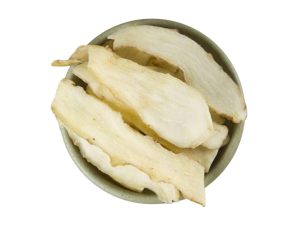
The tuberous roots are cylindrical or consist of several spindle-shaped bodies strung together in a cluster; they are pale yellow or earthy yellow, slightly rough, and bear annular rings. Commercially available products are typically cut into slices measuring 4–9 cm in length, 2–3 cm in width, and approximately 0.5–1 cm in thickness. The cross-section reveals a nearly white cortex; just inside is a layer of faint brown annular rings; the central portion is nearly white, mealy, and slightly loose.Mature roots are nearly woody and tough, while young roots are brittle and break easily. They have a faint odor and a slightly sweet taste. The best specimens are characterized by large slices, a white color, a starchy texture, and a sweet taste.
Distribution Area
It is distributed throughout areas south of the Yangtze River basin.