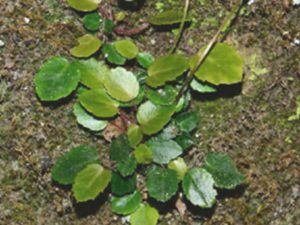
Opposite-leaved ear fern, a name in traditional Chinese medicine. It refers to the whole plant of Polystichum deltodon (Bak.) Diels, a member of the Polypodiaceae family. It is distributed in Southwest China, as well as in Anhui, Taiwan, Hubei, Hunan, Guangdong, and Guangxi. It has the effects of promoting blood circulation, relieving pain, reducing swelling, promoting urination, and preventing colds. It is commonly used to treat contusions and sprains, as well as snake bites.
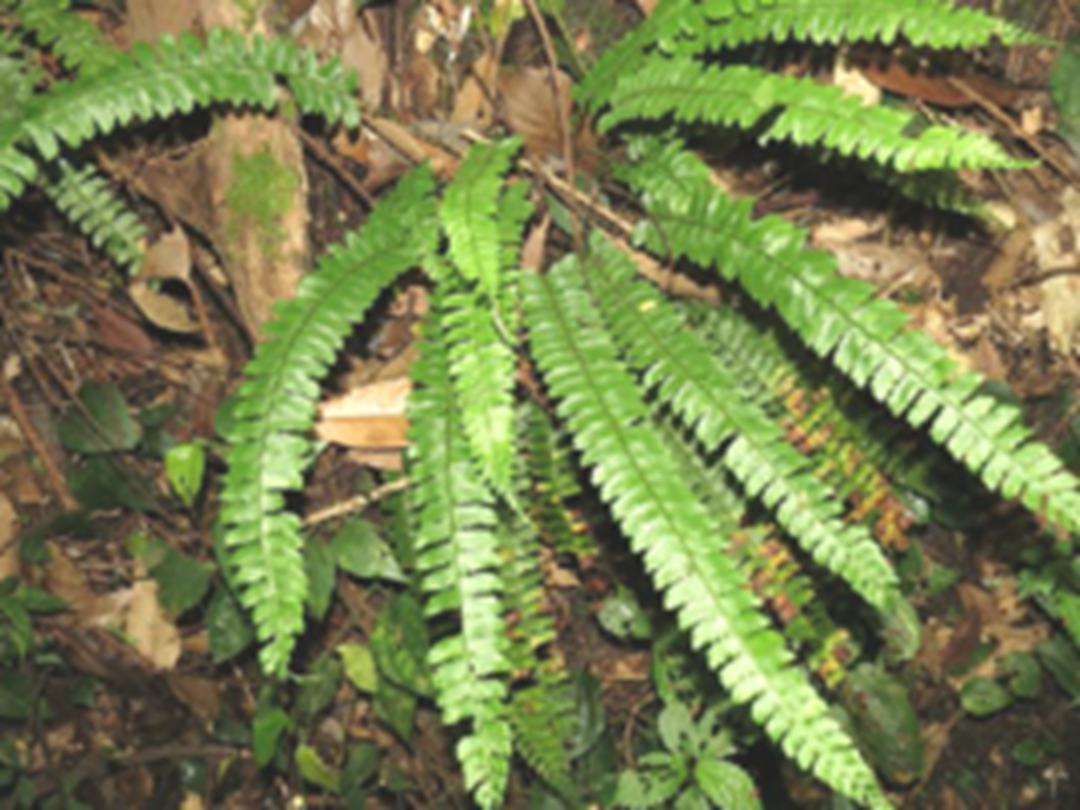
Opposite-leaved Ear Fern
Opposite-leaved ear fern, a name in traditional Chinese medicine. It refers to the whole plant of Polystichum deltodon (Bak.) Diels, a member of the Polypodiaceae family. It is distributed in Southwest China, as well as in Anhui, Taiwan, Hubei, Hunan, Guangdong, and Guangxi. It has the effects of promoting blood circulation, relieving pain, reducing swelling, promoting urination, and preventing colds. It is commonly used to treat contusions and sprains, as well as snake bites.
Chinese Name : 对生耳蕨
Aliases : Centipede Grass, Ash-colored Polygonatum
Nature, Flavor & Meridian Tropism : Taste: sour and astringent; nature: slightly cold. Enters the Liver and Kidney meridians
Benefits & Efficacy
Benefits
Promotes blood circulation, relieves pain, reduces swelling, promotes urination, and helps prevent colds.
Indications
For external use to treat contusions and bruises, as well as snake bites.
Usage and Dosage
15–30 g. External use: Apply an appropriate amount, either pounded into a paste or ground into a powder and sprinkled on the affected area.
Applications
Related Compatibility
1. For contusions and bruises: Pound Opposite-leaved Fern and Verbena together and apply the paste to the affected area. (*Hunan Materia Medica*)
2. For snake bites: First, suck out the contaminated blood from the affected area, then apply a paste made from crushed Pteridium heterophyllum leaves to the affected area. If the wound has become ulcerated, grind the leaves into a powder and apply it to the affected area. If swelling is rising upward, prepare a decoction with 30 g of the whole Pteridium heterophyllum plant, 3 g of garlic, and a small amount of realgar, and take it orally. (*Hunan Materia Medica*)
Processing & Preparation
Harvesting & Processing
It can be harvested year-round. After digging it up, wash it thoroughly and use it fresh or dry it in the sun.
Crude Drug Identification
Botanical Information
Botanical Classification
A plant of the family Polypodiaceae, specifically the Opposite-leaved Ear Fern.
Morphological Characteristics
A perennial herb, 20–90 cm tall. The rhizome is erect and densely covered with lanceolate scales extending to the base of the petioles.Leaves are clustered; petioles are 5–10 cm long, straw-colored above the base, and sparsely covered with scales; leaf blades are lanceolate, papery, 15–25 cm long, 2.5–3.5 cm wide at the middle, narrowing almost uniformly toward the base, nearly smooth, and once-pinnate;the middle pinnae are 1.2–1.8 cm long (the basal pair is slightly shorter), 6–8 mm wide at the base, oblong or rhomboid-triangular, with an acute apex and a prominent tip; the upper side of the base is wider, with a triangular protrusion, while the lower side is cut off flat; the margins bear triangular-acute teeth; the veins are pinnately forked.Spore sacs are clustered at the tips of minor veins, usually arranged in a single row on the upper side of the midrib (sometimes with 1–3 on the upper part of the lower side); indusia are round-shield-shaped, more or less serrate.
Distribution Area
Distributed in Southwest China, as well as Anhui, Taiwan, Hubei, Hunan, Guangdong, and Guangxi.