Niushéhuáng is the name of a traditional Chinese medicine. It consists of the roots, stems, or leaves of Callicarpa kochiana Makino [C. loureire Hook. et Arn.; C. longiloba Merr.], a plant in the Verbenaceae family. Niushéhuáng is distributed in Henan, Zhejiang, Jiangxi, Fujian, Taiwan, Hunan, Guangxi, and other regions. It has the effects of dispelling wind and dampness, as well as promoting blood circulation and stopping bleeding.It is commonly used to treat rheumatic pain, wind-cold coughs, headaches, gastric hemorrhage, and bleeding from external injuries.
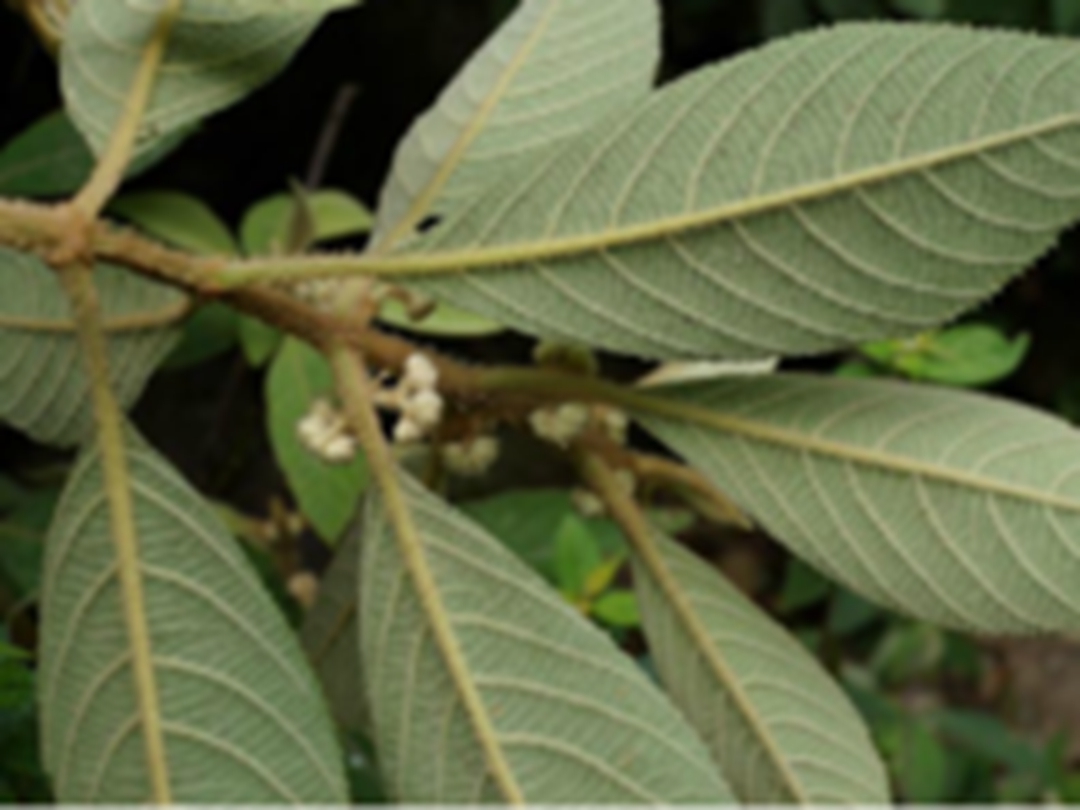
Ox-Tongue
Niushéhuáng is the name of a traditional Chinese medicine. It consists of the roots, stems, or leaves of Callicarpa kochiana Makino [C. loureire Hook. et Arn.; C. longiloba Merr.], a plant in the Verbenaceae family. Niushéhuáng is distributed in Henan, Zhejiang, Jiangxi, Fujian, Taiwan, Hunan, Guangxi, and other regions. It has the effects of dispelling wind and dampness, as well as promoting blood circulation and stopping bleeding.It is commonly used to treat rheumatic pain, wind-cold coughs, headaches, gastric hemorrhage, and bleeding from external injuries.
Chinese Name : 牛舌癀
Aliases : Wild Loquat, Hairy Purple Pearl
Nature, Flavor & Meridian Tropism : Bitter and pungent in taste; neutral in nature
Benefits & Efficacy
Benefits
Dispels wind and dampness; promotes blood circulation and stops bleeding.
Indications
Used for rheumatic arthralgia, wind-cold cough, headache, gastric hemorrhage, and bleeding from trauma.
Usage and Dosage
Internal use: Decoct 15–30 g; double the amount for fresh material; or crush to extract juice and drink. External use: Apply an appropriate amount as a poultice after crushing; or sprinkle as a powder.
Relevant Discussions
*Fujian Materia Medica*: “Rhizome: Dispels wind and dampness; treats arthritis, edema, and trauma. Leaves: Stops bleeding and detoxifies; treats gastric hemorrhage, thrombocytopenic purpura, traumatic bleeding, frostbite, and snake bites.”
Applications
Related Compatibility
1. For rheumatic pain: 60–90 g of Long-leaved Purple Pearl root. Decoct in water and drink. (*Folk Medicinal Herbs of Fujian*)
2. For wind-cold headaches: 30 g of fresh Long-leaved Purple Pearl leaves. Decoct in a mixture of wine and water and drink. (*Chinese Medicinal Herbs of Fujian*)
3. For cold-induced cough: 30 g of fresh Long-leaved Purple Pearl leaves; brush off the fine hairs, add 15 g of rock sugar. Decoct in water and drink.(*Folk Herbal Medicine of Fujian*)
4. For gastric hemorrhage: Wash fresh leaves of *Niu She Huang* (Cynanchum auriculatum), pound to extract half a bowl of natural juice, mix with an equal amount of honey, and consume. (*Folk Herbal Medicine of Southern Fujian*)
5. For edema: 30–60 g of fresh roots or fresh stems and leaves of long-leaved purple pearl. Decoct in water and drink. (*Chinese Herbal Medicine of Fujian*)
Processing & Preparation
Harvesting & Processing
Harvested in summer and fall; sun-dried or used fresh.
Crude Drug Identification
Botanical Information
Botanical Classification
A plant of the Verbenaceae family, Loquat-leaf Lonicera.
Morphological Characteristics
Loquat-leaved Lonicera, also known as Lao Lai’s Lonicera, Long-leaved Lonicera, Mountain Loquat, Yellow Lonicera, or Old Crab’s Eye. A shrub 1–4 m tall. Twigs, petioles, and inflorescences are densely covered with yellowish-brown, branched tomentum. Simple leaves are opposite;petioles 1–3 cm long; leaf blades oblong-lanceolate, oblong-elliptic, or ovate-lanceolate, with an acuminate or acute apex, a cuneate base, and serrate margins; upper surface glabrous or sparsely hairy, lower surface densely covered with yellowish-brown stellate hairs and branched tomentum; both surfaces bearing yellow, translucent glandular dots; lateral veins 10–18 pairs.Cymes are axillary, 3–6 cm wide, and 3–5-times branched; peduncles are 1–2 cm long; flowers are sessile and densely clustered at the tips of the branches; the calyx is tubular and tomentose, 4-lobed, with linear or acuminate-triangular lobes;the corolla is pale red or purplish red, 4-lobed, with lobes covered in downy hairs; there are 4 stamens, longer than the corolla. The style is longer than the stamens. The fruit is globose, with a stalk approximately 1.5 mm long, enclosed within the persistent calyx. Flowering occurs from July to August, and fruiting from September to December.
Distribution Area
Distributed in Henan, Zhejiang, Jiangxi, Fujian, Taiwan, Hunan, Guangxi, and other areas.