“Walking the Frontier” is the name of a traditional Chinese medicinal herb. It refers to the whole plant of Viola acuminata Ledeb. (family Violaceae). It is harvested in summer and fall and either sun-dried or used fresh. It has the effects of clearing heat, detoxifying, reducing swelling, and relieving pain. It is primarily used to treat coughs caused by lung heat, swelling and pain from trauma, boils and abscesses, and acute infectious hepatitis.
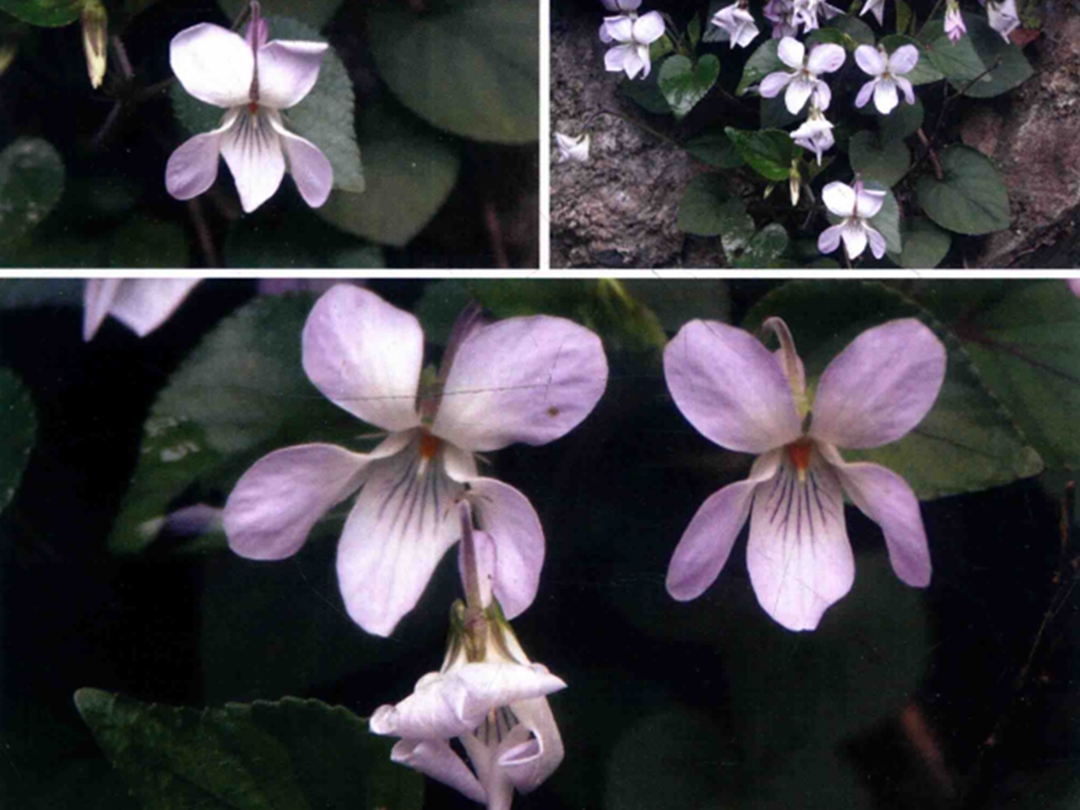
Journey to the Frontier
“Walking the Frontier” is the name of a traditional Chinese medicinal herb. It refers to the whole plant of Viola acuminata Ledeb. (family Violaceae). It is harvested in summer and fall and either sun-dried or used fresh. It has the effects of clearing heat, detoxifying, reducing swelling, and relieving pain. It is primarily used to treat coughs caused by lung heat, swelling and pain from trauma, boils and abscesses, and acute infectious hepatitis.
Chinese Name : 走边疆
Aliases : Red Plowshare Grass
Nature, Flavor & Meridian Tropism : Mild in taste, cold in nature
Benefits & Efficacy
Benefits
Clears heat, detoxifies, reduces swelling, and relieves pain.
Indications
Coughs due to lung heat, swelling and pain from trauma, boils and abscesses, and acute infectious hepatitis.
Usage and Dosage
Internal use: Decoct 9–15 g; use 30–60 g of fresh herb; or crush to extract juice and drink. External use: Crush and apply as a poultice.
Applications
Related Compatibility
For acute infectious hepatitis: 30 g of Chicken-Leg Violet and 15 g of Artemisia capillaris. Decoct in water and take orally. (From *Shanxi Chinese Herbal Medicine*)
Processing & Preparation
Harvesting & Processing
Harvest from July to October; sun-dry or use fresh.
Crude Drug Identification
Properties of Crude Drugs
Often shriveled into a ball. Several roots, brownish-black. Stems grow in clusters; stipules are deeply pinnately lobed, often curled into thread-like strands; leaf blades are heart-shaped. Oval capsules are sometimes visible. Slight odor; slightly bitter taste.
Botanical Information
Botanical Classification
A plant of the Violaceae family, specifically Chicken-Leg Violet.
Morphological Characteristics
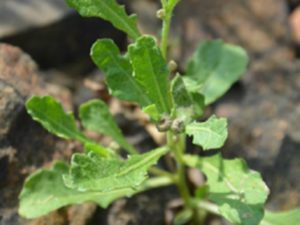
A perennial herb, 10–40 cm tall. Usually lacks basal leaves. The rhizome is relatively thick, growing vertically or obliquely, densely covered with numerous light brown roots. Stems are erect, usually growing in clusters of 2–4, glabrous or hairy toward the upper part.Leaves are sometimes alternate; those on the lower part of the petiole are longer, while those on the upper part are shorter; stipules are large, leaf-like, herbaceous, usually deeply pinnately lobed and tassel-like, or shallowly lobed and serrated;leaf blades are cordate, ovate-cordate, or ovate, 1.5–5.5 cm long and 1.5–4.5 cm wide, with an apex acute, shortly acuminate, or long acuminate; the base is usually cordate; the margins are bluntly toothed; both surfaces are covered with fine, short hairs or the veins are hairy.Flowers are pale purple or nearly white, with long pedicels; the pedicels are slender, extending beyond the leaves, and bear two small linear bracts at the upper part; sepals are 5, linear-lanceolate, with appendages at the base and truncate at the apex; petals are 5, nearly white or pale purple, and smaller; the spur is usually straight, 1.5–3.5 mm long, saccate, and blunt at the apex;There are 5 stamens with short, broad filaments; the ovary is superior, unilocular, conical, and glabrous; the style is slightly geniculate at the base, gradually thickening upward, and terminates in a short beak. The capsule is elliptical, approximately 1 cm long, glabrous, and gradually tapering to a point at the apex. Flowering and fruiting occur from May to September.
Distribution Area
Distributed in Northeast China, North China, and the provinces of Shaanxi, Gansu, Henan, Shandong, Jiangsu, Anhui, and Zhejiang.