Paulownia seeds are a traditional Chinese medicinal material. They are the seeds of the plant Paulownia plantanifolia (L.f.) Marsili, belonging to the Paulowniaceae family. They have the effects of regulating qi and harmonizing the stomach, strengthening the spleen and aiding digestion, and stopping bleeding. They are primarily used to treat epigastric pain, diarrhea caused by indigestion, hernias, premature graying of hair, mouth sores in children, and nosebleeds.
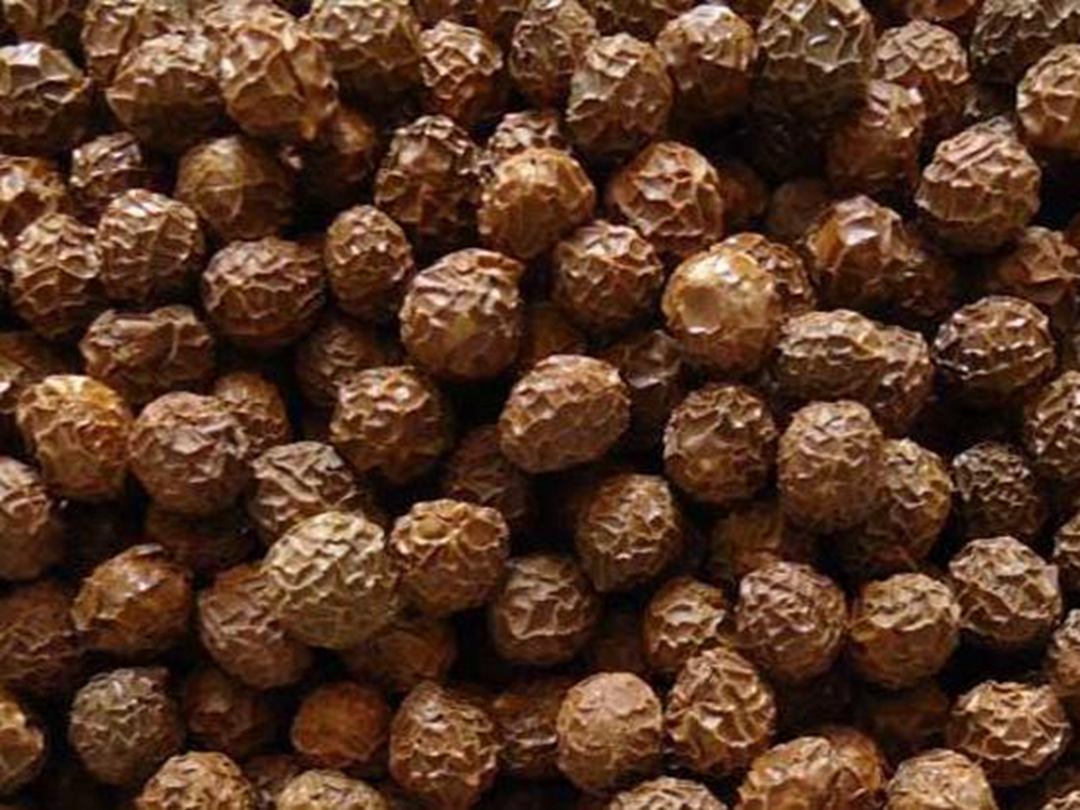
Paulownia Seed
Paulownia seeds are a traditional Chinese medicinal material. They are the seeds of the plant Paulownia plantanifolia (L.f.) Marsili, belonging to the Paulowniaceae family. They have the effects of regulating qi and harmonizing the stomach, strengthening the spleen and aiding digestion, and stopping bleeding. They are primarily used to treat epigastric pain, diarrhea caused by indigestion, hernias, premature graying of hair, mouth sores in children, and nosebleeds.
Chinese Name : 梧桐子
Aliases : Gourd Fruit, Paulownia Fruit, Phoenix Eye Fruit, Safflower Fruit
Nature, Flavor & Meridian Tropism : Sweet in taste, neutral in nature; enters the Heart, Lung, and Kidney meridians
Benefits & Efficacy
Benefits
Regulates qi and harmonizes the stomach; strengthens the spleen and aids digestion; stops bleeding.
Indications
Epigastric pain, diarrhea due to indigestion, hernia, premature graying of hair, mouth sores in children, nosebleeds.
Usage and Dosage
Internal use: Decocted as a soup, 3–9 g; or ground into powder, 2–3 g. External use: Apply an appropriate amount of the calcined and ground powder as a poultice.
Precautions
1. *Discourse on Dietary Regimen for Regulating Diseases*: “Excessive consumption may cause deafness; those with pre-existing ear conditions should avoid it.” 2. *Compendium of Shaanxi Traditional Chinese Medicine*: “Those with coughs accompanied by excessive phlegm should not consume it.”
Chemical Constituents
It contains fatty oils with fatty acids such as malic acid and mallic acid, as well as alkaloids with hemostatic properties and caffeine.
Pharmacological Actions
1. Hypotensive effect: Intravenous injection of total alkaloids from Paulownia seeds (TAW) at doses of 0.3 g/kg, 0.6 g/kg, and 1.2 g/kg into anesthetized rabbits and cats caused a rapid but short-lived decrease in blood pressure, accompanied by a slowing of heart rate; intravenous injection of 0.3 g/kg TAW into dogs and intraduodenal injection of 2.5 g/kg TAW into anesthetized cats also resulted in a decrease in blood pressure;Experiments also indicate that the hypotensive effect of TAW is related to M receptors and may result from the inhibition of acetylcholinesterase, which leads to stimulation of M receptors. 2. Hemostatic Effects: A decoction of Paulownia seeds shortens the time to traumatic bleeding in rats; however, it has no significant effect on clotting time, prothrombin time, plasma recalcification time, or platelet count in rabbits.Intraperitoneal injection of 84 mg/kg or oral administration of 168 mg/kg of total alkaloids from Paulownia seeds produced a significant hemostatic effect on tail-amputation bleeding in rats and significantly promoted the formation of experimental arterial thrombi in rats.Experimental results show that administering a suspension of Paulownia seed powder at 6 g/kg orally to rabbits daily for 3 consecutive days demonstrated that Paulownia seeds significantly promote platelet aggregation. Total alkaloids from Paulownia seeds also promote platelet aggregation in the circulating blood of rabbits. Therefore, the hemostatic mechanism of Paulownia seeds and their total alkaloids may be related to their promotion of platelet adhesion and aggregation.
Relevant Discussions
1. *Compendium of Materia Medica*: “Pound to extract the juice and apply it topically to remove white hair; black hair will surely grow from the root. It also treats mouth sores in children; mix with an egg, roast until charred, grind, and apply.”
2. *An Inquiry into Food*: “Clears the heart and benefits the lungs; relieves fever and soothes the throat; regulates the spleen and stimulates the appetite.”
3. *Revised Materia Medica*: “Warms the middle burner and tonifies qi; protects the lungs; strengthens the kidneys and nourishes body fluids.”
4. *Ben Cao Qiu Yuan*: “When eaten cooked, it stimulates the appetite and invigorates the spleen.”
5. *Sui Xi Ju Dietary Spectrum*: “Moistens the lungs, clears heat, and treats hernias.”
6. *Chronicle of Sichuan Chinese Medicinal Herbs* (1979 edition): “Regulates qi and harmonizes the stomach.”
7. Guangzhou Military Region *Manual of Common Chinese Herbs*: “Strengthens the spleen and relieves food stagnation.”
Applications
Related Compatibility
1. For abdominal pain and diarrhea caused by indigestion: ① (Paulownia seeds) Roast until charred and grind into powder. Dissolve in hot water; take 3g per dose. (Guangzhou Military Region’s *Manual of Common Chinese Herbal Medicines*) ② 15g of Paulownia seeds (roasted until charred) and 12g of Qingtengxiang. Grind into a fine powder. Take 3g per dose with hot water. (*Chronicle of Sichuan Chinese Medicinal Herbs*, 1979)
2. For hernia: Roast Paulownia seeds until fragrant, remove the shells, and consume them. (*Secret Formulas from Guizhou Provincial Traditional Chinese Medicine*)
3. For gray hair: 9g Paulownia seeds, 15g Polygonum multiflorum, 9g black sesame seeds, 15g prepared Rehmannia root. Decoct in water and take orally. (*Shandong Handbook of Chinese Herbal Medicine*)
4. For chronic asthma: Take a string of Paulownia seeds, wrap them in damp paper, and place them over a fire to roast. Remove them, place them on the ground to cool, and grind into a powder. Take on an empty stomach with one cup of well water; once phlegm is expelled, the condition is cured. (*Formulas for Universal Relief*)
Processing & Preparation
Harvesting & Processing
In autumn, when the seeds are ripe, harvest the fruit-bearing branches, thresh the seeds, remove impurities, and sun-dry them.
Processing Methods
Take the raw herbal material, remove impurities, sift out ash and debris, and crush it when needed.
Storage Methods
Store in a dry container in a well-ventilated, dry place to prevent insect infestation.
Crude Drug Identification
Properties of Crude Drugs
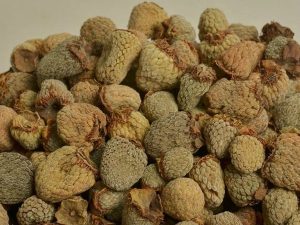
The seeds are spherical, resembling peas, with a diameter of about 7 mm. Their surface is yellowish-brown to brown, slightly lustrous, and features distinct, raised reticulated wrinkles.They are light and hard; the outer seed coat is brittle and easily broken, while the inner seed coat is tough and resilient. Upon removing the seed coat, several layers of pale red outer endosperm are visible, with a thick, pale yellow inner endosperm inside that is oily in texture. There are two cotyledons, which are thin and large, closely adhering to the inner endosperm, with the radicle located at the smaller end.
Plump, intact, pale green seeds are considered the best.
Botanical Information
Botanical Classification
Syzygium genus, Syzygium species.
Morphological Characteristics
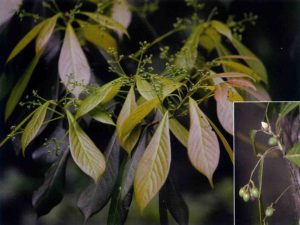
A deciduous tree reaching a height of up to 16 m. The bark is bluish-green and smooth. The simple leaves are alternate, with petioles 8–30 cm long; the leaf blades are heart-shaped, palmately 3–5-lobed, 15–20 cm in diameter, with triangular lobes that are gradually tapering at the apex and heart-shaped at the base; both surfaces are glabrous or slightly covered with short soft hairs; there are 7 basal veins.Terminal panicles, approximately 20–50 cm long; lower branches up to 12 cm long; flowers unisexual or bisexual, pale yellowish-green; calyx tube approximately 2 mm long; 5 lobes, linear, outwardly curled, 7–9 mm long, with pale yellow short soft hairs on the outer surface; no petals;Male flowers consist of 10–15 fused stamens; the filaments are fused into a cylindrical structure approximately equal in length to the sepals; female flowers are often surrounded by vestigial stamens at the base of the ovary; the ovary is formed by 5 fused carpels, partially free; the style is long, and the stigma is 5-lobed.There are 5 papery, stalked capsules, 6–11 cm long and 1.5–2.5 cm wide, covered with short tomentum or nearly glabrous; before maturity, each carpel splits along the ventral suture to form leaf-like fruit valves. There are 4–5 seeds, spherical, about 7 mm in diameter, with a wrinkled surface when dry, attached to the margins of the leaf-like fruit valves.Flowering occurs from June to July; fruit ripens from October to November.
Distribution Area
Distributed throughout most of China. Also found in Japan.