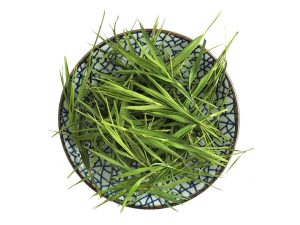
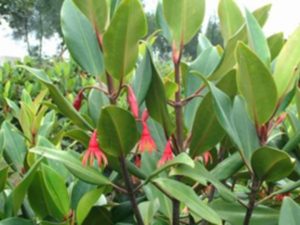
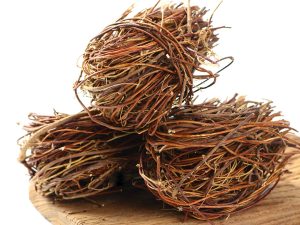
Purple Nanmu, a plant of the genus Nanmu in the family Lauraceae, is distributed throughout regions south of the Yangtze River basin. Its leaves and roots are used medicinally, known respectively as Purple Nanmu leaves and Purple Nanmu roots. Purple Nanmu leaves have the effects of regulating qi, warming the stomach, dispelling dampness, and resolving blood stasis; they are primarily used to treat qi stagnation with epigastric and abdominal distension and pain, edema caused by beriberi, and muscle cramps.Purple Nanmu root promotes blood circulation, dispels blood stasis, regulates qi, reduces swelling, and induces labor; it is primarily used to treat traumatic injuries, edema and abdominal distension, and post-term pregnancy.

Purple Nanmu
Purple Nanmu, a plant of the genus Nanmu in the family Lauraceae, is distributed throughout regions south of the Yangtze River basin. Its leaves and roots are used medicinally, known respectively as Purple Nanmu leaves and Purple Nanmu roots. Purple Nanmu leaves have the effects of regulating qi, warming the stomach, dispelling dampness, and resolving blood stasis; they are primarily used to treat qi stagnation with epigastric and abdominal distension and pain, edema caused by beriberi, and muscle cramps.Purple Nanmu root promotes blood circulation, dispels blood stasis, regulates qi, reduces swelling, and induces labor; it is primarily used to treat traumatic injuries, edema and abdominal distension, and post-term pregnancy.
Chinese Name : 紫楠
Latin Name : Phoebe sheareri (Hemsl.) Gamble
Aliases : Loquat Tree, Small-leaved Tender Reed, Wild Loquat, Mountain Loquat
Nature, Flavor & Meridian Tropism : Leaves: Pungent in taste, slightly warm in nature. Roots: Pungent in taste, warm in nature.
Benefits & Efficacy
Benefits
1. Zinan leaves: Regulate qi, warm the stomach, dispel dampness, and resolve blood stasis. 2. Zinan roots: Promote blood circulation and resolve blood stasis, regulate qi and reduce swelling, and induce labor.
Indications
1. Zinan leaves: Primarily used to treat qi stagnation with epigastric and abdominal distension and pain, edema caused by beriberi, and muscle cramps. 2. Zinan root: Primarily used to treat trauma, edema and abdominal distension, and prolonged pregnancy beyond the due date.
Usage and Dosage
1. Zinan Leaves (1) Internal use: Decoct 15–30 g in water. (2) External use: Use an appropriate amount; decoct in water for steam baths or washing. 2. Zinan Root Internal use: Decoct 10–15 g (or 30–60 g of fresh material) in water.
Precautions
Patients requiring treatment with Chinese herbal medicine should first consult a licensed Traditional Chinese Medicine (TCM) hospital, where a TCM practitioner will conduct a professional pattern differentiation and prescribe an herbal formula.
Chemical Constituents
The branches and leaves of the Chinese camphor tree contain essential oils. The seeds contain oil, which includes lauric acid, myristic acid, palmitic acid, hexadecenoic acid, stearic acid, oleic acid, linoleic acid, linolenic acid, and decanoic acid. The roots contain essential oils.
Relevant Discussions
1. *Flora of Medicinal Plants of Tianmu Mountain*: “(Phillyrea leaves) warm the stomach and regulate qi.”
2. *Catalog of Traditional Chinese Medicine Resources in Zhejiang*: “(Phillyrea leaves) decocted as a wash for treating muscle cramps and foot swelling.”
Applications
Clinical Applications
1. Phalaenopsis Leaf
For treating edema caused by dampness and water retention, as well as abdominal distension due to qi reversal: 30 g of Phalaenopsis leaf, 15–18 g each of Acorus tatarinowii root, Rosa rugosa root, and Rosa multiflora root, and 3 slices of old ginger. Decoct in water and take once daily before breakfast and once before dinner.(*Flora of Medicinal Plants of Tianmu Mountain*)
2. Phalaenopsis Root
(1) For contusions and bruises: 60 g of fresh Phalaenopsis root. Pound into a paste, decoct in water, and take with rice wine as a vehicle. (*Manual of Herbal Medicine*, Jiangxi)
(2) To induce labor: 30 g of fresh Phalaenopsis root. Decoct in water and take orally. (*Manual of Herbal Medicine*, Jiangxi)
Notes
References: [1] Editorial Committee of *Chinese Materia Medica*, State Administration of Traditional Chinese Medicine. *Chinese Materia Medica* 3 [M]. Shanghai: Shanghai Science and Technology Press, 1999: 90. [2] Nanjing University of Chinese Medicine. *Comprehensive Dictionary of Traditional Chinese Medicine* (2nd ed.) [M]. Shanghai: Shanghai Science and Technology Press, 2006: 3301–3302.
Processing & Preparation
Harvesting & Processing
1. Purple Nanmu Leaves: Can be harvested year-round and sun-dried. 2. Purple Nanmu Root: Can be harvested year-round and sun-dried.
Crude Drug Identification
Botanical Information
Botanical Classification
Zinan (Cinnamomum purpureum), a plant of the genus Cinnamomum in the family Lauraceae.
Morphological Characteristics
A large shrub to tree, 5–15 m tall. Twigs, petioles, and inflorescences are densely covered with yellowish-brown or grayish-black soft hairs or downy hairs.Simple, alternate leaves; petioles 1–2.5 cm long; leaf blades obovate, elliptic-obovate, or broadly oblanceolate, 8–27 cm long, 3.5–9 cm wide, with an acuminate or caudate apex, gradually narrowing at the base, glabrous above or hairy along the veins, and densely covered with yellowish-brown long soft hairs below.Panicles arise from the leaf axils of young branches; flowers are bisexual; perianth segments number 6, nearly equal in size, ovate, about 3 mm long, hairy on both surfaces; fertile stamens number 9, arranged in 3 whorls, with filaments hairy in each whorl, anthers 4-celled; filaments of sterile stamens are entirely hairy; ovary globose, glabrous, style usually straight, stigma inconspicuous or disc-shaped.The fruit is ovate, about 1 cm long, and 5–6 mm in diameter; the fruit stalk is slightly thickened and hairy; the persistent perianth segments are ovate, hairy on both surfaces, and loosely attached. Flowering occurs from April to May, and fruiting from September to October.
Distribution Area
It is distributed throughout areas south of the Yangtze River basin.
Growth Habits
It is a shade-tolerant species. It prefers a warm, humid climate and grows in shaded, moist, forested environments on valley slopes. It thrives in deep, well-drained, humus-rich, slightly acidic soils but can also adapt to neutral soils. It has relatively strong cold tolerance, but seedlings are susceptible to sunscald and frost damage.
Propagation Methods
Propagated by seed.
Cultivation Techniques
Collect seeds in early to mid-November; allow them to after-ripen in a pile; rub off the fruit peel; then use wood ash to remove the oils adhering to the seed coat. Because the seeds have a short shelf life and a thin seed coat—which will crack within a few days even when air-dried in the shade—it is best to sow them immediately after washing and light air-drying, or to store them mixed with sand. The germination rate is 80%–90%. Sow in rows from February to March,with a row spacing of 15–20 cm. The seeding rate is approximately 450 kg per hectare. Cover the seeds with 2 cm of soil and mulch with straw. When raising seedlings in a level, sunny area, provide shade for about 4 months. If seedlings are too dense, thin them out after rain. During the seedling stage, intensify care activities such as loosening the soil, weeding, watering, and applying fertilizer. Remove the shade structure in mid- to late September, and erect a heated shelter before winter to protect against the cold.In the second year, continue growing the plants in the same bed, or transplant larger seedlings in March, setting up support stakes immediately after planting.