Jinxiangcao, a name in traditional Chinese medicine. It refers to the whole plant or the roots of Phyllagathis cavaleriei (Levl. et Van.) Guill., a plant in the Bignoniaceae family. It is distributed in Hunan, Guangdong, Guangxi, Guizhou, Yunnan, and other regions. It has the therapeutic effects of clearing heat, cooling the blood, and draining dampness. It is commonly used to treat heat-toxin bloody dysentery, damp-heat leukorrhea, irregular menstruation, excessive uterine bleeding due to blood heat, hemorrhoidal bleeding caused by intestinal heat, and scrotal swelling in children.

Phyllagathis
Disclaimer: These statements have not been evaluated by the Food and Drug Administration (FDA). This product is not intended to diagnose, treat, cure, or prevent any disease. All references in this article to TCM syndrome differentiation, herbal medicines, teas, and decoctions are intended to promote TCM culture and are provided solely for educational and reference purposes.
Jinxiangcao, a name in traditional Chinese medicine. It refers to the whole plant or the roots of Phyllagathis cavaleriei (Levl. et Van.) Guill., a plant in the Bignoniaceae family. It is distributed in Hunan, Guangdong, Guangxi, Guizhou, Yunnan, and other regions. It has the therapeutic effects of clearing heat, cooling the blood, and draining dampness. It is commonly used to treat heat-toxin bloody dysentery, damp-heat leukorrhea, irregular menstruation, excessive uterine bleeding due to blood heat, hemorrhoidal bleeding caused by intestinal heat, and scrotal swelling in children.
Chinese Name : 锦香草
Latin Name : Phyllagathis caualeriei
Aliases : White-haired Tiger-tongue Felt, Tiger’s Ear, Stone Herb, Large Tiger’s Ear, Mountain Overlord
Authentic Producing Area : Hunan, Guangdong, Guangxi, Guizhou, Yunnan
Nature, Flavor & Meridian Tropism : Bitter and pungent in taste; cold in nature
Benefits & Efficacy
Benefits
Clears heat and cools the blood; drains dampness.
Indications
Used for heat-toxin bloody dysentery, damp-heat leukorrhea, irregular menstruation, blood-heat-induced metrorrhagia and menorrhagia, intestinal heat with hemorrhoidal bleeding, and scrotal swelling in children.
Usage and Dosage
Internal use: Decoct 15–30 g; or steep in wine. External use: Apply an appropriate amount, pounded into a paste; or use the decoction for washing.
Precautions
Not yet established.
Relevant Discussions
*Guizhou Herbal Medicine*: “Slightly cold in nature; pungent and bitter in taste.”
*Guizhou Herbal Medicine*: “Root: Clears heat, cools the blood, drains dampness, and tonifies deficiency. Treats menstrual disorders, heat-induced diarrhea, and bleeding from hemorrhoids.”
Applications
Related Compatibility
1. For intestinal heat-induced dysentery: Use 15–30 g of the herb. Simmer in water and drink the decoction. (*Guizhou Herbal Medicine*)
2. For menstrual disorders: Use 15–30 g of the herb. Steep in 250 g of wine. Take 15 g twice daily. (*Guizhou Herbal Medicine*)
3. For bleeding hemorrhoids: Use 15 g of the herb. Simmer in water and drink the decoction three times daily. (*Guizhou Herbal Medicine*)
Processing & Preparation
Harvesting & Processing
Harvest the whole plant in spring and summer; the roots can be harvested year-round. Wash thoroughly and use fresh or chop and sun-dry.
Botanical Information
Botanical Classification
A plant of the family Bignoniaceae, known as "Jinxiangcao."
Morphological Characteristics
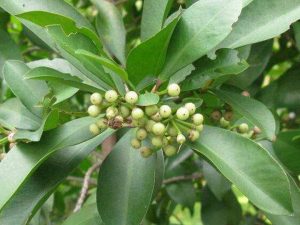
Herb, 10–15 cm tall. Stems erect or prostrate, rooting at each node, nearly fleshy, densely covered with long, coarse hairs, quadrangular, usually unbranched. Leaves opposite; petioles 1.5–9 cm long, densely covered with long, coarse hairs;leaf blades papery, broadly ovate, broadly elliptic, or round, apex broadly acute to nearly rounded, base cordate, 6–16 cm long, 4.5–14 cm wide, green on both surfaces or sometimes purplish-red on the underside; upper surface sparsely covered with rough, appressed, long, coarse hairs; lower surface bearing only the basal and lateral veins covered with spreading, long, coarse hairs;There are 7–9 basal veins; the veins on the upper surface are flat, while those on the lower surface are raised. The inflorescence is an umbel, terminal; the main peduncle is 4–17 cm long, covered with long, coarse hairs, rarely nearly glabrous; the bracts are obovate or nearly laterally lanceolate, covered with coarse hairs, usually only 4 in number, about 1 cm long or longer;Both the pedicel and calyx are covered with chaff; the calyx is funnel-shaped and four-angled, with broadly ovate lobes; the petals are pink to purple, slightly oblique at the upper part, and abruptly pointed at the apex; the stamens are 4, nearly equal in length, with anthers bearing small tubercles or no distinct tubercles at the base, and the connectives extending downward to form short spurs; the ovary is cup-shaped, with a crown at the apex.Capsule, with a 4-lobed crown at the apex, protruding beyond the persistent calyx; the persistent calyx bears 8 longitudinal ribs; the fruit stalk is elongated and covered with chaff. Flowering period: June–August; fruiting period: July–September.
Distribution Area
Distributed in Hunan, Guangdong, Guangxi, Guizhou, Yunnan, and other areas.
Copyright: Excerpt from Internet, Copyright belongs to the Original Author and all original sources, This article was shared by DeDe on August 2, 2026, Please credit the source and include a link to the original article when reposting.
Terminology Proofreading: [Cheng Bo] | August 2, 2026 Reviewed by: [Wang Zhongxiang, Associate Chief TCM Physician (China)] | August 2, 2026
Correct Content Errors: Errors may occur during the writing, editing, translation, and publication of website content. If you find any errors or inaccurate information in this article, please feel free to Contact Us to report them, and we will correct them promptly.
FDA Disclaimer: The descriptions of the efficacy of Chinese herbal medicines, herbal teas, decoctions, and formulas, as well as the content on Traditional Chinese Medicine (TCM) diagnostic theory and traditional TCM therapies contained on this site, are intended solely for the purpose of popularizing TCM culture and serving as an educational reference; they do not constitute medical diagnosis or treatment advice. Please do not attempt to use these products on your own without proper guidance. These statements have not been evaluated by the Food and Drug Administration. This product is not intended to diagnose, treat, cure, or prevent any disease. If you are experiencing any physical discomfort, please consult a licensed healthcare professional and seek treatment at a reputable medical institution. This platform assumes no responsibility for any consequences resulting from the use of herbs or formulas by any individual based on the information provided on this site. Please read Medical Disclaimer.