Polygala, a name in traditional Chinese medicine. It refers to the dried roots of Polygala tenuifolia Willd. or Polygala sibirica L., plants belonging to the genus Polygala in the family Polygalaceae. It has the effects of calming the mind and enhancing cognitive function, harmonizing the heart and kidneys, eliminating phlegm, and reducing swelling.It is primarily used to treat insomnia and frequent dreaming caused by a lack of communication between the heart and kidneys, as well as forgetfulness, palpitations, mental confusion, difficult expectoration, abscesses and swellings, and breast swelling and pain.

Polygala
Polygala, a name in traditional Chinese medicine. It refers to the dried roots of Polygala tenuifolia Willd. or Polygala sibirica L., plants belonging to the genus Polygala in the family Polygalaceae. It has the effects of calming the mind and enhancing cognitive function, harmonizing the heart and kidneys, eliminating phlegm, and reducing swelling.It is primarily used to treat insomnia and frequent dreaming caused by a lack of communication between the heart and kidneys, as well as forgetfulness, palpitations, mental confusion, difficult expectoration, abscesses and swellings, and breast swelling and pain.
Chinese Name : 远志
Latin Name : Polygalae Radix
Aliases : Tao Rao, Zhu Qiao, Ji Wan, Xiao Cao, Xi Cao, Xian’er Cha, Xiao Cao Gen, Shen Sha Cao
Authentic Producing Area : Shanxi, Shaanxi, Hebei, Henan
Nature, Flavor & Meridian Tropism : Taste: bitter, pungent; Nature: warm; Enters the Heart, Kidney, and Lung meridians
Benefits & Efficacy
Benefits
Calms the mind and enhances mental clarity; facilitates communication between the Heart and Kidney meridians; eliminates phlegm; reduces swelling.
Indications
Insomnia and frequent dreaming caused by a lack of communication between the Heart and Kidney meridians; forgetfulness and palpitations; mental confusion; difficult expectoration; sores, abscesses, and toxic swellings; and breast swelling and pain.
Usage and Dosage
Internal use: Decocted as a soup, 3–10 g; infused in wine or incorporated into pills or powders. External use: Ground into a powder and applied as a paste mixed with wine.
Precautions
1. Use Polygala with caution in cases of excess heat or internal phlegm-fire, as well as in patients with gastric ulcers or gastritis. 2. Polygala is best combined with Poria, Winter Mallow Seeds, and Dragon Bone. 3. Polygala is incompatible with Pearl, Lepidium, Cockroach, Chinese Clam, and Grubs. 4. The saponin components in Polygala can be precipitated by the tannins in Panax notoginseng in solution, thereby weakening or eliminating its effects and affecting therapeutic efficacy; therefore, they should not be used together. 5. When Polygala is used in combination with sedatives or anesthetics, the dosage should not be excessive. 6. Vitamin C can break down the glycosides in Polygala into aglycones and sugars, thereby affecting therapeutic efficacy; therefore, they should not be used together.
Chemical Constituents
This product contains saponins, as well as polygonate, alkaloids, polygonate alcohol, fine-leaf polygonate alkaloid, fatty oil, and resin.
Pharmacological Actions
This product possesses pharmacological effects including sedative and hypnotic action, antidepressant effects, improvement of learning and memory, enhancement of cardiac function, antitussive and expectorant effects, inhibition of gastrointestinal motility, stimulation of uterine smooth muscle, treatment of diabetes and its complications, anti-inflammatory effects, and antitumor effects.
Relevant Discussions
1. *Shennong Bencao Jing*: “Treats coughing and vomiting caused by internal injury; replenishes deficiencies; dispels pathogenic factors; clears the nine orifices; enhances wisdom; sharpens hearing and vision; improves memory; strengthens willpower; and doubles physical strength.”
2. *Mingyi Bielu*: “It calms the heart’s qi, stops palpitations, nourishes essence, dispels qi stagnation beneath the heart and in the diaphragm, alleviates internal heat in the skin, and treats sallow complexion.”
3. *Yao Pin Hua Yi*: “Yuanzhi has a pungent, heavy, and potent flavor; it enters the Heart meridian to open the orifices and is a dispersing herb.Whenever phlegm and saliva are trapped in the heart, obstructing the heart orifices and causing excessive heat in the heart qi, this manifests as mental dullness, slurred speech, restless sleep, confusion and fear, forgetfulness, nightmares, and “guest-offense” in children. By temporarily resolving phlegm and unblocking the orifices to restore the flow of heart qi, mental confusion will naturally subside.”
Applications
Clinical Applications
1. To treat restlessness of the mind, insomnia, and palpitations caused by a lack of communication between the heart and kidneys, it is often used in combination with sedative and tranquilizing herbs such as Poria Sclerotium, Dragon’s Teeth, and Cinnabar, as in the Polygala Pill (from *Zhang’s Comprehensive Treatise on Medicine*);For treating forgetfulness, it is often combined with Ren Shen, Fu Ling, and Chang Pu, as in the Kai Xin San (from *Qian Jin Fang*); if Fu Shen is added to this formula, it becomes the Bu Wang San (from *Zheng Zhi Zun Sheng*).
2. For treating epileptic fainting, convulsions, and spasms, it can be combined with herbs that resolve phlegm and subdue wind, such as Pinellia, Gastrodia, and whole scorpion; for treating episodes of infantile convulsions and mania, it is often used in combination with herbs that eliminate phlegm and open the orifices, such as Acorus, Curcuma, and white alum.
3. For treating excessive, viscous phlegm that is difficult to cough up or expel, or for external invasion by wind-cold with cough and copious phlegm, it is often used in combination with Apricot Kernel, Fritillary Bulb, Trichosanthes Fruit, and Platycodon Root.
4. For treating abscesses, boils, and toxic sores, as well as breast swelling and pain, it is effective both when taken internally and applied externally. For internal use, it can be taken alone as a powder, washed down with rice wine. For external use, steam it over water until soft, add a small amount of rice wine, pound it into a paste, and apply to the affected area.
Related Compatibility
1. Polygala combined with Acorus: Although both herbs enter the Heart Meridian and possess the ability to eliminate phlegm and open the orifices, Acorus tends to use its pungent nature to disperse phlegm-dampness, while Polygala tends to use its bitter nature to descend phlegm that has rebelled upward and obstructed the orifices.When combined, these two herbs allow qi to flow smoothly and clear blockages; qi and blood no longer rise excessively, phlegm and turbidity dissipate without obscuring the clear orifices, and mental clarity is restored.This formula is indicated for mental confusion, stupor with inability to speak, or mania, mania-epilepsy, and convulsions caused by phlegm-qi surging upward and obscuring the heart orifices. It is also used for palpitations, forgetfulness, anxiety, insomnia, deafness, and blurred vision resulting from phlegm-turbidity and qi stagnation affecting mental clarity.
2. Polygala combined with Red Poria: Red Poria calms the heart and soothes the spirit; Polygala root connects the heart and kidneys, calming the spirit and enhancing mental clarity. When used together, heart yang descends to the kidneys, and kidney yin ascends to the heart, resulting in normal sleep and sound memory. This combination is suitable for palpitations, shortness of breath, and insomnia caused by a lack of communication between the heart and kidneys.
3. Polygala combined with Lotus Seed Heart: Polygala can regulate kidney qi, allowing it to ascend to the heart, thereby calming the spirit and enhancing mental clarity; Lotus Seed Heart clears heart heat and facilitates communication between the heart and kidneys. When used together, these two herbs both clear heart heat and nourish kidney vitality, promoting communication between the heart and kidneys. This combination is suitable for insomnia at night, or conditions such as frequent dreaming and nocturnal emissions resulting from a lack of communication between the heart and kidneys.
4. Polygala combined with Curcuma: Both herbs have the effect of relieving depression; Polygala can resolve phlegm and calm the spirit, while Curcuma can cool the blood and clear the heart. When combined, they have the effects of relieving depression, clearing the heart, and eliminating restlessness. This combination is suitable for treating palpitations, anxiety, forgetfulness, and mental confusion caused by phlegm-qi stagnation.
5. Polygala combined with Platycodon: Both herbs can eliminate phlegm and relieve cough; Polygala also relieves depression, while Platycodon promotes the proper dispersion of lung qi. When used together, their efficacy in eliminating phlegm and relieving cough is remarkable. This combination is suitable for coughs with excessive phlegm caused by stagnation of phlegm-qi and impaired dispersion of lung qi.
Medicinal Identification
1. Polygala and Processed Polygala: Both are different processed varieties of Polygala. Due to differences in processing methods, their therapeutic effects have distinct emphases. Polygala functions to calm the mind and enhance cognitive function, harmonize the heart and kidneys, eliminate phlegm, and reduce swelling. It is used for insomnia with frequent dreaming, forgetfulness, palpitations, and mental confusion caused by disharmony between the heart and kidneys, as well as for difficult-to-expel phlegm, abscesses and swellings, and breast swelling and pain.Processed Polygala, on the other hand, not only moderates its drying nature but also eliminates the numbing taste and prevents throat irritation. It primarily calms the mind and enhances mental clarity, and is frequently used for restlessness, palpitations, insomnia, and forgetfulness.
2. Polygala and Poria: Both herbs calm the mind and enhance mental clarity. Polygala nourishes the heart and kidneys to dispel stagnation, eliminate phlegm, and open the orifices; it is particularly suited for treating mental disorders caused by excessive worry or phlegm obstructing the heart orifices. Poria tonifies the heart and spleen, promotes diuresis, and drains dampness; it is particularly suited for treating mental disorders caused by deficiency of both the heart and spleen or by dampness overwhelming the heart.Both herbs can also resolve phlegm and are suitable for treating coughs with excessive phlegm. However, Polygala tends to disperse blood stasis and resolve phlegm, making it more appropriate for thick phlegm that is difficult to expectorate; Poria tonifies qi, drains dampness, and resolves phlegm, making it suitable for copious, thin, and easily expectorated phlegm. Additionally, Polygala has the effect of unblocking stagnation and dispersing abscesses and swellings, while Poria has the function of tonifying the spleen, promoting diuresis, and reducing swelling.
Related Medicines
Polygala Tincture.
Related Prescriptions
Polygala Pills (from *Formulas of the Bureau of Harmonious Medicines*), Kaixin Powder (from *Thousand Gold Prescriptions*), Polygala, Scallion, and Honey Cakes (from *Essence of Ancient Formulas*)
Medicinal Diet Therapy
Polygala and Jujube Seed Porridge
1. Benefits: This porridge has the effects of calming the mind, soothing the spirit, and enhancing brain function and cognitive abilities. It can treat symptoms such as palpitations, insomnia, and forgetfulness caused by blood deficiency in the elderly.
2. Ingredients: 15g Polygala, 10g roasted jujube seeds, 75g japonica rice.
3. Preparation: Rinse the japonica rice thoroughly, place it in a pot with an appropriate amount of water, add the washed Polygala and jujube seeds, bring to a boil over high heat, then reduce to low heat and simmer until it becomes porridge.
4. Usage: Can be consumed as a late-night snack.
Notes
Patients requiring treatment with traditional Chinese medicine should first consult a licensed TCM hospital, where a TCM practitioner will conduct a professional diagnosis and prescribe the appropriate herbal formula.
Processing & Preparation
Harvesting & Processing
Harvest in spring or autumn; remove fibrous roots and soil, then sun-dry or extract the woody core and sun-dry.
Processing Methods
1. Polygala: Take the raw herb, remove impurities, rinse lightly, moisten thoroughly, remove the pith, cut into sections, and dry.
2. Processed Polygala: Take licorice, add an appropriate amount of water to prepare a decoction, add the cleaned Polygala sections, and simmer over low heat until the liquid is completely absorbed; remove and dry. Use 6 kg of licorice per 100 kg of Polygala sections.
3.Roasted Polygala: Take the processed Polygala flesh, place it in a hot pan, and roast over high heat until the surface is charred black and the interior is dark brown. Remove, sprinkle with a small amount of clean water to extinguish any embers, and sun-dry.
4. Honey-coated Polygala: Dilute refined honey with an appropriate amount of boiling water, add the cleaned Polygala segments, mix thoroughly, and let stand until thoroughly moistened. Place in a pan, heat over low heat, and stir-fry until the mixture no longer sticks to the hands. Remove and let cool.For every 100 kg of prepared Polygala segments, use 25 kg of refined honey.
5. Cinnabar-coated Polygala: Moisten the prepared Polygala with water, sprinkle with fine cinnabar powder, mix thoroughly, and air-dry. For every 100 kg of prepared Polygala, use 2 kg of cinnabar.
Storage Methods
Store in a dry container. Keep processed Polygala, stir-fried Polygala, honey-processed Polygala, and cinnabar-processed Polygala tightly sealed in a cool, dry place to prevent mold and insect infestation.
Crude Drug Identification
Properties of Crude Drugs
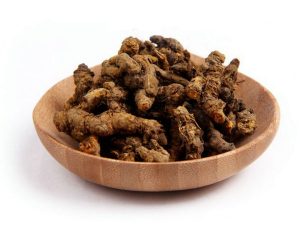
The root is cylindrical, slightly curved, 3–15 cm long, and 0.3–0.8 cm in diameter.The surface is grayish-yellow to grayish-brown, with relatively dense and deeply sunken transverse and longitudinal wrinkles and fissures; in older roots, the transverse wrinkles are denser and more deeply sunken, appearing slightly nodular. The texture is hard and brittle, breaking easily; the cross-section shows a brownish-yellow cortex and a yellowish-white xylem, with the cortex easily separable from the xylem. It has a faint odor, a bitter and slightly pungent taste, and causes a scratchy sensation in the throat when chewed.
Properties of Processed Slices
1. Polygala: Cylindrical segments with a grayish-yellow to grayish-brown outer surface featuring transverse wrinkles; the cross-section is brownish-yellow. It has a faint odor, a bitter and slightly pungent taste, and causes a scratchy sensation in the throat when chewed.
2. Processed Polygala: Resembles Polygala segments but has a slightly sweet taste.
3. Roasted Polygala: Resembles Polygala segments; the surface is charred black, and the inner surface is charred brown.
4. Honey-coated Polygala: Resembles Polygala segments; the color is darker, and it has a sweet taste.
5. Cinnabar-coated Polygala: Resembles Polygala segments; the exterior is coated with fine cinnabar powder.
Botanical Information
Botanical Classification
Plants of the genus Polygala in the family Polygalaceae, including Polygala tenuifolia and Polygala ovata.
Morphological Characteristics
1. Polygala: A perennial herb, 25–40 cm tall. The root is cylindrical, long, and slightly curved. Stems grow in clumps from the base; they are slender and cylindrical, hard in texture, greenish in color, and highly branched toward the top.Leaves are simple and alternate, with short or nearly absent petioles; leaf blades are linear, 1–3 cm long and 1.5–3 mm wide, with acute tips, gradually narrowing at the base, entire margins, and glabrous or slightly pubescent. In spring, a raceme 5–12 cm long emerges from the stem apex, bearing small, sparsely arranged flowers; there are 5 sepals, 2 of which are petal-like and greenish-white;3 petals, pale purple, one of which is larger, keel-like, with a tassel-like appendage at the apex; 8 stamens, filaments fused at the base; 1 pistil, ovary obovate, flattened, 2-chambered, style curved, stigma 2-lobed.The capsule is flat, circular-inverted heart-shaped, 4–5 mm long and wide, green, smooth, with narrowly winged margins, glabrous, bearing persistent sepals at the base, and splitting along the margins when mature. The seeds are ovate, slightly flattened, brownish-black, and densely covered with white tomentum. Flowering occurs from May to July; fruiting occurs from June to August.
2. Ovate-leaved Polygala: Morphologically similar to Polygala, but distinguished by its small lower leaves, which are ovate, approximately 6 mm long and 4 mm wide, with a blunt apex and a short point;the upper leaves are large, lanceolate or elliptic-lanceolate, 1–2 cm long, 3–6 mm wide, green, covered with short soft hairs, with a blunt apex and a short, bony point, a wedge-shaped base, entire margins, and revolute margins.The raceme is axillary or pseudo-terminal; there are 3 petals, which are bluish-purple. The capsule is nearly heart-shaped, about 5 mm in diameter, with a slightly notched apex, narrow wings, and sparsely covered with short cilia.
Distribution Area
1. Polygala tenuifolia: Distributed in Northeast China, North China, Northwest China, as well as Shandong, Jiangsu, Anhui, Jiangxi, and other regions. 2. Polygala ovata: Distributed in Northeast China, North China, Northwest China, and Southwest China.
Growth Habits
It prefers a cool climate, dislikes high temperatures, and is drought-tolerant. It is best cultivated in sunny, well-drained sandy loam; clay loam and calcareous loam are also suitable. However, it should not be planted in clay or low-lying, waterlogged areas.
Propagation Methods
Propagation is by seed, either by direct seeding or by raising seedlings and transplanting them.
Cultivation Techniques
1. Seed Propagation: Harvest seeds when the capsules are 70–80% mature. For direct seeding, sow in mid- to late April for spring planting, or mid- to late October or early November for fall planting. Make shallow furrows with a row spacing of 20–30 cm. Sow in rows, cover with 1.5–2 cm of soil, lightly firm the soil, and water thoroughly. Seedlings begin to emerge 15 days after sowing; fall-sown seeds will emerge the following spring.
2. Seedling Rearing and Transplanting: In early to mid-March, sow seeds in rows on a seedbed and cover with 1 cm of soil; seedlings will emerge in about 10 days. When seedlings reach a height of about 5 cm, transplant them at a spacing of (15–20) cm × (3–6) cm between rows and plants. Choose a cloudy or rainy day or the afternoon for transplanting.
3. Field Management: Polygala plants are short and stunted, so frequent cultivation and weeding are necessary. Aside from moderate watering during seed germination and the seedling stage, frequent watering should be avoided during the later growth stages. Apply fertilizer once each year in spring and winter, as well as in April and May, focusing primarily on phosphate fertilizers.