Purslane, a name in traditional Chinese medicine, refers to the dried aerial parts of Portulaca oleracea L., a plant belonging to the genus Portulaca in the Portulacaceae family.It is produced in most regions of the country. This product has the effects of clearing heat and detoxifying, cooling the blood and stopping bleeding, and relieving dysentery. It is primarily used to treat heat-toxin bloody dysentery, boils, carbuncles, eczema, erysipelas, snake and insect bites, bloody stools, bleeding from hemorrhoids, and abnormal uterine bleeding.

Purslane
Purslane, a name in traditional Chinese medicine, refers to the dried aerial parts of Portulaca oleracea L., a plant belonging to the genus Portulaca in the Portulacaceae family.It is produced in most regions of the country. This product has the effects of clearing heat and detoxifying, cooling the blood and stopping bleeding, and relieving dysentery. It is primarily used to treat heat-toxin bloody dysentery, boils, carbuncles, eczema, erysipelas, snake and insect bites, bloody stools, bleeding from hemorrhoids, and abnormal uterine bleeding.
Chinese Name : 马齿苋
Latin Name : Portulacae Herba
Aliases : Purslane, Horse Amaranth, Horse-tooth Herb, Horse-tooth Dragon Sprout, Five-Element Herb, Five-Direction Herb, Longevity Herb, Nine-Headed Lion Herb, Ash Amaranth, Horse-Trampled Herb, Soy-Sauce-Leaf Herb, Peace Herb, Sour Amaranth, Bean-Plate Herb, Melon-Seed Herb, Longevity Amaranth,Soybean-Leafed Purslane, Snake Grass, Sour-Flavored Vegetable, Sows’ Grass, Lion Grass, Ground Purslane, Horse-Snake Vegetable, Ant Vegetable, Longevity Vegetable, Drought-Tolerant Vegetable
Authentic Producing Area : Produced in most regions of the country
Nature, Flavor & Meridian Tropism : Cold in nature, sour in taste; enters the Liver and Large Intestine meridians
Benefits & Efficacy
Benefits
Clears heat and detoxifies; cools the blood and stops bleeding; treats dysentery.
Indications
Mainly used for heat-toxin bloody dysentery, boils, carbuncles, and furuncles; eczema; erysipelas; snake and insect bites; bloody stools; bleeding from hemorrhoids; and metrorrhagia and menorrhagia.
Usage and Dosage
1. Internal use: Decoct 9–15 g; use 30–60 g of fresh herb. 2. External use: Apply an appropriate amount, pounded and applied to the affected area.
Precautions
1. Use with caution in cases of spleen and stomach deficiency-cold or loose stools due to intestinal slippage. 2. Should not be consumed with soft-shelled turtle.
Chemical Constituents
This product primarily contains organic acids (such as oxalic acid, malic acid, and citric acid), triterpenes (such as β-amyrin and lupeol), and glycosides (such as betaine and isobetaine).It also contains dopamine, poly-ω-3 unsaturated fatty acids, flavonoids, amino acids, monosaccharides, and polysaccharides.
Pharmacological Actions
This product exhibits antimicrobial, anti-inflammatory, hypoglycemic, and lipid-lowering effects.
Relevant Discussions
1. *Newly Revised Materia Medica*: “It is used to treat various swellings, fistulas, and warts; pound and apply topically. Drinking the juice treats gastric reflux, various types of dysuria, bleeding from wounds, and blood stasis masses; it is particularly effective for children.”
2. *Compendium of Materia Medica*: “It disperses blood stasis and reduces swelling, promotes bowel movements and facilitates childbirth, detoxifies and relieves dysuria, and treats postpartum night sweats.”
Applications
Clinical Applications
1. To treat heat-toxin bloody dysentery, cook it into porridge with japonica rice and consume on an empty stomach, such as purslane porridge (*Shenghui Fang*); to treat postpartum bloody dysentery, *Jingxiao Chuanbao* recommends using only the fresh herb—pounded into juice, mixed with honey, and taken orally;To treat damp-heat in the large intestine, abdominal pain with diarrhea, or bloody and purulent stools accompanied by tenesmus and a sensation of incomplete evacuation, combine it with herbs such as Scutellaria baicalensis and Coptis chinensis.
2. To treat severe blood heat and toxin accumulation, abscesses, boils, and sores, as well as erysipelas with swelling and pain, this herb may be used alone to prepare a decoction for both internal consumption and external washing, followed by applying a paste made from fresh, pounded leaves externally, such as the purslane paste (from *Yizong Jinjian*); it may also be combined with other heat-clearing and detoxifying herbs.
3. To treat uncontrolled blood flow due to blood heat, such as metrorrhagia and menorrhagia, the herb may be pounded to extract its juice and taken orally; if used to treat damp-heat in the large intestine, such as bloody stools or itchy bleeding, it may be combined with herbs such as Sanguisorba officinalis, Sophora japonica pods, and Eupatorium fortunei.
Related Compatibility
1. Purslane combined with Iron Purslane: Both herbs possess heat-clearing and detoxifying properties; Purslane is particularly effective at cooling the blood, stopping bleeding, and treating dysentery, while Iron Purslane excels at draining dampness, astringing, and arresting bleeding. When used together, they enhance the effects of clearing heat, cooling the blood, and treating dysentery, making this combination suitable for damp-heat diarrhea and heat-toxin dysentery.
2. Purslane combined with Smilax glabra: Purslane primarily clears heat and cools the blood, while Smilax glabra excels at detoxifying and eliminating dampness. When combined, these two herbs are particularly effective at clearing heat, detoxifying, eliminating dampness, and relieving itching. This combination is suitable for conditions such as damp sores, leukorrhea, and genital itching caused by the accumulation of damp-heat.
3. Purslane combined with Notopterygium: Purslane has a nature that is good at clearing and draining; it can clear heat, eliminate toxins, disperse nodules, and reduce swelling. Notopterygium has a nature that is good at ascending and dispersing; it can release stagnation. The combination of these two herbs embodies the principle of “releasing pent-up fire,” working together to disperse stagnant fire, clear heat, and eliminate toxins. This combination is suitable for swollen and painful scrofula caused by stagnation of phlegm-fire.
Medicinal Identification
1. Purslane and Whitehead: Both herbs are cold in nature and enter the Large Intestine Meridian; they are both effective at clearing heat and detoxifying, cooling the blood, and stopping dysentery, and can be used together to treat heat-toxin bloody dysentery. However, purslane is sour and cold with astringent properties, excelling at stopping bleeding and dysentery, and is particularly effective for treating heat-toxin dysentery with pus and blood in the stool;whereas Whitehead’s Root is bitter and cold in nature with descending and purgative properties; it is particularly effective at clearing damp-heat from the stomach and intestines and heat-toxin from the blood, making it an excellent remedy for heat-toxin bloody dysentery. Additionally, Purslane is commonly used to treat heat-toxin sores and ulcers, metrorrhagia and menorrhagia, and hematochezia; Whitehead’s Root can also be used for symptoms such as genital itching and leukorrhea.
2. Purslane and Qinpi: Both herbs are cold in nature and enter the Large Intestine and Liver meridians. They function to clear heat, resolve toxins, and stop dysentery, and can both be used to treat heat-toxin dysentery and damp-heat diarrhea.However, purslane is sour and cold in nature and is particularly effective at clearing the intestines and cooling the blood; it is commonly used to treat bloody dysentery caused by heat toxins. Qinpi, on the other hand, is bitter, astringent, and cold in nature; it both clears heat and dries dampness, possessing the advantage of being astringent without retaining pathogenic factors, and is commonly used to treat damp-heat diarrhea and dysentery accompanied by tenesmus and a sensation of incomplete evacuation.In addition, purslane can clear heat and reduce swelling, as well as cool the blood and stop bleeding; therefore, it is effective for treating heat-toxin sores and ulcers, metrorrhagia and menorrhagia, and blood in the stool or from hemorrhoids. Qinpi can dry dampness and stop leukorrhea, as well as clear the liver and improve vision; it is effective for treating red and white leukorrhea and corneal opacities.
Related Medicines
Liyuanning Tablets, Heat-Clearing and Dysentery-Treating Pills, Eczema Powder, Skin Kang Wash, and Shenyanling Capsules.
Related Prescriptions
Purslane Porridge (from *Classified Materia Medica*, citing *Dietary Therapy Materia Medica*), Purslane Decoction (*Shenghui Formulas*).
Notes
Patients requiring treatment with traditional Chinese medicine should first consult a licensed TCM hospital, where a TCM practitioner will conduct a professional diagnosis and prescribe the appropriate herbal formula.
Processing & Preparation
Harvesting & Processing
Harvest in summer and autumn; remove residual roots and impurities, wash thoroughly, and sun-dry after lightly steaming or blanching.
Processing Methods
Remove impurities, wash thoroughly, moisten slightly, cut into sections, and dry.
Storage Methods
Store in a well-ventilated, dry place.
Crude Drug Identification
Identification
1. The powder of this product is grayish-green. Numerous calcium oxalate cluster crystals of varying sizes are present, with diameters ranging from 7 to 108 μm; the larger cluster crystals form larger masses with blunt edges. Calcium oxalate prismatic crystals are 8–69 μm wide and up to 125 μm long; some prismatic crystals are stacked to form cluster-like structures.The transverse walls of leaf epidermal cells are curved or relatively straight; the stomata are paracytic. Crystal-containing cells are often located adjacent to the vascular bundles and contain minute calcium oxalate cluster crystals.Most stone cells in the endocarp occur in groups; they are long fusiform or rectangular in shape, with slightly thickened walls, and visible pore grooves and pits. Seed coat cells are brownish-red or brownish-yellow; when viewed from the surface, they appear polygonal and star-shaped, with the surface densely covered with irregular small projections. Pollen grains are subglobose, 48–65 μm in diameter, with fine spiny striations on the surface and a short, transverse germination pore.
2. Take 2 g of the powdered sample, add 20 mL of water, and adjust the pH to 3–4 with formic acid. Cold-soak for 3 hours, filter, and evaporate the filtrate to dryness. Dissolve the residue in 5 mL of water to prepare the test solution.Separately, take 2 g of purslane reference material and prepare a reference solution using the same method. Perform thin-layer chromatography (General Chapter 0502): pipette 1–2 μL of each of the two solutions and spot them separately onto the same silica gel G plate. Develop the plate using a mobile phase of water-saturated n-butanol-glacial acetic acid-water (4:1:1) as the developing agent, develop the plate, remove it, air-dry, spray with a 0.2% indophenol ethanol solution, and heat at 110°C until the spots become clearly visible. In the test solution chromatogram, spots of the same color appear at positions corresponding to those in the reference herbal material chromatogram.
Properties of Crude Drugs
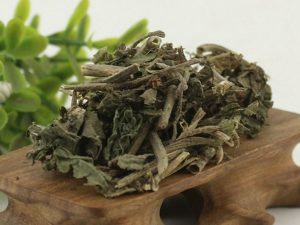
This product is mostly shriveled and curled, often clumped together. The stems are cylindrical, up to 30 cm long and 0.1–0.2 cm in diameter, with a yellowish-brown surface and distinct longitudinal grooves. The leaves are opposite or alternate and easily broken; intact leaves are obovate, 1–2.5 cm long and 0.5–1.5 cm wide;greenish-brown, with a blunt or slightly notched apex and entire margins. The flowers are small, with 3–5 blooming at the branch tips; they have 5 yellow petals. The capsule is conical, approximately 5 mm long, and contains numerous minute seeds. It has a faint odor and a slightly sour taste.
Properties of Processed Slices
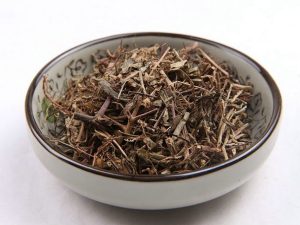
This product consists of irregular segments. The stem is cylindrical, with a yellowish-brown surface and distinct longitudinal grooves. The leaves are mostly fragmented; when flattened, intact leaves are obovate, with a blunt or slightly notched apex and entire margins. The capsule is conical and contains numerous minute seeds. It has a faint odor and a slightly sour taste.
Botanical Information
Botanical Classification
Portulaca oleracea, a plant of the genus Portulaca in the family Portulacaceae.
Morphological Characteristics
An annual herb; the entire plant is glabrous. The stems are prostrate or decumbent, spreading along the ground, highly branched, cylindrical, 10–15 cm long, and pale green or tinged with dark red.Stems are purplish-red; leaves are alternate, sometimes nearly opposite; leaf blades are flat, fleshy, obovate, and horse-tooth-shaped, 1–3 cm long and 0.6–1.5 cm wide, with a rounded or truncate apex (sometimes slightly concave), a wedge-shaped base, and entire margins; the upper surface is dark green, the lower surface is pale green or tinged with dark red, and the midrib is slightly raised; petioles are short and stout.Flowers are sessile, 4–5 mm in diameter, often clustered in groups of 3–5 at the branch tips, and fully open at noon; bracts 2–6, leaf-like, membranous, nearly whorled; sepals 2, opposite, green, helmet-shaped, flattened laterally, about 4 mm long, acuminate at the apex, with a keel-like ridge on the back, and fused at the base;Petals 5, rarely 4, yellow, obovate, 3–5 mm long, apex slightly concave, base connate; stamens usually 8 or more, ca. 12 mm long, anthers yellow; ovary glabrous, style slightly longer than stamens, stigma 4–6-lobed, linear.The capsule is ovoid, about 5 mm long, and dehisces by a cap; the seeds are minute, mostly oblate-spherical, blackish-brown, glossy, less than 1 mm in diameter, and bear small wart-like protrusions. Flowering occurs from May to August, and fruiting from June to September.
Distribution Area
It is found throughout China, from north to south. It is widely distributed in temperate and tropical regions worldwide.
Growth Habits
It prefers high humidity, is drought- and waterlogging-tolerant, and is sun-loving; it is suitable for cultivation in various fields and on slopes, with neutral to slightly acidic soils being optimal. Its germination temperature is 18°C, and the optimal growth temperature range is 20°C–30°C.
Propagation Methods
Propagated by seed or cuttings.
Cultivation Techniques
1. Seed Propagation: Use seeds collected from the wild the previous year or saved from cultivated plants. The seeds are extremely small, so the soil must be prepared meticulously. Keep the soil moist after sowing; seedlings will emerge in 7–10 days.
2. Cutting Propagation: Take cuttings from seedlings sown that year or from wild seedlings; it is best to select them from vigorous plants with abundant branching and strong growth, ensuring each cutting retains 3–5 nodes.Thoroughly prepare the soil before taking cuttings; apply ample, well-rotted farmyard manure during soil preparation. Plant at a density of 3 cm × 5 cm (spacing between plants and rows), with cuttings inserted about 3 cm deep into the soil. Maintain adequate moisture and provide appropriate shade after planting; the cuttings will take root within a week.