Sheep’s-ear Chrysanthemum, a name in traditional Chinese medicine. It refers to the roots and whole plant of Inulacappa (Buch.-Ham.) DC., a member of the Asteraceae family.It is distributed in Jiangxi, Fujian, Hunan, Guangxi, Guangdong, Sichuan, Yunnan, and other regions. It has the therapeutic effects of dispelling wind and cold, regulating qi and promoting diuresis, resolving phlegm and relieving cough, and reducing swelling and alleviating pain. It is commonly used for wind-cold colds, coughs, nervous headaches, stomach pain, rheumatic pain in the lower back and legs, swelling and pain from trauma, irregular menstruation, leukorrhea, and schistosomiasis.
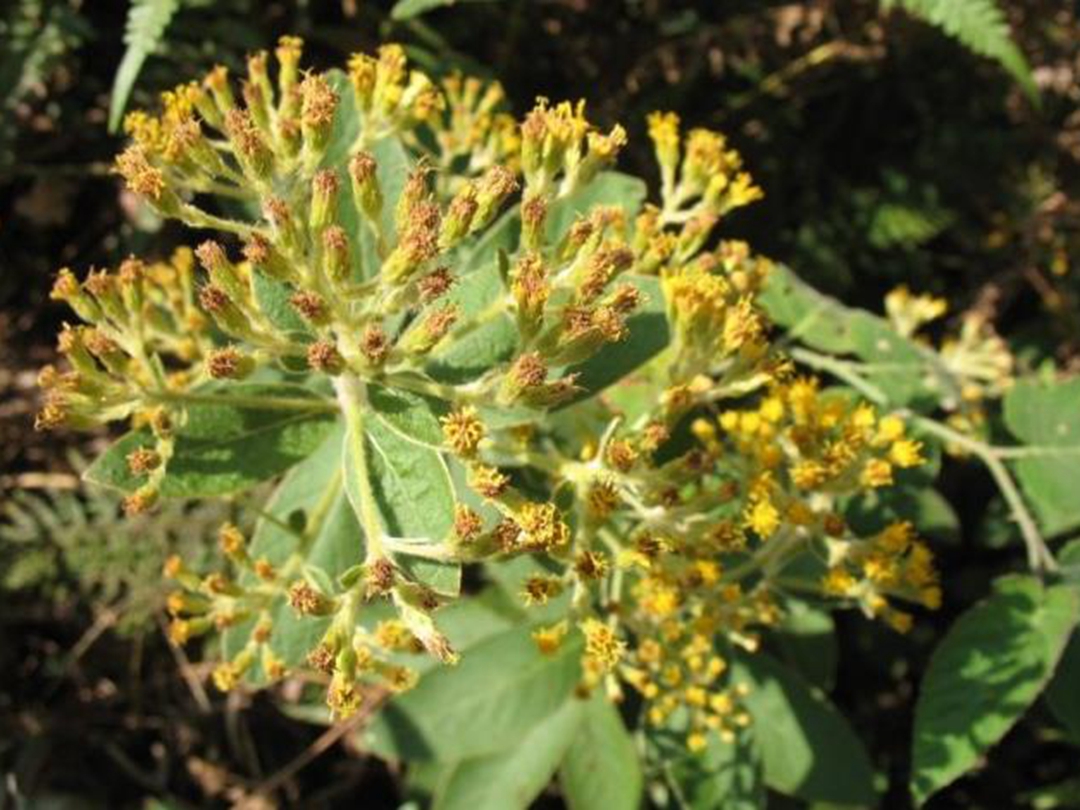
Sheep’s-ear Chrysanthemum
Sheep’s-ear Chrysanthemum, a name in traditional Chinese medicine. It refers to the roots and whole plant of Inulacappa (Buch.-Ham.) DC., a member of the Asteraceae family.It is distributed in Jiangxi, Fujian, Hunan, Guangxi, Guangdong, Sichuan, Yunnan, and other regions. It has the therapeutic effects of dispelling wind and cold, regulating qi and promoting diuresis, resolving phlegm and relieving cough, and reducing swelling and alleviating pain. It is commonly used for wind-cold colds, coughs, nervous headaches, stomach pain, rheumatic pain in the lower back and legs, swelling and pain from trauma, irregular menstruation, leukorrhea, and schistosomiasis.
Chinese Name : 羊耳菊
Aliases : White Ox Gallbladder, Daliwang, Hairy Bupleurum, Ye Xia Bai, Mountain Angelica
Nature, Flavor & Meridian Tropism : Taste: pungent, sweet, and slightly bitter; nature: warm. Enters the Liver, Lung, Spleen, and Stomach meridians
Benefits & Efficacy
Benefits
Dispels wind and cold, regulates qi and promotes diuresis, resolves phlegm and relieves cough, reduces swelling and alleviates pain.
Indications
Wind-cold common cold, cough, nervous headaches, stomach pain, rheumatic pain in the lower back and legs, swelling and pain from trauma, irregular menstruation, leukorrhea, schistosomiasis.
Usage and Dosage
Oral use: 15–30 g.
Precautions
Avoid sour and spicy foods while taking this herb.
Pharmacological Actions
1. Antibacterial effects. 2. Free radical scavenging effects.
Relevant Discussions
*New Selection of Practical Chinese Herbs from Guangxi*: “Dispels wind and relieves pain; regulates menstruation and promotes blood circulation; nourishes blood; and relieves exterior syndromes. Primarily used to treat contusions and bruises, fractures, rheumatic pain, irregular menstruation, anemia, diarrhea, dysentery, and bronchitis.”
Applications
Related Compatibility
1. For postpartum common cold: 18 g of Sheep’s-ear Chrysanthemum, 9 g of Chinese Schizonepeta, and 12 g of Wood Hibiscus; decoct and take orally. (*Formulas for Common Chinese Herbs*)
2. For gallstones and cholecystitis: 15 g each of Sheep’s-ear Chrysanthemum, White Flower Snake’s-tongue Grass, and Cowhide-soapwort; 30 g of Coin-shaped Grass; and 6 g of Stone Acorus. Decoct in water three times and take in divided doses. (*Formulas of Common Chinese Herbal Medicines*)
Notes
This herb has a strong odor; when taken orally alone, it often causes vomiting. It is typically simmered with pork bones or used in herbal formulas to prevent vomiting.
Processing & Preparation
Harvesting & Processing
Harvest the whole plant in summer and fall; dig up the roots in spring and fall. Wash thoroughly and use fresh or dry in the sun.
Processing Methods
Remove impurities from the raw herbal material, rinse with water, chop finely, dry, and sift out any dust or debris.
Crude Drug Identification
Properties of Crude Drugs
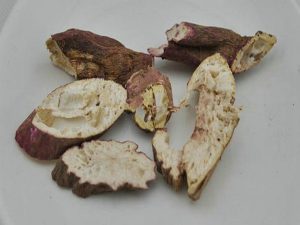
1. Whole Herb: 90–150 cm long; stem cylindrical, sparsely branched; surface grayish-brown to dark brown, with fine longitudinal striations and raised elliptical lenticels; leaf scars distinct, semilunar in shape; cortex easily peeled off. Hard in texture, breaks easily; fracture surface uneven.Leaves fall off easily and are often curled; when unfolded, they are narrowly oblong or nearly obovate, with small serrations along the margins, a gradually tapering or blunt apex, and a rounded or broadly cuneate base. The upper surface is yellowish-green with yellow coarse hairs, while the lower surface is yellowish-white and covered with white silky hairs.Occasionally bears corymbs composed of terminal or axillary capitula. The flowers are small, consisting of ray and disk flowers. The achenes are ribbed and pappus-bearing. It has a fragrant odor and a pungent, slightly bitter taste.
2. Root: The root crown retains a short, above-ground stem. The root is cylindrical and branched, 2–5 cm long and 0.3–1.5 cm in diameter.The surface is grayish-black or dark brown, with sparse fibrous roots or scars where fibrous roots have fallen off. The root bark is thin; when scraped, it reveals a grayish-brown, oily surface. The texture is hard; the cross-section of the xylem is grayish-yellow with scattered yellow oil spots, and the center of the root crown contains a spongy pith. It has a distinctive fragrance, which becomes more pronounced when the root is rubbed between the fingers. The taste is pungent and slightly bitter.
Botanical Information
Botanical Classification
Asteraceae family, genus Inula, species Inula capensis.
Morphological Characteristics
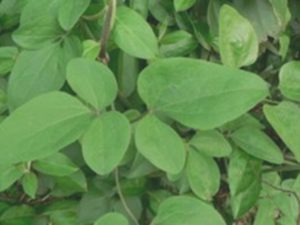
Subshrub. The rhizome is stout and highly branched. The stem is erect, 70–200 cm tall, stout, and entirely covered with dense, off-white or light brown, silky or cottony pubescence; it branches from the upper part or the middle, with all branches bearing numerous densely arranged leaves; after the lower leaves fall during flowering, axillary buds covered with white or off-white cottony hairs remain.Leaves more or less spreading, oblong or oblong-lanceolate; middle leaves 10–16 cm long, with petioles about 0.5 cm long; upper leaves gradually smaller and nearly sessile;All leaves are rounded or nearly wedge-shaped at the base, with a blunt or acute apex; the margins bear small, pointed teeth or shallow teeth; the upper surface is covered with dense, wart-like rough hairs at the base and denser hairs along the midvein, while the lower surface is covered with white or off-white, silky, thick tomentum; the midvein and 10–12 pairs of lateral veins are raised on the lower surface, and the reticulate venation is distinct.Capitula are obovate, 5–8 mm wide, numerous and densely clustered at the tips of stems and branches to form corymbose panicles; densely covered with silky tomentum. Linear bracts are present. The involucre is nearly campanulate, 5–7 mm long;the involucral bracts in about 5 layers, linear-lanceolate, the outer layer 3–4 times shorter than the inner layer, apex slightly pointed, outer surface covered with off-white or brownish silky tomentum. Florets 4–5.5 mm long; marginal florets with a small ligule bearing 3–4 lobes, or lacking a ligule and bearing 4 rudimentary stamens;the central florets are tubular, with triangular-ovate lobes at the upper part; the pappus is off-white, approximately as long as the corolla of the tubular florets, bearing more than 20 rough hairs. The achenes are oblong-cylindrical, about 1.8 mm long, covered with long, white, silky hairs. Flowering period: June–October; fruiting period: August–December.
Distribution Area
Jiangxi, Fujian, Hunan, Guangxi, Guangdong, Sichuan, Yunnan, and other regions.