Silver carp is a name used in traditional Chinese medicine. It refers to the flesh of the silver carp (Hypophthalmichthys molitrix (Cuvier et Valenciennes)), a member of the Cyprinidae family. It is found in the Yangtze, Pearl, Yellow, and Heilongjiang Rivers in China. It is believed to warm the middle burner, tonify qi, and promote diuresis. It is commonly used to treat chronic illness-induced physical weakness and edema.
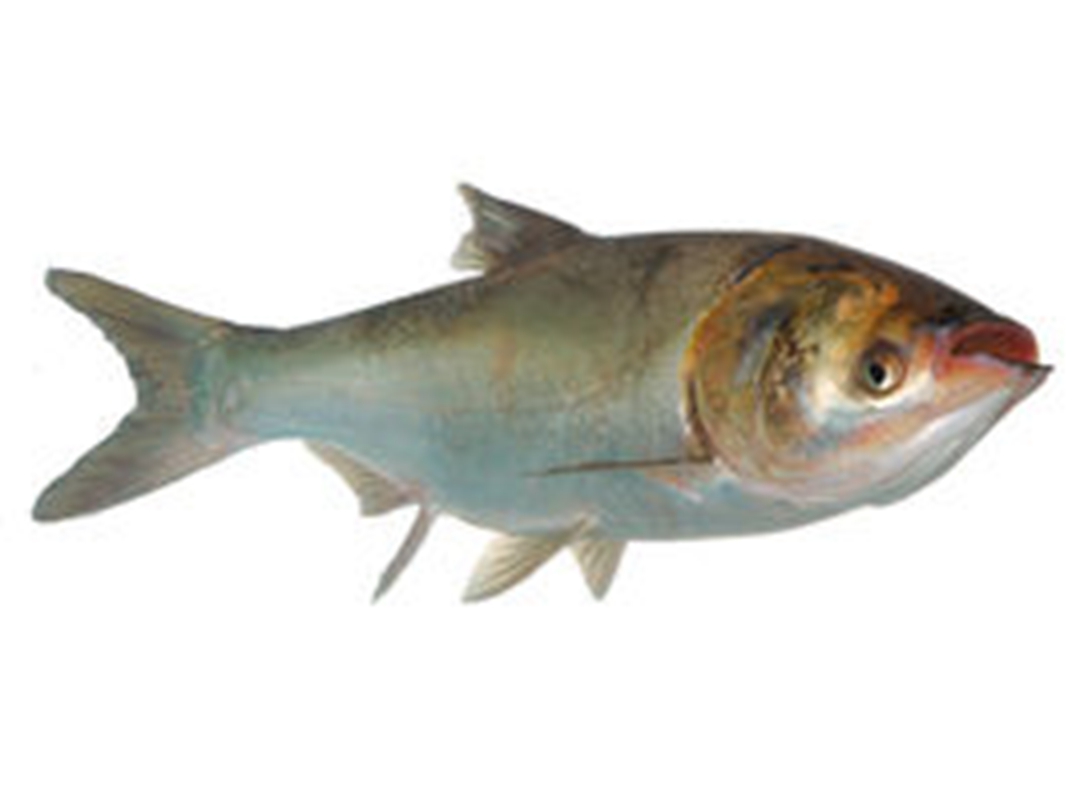
Silver Carp
Silver carp is a name used in traditional Chinese medicine. It refers to the flesh of the silver carp (Hypophthalmichthys molitrix (Cuvier et Valenciennes)), a member of the Cyprinidae family. It is found in the Yangtze, Pearl, Yellow, and Heilongjiang Rivers in China. It is believed to warm the middle burner, tonify qi, and promote diuresis. It is commonly used to treat chronic illness-induced physical weakness and edema.
Chinese Name : 鲢鱼
Aliases : White-footed Silver Carp, Silver Carp, White Silver Carp, "Yangpangzi," White-leaf
Nature, Flavor & Meridian Tropism : Sweet in taste, warm in nature. Enters the Spleen and Stomach meridians
Benefits & Efficacy
Benefits
Warms the middle burner, tonifies qi, and promotes diuresis.
Indications
Chronic illness with physical weakness, edema.
Usage and Dosage
Internal use: Cook and eat, 100–250 g.
Precautions
Use with caution in patients with smallpox, malaria, dysentery, eye diseases, and skin ulcers.
Pharmacological Actions
It has diuretic and antioxidant effects.
Relevant Discussions
1. *Dietary Compendium of Suixi Ju*: “Warms the stomach, tonifies qi, and nourishes the skin.” 2. *Compendium of Chinese Animal Medicines*: “Promotes diuresis. Primarily used to treat chronic illness-induced physical weakness and edema.”
Applications
Clinical Applications
Medicinal Dietary Therapy:
Silver Carp Head Stewed with Tofu:
Benefits: Clears heat, removes blood stasis, warms the stomach, and nourishes the brain. Highly effective for anemia, hypertension, chronic gastritis, vertigo, colds, and headaches.
Ingredients: 300g silver carp head, 250g tofu, 30g rehydrated shiitake mushrooms,100g green garlic, Shaoxing wine, red vinegar, sesame oil, scallions, ginger, garlic, spicy bean paste, white sugar, vegetable oil, salt, and MSG—all to taste.
Preparation: Rinse the silver carp head thoroughly. Cut the tofu into thick slices. Cut the green garlic into 3-centimeter-long segments. Peel and mince the scallions, ginger, and garlic. Heat oil in a wok over high heat, lightly pan-fry the fish head, then remove and set aside.Leave a small amount of oil in the wok and briefly sauté the minced scallions, ginger, and garlic along with 2 spoonfuls of bean paste. Add the shiitake mushrooms, fish head, tofu, rice wine, sugar, salt, and water. Cover and bring to a boil, then simmer over low heat for 15 minutes. Finally, add MSG, red vinegar, sesame oil, and the green garlic segments.
Usage: Serve with meals; portion size is at your discretion.
Related Compatibility
1. To treat low milk production after childbirth: Dice 200g of silver carp meat, then cook it into congee with 100g of millet and 50g of diced loofah. (From *Medicinal and Culinary Uses of Fish*)
2. To treat postpartum hematuria: Slice 200g of silver carp meat, add 5g of ginseng slices, 1g of angelica root, 3g of chuanxiong, and 50g of celery slices, then simmer into a soup and drink. (From *Medicinal and Culinary Uses of Fish*)
Processing & Preparation
Harvesting & Processing
Can be caught year-round. After catching, remove the scales and internal organs, wash thoroughly, and use fresh.
Crude Drug Identification
Properties of Crude Drugs
This species measures approximately 60 cm in length. Its body is laterally compressed and spindle-shaped, with fine scales. The back and upper part of the head are gray-green, while the sides and belly are silvery-white. The dorsal and caudal fins are the same color as the back. The remaining scales are pale and have a slight yellowish tint. The tail is deeply forked. The gill rakers are fused into a semilunar, spongy filter.
Botanical Information
Morphological Characteristics
The body is laterally compressed and slightly elevated, with a narrow abdomen; the ventral ridge extends from the pectoral fins directly to the anus. The head is large, measuring approximately one-quarter of the body length. The snout is short, blunt, and rounded, with a wide mouth. The eyes are small and located below the midline of the head. The pharyngeal teeth form a single row and are sandal-shaped and flat. The gill rakers are specialized and fused into a semilunar, spongy filter.The body is covered with small, round scales. The lateral line scales number 108–120 and form a broad, downward-curving arc. The dorsal fin consists of 3, 7 rays; it lacks spines, is relatively short, and its origin is approximately equidistant from the tip of the snout and the base of the caudal fin. The anal fin consists of 3, 12–13 rays; it is of medium length, and its origin lies posterior and inferior to the base of the dorsal fin.Pectoral fins: 7, 8; sublateral, extending to or slightly beyond the base of the pelvic fins. Pelvic fins: 1, 7–8; their origin is closer to the pectoral fins than to the anal fins, and they do not reach the anus. The caudal fin is deeply forked.The abdominal cavity is large, and the peritoneum is black. The swim bladder has two chambers; the anterior chamber is long and distended, while the posterior chamber is small and tapers to a point. The dorsal side of the body is dark gray, the ventral side is silvery-white, and the fins are pale gray.
Distribution Area
It is distributed in the Yangtze, Pearl, Yellow, and Heilongjiang Rivers and other water bodies in China.