White Discharge Herb is the name of a traditional Chinese medicine. It refers to the whole plant of Cardamine hirsuta L. (hairy cardamine) and Cardamine flexuosa With. (curved cardamine), both members of the Brassicaceae family. Cardamine hirsuta is distributed in Liaoning, Hebei, Shanxi, Shaanxi, Gansu, Shandong, and areas south of the Yangtze River; Cardamine flexuosa is distributed in Liaoning, Hebei, Shaanxi, Gansu, Henan, and areas south of the Yangtze River.It has the effects of clearing heat and draining dampness, calming the mind, and stopping bleeding. It is primarily used to treat damp-heat diarrhea and dysentery, heat-induced urinary disorders, leukorrhea, palpitations, insomnia, toothache caused by deficiency-heat, pediatric malnutrition, hemoptysis, hematochezia, and carbuncles.

White-banded Grass
White Discharge Herb is the name of a traditional Chinese medicine. It refers to the whole plant of Cardamine hirsuta L. (hairy cardamine) and Cardamine flexuosa With. (curved cardamine), both members of the Brassicaceae family. Cardamine hirsuta is distributed in Liaoning, Hebei, Shanxi, Shaanxi, Gansu, Shandong, and areas south of the Yangtze River; Cardamine flexuosa is distributed in Liaoning, Hebei, Shaanxi, Gansu, Henan, and areas south of the Yangtze River.It has the effects of clearing heat and draining dampness, calming the mind, and stopping bleeding. It is primarily used to treat damp-heat diarrhea and dysentery, heat-induced urinary disorders, leukorrhea, palpitations, insomnia, toothache caused by deficiency-heat, pediatric malnutrition, hemoptysis, hematochezia, and carbuncles.
Chinese Name : 白带草
Aliases : Sparrow Herb, Wild Shepherd’s Purse, Fragrant Shepherd’s Purse
Authentic Producing Area : Liaoning, Hebei, Henan, Shandong, and regions south of the Yangtze River
Nature, Flavor & Meridian Tropism : Sweet and bland in taste; cool in nature
Benefits & Efficacy
Benefits
Clears heat and drains dampness; calms the mind; stops bleeding.
Indications
Mainly used to treat damp-heat diarrhea and dysentery, heat-induced urinary disorders, leukorrhea, palpitations, insomnia, deficient-fire toothache, pediatric malnutrition, hemoptysis, hematochezia, and carbuncles.
Usage and Dosage
1. Internal use: Decoct 15–30 g. 2. External use: Apply an appropriate amount after pounding into a paste.
Precautions
Patients requiring treatment with Chinese herbal medicine should first consult a licensed Traditional Chinese Medicine (TCM) hospital, where a TCM practitioner will conduct a professional pattern differentiation and prescribe an herbal formula.
Relevant Discussions
1. *Commonly Used Chinese Herbs of Shanghai*: “Astringent; stops leukorrhea; stops dysentery.”
2. *Chronicle of Sichuan Chinese Medicinal Herbs* (1982 edition): “Clears heat and drains dampness; improves vision and removes corneal opacities; cools the blood and stops bleeding. Used for damp-heat diarrhea, dysentery, leukorrhea, dizziness with red eyes, corneal opacities, and hemoptysis or hematochezia.”
3. *Compendium of Fujian Medicinal Herbs*: “Clears heat and drains dampness; nourishes the heart and calms the spirit. Mainly used to treat dysentery, urethritis, cystitis, palpitations, insomnia, and leukorrhea.”
4. *Compendium of Hunan Medicinal Herbs*: “Treats malnutrition in children.”
5. *Compendium of Zhejiang Medicinal Plants*: “Treats stomach pain and rheumatoid arthritis.”
Applications
Clinical Applications
1. For treating diarrhea and dysentery caused by damp-heat, and scanty, reddish urine: 15 g of Fragmented Rice Cress, 15 g of Fire Charcoal Mother Grass, and 30 g of Plantain Seed. Decoct in water and take orally. (Compendium of Sichuan Traditional Chinese Medicine, 1982 edition)
2. For leukorrhea: 30 g each of fresh Shatuiqi and Sanbaicao. Decoct in water and take orally. (*Compendium of Natural Medicines of the Qinling and Bashan Mountains*)
3. For hematemesis and hematochezia: 15 g Shatuiqi, 9 g Platycladus orientalis leaves, 12 g raw Rehmannia root, and 9 g charred Schizonepeta. Decoct in water and take orally. (*Compendium of Sichuan Traditional Chinese Medicine*, 1982 edition)
Notes
References: [1] Editorial Committee of *Chinese Materia Medica*, State Administration of Traditional Chinese Medicine. *Chinese Materia Medica* 3 [M]. Shanghai: Shanghai Science and Technology Press, 1999: 700–701.
Processing & Preparation
Harvesting & Processing
Harvest from February to May; sun-dry or use fresh.
Crude Drug Identification
Properties of Crude Drugs
1. Crushed Shepherd’s Purse: The whole plant is twisted into a ball. The taproot is slender and long; lateral roots are fibrous and pale yellowish-white. The stem is highly branched, yellowish-green, with a faint purplish tint at the base, and densely covered with grayish-white, coarse hairs.The leaves are odd-pinnate, often wrinkled, with 2–5 pairs of leaflets. The terminal leaflet is reniform, with 3–5 shallow, wavy lobes along the margin; it is hairy on both surfaces. The lateral leaflets are smaller, ovate, with a wedge-shaped, slightly asymmetrical base and 2–3 rounded teeth along the margin; they are sessile. The siliques are linear and flattened, up to 3 cm long, with seeds arranged in a single row per locule.Seeds are elliptical, brown, and have small wart-like dots. They have a faint, pleasant aroma and a slightly sweet taste.
2. Curved Broken-Rice Cress: The taproot is inconspicuous and fibrous. Stems branch from the base; the branches are numerous and nearly equal in length, with fine grooves and ridges on the surface. The leaves are odd-pinnate compound, with 3–7 pairs of leaflets; the leaflets are long-ovate with 1–3 toothed lobes along the margins.The siliques are 1.2–2 cm long. The seeds are oblong and flattened, approximately 1 mm long, with very narrow wings along the margins or at the apex; they are yellowish-brown. They have a faint, pleasant aroma and a slightly sweet taste.
Botanical Information
Botanical Classification
Brassicaceae plants: Fragile Shepherd’s Purse and Curved Shepherd’s Purse.
Morphological Characteristics
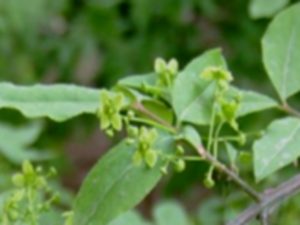
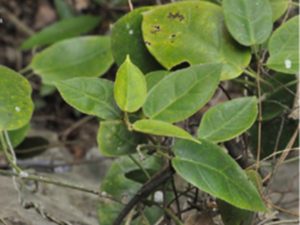
1. Cracked-grain Cress: An annual or biennial herb, 15–35 cm tall. No rhizome; roots are slender and long, with numerous fine lateral roots. The stem is erect or ascending, usually branched, rarely unbranched; the lower part is sometimes pale purple and densely covered with white, coarse hairs, with hairs gradually becoming sparser toward the top.Leaves are odd-pinnate; basal leaves are petiolate, with 2–5 pairs of leaflets; the terminal leaflet is reniform or reniform-orbicular, 4–10 cm long, 5–13 mm wide, with 3–7 shallow, wavy lobes along the margin, and a distinct petiolule; lateral leaflets are ovate or ovate-orbicular, smaller than the terminal leaflet, slightly asymmetrical on both sides at the base, with 2–3 rounded teeth along the margin;Stem leaves are short-petiolate, with 3–6 pairs of leaflets; those on the lower part of the stem are usually similar to the basal leaves, while the terminal leaflets on the upper part of the stem are rhomboid-lanceolate, 5–20 mm long, with a 3-lobed apex and no petiolules; lateral leaflets are ovate, entire, tapering at the base, and all leaflets are more or less coarsely hairy on both surfaces.Racemes are borne at the branch tips; flowers are small. Sepals are 4, sometimes purplish, oblong, with membranous margins and sparsely hairy on the outer surface; petals are 4, white, obovate, 3–5 mm long, gradually narrowing at the base; stamens are 6, with 4 long and 2 short; the long stamens are 2.5–3 mm long,the short stamens 2–2.5 mm long, filaments slightly expanded; pistil 1, ovary columnar, style extremely short, stigma flattened-globose. Long silique linear and slightly flattened, up to 30 mm long, glabrous. Seeds elliptical, brown, with wart-like dots on the surface. Flowering period: February–April; fruiting period: March–May.
2. Curved Rice-cress: An annual or biennial herb, up to 30 cm tall. The taproot is sometimes inconspicuous and fibrous. The stem branches from the base, rising obliquely in a spreading manner, covered with sparse soft hairs, profusely branched, and with fine grooved ridges on the surface.Leaves are odd-pinnate; basal leaves are petiolate; they bear 3–7 pairs of leaflets, with the terminal leaflet ovate or obovate, 2–5 mm long and wide, 3-lobed at the apex, broadly cuneate at the base, and petiolate; lateral leaflets are ovate, slightly smaller than the terminal leaflet, 1–3-lobed at the margin, and petiolate; cauline leaves bear 3–5 pairs of leaflets,most of which are ovate or linear, with 1–3 shallow, wavy lobes or entire margins; all leaflets are nearly glabrous, sometimes with scattered soft hairs. Racemes are borne at the branch tips, bearing numerous small flowers on slender pedicels; sepals are 4, oblong, with white membranous margins and green or purplish outer surfaces;petals 4, white, obovate, gradually narrowing at the base; stamens 6, 4 long and 2 short, the long stamens about 2.5 mm long, the short stamens about 2 mm long; pistil 1, ovary columnar, style short, stigma flattened-globose.The silique is linear and flattened, 12–20 mm long, glabrous; the seeds are oblong and flattened, with very narrow wings along the margins or at the apex, and are yellowish-brown. Flowering period: March–May; fruiting period: April–June.
Distribution Area
1. Cracked-grain Shepherd’s Purse: Found in Liaoning, Hebei, Shanxi, Shaanxi, Gansu, Shandong, and areas south of the Yangtze River. 2. Curved Cracked-grain Shepherd’s Purse: Found in Liaoning, Hebei, Shaanxi, Gansu, Henan, and areas south of the Yangtze River.