Yellow Corydalis is the name of a traditional Chinese medicinal herb. It consists of the root or the whole plant of Corydalis racemosa (Thunb.) Pers., a species of the genus Corydalis in the Papaveraceae family. It is widely distributed in the middle and lower reaches of the Yangtze River basin and the Pearl River basin. It has the effects of clearing heat, draining dampness, detoxifying, and killing parasites.It is primarily used to treat damp-heat diarrhea, dysentery, jaundice, red, swollen, and painful eyes, suppurative otitis externa, toxic sores, scabies and ringworm, and venomous snake bites.

Yellow Corydalis
Yellow Corydalis is the name of a traditional Chinese medicinal herb. It consists of the root or the whole plant of Corydalis racemosa (Thunb.) Pers., a species of the genus Corydalis in the Papaveraceae family. It is widely distributed in the middle and lower reaches of the Yangtze River basin and the Pearl River basin. It has the effects of clearing heat, draining dampness, detoxifying, and killing parasites.It is primarily used to treat damp-heat diarrhea, dysentery, jaundice, red, swollen, and painful eyes, suppurative otitis externa, toxic sores, scabies and ringworm, and venomous snake bites.
Chinese Name : 黄堇
Latin Name : Herba Corydalis Racemosae
Aliases : Yellow-flowered Fish Lampweed, Manure Bucket Grass, Stone Lotus, Water Coptis, Shrimp Grass, Wild Water Celery, Fish Roe Grass, Broken-Intestine Grass
Authentic Producing Area : Zhejiang, Anhui, Hunan, Sichuan
Nature, Flavor & Meridian Tropism : Bitter in taste, cold in nature
Benefits & Efficacy
Benefits
Clears heat, drains dampness, detoxifies, and kills parasites.
Indications
Damp-heat diarrhea, dysentery, jaundice, red, swollen, and painful eyes, suppurating otitis externa, toxic sores, scabies and ringworm, venomous snake bites.
Usage and Dosage
1. Internal use: Decoct 3–6 g (or 15–30 g of fresh herb) in water; or pound to extract juice. 2. External use: Pound an appropriate amount into a paste and apply; or grind the root with wine or vinegar to extract juice and apply topically.
Precautions
Patients requiring treatment with Chinese herbal medicine should first consult a licensed Traditional Chinese Medicine (TCM) hospital, where a TCM practitioner will conduct a professional pattern differentiation and prescribe an herbal formula.
Chemical Constituents
The whole plant contains proto-opium alkaloids and racemic tetrahydro-palmatine.
Pharmacological Actions
Racemic tetrahydro-palmatifolin exhibits significant analgesic, sedative, hypnotic, and antihypertensive effects.
Relevant Discussions
1. *Flora of Medicinal Plants of Tianmu Mountain*: “Detoxifies and kills parasites. Treats venomous snake bites.”
2. *Commonly Used Folk Herbs of Zhejiang*: “Clears heat and relieves summer heat; promotes urination and stops dysentery.”
3. *Compendium of Sichuan Traditional Chinese Medicine* (1982 edition): “Clears heat and detoxifies; relieves pain and itching. Used for toxic sores, scabies, ringworm, venomous snake bites, and traumatic injuries. Recently, it has also been used for acute jaundice-type hepatitis, acute gastroenteritis, and dysentery.”
Applications
Clinical Applications
1. For psoriasis and stubborn tinea: Grind the roots of yellow violets into a paste with wine or vinegar and apply topically. (Jiangxi *Manual of Herbal Medicine*)
2. For swollen and painful toxic sores: Decoct 15 g of the whole fresh yellow violet plant and drink the decoction; simultaneously, pound fresh leaves to extract juice and apply it to the affected area. (*Flora of Medicinal Plants of Tianmu Mountain*)
3. For venomous snake bites: Pound fresh yellow violets to extract the juice and apply it to the affected area. (*Flora of Medicinal Plants of Tianmu Mountain*)
4. For red, swollen, and painful eyes: Pound the whole fresh yellow violet plant with a small amount of salt until pulverized. Close the affected eye, apply the poultice, wrap it securely, and rest in bed for 2 hours.
5. For “flowing fire” (a type of internal heat syndrome): 30 g of the whole yellow violets plant. Add rice wine and brown sugar, then decoct and drink. Take continuously for three days.
6. For summer heat-induced diarrhea and dysentery: 30 g of the whole fresh yellow violets plant. Decoct in water and drink; take continuously for several days.
7. For pulmonary diseases with hemoptysis: 30–60 g of the whole fresh plant of yellow violets. Pound into a paste, extract the juice, and drink it (decocting with water is ineffective). (Formulas 4–7 are from *Commonly Used Folk Herbs of Zhejiang*)
8. For itchy skin rashes: A handful of small-flowered yellow violets. Decoct in water and use the solution to wash the affected area. (*Chronicle of Sichuan Traditional Chinese Medicine*, 1982 edition)
Notes
References: [1] Editorial Committee of *Chinese Materia Medica*, State Administration of Traditional Chinese Medicine. *Chinese Materia Medica*, Vol. 3 [M]. Shanghai: Shanghai Science and Technology Press, 1999: 636–637. [2] Nanjing University of Chinese Medicine. *Encyclopedia of Chinese Materia Medica* (2nd ed.) [M]. Shanghai: Shanghai Science and Technology Press, 2006: 2826–2827.
Processing & Preparation
Harvesting & Processing
Harvest in summer, wash thoroughly, and sun-dry.
Crude Drug Identification
Properties of Crude Drugs
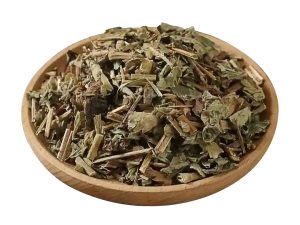
Stems are smooth and glabrous. Leaves are 2–3 times pinnately compound; terminal leaflets are nearly ovate, with shallow to deep lobes. Inflorescences are racemes; flowers are yellowish-brown, with the upper petal extended into a spur ending in a rounded tip. Capsules are linear. Seeds are black and flattened-spherical. Taste: bitter.
Botanical Information
Botanical Classification
Small-flowered Yellow Viola (Viola minor), a plant of the genus Viola in the Papaveraceae family.
Morphological Characteristics
An annual herb, 10–55 cm tall, glabrous, with a foul odor. The taproot is slender and elongated. The stem is erect and highly branched.Leaves are alternate; petioles are 1–4 cm long; leaf blades are ovate to triangular in outline, 3–12 cm long, 2–3 times pinnately compound; first-order segments number 7–9; terminal segments are ovate, with a bluntly rounded apex, deeply pinnately lobed margins, and nearly sessile.Inflorescences are racemes, terminal or axillary, 3–10 cm long; bracts are narrowly lanceolate to awl-shaped, 1.5–5 mm long; sepals are small; corolla is yellow, 6–9 mm long, with outer petals lacking cockscomb-like projections; the spur is only 1/5 the total length of the petals and slightly curved downward at the tip.The capsule is linear, 2–4 cm long and 1–2 cm wide, with slightly swollen nodes. The seeds are flattened-spherical, about 1 mm in diameter, black, and densely covered with small pits on the surface. Flowering occurs from March to April, and fruiting from April to May.
Distribution Area
It is widely distributed in the middle and lower reaches of the Yangtze River basin and the Pearl River basin, extending north to southwestern Henan, southern Shaanxi, and southeastern Gansu; south to Hainan; east to Taiwan; and west to Sichuan and Yunnan.