Deer head meat is the name of a traditional Chinese medicinal material. It consists of the head muscles of the Sika deer (Cervus nippon Temminck) or the Elk (Cervus elaphus Linnaeus) of the Cervidae family. It has the effects of tonifying qi and nourishing essence, as well as promoting fluid production and calming the mind. It is primarily used to treat consumptive diseases with excessive thirst, restlessness, and frequent dreaming.
Deer Head Meat
Deer head meat is the name of a traditional Chinese medicinal material. It consists of the head muscles of the Sika deer (Cervus nippon Temminck) or the Elk (Cervus elaphus Linnaeus) of the Cervidae family. It has the effects of tonifying qi and nourishing essence, as well as promoting fluid production and calming the mind. It is primarily used to treat consumptive diseases with excessive thirst, restlessness, and frequent dreaming.
Chinese Name : 鹿头肉
Nature, Flavor & Meridian Tropism : Sweet in taste, neutral in nature
Benefits & Efficacy
Benefits
Tonifies qi and nourishes essence; promotes fluid production and calms the mind.
Indications
Consumptive diseases with excessive thirst, restlessness, and frequent dreaming.
Usage and Dosage
Internal use: Boil and eat in appropriate amounts; or simmer to make gelatin.
Relevant Discussions
1. *Qianjin: Dietary Therapy*: “Treats diabetes and frequent, bizarre dreams.”
2. *Rihua Zi*: “Treats restlessness, bloating, and frequent dreams.”
3. *Comprehensive Compendium of Materia Medica*: “Promotes the production of body fluids.”
4. *Study of Foods*: “Calms the mind.”
Applications
Related Compatibility
1. For treating diabetes in the elderly who have not responded to other medications, presenting with jaundice, emaciation, and weakness: Take one deer head, roast it to remove the hair, wash it thoroughly, and boil it until completely tender. Consume it on an empty stomach with five-flavor seasoning daily, along with the broth. (Deer Head Formula from *New Book on Nourishing Parents and Prolonging Life*)
2. To treat deficiency-related wasting disease, diabetes insipidus, and nightmares of ghosts and monsters, and to tonify essence and vital energy: Boil a deer head until completely tender, mash it into a paste, mix with the cooking liquid and fermented rice to brew wine, and drink it with a small amount of scallions and pepper added. (*Compendium of Materia Medica*: Deer Head Wine)
Processing & Preparation
Harvesting & Processing
After slaughtering a deer, cut off the head, peel back the scalp, remove the meat from the skull, cut it into small pieces, wash thoroughly, and use fresh or dried.
Processing Methods
Take this product, wash it thoroughly with clean water, break it into small pieces, and crush or grind it as needed.
Storage Methods
Store in a cool, dry place to prevent insect infestation and mold.
Crude Drug Identification
Properties of Crude Drugs
Dried meat pieces appear in longitudinal, transverse, or diagonal blocks or strips of varying sizes. The surface is brownish or brownish-black, with visible muscle fibers. The texture is light, and the pieces tear easily. Fresh meat is reddish-purple or dark red and has a supple, resilient texture. It has a gamey, pungent odor and a slightly salty taste.
Botanical Information
Morphological Characteristics
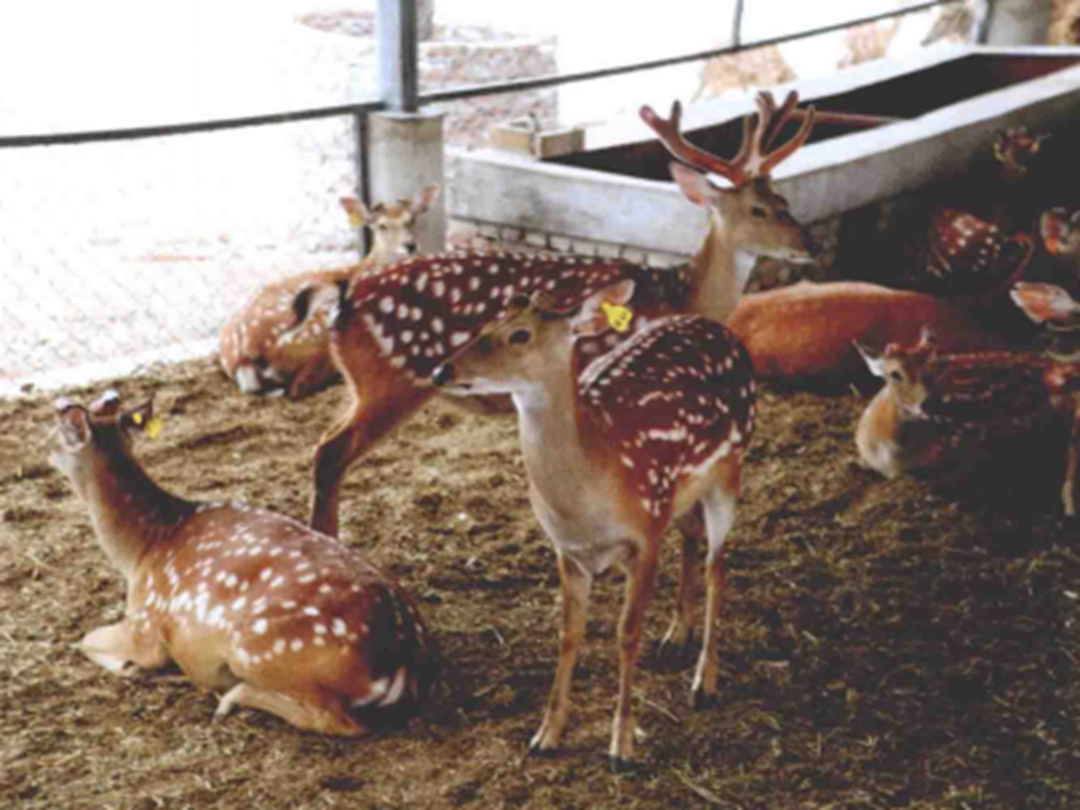
1. Sika Deer: Sika deer are approximately 1.5 meters in body length and weigh about 100 kg. They have prominent suborbital glands, large erect ears, and a slender, long neck. Their limbs are slender and long; on the outer side of the hind legs, below the ankle joint, there are brown plantar glands. The main hooves are narrow, and the lateral hooves are small. They have a distinct white patch on the rump and a short tail.Male sika deer have branched antlers; when fully grown, they have 4–5 tines. The brow tine extends diagonally forward; the second tine is set relatively far from the brow tine, and the main shaft splits into two small tines at its tip. The winter coat of the sika deer is chestnut brown, with inconspicuous white spots. The hair on the muzzle and cheeks is short, with sandy-yellow tips. A dark brown dorsal stripe runs from the top of the head along the spine to the tail.The white rump patch has a dark brown border. The undercoat is pale brown, and the groin area is white. The outer sides of the limbs match the body color, while the inner sides are slightly lighter. The summer coat is thin, without underfur, reddish-brown in color, with prominent white spots arranged in vertical rows along both sides of the spine and the lower edges of the flanks; there is a black dorsal stripe. The belly is white, the dorsal surface of the tail is black, and the limbs are lighter in color than the body.2. Gueland Deer: This species is large, with a body length of 2 m and a weight exceeding 200 kg. Its shoulder height is approximately 1 m; the back is straight, and the heights at the shoulders and hindquarters are equal. The tip of the nose is bare, and the ears are large and conical. The neck is about one-third the length of the body, with relatively long undercoat on the underside of the neck. The limbs are long, and the hooves on both sides are long enough to touch the ground.The tail is short. Males have antlers; the brow tines extend forward, forming nearly a right angle with the main shaft, which curves slightly backward and inward. The surface of the antlers is rough except at the tips, and the base of the antlers has a small ring of tubercle-like protrusions. The winter coat is grayish-brown. The muzzle and lower jaw are dark brown, the cheeks are brown, and the forehead is brownish-black.The outer surface of the ears is yellowish-brown, while the inner surface is white. The neck and dorsal surface of the body are slightly yellowish-brown, with a blackish-brown dorsal stripe. The outer sides of the limbs are brown, while the inner sides are lighter in color. The rump has a yellowish-ochre patch. The summer coat is shorter, without undercoat, and reddish-brown in color.
Distribution Area
1. Sika deer: Inhabits mixed forests, mountainous grasslands, and forest edges. 2. Elk: Inhabits mixed forests and alpine forest-grasslands.