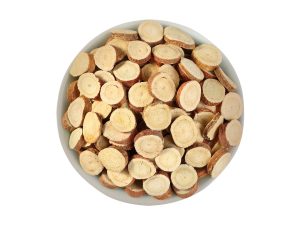
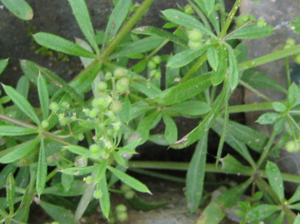
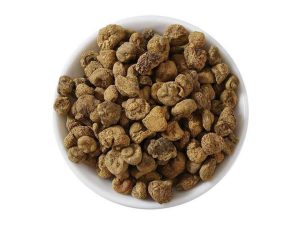
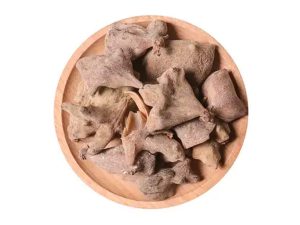
Okra is a name used in traditional Chinese medicine. It refers to the roots, leaves, flowers, or seeds of the plant Abelmoschus esculentus (L.) Moecnh [Hibiscus esculentus L.] of the Malvaceae family.It is distributed in Hebei, Shandong, Jiangsu, Zhejiang, Fujian, Taiwan, Hubei, Hunan, Guangdong, Hainan, Guangxi, and Yunnan, where it has been introduced and cultivated. It is native to India. It has the therapeutic effects of soothing the throat, relieving dysuria, promoting lactation, and regulating menstruation. It is commonly used for sore throat, painful urination, insufficient postpartum milk production, and irregular menstruation.

Okra
Okra is a name used in traditional Chinese medicine. It refers to the roots, leaves, flowers, or seeds of the plant Abelmoschus esculentus (L.) Moecnh [Hibiscus esculentus L.] of the Malvaceae family.It is distributed in Hebei, Shandong, Jiangsu, Zhejiang, Fujian, Taiwan, Hubei, Hunan, Guangdong, Hainan, Guangxi, and Yunnan, where it has been introduced and cultivated. It is native to India. It has the therapeutic effects of soothing the throat, relieving dysuria, promoting lactation, and regulating menstruation. It is commonly used for sore throat, painful urination, insufficient postpartum milk production, and irregular menstruation.
Chinese Name : 秋葵
Aliases : Hairy Eggplant, Yellow Hollyhock
Nature, Flavor & Meridian Tropism : Mild in taste, cold in nature
Benefits & Efficacy
Benefits
Relieves sore throat, promotes urination, stimulates lactation, and regulates menstruation.
Indications
Used for sore throat, painful urination, scanty postpartum lactation, and irregular menstruation.
Usage and Dosage
Internal use: Decoction, 9–15 g.
Precautions
Not suitable for those with spleen and stomach deficiency-cold.
Pharmacological Actions
Regular consumption of okra helps protect the skin, aid digestion, strengthen the stomach, regulate the gastrointestinal tract, clear liver toxins, enhance virility and kidney function, and boost the body’s immune system.
Relevant Discussions
*Flora of Medicinal Plants of Taiwan*: “The fruit treats sore throat, dysuria, and difficulty urinating.”
Applications
Related Compatibility
1. For heat-induced sore throat: 6–9 g each of okra flowers and magnolia flower buds, plus 3 g of peppermint; decoct in water and take orally. 2. For painful and difficult urination due to heat: 10–15 g each of okra root, white grass root, and plantain herb; decoct in water and take orally. (Formulas 1 and 2 are from *Newly Compiled Illustrated Atlas of Chinese Herbal Medicines and Classic Formulas, Vol. 2*)
Processing & Preparation
Harvesting & Processing
Roots are dug up from November through February of the following year, shaken to remove soil, and sun-dried or dried on a heated bed. Leaves are harvested in September–October and sun-dried. Flowers are picked in June–August and sun-dried. Seeds are harvested in September–October when the fruit is ripe, threshed, and sun-dried.
Crude Drug Identification
Botanical Information
Botanical Classification
Coffee Okra (a plant of the Malvaceae family).
Morphological Characteristics
Coffee Okra, also known as Yellow Okra, Goat’s Horn Bean, Coffee Mallow, Wooden Luffa, or Vietnamese Sesame. An annual herb reaching 1–2 m in height. The stem is cylindrical with sparse, scattered spines. Leaves are alternate; petioles are 7–15 cm long and covered with long, stiff hairs; stipules are linear, 7–10 mm long, and covered with sparse, stiff hairs.Leaves are palmately 3–7-lobed, 10–30 cm in diameter; lobes range from broad to narrow, covered on both surfaces with sparse stiff hairs, and the margins are coarsely toothed and notched. Flowers are solitary in the leaf axils; pedicels are 1–2 cm long and sparsely covered with rough, stiff hairs; the calyx is bell-shaped, longer than the bracteoles, and densely covered with short, star-shaped tomentum;the flower is yellow, with a purple base on the inner surface, 5–7 cm in diameter; the petals are obovate, 4–5 cm long. The capsule is cylindrical-pyramidal, 10–25 cm long, 1.5–2 cm in diameter, with a long beak at the apex, sparsely covered with coarse, stiff hairs; the seeds are spherical, numerous, 4–5 mm in diameter, with hair-like veins. Flowering period: May–September.