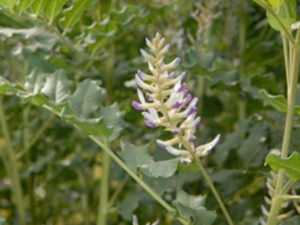
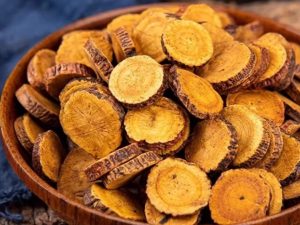
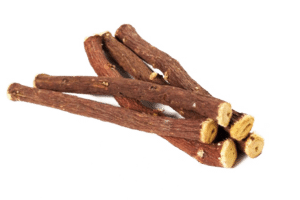
Licorice Slices are a type of traditional Chinese medicine prepared from the dried roots and rhizomes of the leguminous plants Glycyrrhiza, Glycyrrhiza glabra, or Glycyrrhiza glabra var. glabra, processed through steps such as cleaning and slicing.According to traditional medicine, they have a sweet taste and a slightly cool nature, entering the Heart, Lung, Spleen, and Stomach meridians. They are believed to tonify the spleen and boost qi, clear heat and detoxify, eliminate phlegm and relieve cough, and relieve spasms and alleviate pain. Clinically, they are commonly used to treat conditions such as spleen and stomach deficiency, insufficiency of heart qi, abscesses, swellings, and toxic sores, cough with excessive phlegm, and spasmodic pain in the epigastrium, abdomen, or limbs.In addition, licorice slices harmonize the actions of other herbs, enabling the ingredients in a formula to work in synergy and achieve a more effective overall therapeutic outcome; therefore, they are widely used in herbal formulas.

Licorice Slices
Licorice Slices are a type of traditional Chinese medicine prepared from the dried roots and rhizomes of the leguminous plants Glycyrrhiza, Glycyrrhiza glabra, or Glycyrrhiza glabra var. glabra, processed through steps such as cleaning and slicing.According to traditional medicine, they have a sweet taste and a slightly cool nature, entering the Heart, Lung, Spleen, and Stomach meridians. They are believed to tonify the spleen and boost qi, clear heat and detoxify, eliminate phlegm and relieve cough, and relieve spasms and alleviate pain. Clinically, they are commonly used to treat conditions such as spleen and stomach deficiency, insufficiency of heart qi, abscesses, swellings, and toxic sores, cough with excessive phlegm, and spasmodic pain in the epigastrium, abdomen, or limbs.In addition, licorice slices harmonize the actions of other herbs, enabling the ingredients in a formula to work in synergy and achieve a more effective overall therapeutic outcome; therefore, they are widely used in herbal formulas.
Chinese Name : 甘草片
Authentic Producing Area : Licorice slices are a type of herbal medicine prepared from licorice. Licorice is primarily produced in Inner Mongolia, Shaanxi, Gansu, and Northeast China
Nature, Flavor & Meridian Tropism : It has a sweet taste and a slightly cool nature, and enters the Heart, Lung, Spleen, and Stomach meridians
Benefits & Efficacy
Benefits
Licorice Slices have the effects of tonifying the spleen and boosting qi, clearing heat and detoxifying, eliminating phlegm and relieving cough, alleviating acute pain, and harmonizing the actions of other herbs.
Indications
Licorice Slices are primarily used to treat spleen and stomach disorders, heart-related conditions, coughs, heat-toxin syndromes, and pain.1. Spleen and Stomach Disorders: Licorice Slices can be used to treat fatigue, weakness, poor appetite, and loose stools caused by spleen and stomach deficiency. They are often combined with herbs such as ginseng and white atractylodes, which tonify qi and strengthen the spleen.2. Heart-related disorders: Licorice tablets gently tonify heart qi and can be used to treat palpitations, shortness of breath, and irregular or skipped heartbeats caused by deficiency of heart qi.3. Coughs: When formulated according to specific symptoms, licorice tablets can be used to treat various types of coughs, such as wind-cold coughs, wind-heat coughs, dry-lung coughs, and damp-phlegm coughs.4. Heat-Toxin Syndromes: Licorice tablets are effective in alleviating various heat-toxin syndromes. They are commonly used to treat heat-toxin sores and ulcers, relieving local redness, swelling, heat, and pain; they can also treat sore throat caused by ascending heat-toxin, reducing pain, redness, and swelling in the throat.5. Pain: Licorice tablets can relieve pain symptoms and are particularly suitable for cramping and spasmodic pain in the epigastrium and abdomen caused by spleen deficiency with liver hyperactivity, as well as cramping and spasmodic pain in the limbs caused by deficiency of yin and blood. Clinically, they are often combined with white peony root to enhance therapeutic efficacy.
Usage and Dosage
Clinically, the most common method of using licorice tablets is to decoct them into a decoction for oral administration, with a standard dosage of 2–10 g; they may also be incorporated into formulations such as pills or powders.It is important to note that due to differences in each patient’s condition and constitution, the specific dosage of licorice tablets may vary from person to person. Patients should strictly adhere to the dosage prescribed by their physician.
Precautions
1. Long-term or high-dose use of licorice tablets may lead to adverse reactions such as edema, elevated blood pressure, sodium retention, and low blood potassium levels. Therefore, long-term or excessive use is not recommended. Patients who must take this medication long-term or in high doses should have their blood pressure and potassium levels monitored during treatment.2. Patients with various types of edema, kidney disease, hypertension, hypokalemia, or congestive heart failure should use Licorice Tablets with caution.3. Pregnant women, breastfeeding women, and children constitute special patient populations. Their physical constitution and physiological functions differ from those of typical adults, resulting in relatively higher risks associated with medication use. Therefore, members of these groups must consult a medical professional before using licorice tablets and should use the medication with caution only after receiving clear guidance and recommendations. Additionally, children must be under the constant supervision of an adult while taking this medication.
Chemical Constituents
Licorice tablets contain triterpene saponins, flavonoids, coumarins, alkaloids, and polysaccharides, among other components.1. Triterpene saponins: such as glycyrrhizic acid, Ural licorice saponins A and B, and 22-acetylglycyrrhizic acid.2. Flavonoids: such as glycyrrhizin aglycone, glycyrrhizin, isoglycyrrhizin, isoglycyrrhizin aglycone, neoglycyrrhizin, neoisoglycyrrhizin, and glycyrrhizidin.3. Coumarins: such as glycyrrhizic coumarin, glycyrrhizol, isoglycyrrhizol, and neoglycyrrhizol.4. Alkaloids: such as 5,6,7,8-tetrahydro-4-methylquinoline and 5,6,7,8-tetrahydro-2,4-dimethylquinoline.5. Polysaccharides: such as licorice glucan (GBW) and licorice polysaccharides UA, UB, and UC.
Pharmacological Actions
Modern pharmacological research has found that licorice tablets possess effects such as preventing gastrointestinal ulcers, regulating gastrointestinal function, modulating the immune system, combating myocardial ischemia, relieving coughs, alleviating asthma, and expelling phlegm, as well as anti-inflammatory, analgesic, detoxifying, and hepatoprotective properties.
Relevant Discussions
1. *Medical Origins*: “It harmonizes and coordinates various herbs, working together synergistically without conflict; its nature is mild, and it excels at alleviating acute conditions.”
2. *Essentials of Prescribing*: “When used with hot herbs, it moderates their heat; when used with cold herbs, it moderates their coldness.”
Applications
Related Compatibility
Licorice tablets can be combined with Chinese herbal medicines such as ginseng, white peony root, dandelion, and aconite to treat relevant conditions.
1. Licorice tablets combined with ginseng: Licorice tablets tonify heart qi, while ginseng excels at tonifying the spleen and boosting qi. When combined, these two herbs enhance the effects of tonifying qi and strengthening the spleen, making this combination suitable for conditions involving deficiency of both the heart and spleen.
2. Licorice Tablets combined with White Peony Root: Licorice Tablets are sweet in taste and slightly cool in nature, while White Peony Root is sour and cold. When combined, they transform sourness into sweetness and nourish yin, thereby consolidating yin and nourishing blood. This ensures sufficient body fluids and blood to nourish the tendons and vessels, achieving the goal of relieving spasms and alleviating pain. This combination is suitable for abdominal pain and tendon spasms caused by disharmony between qi and blood.
3. Licorice Tablets combined with Dandelion: Licorice Tablets have a sweet taste and a slightly cool nature, excelling at clearing heat and detoxifying; Dandelion is sweet and cold, excelling at clearing heat, detoxifying, resolving abscesses, and dispersing nodules. When combined, these two herbs enhance the effect of clearing heat and detoxifying, making this combination suitable for conditions such as boils, abscesses, and toxic swellings, as well as redness and swelling at the site of traumatic wounds.
4. Licorice Tablets Combined with Aconite: Licorice tablets have a sweet taste and a slightly cool nature; they serve to moderate the properties of other herbs and harmonize various medicinal formulations. Aconite is pungent and hot, and is toxic; it is used to restore yang and reverse collapse, as well as to tonify fire and assist yang. When used together, these two herbs mitigate the toxicity of aconite, ensuring the safety of the treatment.
Related Medicines
Examples include Compound Licorice Tablets, Nao Le Jing, and Qingreling Granules.
Related Prescriptions
Yinqiao Powder (*Treatise on Warm Diseases*), Sangju Decoction (*Treatise on Warm Diseases*), etc.
Notes
Patients requiring treatment with traditional Chinese medicine should first consult a licensed TCM hospital, where a TCM practitioner will conduct a professional diagnosis and prescribe the appropriate herbal formula.
Processing & Preparation
Harvesting & Processing
It is best harvested in spring and fall. After harvesting, the root crown, branching roots, and fibrous roots must be removed, followed by sun-drying.
Processing Methods
The preparation of licorice slices involves the following steps: cleaning, washing and moistening, steaming, slicing, and drying.
1. Cleaning: Take the licorice raw material and remove impurities.
2. Washing and Moistening: Wash the raw material thoroughly, place it in a container, and add clean water to soak it; the water level should fully cover the material.
3. Steaming: Steam the raw material until the moisture content is uniform throughout and the material is completely penetrated.
4. Slicing: After the material is thoroughly moistened, slice it into thick slices using a slicing machine or by hand.
5. Drying: Spread the sliced pieces out and air-dry them in a well-ventilated, dry place or dry them in a low-temperature oven.
Storage Methods
Licorice slices should be stored in a well-ventilated and dry place, taking care to prevent insect infestation.
Crude Drug Identification
Properties of Crude Drugs
Licorice slices are herbal slices prepared from the dried roots and rhizomes of the leguminous plants Glycyrrhiza, Glycyrrhiza inflata, or Glycyrrhiza glabra; the characteristics vary depending on the type of licorice herb.
1. Licorice: The root is cylindrical, 25–100 cm long, and 0.6–3.5 cm in diameter.The outer bark varies in firmness. The surface is reddish-brown or grayish-brown, with prominent longitudinal wrinkles, grooves, lenticels, and sparse fine root scars. The texture is firm; the cross-section appears slightly fibrous, yellowish-white, and powdery, with a distinct cambium ring and radially arranged rays; some specimens may have fissures. The rhizome is cylindrical, with bud scars on the surface and a pith in the central part of the cross-section. It has a faint odor and a sweet, distinctive taste.
2. Swollen-Fruit Licorice: The roots and rhizomes are woody and robust, sometimes branched, with a rough outer bark that is mostly grayish-brown or grayish-brown. The texture is hard, with abundant woody fibers and little powdery substance. The rhizomes have numerous, large adventitious buds.
3. Smooth-fruited Licorice: The roots and rhizomes have a relatively firm texture, with some branching; the outer bark is not rough, mostly grayish-brown, with fine, inconspicuous lenticels.
Properties of Processed Slices
Licorice slices are thick, roundish or oval in shape. The outer surface is reddish-brown or grayish-brown, with longitudinal wrinkles. The cross-section appears slightly fibrous; the center is yellowish-white, with distinct radial striations and a cambium ring. The texture is firm and slightly powdery. It has a faint odor and a sweet, distinctive taste.
Botanical Information
Botanical Classification
Species of the genus Glycyrrhiza in the legume family, including Glycyrrhiza uralensis, Glycyrrhiza glabra, or Glycyrrhiza glabra var. glabra.
Morphological Characteristics
1. Licorice: A perennial herb; the roots and rhizomes are stout, 1–3 cm in diameter, with a brown outer bark and a pale yellow interior, and possess a sweet taste.Stems are erect and highly branched, 30–120 cm tall, densely covered with scale-like glandular dots, spiny glandular hairs, and white or brown tomentum; leaves are 5–20 cm long; stipules are triangular-lanceolate, approximately 5 mm long and 2 mm wide, densely covered with short white soft hairs on both surfaces; petioles are densely covered with brown glandular dots and short soft hairs;5–17 leaflets, ovate, long-ovate, or nearly round, 1.5–5 cm long, 0.8–3 cm wide, dark green above, green below, both surfaces densely covered with yellowish-brown glandular dots and short soft hairs; apex obtuse with a short point, base rounded, margin entire or slightly wavy, more or less revolute.The raceme is axillary, bearing numerous flowers; the raceme peduncle is shorter than the leaves and densely covered with brown scale-like glandular dots and short soft hairs; the bracts are oblong-lanceolate, 3–4 mm long, brown, membranous, and covered on the outside with yellow glandular dots and short soft hairs;The calyx is campanulate, 7–14 mm long, densely covered with yellow glandular dots and short soft hairs; the base is oblique and swollen into a sac-like structure; there are 5 calyx teeth, nearly as long as the calyx tube, with the upper two teeth largely fused;Corolla purple, white, or yellow, 10–24 mm long; standard oblong, slightly concave at the apex, with a short petal stalk at the base; wings shorter than the standard; keel shorter than the wings; ovary densely covered with spiny glandular hairs.The pods are curved, sickle-shaped or ring-shaped, densely clustered into a sphere, and densely covered with tuberculate projections and spiny-hairy glands. Seeds number 3–11; they are dark green, round or reniform, and approximately 3 mm long. Flowering occurs from June to August; fruiting occurs from July to October.
2. Swollen-fruited Licorice: A perennial herb; the roots and rhizomes are stout, with brown outer skin covered in yellow scale-like glands; the interior is pale yellow and sweet-tasting. The stem is erect, slightly woody at the base, highly branched, and 50–150 cm tall.Leaves 4–20 cm long; stipules small, triangular-lanceolate, brown, about 1 mm long, early deciduous; petioles and rachis densely covered with brown scale-like glandular dots, densely pubescent when young;There are 3–7 (–9) leaflets, ovate, elliptic, or oblong, 2–6 cm long and 0.8–3 cm wide, with an acute or obtuse apex and a nearly rounded base; the upper surface is dark green, the lower surface pale green; both surfaces are covered with yellowish-brown glandular dots and sparsely pubescent along the veins; the margins are more or less undulate.Racemes are axillary, bearing numerous, sparsely arranged flowers; the raceme peduncle is as long as or shorter than the leaves, often elongating after flowering, densely covered with scale-like glandular dots, and densely pubescent when young; bracts are oblong-lanceolate, about 3 mm long, densely covered with glandular dots and short pubescence;The calyx is campanulate, 5–7 mm long, densely covered with orange-yellow glandular dots and soft hairs; the calyx teeth are 5, lanceolate, equal in length to the calyx tube, with the upper two teeth fused below the midpoint;The corolla is purple or pale purple; the standard is oblong, 6–9 (–12) mm long and 4–7 mm wide, with a rounded apex and a short petal stalk at the base; the wings are nearly equal in size to the standard, with distinct auricles and petal stalks; the keel is slightly shorter, and all petals bear petal stalks and auricles.The pod is elliptic or oblong, 8–30 mm long, 5–10 mm wide, straight or slightly curved, with a swelling between the two seeds or with lateral partitions of varying degrees; it is covered with brown glandular dots and spiny glands, and sparsely covered with long soft hairs. There are 1–4 seeds, which are round, green, and 2–3 mm in diameter. Flowering occurs from May to July; fruiting occurs from June to October.
3. Smooth-fruited Licorice: A perennial herb; the roots and rhizomes are stout, 0.5–3 cm in diameter, with brown root bark and a yellow interior that has a sweet taste. The stem is erect and highly branched, 0.5–1.5 m tall, woody at the base, densely covered with pale yellow scale-like glandular dots and white soft hairs; when young, it is ribbed and sometimes bears short spiny glandular hairs.Leaves 5–14 cm long; stipules linear, only 1–2 mm long, early deciduous; petioles densely covered with yellowish-brown glandular hairs and long soft hairs;11–17 leaflets, ovate-oblong, oblong-lanceolate, or elliptic, 1.7–4 cm long and 0.8–2 cm wide; upper surface nearly glabrous or sparsely covered with short soft hairs; lower surface densely covered with pale yellow scale-like glandular dots and sparsely covered with short soft hairs along the veins; apex rounded or slightly凹, with a short tip; base nearly rounded.Racemes are axillary, bearing numerous densely clustered flowers; the raceme peduncle is shorter than or equal in length to the leaves (elongating after fruiting), densely covered with brown scale-like glandular dots, white long soft hairs, and villi; bracts are lanceolate, membranous, approximately 2 mm long;The calyx is campanulate, 5–7 mm long, sparsely covered with pale yellow glandular dots and short soft hairs; the calyx teeth number 5, are lanceolate, and nearly as long as the calyx tube; the upper two teeth are largely fused;Corolla purple or pale purple, 9–12 mm long; standard ovate or oblong, 10–11 mm long, apex slightly concave, petal stalk half as long as the petal blade; wings 8–9 mm long; keel straight, 7–8 mm long; ovary glabrous.The pod is oblong, flattened, 1.7–3.5 cm long, 4.5–7 mm wide, slightly sickle-shaped, sometimes slightly constricted between seeds, glabrous or sparsely hairy, and sometimes bearing sparse or dense spiny glandular hairs. There are 2–8 seeds, dark green, smooth, reniform, and approximately 2 mm in diameter. Flowering occurs from May to June; fruiting occurs from July to September.
Distribution Area
1. Licorice: Distributed in North China, Northeast China, and Northwest China.2. Smooth-fruited Licorice: Native to the Mediterranean region of Europe; also found in North Africa, Central Asia, and Siberia; distributed in Xinjiang, China.3. Swollen-fruited Licorice: Distributed in Inner Mongolia, Gansu, Xinjiang, and other areas.
Growth Habits
The aboveground parts of licorice die back each year in late fall; the roots and rhizomes overwinter in the soil. In the following spring (March–April), new shoots emerge from the rhizomes, producing long branches and leaves. The plant reaches its full foliage in May–June, flowers and sets fruit in June–July, and the pods ripen in September.It is cold- and drought-tolerant and sun-loving, serving as an indicator plant for calcareous soils. It is best cultivated in sandy loam with deep soil layers, good drainage, and a low water table; it should not be planted in waterlogged areas or regions with a high water table. Neutral or slightly alkaline soil is preferred; it grows poorly in acidic soil.
Propagation Methods
Propagate by seeds or rhizomes.
Cultivation Techniques
1. Propagation by Seed
(1) Seed Collection: Cut off fully mature, dried seed heads; after thorough drying, crush the pods and sift to select plump seeds free of pests and diseases. Seeds of brownish-green or dark green color, with a purity of 98% or higher and a germination rate of 85% or higher, are considered the best quality.
(2) Seed Treatment: Licorice seeds have a high rate of hard seed coats, and germination rates are difficult to guarantee without treatment.The main seed treatment methods are mechanical grinding and sulfuric acid treatment. Mechanical grinding is the most commonly used method in production and is suitable for processing large quantities of seeds. A grinding wheel machine is typically used (generally grinding 1–2 times; the process is complete when the seed coats of the vast majority of seeds appear dull or slightly abraded to the naked eye, while the seeds remain intact and free of other damage). This method is simple to operate and low-cost.Sulfuric acid treatment is suitable for small quantities of seeds. The method involves adding 30–40 mL of concentrated sulfuric acid per kilogram of seeds, mixing thoroughly, and stirring continuously (until most seeds develop black, circular corrosion spots). Rinse the seeds with clean water at the appropriate time to remove the sulfuric acid, then let them air dry.One day before sowing, treat the seeds by mixing them with a 50% phoxim emulsion and 20% carbendazim at 0.2% of the seed weight to reduce pests and diseases.
(3) Direct Seeding: This is divided into spring, summer, and fall sowing. Spring sowing takes place in mid- to late April, summer sowing in July–August, and fall sowing in September. When sowing, make furrows on the ridges with a row spacing of 30 cm and a depth of about 2 cm. Scatter the seeds into the furrows, cover with soil, and press down lightly. The seeding rate is 1.5–2 kg per mu.
(4)Seedling Rearing: Seedling sowing is typically carried out in the spring (April–May), using the same method as direct seeding. The seeding rate is 3–5 kg per mu.
2. Rhizome Propagation
When harvesting licorice, the dug-up thick roots and rhizomes are used for medicinal purposes. Cut undamaged rhizomes with a diameter of 0.5–0.8 cm into segments 10–15 cm long, each containing 2–3 bud eyes.In prepared field beds, dig 15 cm deep furrows with a row spacing of 30 cm. Place the cut rhizome segments flat on the bottom of the furrows at a plant spacing of 15 cm, then cover with soil and firm it down. Planting should take place in early April or late October.
Pest and Disease Control
1. Diseases: Common diseases include powdery mildew, rust, and brown spot, which primarily affect the leaves. Control measures include promptly removing diseased plants and applying chemical pesticides (such as lime-sulfur solution, Bordeaux mixture, or methyl thiophanate wettable powder) at the first sign of infection.
2. Pests: These include aphids and licorice seed wasps. Control measures primarily involve cleaning the orchard to reduce pest sources, supplemented by chemical treatments during outbreak periods.