Danshen is a medicinal herb used to invigorate blood circulation and regulate menstruation; it consists of the dried roots and rhizomes of Salvia miltiorrhiza Bge., a plant in the genus Salvia of the Lamiaceae family. It has the effects of invigorating blood circulation and removing blood stasis, unblocking meridians and relieving pain, clearing the heart and relieving restlessness, and cooling the blood to resolve abscesses.It is primarily used for chest pain due to bi syndrome, epigastric, abdominal, and flank pain, masses and accumulations, pain from heat-bi syndrome, restlessness and insomnia, irregular menstruation, dysmenorrhea and amenorrhea, and swollen and painful sores.

Danshen
Danshen is a medicinal herb used to invigorate blood circulation and regulate menstruation; it consists of the dried roots and rhizomes of Salvia miltiorrhiza Bge., a plant in the genus Salvia of the Lamiaceae family. It has the effects of invigorating blood circulation and removing blood stasis, unblocking meridians and relieving pain, clearing the heart and relieving restlessness, and cooling the blood to resolve abscesses.It is primarily used for chest pain due to bi syndrome, epigastric, abdominal, and flank pain, masses and accumulations, pain from heat-bi syndrome, restlessness and insomnia, irregular menstruation, dysmenorrhea and amenorrhea, and swollen and painful sores.
Chinese Name : 丹参
Latin Name : Salviae Miltiorrhizae Radix et Rhizoma
Aliases : Xie Chancao, Red Ginseng, Wood Goat’s Milk, Zhu Ma, Ben Ma Cao, Mountain Ginseng, Purple Danshen, Red Root, Mountain Red Radish, Blood-Activating Root, Kao Shan Hong, Red Ginseng, Premium Wine Jar Root, Wild Perilla Root, Mountain Perilla Root, Da Hong Pao, Honey Jar, Blood Ginseng Root, Duoduo Flower Root, Honey Jar, Red Danshen
Authentic Producing Area : Mainly produced in Sichuan, Shandong, and Hebei
Nature, Flavor & Meridian Tropism : Bitter in taste, slightly cold in nature; enters the Heart and Liver meridians
Benefits & Efficacy
Benefits
This herb promotes blood circulation and removes blood stasis, unblocks meridians and relieves pain, clears the heart and relieves restlessness, and cools the blood to resolve abscesses.
Indications
It is primarily used to treat chest pain due to bi syndrome, epigastric, abdominal, and flank pain, masses and accumulations, pain from heat-bi syndrome, restlessness and insomnia, irregular menstruation, dysmenorrhea and amenorrhea, and swollen and painful sores.
Usage and Dosage
Oral use: Decoct and take 10–15 g.
Precautions
1. Contraindications for Combination with Other Chinese Herbs Contraindicated when combined with Lepidium. 2. Contraindications for Combination with Western Medications (1) Should not be combined with aluminum hydroxide or cytochrome C injection, as this forms complexes that impair absorption. (2) Danshen may promote the metastasis of malignant tumors and should not be used in combination with chemotherapy drugs such as cyclophosphamide, fluorouracil, or cytarabine. (3) When Danshen is used concurrently with antacids, chelates may form, thereby reducing the bioavailability of Danshen and affecting its therapeutic efficacy. (4) Danshen should not be used concurrently with atropine, as atropine can block the blood pressure-lowering effect of Danshen. (5) Mixing Danshen injection with vitamin C can trigger a redox reaction, which may reduce or eliminate the effects of both substances. (6) When used in combination with Western pharmaceuticals such as anticoagulants, sedatives, and anesthetics, the dosage must be reduced. 3. Dietary Restrictions Avoid vinegar and acidic foods while taking this medication.
Chemical Constituents
It primarily contains fat-soluble and water-soluble components. Fat-soluble components include tanshinone I, tanshinone IIA, tanshinone IIB, tanshinone III, cryptotanshinone, hydroxytanshinone, tanshinic acid methyl ester,purpuradan-A, purpuradan-B, dan-shinone, danshenol I, danshenol II, danshenol III, danshenol, and danshenaldehyde, among others. The water-soluble components primarily include danshenoside, danshenic acid A, B, and C, protocatechuic acid, and protocatechuic aldehyde, among others.
Pharmacological Actions
This product has pharmacological effects including improving blood rheology, enhancing microcirculation, anticoagulation, preventing myocardial ischemia, preventing cerebral ischemia, inhibiting liver fibrosis, and antitumor activity.
Relevant Discussions
1. *Rihua Zi Bencao*: “Nourishes the blood and calms the mind; unblocks and regulates the joints; treats cold and heat-induced exhaustion, joint pain and discomfort, and paralysis of the limbs; relieves bloating and alleviates pain; promotes tissue regeneration and muscle growth; breaks up stagnant blood and replenishes new blood; stabilizes live fetuses and expels dead ones; stops metrorrhagia and leukorrhea; regulates irregular menstrual cycles in women and alleviates blood stasis and restlessness;malignant sores, scabies, tinea, goiters, tumors, and erysipelas; headaches and red eyes; and restlessness caused by febrile diseases.”
2. *A Concise Guide to Materia Medica*: “Salvia miltiorrhiza shares the same therapeutic effects as the Four Substances Decoction; it can remove stasis to generate new blood, is highly effective in treating wind-related conditions and dispersing nodules, has a mild nature that promotes blood circulation, … and its sweet and bitter flavors regulate the menstrual cycle, though it primarily focuses on the nutritive blood level.Although Danshen bears the name ‘ginseng,’ its ability to tonify blood is insufficient, while its ability to invigorate blood is abundant; it is the foremost herb for regulating the blood. The reason it treats wind-induced arthralgia and eliminates masses and accumulations is that when the blood flows, the wind subsides of its own accord; when the blood flows, the accumulations dissipate on their own.”
Applications
Clinical Applications
1. To treat conditions of blood heat and stasis, combine it with Chuanxiong, Danggui, and Yimucao, as in the Ningkun Zhibao Dan formula (from *Weisheng Hongbao*).
2. To treat cold-induced blood stasis, combine it with Wu Zhu Yu and Rou Gui.
3. To treat chest pain and cardiac pain caused by blood stasis in the vessels, as well as epigastric and abdominal pain, it is combined with Amomum villosum and Sandalwood, as in Danshen Decoction (*Medical Golden Needle*).
4. To treat masses and accumulations, it can be combined with Curcuma zedoaria, Curcuma zedoaria var. longifolia, and softshell turtle shell.
5. To treat trauma-induced injuries and pain caused by blood stasis in the limbs, it is often used in combination with Danggui, Frankincense, and Myrrh, as in the Huoluo Xiaoling Dan formula (*Records of Integrating Chinese and Western Medicine*).
6. To treat rheumatic bi syndrome, it can be combined with Fangfeng, Qin Jiao, and other herbs that dispel wind and remove dampness.
7. To treat sores, abscesses, and toxic swellings caused by heat-toxin and blood stasis obstruction, it is often combined with herbs that clear heat and eliminate toxins.
8. To treat the early stages of mastitis, it can be used in combination with Honeysuckle (Jinyinhua) and Forsythia (Lianqiao), as in the Mastitis-Resolving Decoction (from *Medicine: Integrating Chinese and Western Approaches*).
9. To treat restlessness, insomnia, or even mental confusion caused by pathogenic heat invading the Heart’s Nutritive Level, it can be combined with Sheng Di, Xuan Shen, Huang Lian, and Zhu Ye.
10. To treat insomnia and palpitations resulting from insufficient blood nourishing the heart, it is often used in combination with Sheng Di, Suan Zao Ren, and Bai Zi Ren, as in the Tian Wang Bu Xin Dan (from *Secrets of Health Preservation*).
Related Compatibility
1. Salvia Miltiorrhiza Combined with Cinnamomum Twig: Salvia Miltiorrhiza excels at promoting blood circulation and resolving blood stasis; Cinnamomum Twig excels at assisting yang and unblocking meridians. When used together, these two herbs work synergistically to warm yang, promote blood circulation, unblock meridians, and relieve pain. This combination is suitable for chest pain and palpitations caused by deficient heart yang and obstruction by blood stasis.
2. Danshen combined with Pueraria root: Danshen excels at promoting blood circulation and resolving stasis, capable of eliminating old blood and generating new blood; Pueraria root has a light, ascending nature, capable of relieving muscle tension, reducing fever, generating body fluids, and quenching thirst. When used together, these two herbs complement each other, enhancing their ability to promote blood circulation, resolve stasis, generate body fluids, and unblock the meridians. This combination is suitable for cases of yin deficiency with excessive thirst complicated by blood stasis.
3. Danshen combined with Gualou: Danshen promotes blood circulation, cools the blood, reduces swelling, and alleviates pain; it excels at clearing heat from the blood to resolve stasis. Gualou clears heat, resolves phlegm, disperses nodules, and eliminates abscesses; it excels at clearing heat from the qi to resolve phlegm. When used together, these two herbs treat both qi and blood simultaneously, demonstrating significant efficacy in clearing heat, promoting blood circulation, and reducing swelling.Indicated for mastitis, skin abscesses, redness, swelling, and pain caused by stagnation of heat-toxin.
4. Danshen combined with Sha Ren: Danshen excels at promoting blood circulation and resolving blood stasis; Sha Ren excels at regulating qi and harmonizing the middle jiao. When used together, this combination effectively regulates qi, resolves blood stasis, and relieves pain. Indicated for epigastric pain and chest pain (Xin Bi) caused by blood stasis and qi stagnation.
5. Danshen Combined with Ginseng: Danshen promotes blood circulation and resolves blood stasis, while also nourishing the blood; ginseng greatly tonifies primordial qi and can tonify qi to generate blood. When used together, these two herbs not only nourish and invigorate the blood but also tonify qi to generate blood, thereby fostering the mutual generation of qi and blood. This combination is suitable for palpitations, chest tightness, chest pain, or irregular menstruation caused by qi deficiency and blood stasis.
Medicinal Identification
1. Raw Danshen vs. Wine-Processed Danshen: Raw Danshen is more potent in removing blood stasis, relieving pain, clearing the heart, and calming the mind, and it can also promote blood circulation and unblock the meridians. Because of its cold nature, it is often used for conditions such as boils and abscesses caused by blood heat and stasis,postpartum stasis-related pain, amenorrhea with abdominal pain, pain in the chest and abdomen, and pain in the limbs. After being processed with wine, its cold nature is moderated, enhancing its ability to invigorate blood, remove stasis, regulate menstruation, and relieve pain. It is frequently used for amenorrhea and dysmenorrhea due to blood stasis, irregular menstruation, retained lochia after childbirth, chest and heart pain, masses and accumulations, and trauma-induced injuries.
2. Danshen and Xuan Shen: Both herbs are named after “shen” (ginseng) and possess a cold nature; they both have the function of clearing heat and can be used to treat heat syndromes. However, Danshen excels at promoting blood circulation, regulating menstruation, cooling the blood to resolve abscesses, and calming the mind. It is primarily used to treat menstrual irregularities, dysmenorrhea, and amenorrhea caused by blood stasis obstruction,postpartum abdominal pain due to blood stasis, chest, epigastric, and abdominal pain caused by blood stasis, masses and accumulations, rheumatic arthralgia, trauma, sores, abscesses, and swellings, restlessness and coma in febrile diseases, as well as palpitations and insomnia in miscellaneous disorders.Scrophularia excels at clearing heat, cooling the blood, nourishing yin, and detoxifying; it is primarily used to treat rashes caused by warm toxins, constipation due to fluid depletion, sore throat, scrofula and phlegm nodules, abscesses, and toxic sores.
3. Salvia miltiorrhiza and Ligusticum chuanxiong: Both herbs have the effects of promoting blood circulation and removing blood stasis, as well as regulating menstruation and relieving pain. They can both be used to treat amenorrhea, dysmenorrhea, irregular menstruation, postpartum abdominal pain due to blood stasis, pain in the chest and abdomen, masses and accumulations, and trauma caused by falls or blows.However, Danshen not only promotes blood circulation but also cools the blood, making it particularly suitable for cases of blood heat with stasis. Chuanxiong, with its pungent, dispersing, and warming properties, not only promotes blood circulation but also regulates qi, making it particularly suitable for cases of qi stagnation with blood stasis.
4. Danshen and Yujin: Both are cold-natured herbs that promote blood circulation and remove blood stasis, and both can be used to treat blood stasis syndromes and mental disturbances.However, Danshen excels at promoting blood circulation and removing blood stasis; it treats deficiency by promoting free flow, nourishes the blood, and calms the mind, and is commonly used for blood heat with stasis and blood deficiency with mental agitation. Curcuma excels at promoting blood circulation and regulating qi, and can cool the blood and clear the heart; it is commonly used for qi stagnation with blood stasis and mental confusion caused by heat obstructing the orifices of the heart.
5. Danshen and Danggui: Both herbs possess the function of promoting blood circulation and removing blood stasis, and both can be used to treat blood stasis syndromes and rheumatic arthralgia. However, Danshen is slightly cold in nature and is frequently used for cases of blood heat with stasis and rheumatic arthralgia with heat accompanied by blood stasis. Danggui is slightly warm in nature and is frequently used for cases of blood deficiency complicated by stasis and rheumatic arthralgia caused by wind, cold, and dampness accompanied by blood stasis.
Related Medicines
1. Compound Danshen Drops (Granules, Tablets) (from *Guidelines for Clinical Medication: Traditional Chinese Medicine Formulations*, 2020 Edition)
(1) Composition: Danshen, Sanqi, Bingpian.
(2) Functions and Indications: Promotes blood circulation and removes blood stasis; regulates qi and relieves pain. Indicated for chest bi caused by qi stagnation and blood stasis, manifested as chest tightness and stabbing pain in the precordial region; also indicated for angina pectoris associated with coronary heart disease presenting with the aforementioned symptoms.
2. Baoxin Tablets (from *Clinical Guidelines for the Use of Traditional Chinese Medicine Formulations*, 2020 Edition)
(1) Composition: Salvia miltiorrhiza, processed Polygonum multiflorum, Polygonum multiflorum, Ligusticum chuanxiong, Panax notoginseng, Crataegus.
(2) Functions and Indications: Nourishes the liver and kidneys; promotes blood circulation and removes blood stasis. Indicated for chest pain caused by deficiency of the liver and kidneys with internal retention of blood stasis, manifested as chest tightness and stabbing pain in the precordial region; also indicated for angina pectoris associated with coronary heart disease presenting with the aforementioned symptoms.
3. Dantian Lipid-Lowering Pills (from *Essentials of Clinical Drug Use: Traditional Chinese Medicine Formulations*, 2020 Edition)
(1) Composition: Ginseng, Salvia miltiorrhiza, Notoginseng, Ligusticum chuanxiong, Angelica sinensis, Polygonatum, Polygonum multiflorum, Epimedium, Cinnamon bark, Acanthopanax bark, Alisma.
(2) Functions and Indications: Tonifies qi and promotes blood circulation; strengthens the spleen and nourishes the kidneys. Indicated for dizziness and vertigo, chest and diaphragm fullness and oppression, shortness of breath, fatigue, and soreness and weakness in the lower back and knees caused by deficiency of both spleen and kidney, as well as qi deficiency with blood stasis; also indicated for hyperlipidemia presenting with the aforementioned symptoms.
4. Tongmai Granules (from *Clinical Guidelines for the Use of Traditional Chinese Medicine Formulations*, 2020 Edition)
(1) Composition: Salvia miltiorrhiza, Ligusticum chuanxiong, Pueraria lobata.
(2) Functions and Indications: Promotes blood circulation and unblocks meridians. Indicated for stroke caused by blood stasis obstructing the meridians, presenting with hemiplegia, numbness of the limbs, chest pain (Xiaobi), and chest tightness with shortness of breath; also indicated for cerebral arteriosclerosis, ischemic stroke, and angina pectoris due to coronary heart disease presenting with the aforementioned symptoms.
5. Naozhenning Granules (2020 Edition of *Clinical Guidelines for the Use of Traditional Chinese Medicine Formulations*)
(1) Composition: Salvia miltiorrhiza, Angelica sinensis, Ligusticum chuanxiong, Lumbricus, Paeonia suffruticosa, Rehmannia glutinosa, Ziziphus jujuba seed (roasted), Platycladus orientalis seed, Poria cocos, Citrus reticulata, and Bambusa vulgaris.
(2) Functions and Indications: Cools the blood and promotes blood circulation; resolves blood stasis and unblocks the meridians; nourishes the blood and calms the mind. Indicated for traumatic brain injury characterized by blood stasis obstructing the meridians, presenting with symptoms such as headache, dizziness, irritability, palpitations, forgetfulness, and insomnia.
Related Prescriptions
1. Danshen Powder (from *Comprehensive Effective Formulas for Women*)
(1) Composition: Danshen.
(2) Functions and Indications: Promotes blood circulation and regulates menstruation. Suitable for women with irregular menstrual cycles—whether early, late, heavy, or scanty—as well as for fetal instability before childbirth and retained lochia after childbirth.
2. Danshen Decoction (from *Shi Fang Ge Kuo*)
(1) Ingredients: Danshen, Sandalwood, Amomum.
(2) Functions and Indications: Promotes blood circulation and removes blood stasis; regulates qi and relieves pain. Indicated for various types of heart and stomach pain caused by blood stasis and qi stagnation.
3. Xiaoru Decoction (from *Medical Synthesis of Chinese and Western Medicine*)
(1) Ingredients: Anemarrhena, Pangolin Scale, Trichosanthes Fruit, Salvia miltiorrhiza, Raw Frankincense, Honeysuckle, Forsythia, and Raw Myrrh.
(2) Functions and Indications: Clears heat and detoxifies; promotes blood circulation and resolves abscesses. Indicated for swollen and painful breast abscesses.
Medicinal Diet Therapy
1. Tianqi and Danshen Tea
(1) Ingredients: 100 g of Sanqi, 15 g of Danshen.
(2) Preparation: Decoct in water to extract the liquid; add white sugar and divide into 5 doses to be consumed throughout the day.
(3) Functions and Indications: Promotes blood circulation and removes blood stasis; lowers blood lipids; increases coronary blood flow; used for angina pectoris associated with coronary heart disease.
2. Rice, Jujube, and Danshen Porridge
(1) Ingredients: 20g Danshen, 50g glutinous rice, 3 red dates, and brown sugar to taste.
(2) Preparation: First, boil the Danshen in water to extract the liquid; add the rice and red dates and cook together into a porridge; then add brown sugar. Consume morning and evening daily.
(3) Functions and Indications: Darkens and protects hair.
3. Salvia and Dried Tangerine Peel Paste
(1) Ingredients: 100g Salvia miltiorrhiza, 30g dried tangerine peel, 100g honey.
(2) Preparation: Decoct Salvia miltiorrhiza and dried tangerine peel in water; strain to remove the residue and retain the liquid; add honey and simmer until it forms a paste. Take 20g twice daily.
(3) Functions and Indications: Promotes blood circulation and dispels blood stasis; prevents fatty liver.
Notes
Patients requiring treatment with traditional Chinese medicine should first consult a licensed TCM hospital, where a TCM practitioner will conduct a professional diagnosis and prescribe the appropriate herbal formula.
Processing & Preparation
Harvesting & Processing
Harvest in spring or fall; remove stems and leaves, wash thoroughly, moisten thoroughly, cut into thick slices, and sun-dry.
Processing Methods
1. Danshen: Take the raw herb, remove impurities and residual stems, wash thoroughly, moisten thoroughly, cut into thick slices, and dry.
2. Wine-Processed Danshen: Take Danshen slices, mix thoroughly with yellow wine, let stand until thoroughly moistened, place in a wok, and stir-fry over low heat until dry. Remove and let cool. Use 10 kg of yellow wine for every 100 kg of Danshen.
3. Roasted Salvia: Place Salvia slices in a pan and roast over low heat until they turn purplish-brown with scorched spots; remove and allow to cool.
4. Pig’s Blood-Treated Salvia: Take Salvia slices, mix thoroughly with pig’s heart blood and rice wine until fully absorbed, then dry. For every 10 kg of Salvia, use 2 kg of pig’s heart blood and 1 kg of rice wine.
5. Soft-shelled Turtle Blood Danshen: Take Danshen slices, mix thoroughly with soft-shelled turtle blood and rice wine until fully absorbed, then dry. For every 10 kg of Danshen, use 1 kg each of soft-shelled turtle blood and rice wine.
6. Vinegar Danshen: Take Danshen slices, mix thoroughly with vinegar until slightly moistened, place in a pan, and stir-fry over low heat until dry. Remove and let cool. For every 100 kg of Danshen, use 10 kg of rice vinegar.
7. Rice-Processed Danshen: First, moisten the pan with water; sprinkle rice into the pan and heat until smoke rises; then add the Danshen slices and stir-fry over low heat until they turn deep purple; remove, sift out the rice, and let cool. For every 100 kg of Danshen, use 20 kg of rice.
8. Charred Danshen: Place Danshen slices in a pan and stir-fry over high heat until they turn charcoal black. Sprinkle with a small amount of water to extinguish all embers, then remove and allow to cool completely.
Storage Methods
Store in a dry container. Wine-processed Salvia and vinegar-processed Salvia should be kept in airtight containers in a cool, dry place. Pig’s blood-processed Salvia and soft-shelled turtle blood-processed Salvia should be stored in a lime-lined jar. Salvia charcoal should be allowed to cool to prevent reignition.
Crude Drug Identification
Identification
1. The powder of this product is reddish-brown. Stone cells are round, triangular, rectangular, or irregular in shape; some are elongated and fibrous, with irregular edges, measuring 14–70 μm in diameter and up to 257 μm in length. Pore channels are distinct, and some cell cavities contain yellowish-brown material.Wood fibers are predominantly fiber tracheids, oblong in shape, with obliquely pointed or bluntly rounded ends, 12–27 μm in diameter, bearing marginal pores that are punctate, with pores that are obliquely fissured or cruciform, and sparse pore canals. Reticulate vessels and vessels with marginal pores range from 11 to 60 μm in diameter.
2. Take 1 g of the powdered sample, add 5 mL of ethanol, subject to ultrasonic treatment for 15 minutes, centrifuge, and take the supernatant as the test solution. Separately, take 1 g of Salvia miltiorrhiza reference material and prepare a reference solution using the same method.Next, take the Salvia ketone IIA reference standard and the Salvia phenolic acid B reference standard, and dissolve them in ethanol to prepare a mixed solution containing 0.5 mg and 1.5 mg per mL, respectively, as the reference solution.Perform the test according to the Thin-Layer Chromatography method (General Chapter 0502). Pipette 5 μL of each of the three solutions mentioned above and apply them separately in a band-like pattern onto the same silica gel G thin-layer plate. Develop the plate using a mobile phase of chloroform–toluene-ethyl acetate-methanol-formic acid (6:4:8:1:4) as the developing agent, and develop until the front reaches approximately 4 cm. Remove the plate, allow it to air-dry, and then examine it under natural light and under ultraviolet light (365 nm).and ethyl acetate (4:1) as the developing agent until the front reaches approximately 8 cm. Remove the plate, allow it to air-dry, and examine it under both sunlight and ultraviolet light (365 nm). In the chromatogram of the test sample, spots of the same color or fluorescent spots appear at positions corresponding to those in the reference herbal material chromatogram and the reference standard chromatogram.
Properties of Crude Drugs
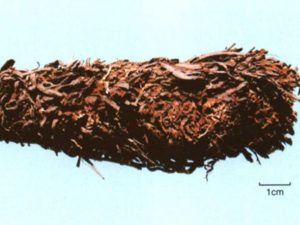
The rhizome is thick; the apical end sometimes retains a reddish-purple or grayish-brown stem base. There is one to several roots, which are brick-red or reddish-brown, oblong-cylindrical, straight or curved, sometimes with branches and fibrous roots, 10–20 cm long and 0.2–1 cm in diameter; the surface bears longitudinal wrinkles and marks from fibrous roots;The periderm of older roots is grayish-brown or brownish-gray, often shedding in scales to reveal reddish-brown new periderm; occasionally, the periderm splits open, exposing the white xylem. The texture is hard and brittle; it breaks easily, with an uneven fracture surface that appears horn-like or fibrous. The cambium ring is distinct; the xylem is yellowish-white, with vessels arranged radially.It has a faintly fragrant aroma, a bland taste, and is slightly bitter and astringent.
Properties of Processed Slices
1. Danshen: Thick, nearly circular slices with a reddish-yellow or yellowish-brown surface, showing scattered white vascular dots; the center is slightly yellow. The outer bark around the edges is dark reddish-brown; it has a faint aroma and a slightly bitter, astringent taste.
2. Wine-Infused Danshen: Resembles Danshen in appearance; the surface is yellowish-brown with a faint aroma of wine.
3. Roasted Danshen: Resembles Danshen in appearance; the surface is purplish-brown with scorched spots.
4. Pig’s Blood Danshen: Resembles Danshen in appearance; has a pungent odor of pig’s blood.
5. Turtle Blood Danshen: Resembles Danshen in appearance; has a pungent odor of turtle blood.
6. Vinegar-processed Danshen: Resembles Danshen in appearance, with a rice vinegar-like sour taste.
7. Rice-processed Danshen: Resembles Danshen in appearance, with a deep purple surface.
8. Charred Danshen: Resembles Danshen in appearance, with a charred black color.
Botanical Information
Botanical Classification
Salvia miltiorrhiza, a plant of the genus Salvia in the Lamiaceae family.
Morphological Characteristics
A perennial herb, 30–100 cm tall. The entire plant is densely covered with pale yellow soft hairs and glandular hairs. The stem is quadrangular, grooved, and branched in the upper part. Leaves are opposite, odd-pinnate compound; petioles are 1–7 cm long;usually 5 leaflets, rarely 3 or 7; the terminal leaflet is the largest, while the lateral leaflets are smaller; leaflets are ovate to broadly ovate, 2–7 cm long and 0.8–5 cm wide, with an acute or acuminate apex, an obliquely rounded or broadly cuneate base, and rounded serrations along the margins; both surfaces are densely covered with white soft hairs.Whorled cymes form terminal or axillary racemes; each whorl bears 3–10 flowers, with those in the lower whorls sparse and those in the upper whorls dense; bracts are lanceolate, glabrous above, and slightly hairy below;The calyx is nearly bell-shaped and purple; the corolla is bilabiate, bluish-purple, 2–2.7 cm long, with the upper lip erect and sickle-shaped, slightly lobed at the apex, and the lower lip shorter than the upper lip, 3-lobed at the apex, with the central lobe longer and larger than the lateral lobes;There are 2 developed stamens, attached to the middle of the lower lip and protruding beyond the corolla; 2 sterile stamens, linear, attached to both sides of the throat of the upper lip, with anthers reduced to petal-like structures; the disk is slightly swollen at the front; the ovary is superior, deeply 4-lobed; the style is slender and long; the stigma is 2-lobed, with unequal lobes.The nutlets are oblong, brown or black when ripe, approximately 3.2 cm long and 1.5 mm in diameter, and enclosed within the persistent calyx. Flowering occurs from May to September, and fruiting from August to October.
Distribution Area
It is distributed throughout central and southern China.
Growth Habits
It prefers a mild and humid climate, is cold-tolerant, and highly adaptable. It is best cultivated in sunny locations with deep, moderately fertile, well-drained sandy loam soil.
Propagation Methods
There are four methods of propagating Salvia miltiorrhiza: seed propagation, root division, rhizome propagation, and cuttings. In commercial production, seed propagation and root division are most commonly used.
Cultivation Techniques
1. Seed Propagation
The germination rate of Salvia miltiorrhiza seeds is approximately 30%–65%. During the seedling stage, only basal leaves develop; plants do not enter the flowering and fruiting stage until they are two-year-old seedlings. The thousand-seed weight is 1.4–1.7 g.
(1) Spring Sowing: In late March, sow seeds in furrows on raised beds. Water immediately after sowing and cover the beds with plastic mulch to maintain a soil temperature of 18–22°C and adequate moisture. Seedlings typically emerge about half a month after sowing. Once seedlings emerge, punch holes in the mulch to allow them to grow through. Thin the seedlings when they reach 6–10 cm in height, and transplant them to the field in May or June.
(2) Fall Sowing: After the seeds mature between June and September, harvest them in batches. On raised beds, dig shallow furrows 1–2 cm deep with a row spacing of 25–30 cm. Sow the seeds evenly into the furrows, cover with soil, and level the surface so that the seeds are just covered, then water. Seedlings will emerge in about half a month.
2. Propagation by Root Division
Dig furrows 5–7 cm deep. Scatter the root cuttings into the furrows at a plant spacing of 20–25 cm and a row spacing of 25–30 cm. Cover with 2–3 cm of soil; the soil layer should not be too thick or too thin, as this may hinder germination. Cover the area with plastic mulch after planting to retain moisture and heat, promoting early germination and root development. Use 60–75 kg of Salvia miltiorrhiza root cuttings per mu.
3. Propagation by Rhizome Clumps
Dig holes or trenches with a row and plant spacing of 25 cm; the trench depth should allow the fine roots to straighten naturally. Plant the rhizome clumps into the holes or trenches and cover with soil.
4. Propagation by Cuttings
In July–August, cut stems from healthy plants and trim them into 12–15 cm long cuttings. Remove the lower leaves, retaining 2–3 leaves at the top.On prepared beds, dig diagonal furrows with a row spacing of 20 cm. Place the cuttings diagonally in the furrows at a spacing of 10 cm, inserting them 2–3 cm into the soil. Huddle soil along the furrows and firm it down, then water and provide shade to keep the soil moist. Roots generally form in about 20 days, with a survival rate of over 90%. Once the roots reach 3 cm in length, the seedlings can be transplanted to the field.
Pest and Disease Control
1. Leaf spot disease: Promptly remove diseased leaves at the base of the plant, ensure proper drainage, and dispose of plant debris in winter.
2. Sclerotium rot: Practice wet-dry crop rotation, clear ditches for drainage, promptly remove diseased plants, and apply 0.5 kg of 50% chloronitramine mixed with 10 kg of lime to the base of the stems and the soil surface to prevent spread.Alternatively, irrigate with a 1,000-fold dilution of 50% Suxiling.
3. Root rot: Implement crop rotation, select healthy, disease-free seedlings, and at the first sign of infection, irrigate with an 800–1,000-fold dilution of 50% Topsin.
4. Other pests include root-knot nematodes. For the cotton looper, spray a 90% diazinon solution diluted 800 times during the larval stage. For the cotton bollworm, spray a 50% zinc phosphide emulsifiable concentrate diluted 1,500 times during the bud stage.